Ora-Ora’s The Hunch until November 14: figures, dreamlike interiors and a moonlit tiger
Curated by Cyrus Lamprecht at Ora-Ora in Tai Kwun, The Hunch brings nine artists together around intuition and uncertainty. Five selected works offer a route through dark figurative painting, mixed-media landscapes and ink on paper.
A hand covers a pair of eyes, a chair faces an empty room, and a tiger hides in moonlight: images often arrive before answers. Ora-Ora’s twentieth-anniversary exhibition The Hunch, curated by Cyrus Lamprecht, runs from October 14 to November 14, 2026, at Tai Kwun in Hong Kong. Nine artists respond to intuition, belief and uncertainty through portraits, landscapes, animals and abstraction. There is no need to begin by finding one definitive story for every work.
The two meanings of hunch: leaning forward and sensing inwardly
The English word hunch points both to a bodily posture and an inner premonition: bending forward, or sensing something that keeps returning without supporting evidence. Lamprecht makes this the opening chapter of Ambiguity, following his Solitude Trilogy. The framework shifts attention from guessing a correct meaning towards continuing to observe before understanding has arrived. Founded in Hong Kong in 2006, the gallery also uses its twentieth anniversary to consider its path from ink painting into other media.
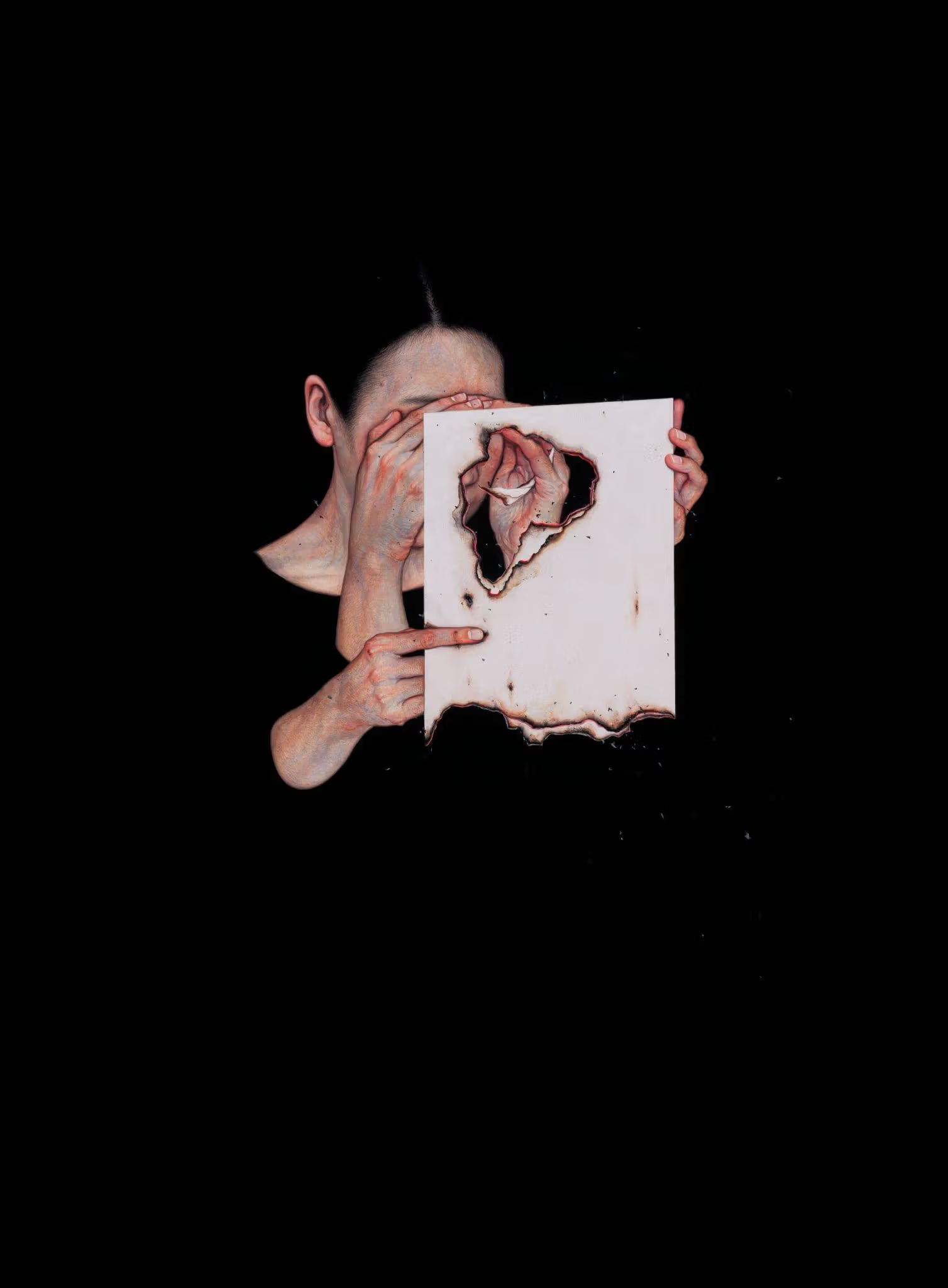
Lee Jinju’s Visible-Veil, made in 2024–2025, measures 110 × 81 cm and uses handmade Leejeongbae black, powdered pigment, animal-skin glue and water on unbleached cotton. A black background leaves a large expanse around a figure who covers her eyes while holding a white sheet with irregular openings; another hand appears within an opening. Concealment, revelation and touch intersect in one image. Follow the fingers and sheet edges before returning to what remains unseen.
Lee Jinju, Visible-Veil, 2024–2025, 110 × 81 cm.
Interiors and a moonlit animal delay recognition
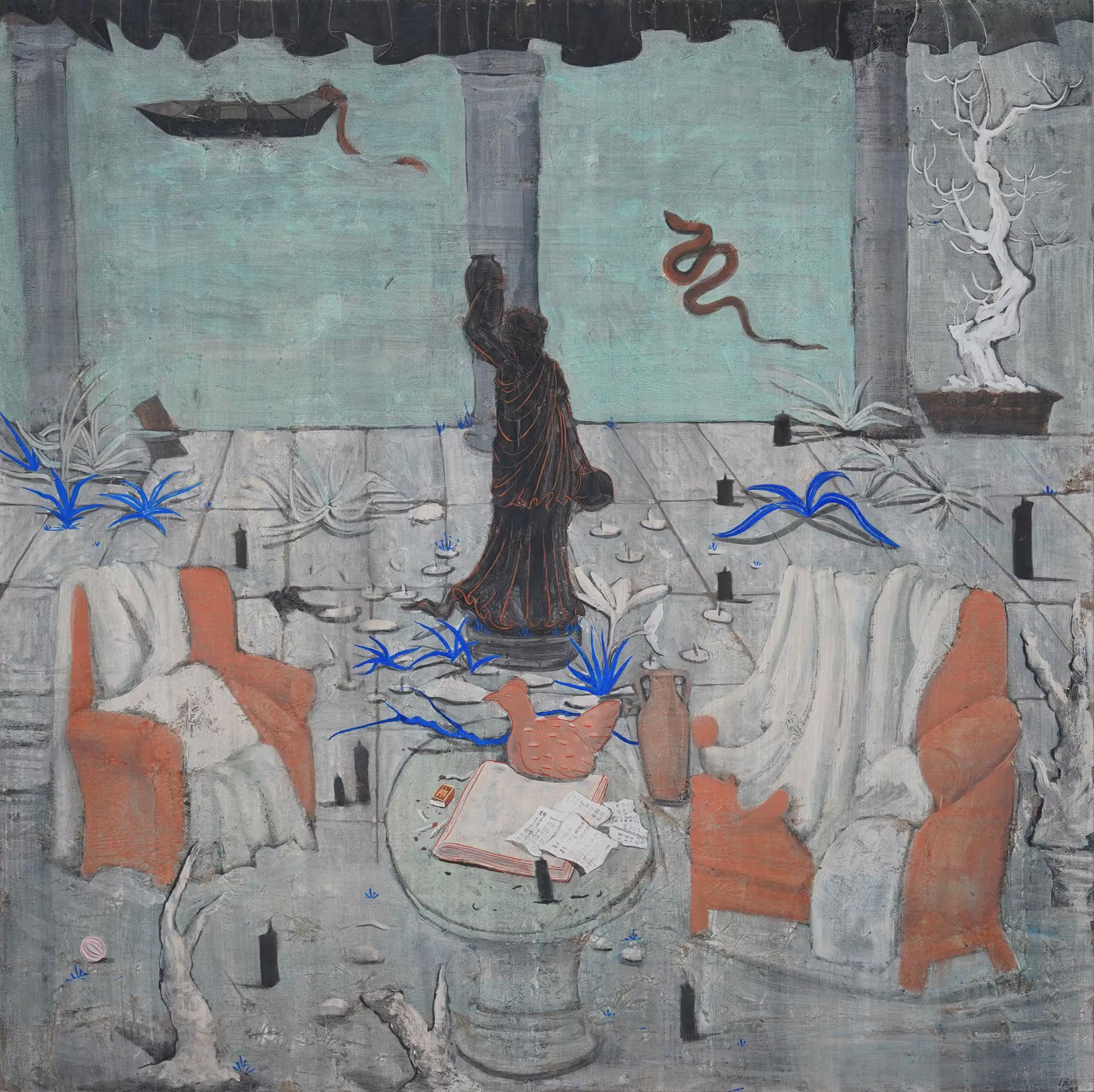
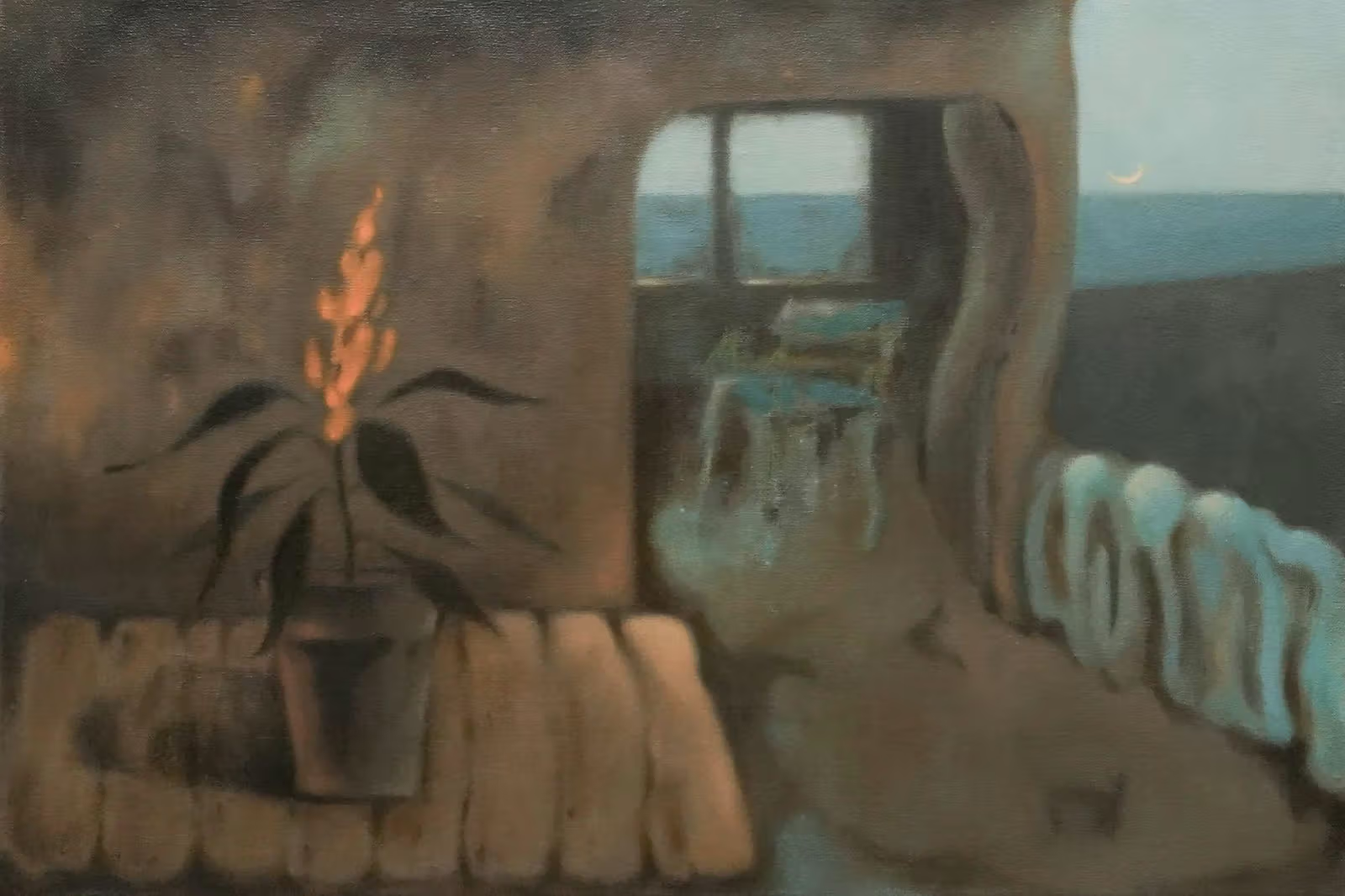
Wong Sze Wai’s Odyssey dates from 2023 and measures 100 × 100 cm. Its materials include ink, water-based colour, pigments, clay and sand. A round table, red chairs, a dark figure and bright-blue plant-like lines share a blue-grey interior, giving familiar furniture an unfamiliar distance through scale and arrangement. Cheng Chit Yan’s 40 × 60 cm oil on canvas Unvisited Coast, from 2026, creates another interior with a potted plant, empty chairs and the sea beyond a window. Compare how colour carries attention from objects into space.
Cheng Chit Yan, Unvisited Coast, 2026, oil on canvas, 40 × 60 cm.
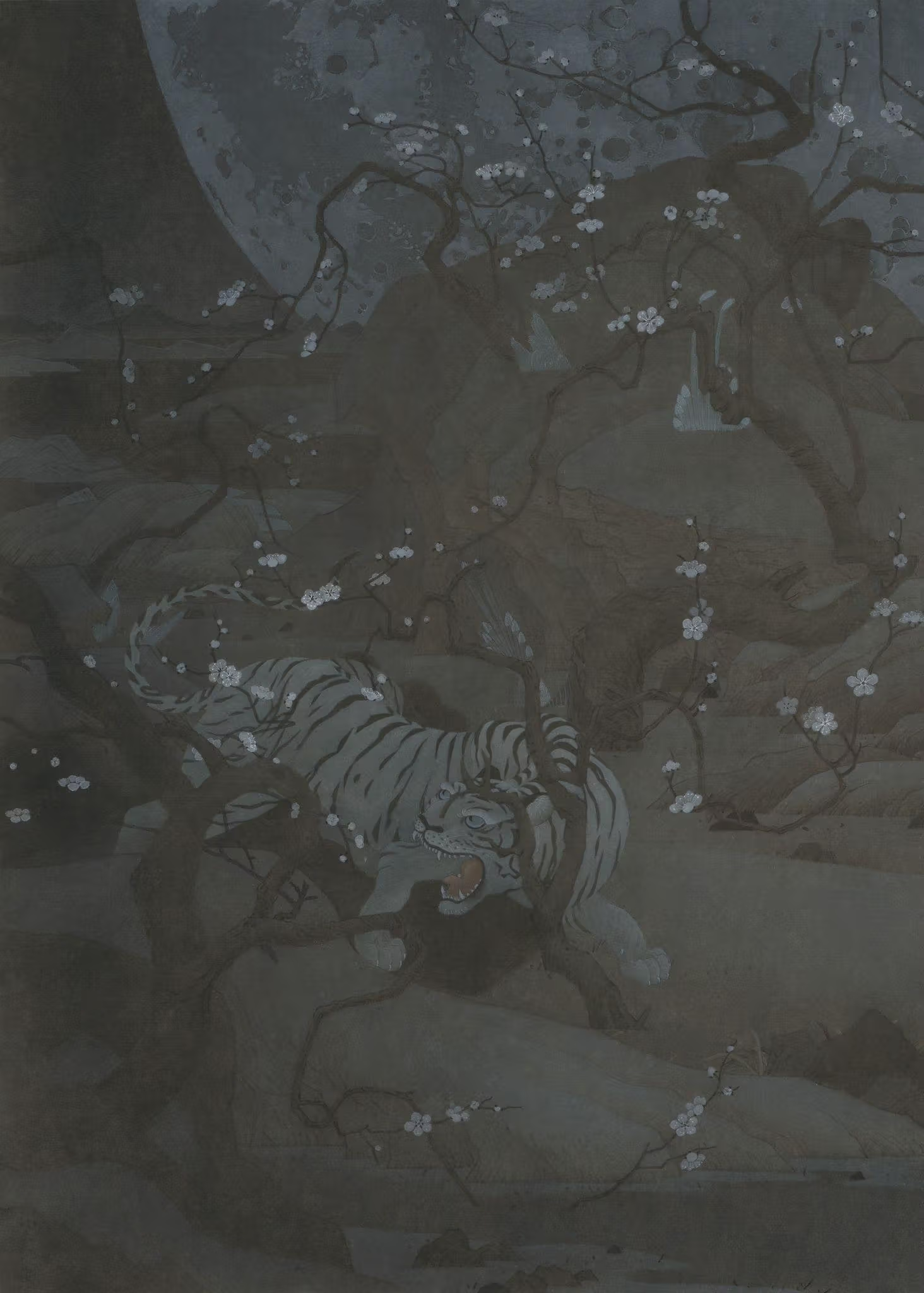
Xiao Xu’s Under the Moon is an 84 × 59.5 cm ink-on-paper work from 2020. Low-value grey-blue dominates, with an open-mouthed tiger among rocks and flowering branches, and white blossoms passing through the darkness like scattered highlights. Looking first at the tiger and following the branches differs from identifying moonlight before finding the animal. Rather than fixing the tiger immediately into an allegory, attend to its posture, surrounding space and the distribution of light marks across the paper.
Xiao Xu, Under the Moon, 2020, ink on paper, 84 × 59.5 cm.
From oil on wood to Tai Kwun: planning a visit
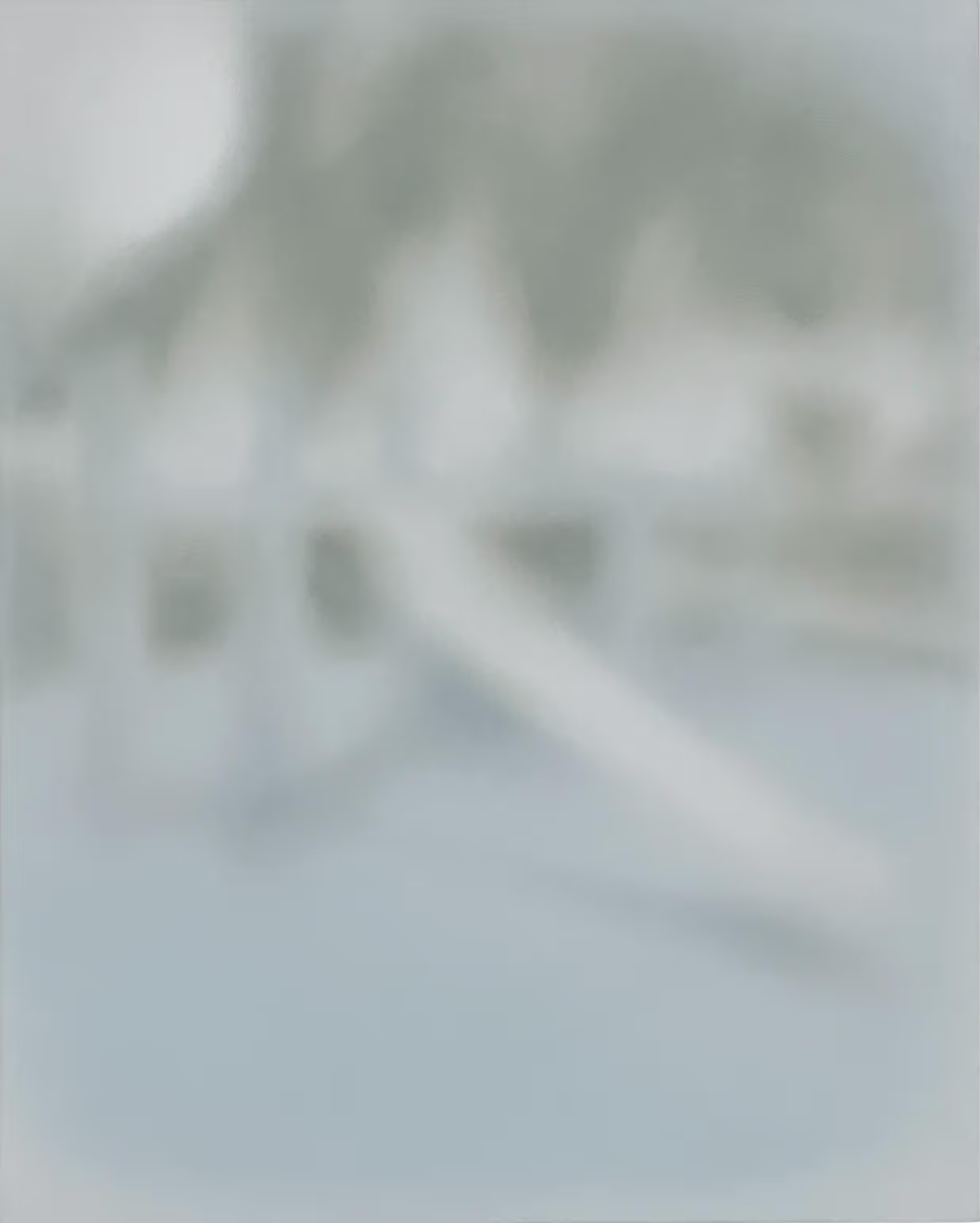
Chino Ng’s 444 is an oil on wood from 2026, listed at 26.4 × 33 cm. Soft, blurred dark shapes gather and disperse across its pale grey-blue surface, contrasting with the clearer figures, furniture and animals in the preceding works. Leaving this piece until later in a viewing route offers a comparison between recognising objects and sensing forms. One prompts questions about what happened; the other holds attention on edges, colour differences and density, returning to the exhibition’s interest in what is not yet understood.
Chino Ng, 444, 2026, oil on wood, 26.4 × 33 cm.
Ora-Ora is at Rooms 105–107, Barrack Block, Tai Kwun, 10 Hollywood Road, Central. Regular gallery hours are Monday to Friday, 10:00–19:00, and Saturday, 11:00–19:00; Sundays and public holidays are by appointment only. Call +852 2167 8735 and check the official exhibition information and visiting arrangements first. These five works differ in medium and year. Moving through figures, spaces, an animal and abstraction makes intuition a starting point for noticing details.