Pineapple Fibre to Clothing: Five Material Responses at Taiwan’s DDW Pavilion
ISLAND UNDER PRESSURE connects DYCTEAM, KIMU, Ting-Hsuan Chang, Lulu Lin and YSTUDIO, extending from flood-sediment glaze to repairable eyewear and circular packaging.
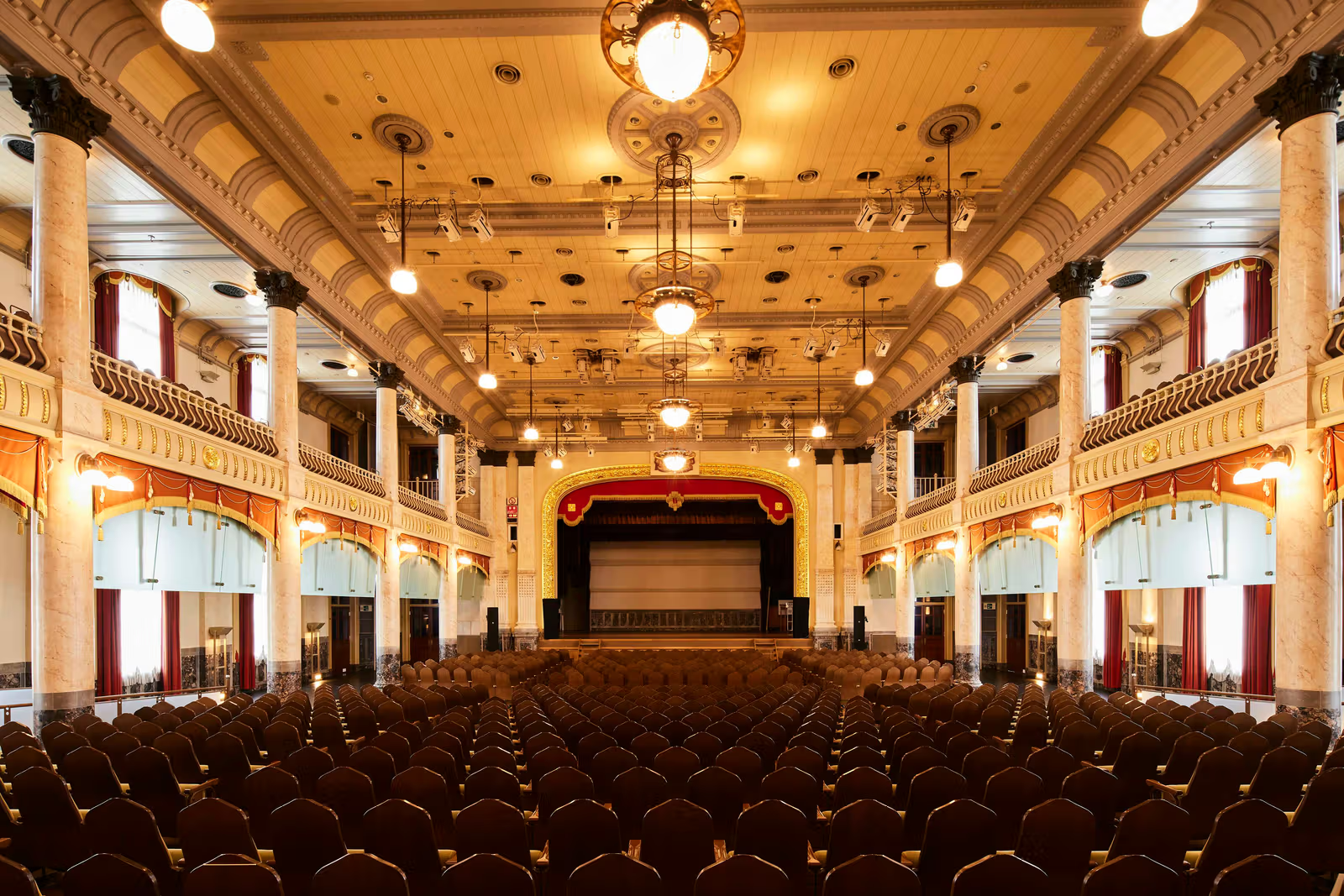
Pineapple leaves, discarded circuit boards, stone offcuts, flood sediment and recovered cartridge cases seem unrelated, yet they form one material investigation at the Taiwan Pavilion of Dutch Design Week 2026. ISLAND UNDER PRESSURE runs October 17–25 at Kazerne Design Lab in Eindhoven, curated by Atelier YenAn founder Yen-An Chen and implemented by the Taiwan Design Research Institute. Beyond treating sustainability as a visual style, this distinct Taiwan Pavilion asks what pressures materials have endured and how they enter another useful life.
From clothing to objects, ask how materials change
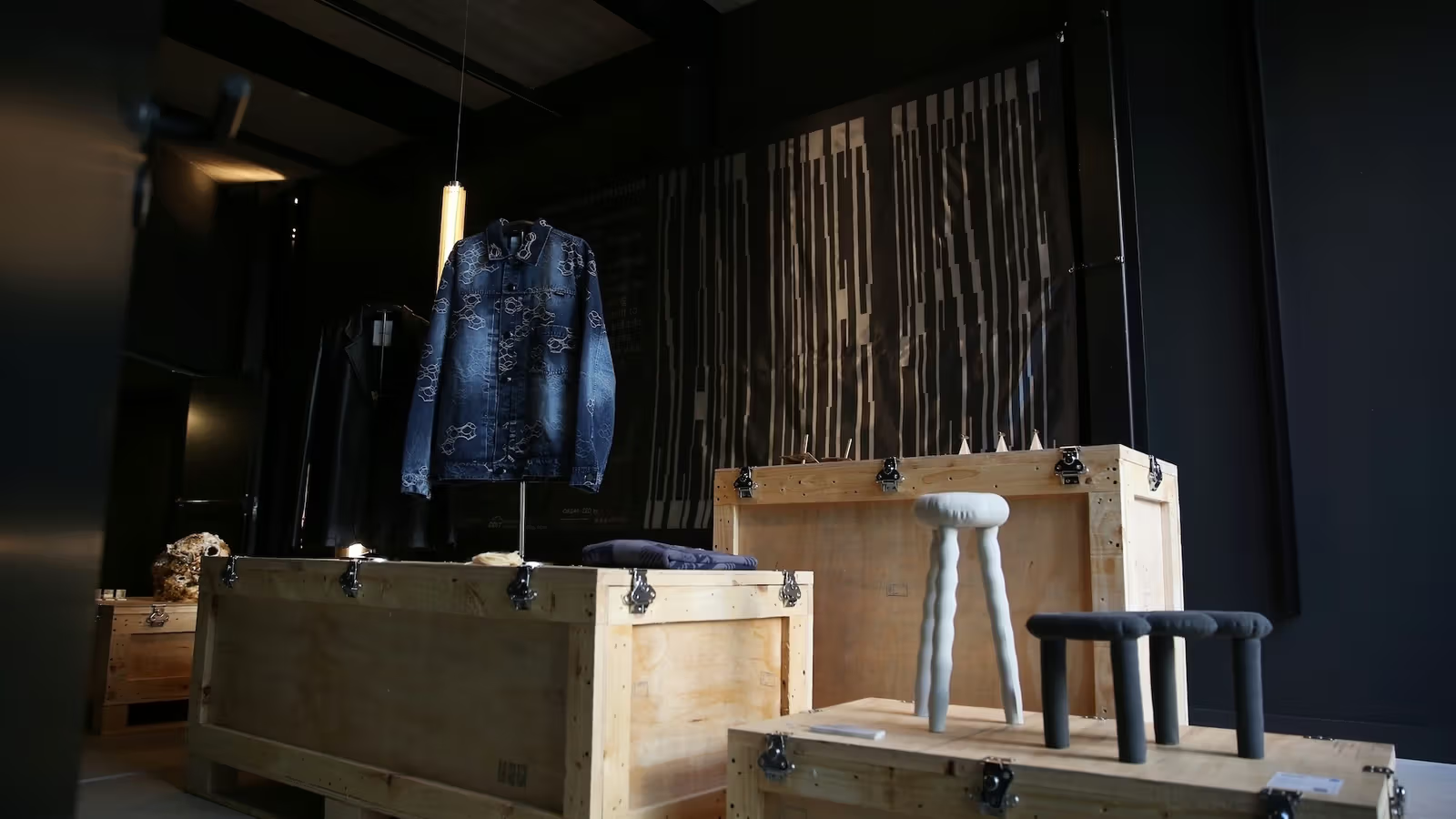
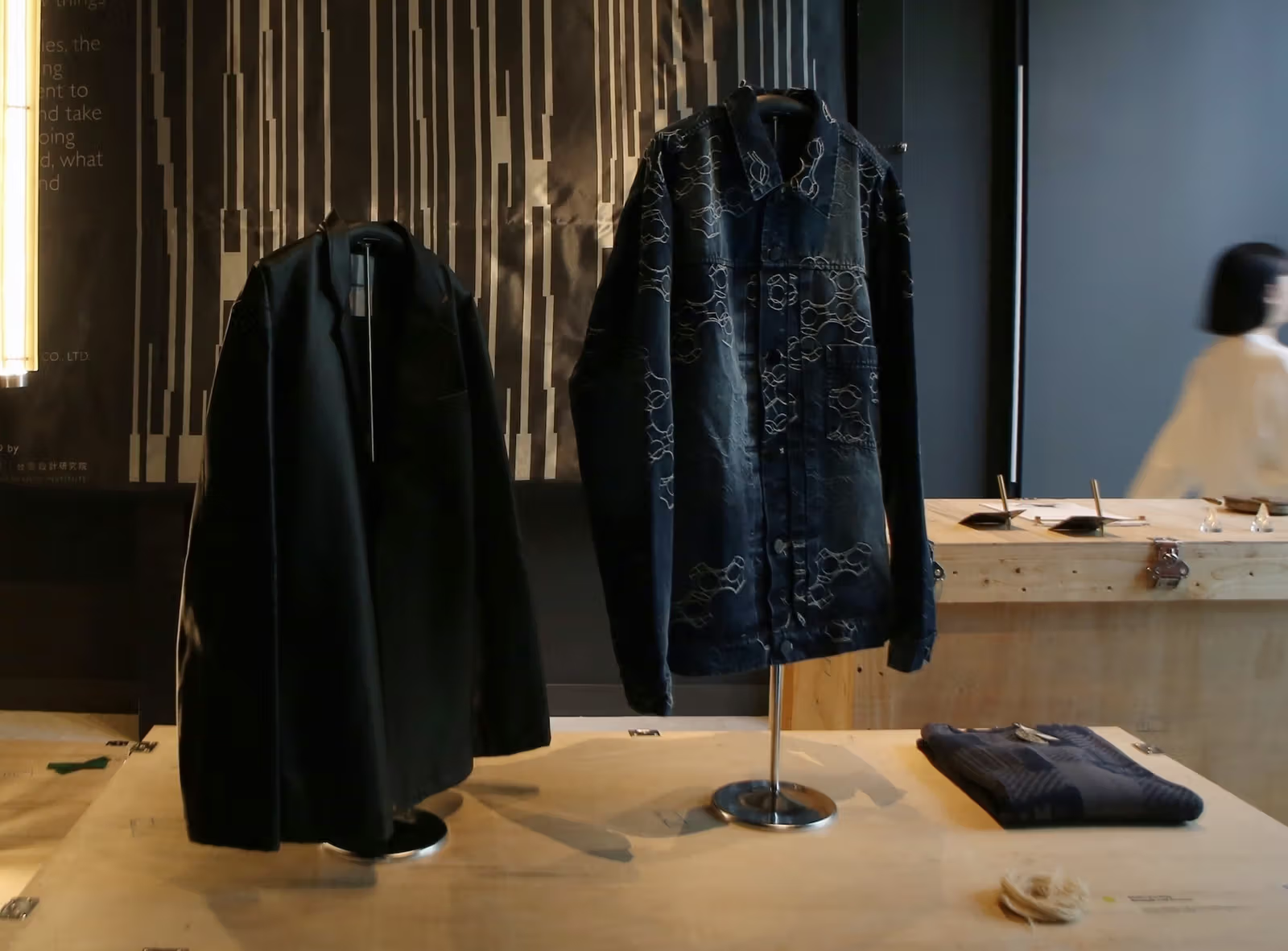
DYCTEAM approaches agricultural pressure by incorporating circular materials such as pineapple-leaf fibre into everyday clothing. Rather than simply attaching an environmental label, the textiles, garments and industrial collaborations connect raw material with wearing. Dark garments and a patterned jacket in exhibition images bring material research back to familiar scales of collars, pockets and bodies. The question shifts from what kind of waste this is to what kind of clothing it can become.
DYCTEAM garments bring material research into everyday clothing at the pavilion.
KIMU addresses industrial pressure, working with SDTI to reprocess discarded circuit boards into wood-plastic material for everyday objects. Ting-Hsuan Chang considers stone-processing remnants left by manufacturing, shaping C-Stone with flexible fabric moulds so folds and tension remain after hardening. One changes where electronic materials go after their original products; the other leaves a soft mould’s traces in a hard material. Looking at technical routes rather than a single colour makes clear that these are different forms of reuse.
Disaster and geopolitics retain their material histories
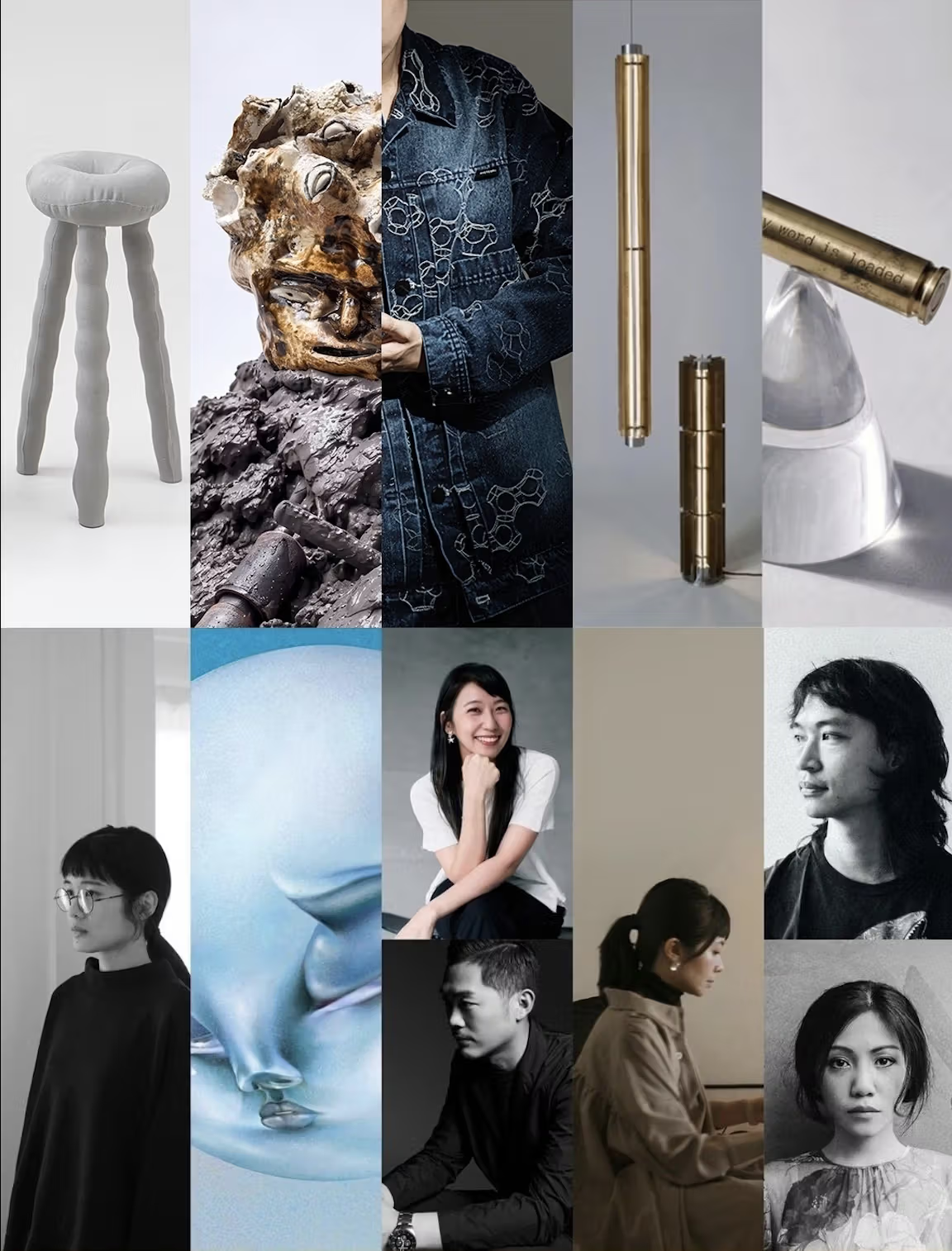
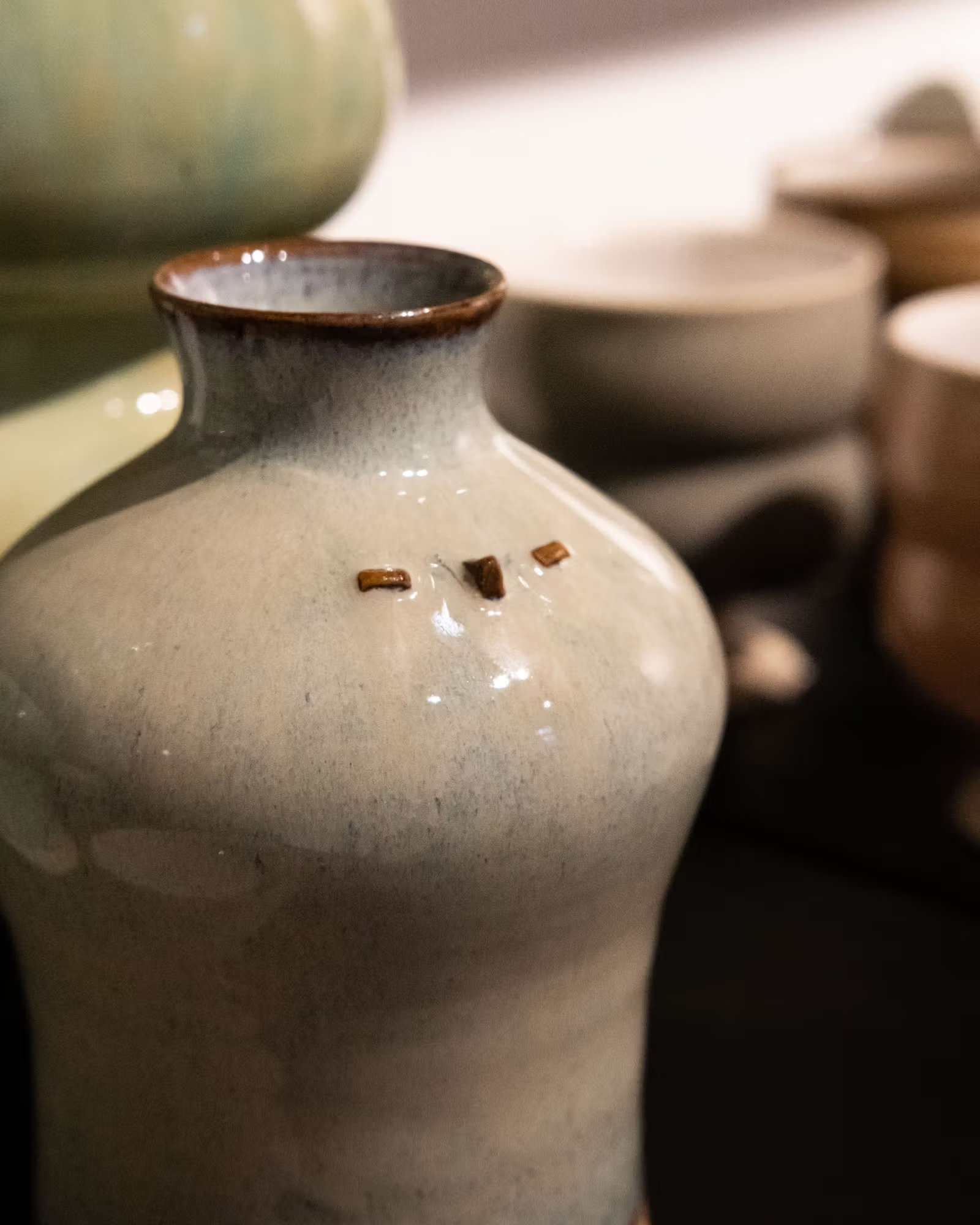
Lulu Lin turns sediment from the Guangfu flood in Hualien into ceramic glaze, bringing changes endured by the land into artistic work. Its significance extends beyond waste reduction: it carries a specific place and event. As sediment becomes surface and colour, its origin becomes part of reading the work. Unlike an image of reliably supplied industrial material, the post-disaster context draws attention to living circumstances behind material recovery.
Original official collage of projects and creators, retained without recomposition.
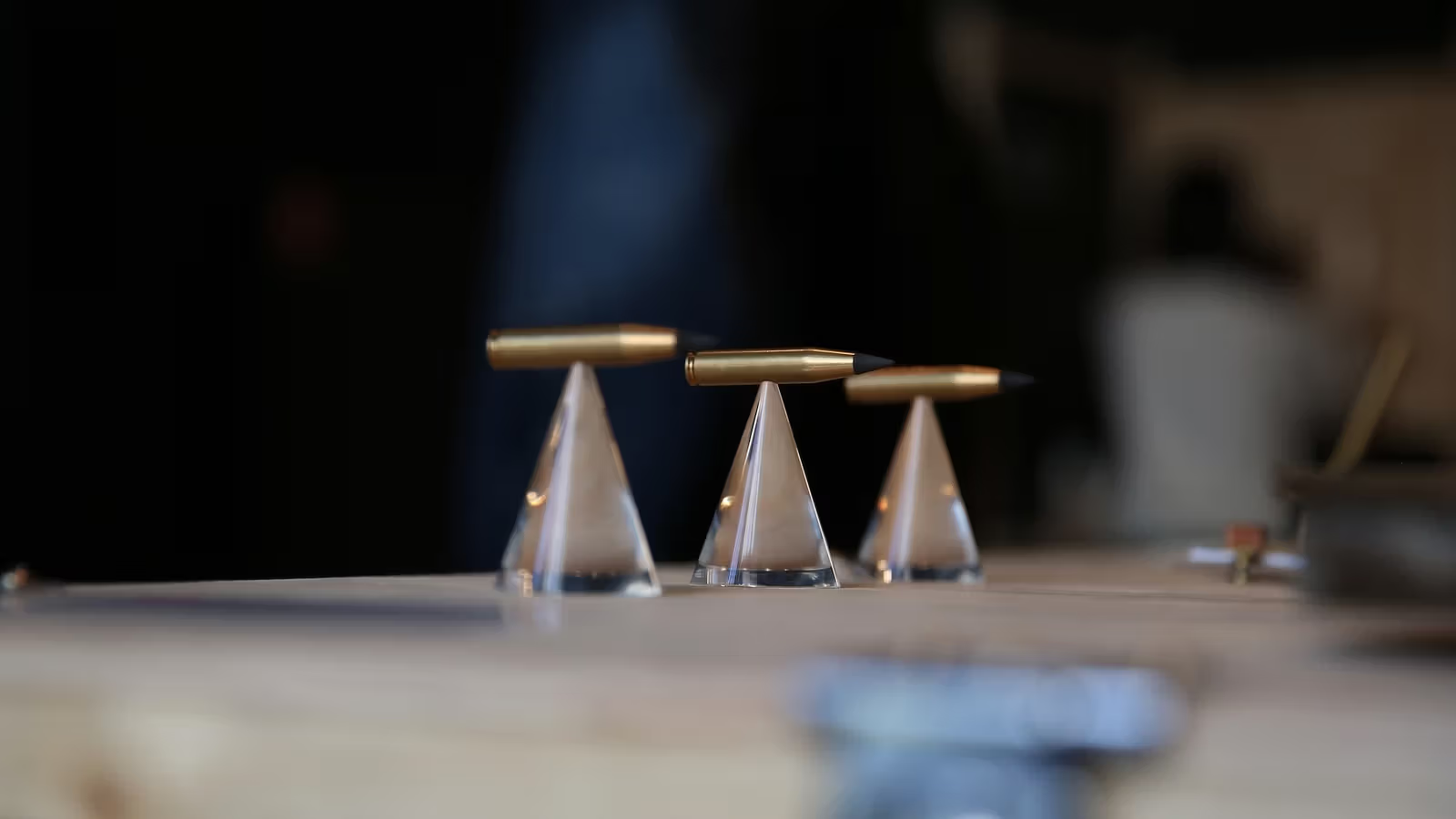
YSTUDIO collaborates with designers Rosa Cuei and Swei Huang, transforming brass recovered after military training into writing objects in response to geopolitical pressure. In the display, pens rest horizontally on transparent conical supports, redirecting metal associated with the military towards words, information and responsibility in writing. Instead of treating all five projects simply as recycled design, the exhibition separates agricultural, industrial, manufacturing, climate and geopolitical pressures, revealing different reasons behind each transformation.
Brass writing objects rest on transparent conical supports.
Circularity also means repair, from glasses to detergent bottles
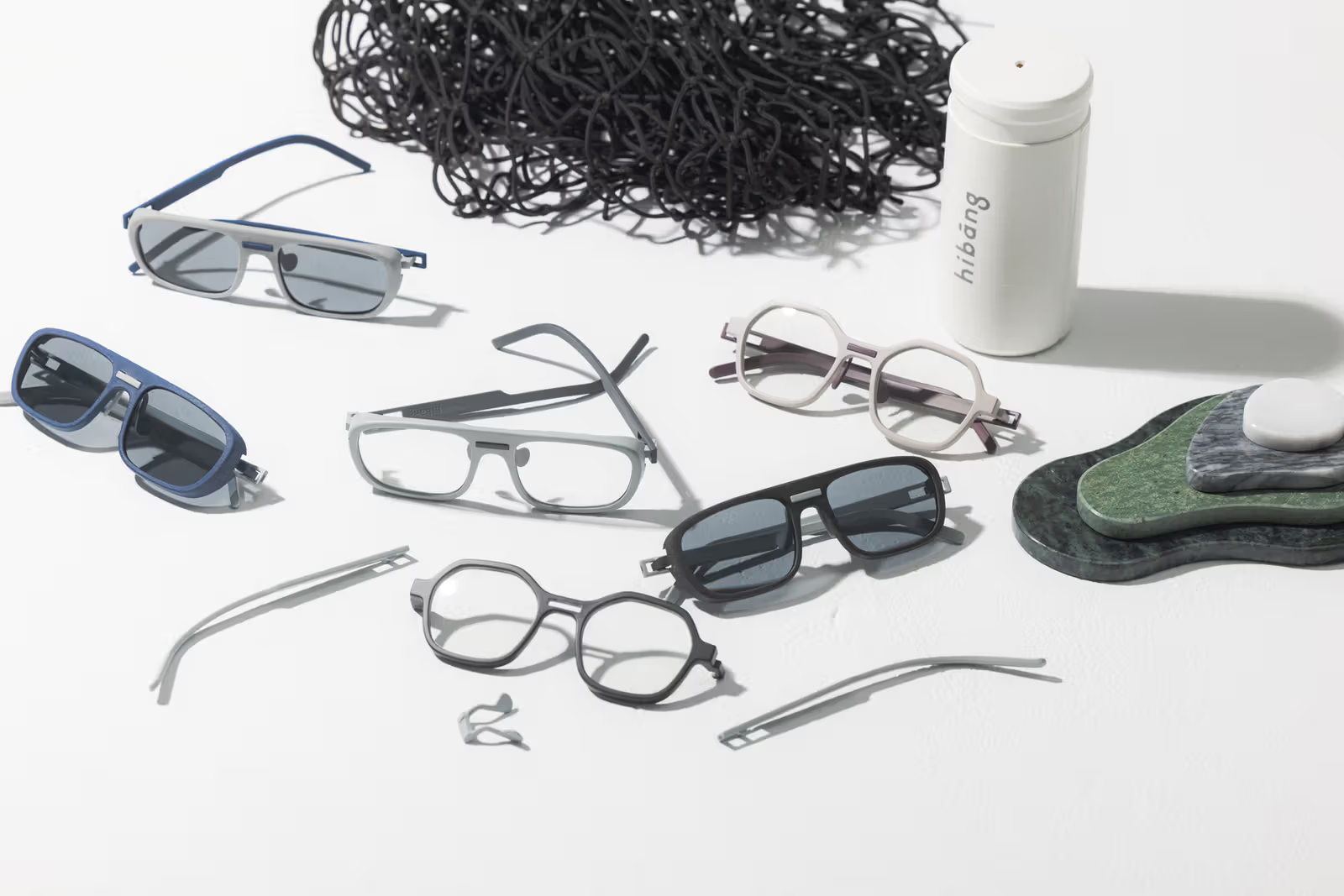
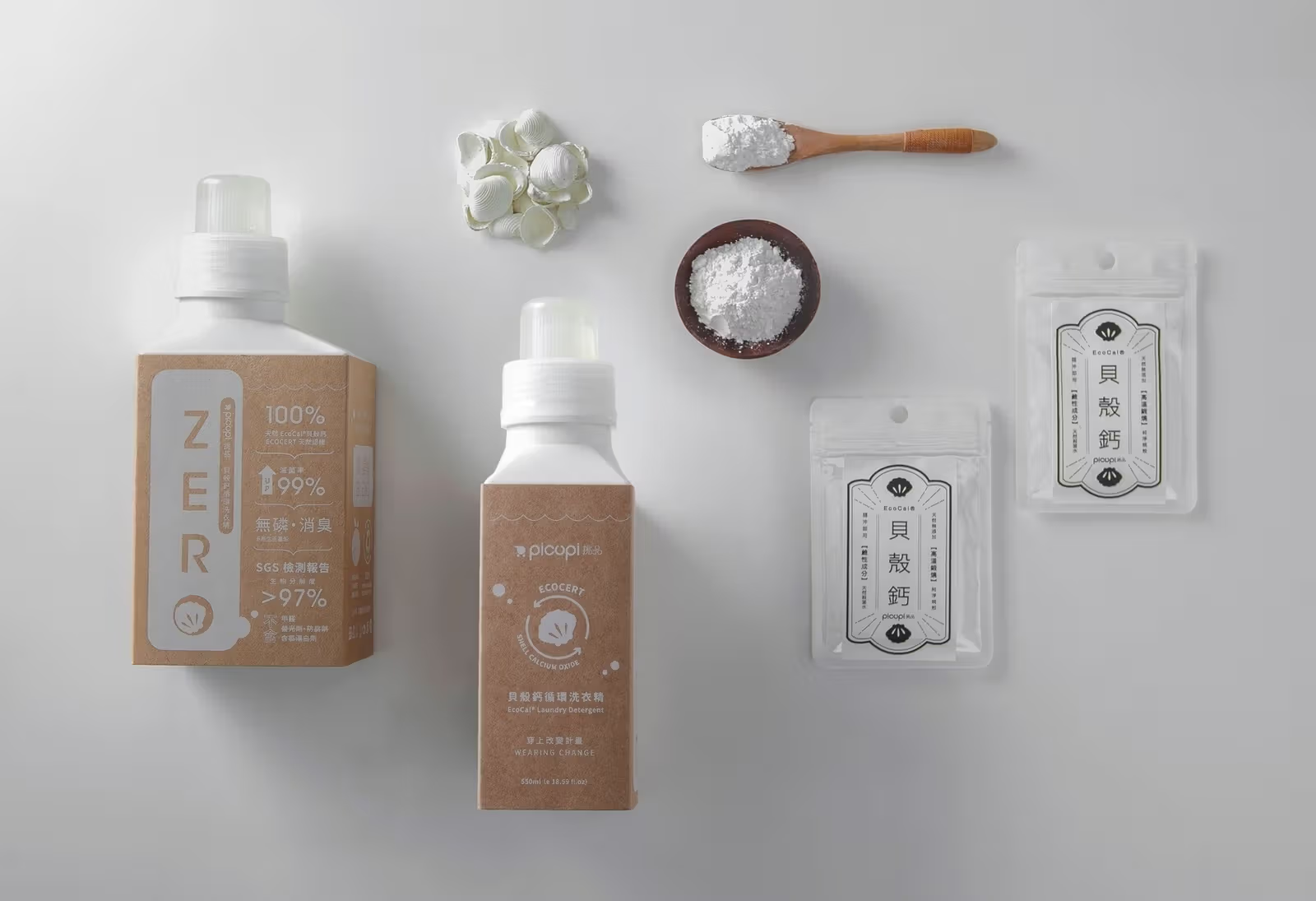
Two additional selections come through the Golden Pin Design Award. Duolog Design’s Hibāng circular eyewear uses nylon regenerated from discarded fishing nets, with screwless interlocking parts that can be repaired or replaced without tools. picupi works with Zhongjie Biotechnology to incorporate shell calcium from high-temperature processing of recovered Hualien golden-clam shells into laundry detergent. Post-consumer recycled plastic bottles and caps, plus recycled-paper packaging, extend the material question to containers.
Hibāng eyewear and separable parts illustrate the screwless interlocking design.picupi detergent, shell calcium and packaging; container lettering belongs to the original products.
These everyday products add a crucial point: recycled feedstock is only the beginning. Disassembly, replacement, repair and eventual collection also affect whether a cycle continues. Across clothing, objects, art and consumer products, the pavilion presents different ways designers collaborate with material researchers and manufacturers. With October 25 marking the exhibition’s final day, its enduring relevance lies in considering origin, processing and the next repair along one continuous line, beyond giving waste an attractive new surface.