Lawa Turns a Grocery Store into Truku-Language Pop
Eight self-written songs on Uwa Truku ga Sbrigan bring rice wine, body comments and family memory into pop, with harmonies designed from the beginning of composition.
An Indigenous-language album can begin with rice wine and a neighbourhood shop where children stop after school, rather than distant cultural symbols. Released September 18, 2026, Lawa’s Uwa Truku ga Sbrigan: The Truku Girl from the Grocery Store contains eight original songs entirely in Truku, with all lyrics, music and vocal harmonies written by her. On the evening of October 25, its release story still placed fourth in the Top 5 of Wind Music’s official breaking-news room. The list does not disclose its measurement period and is not a Taiwan-wide streaming chart.
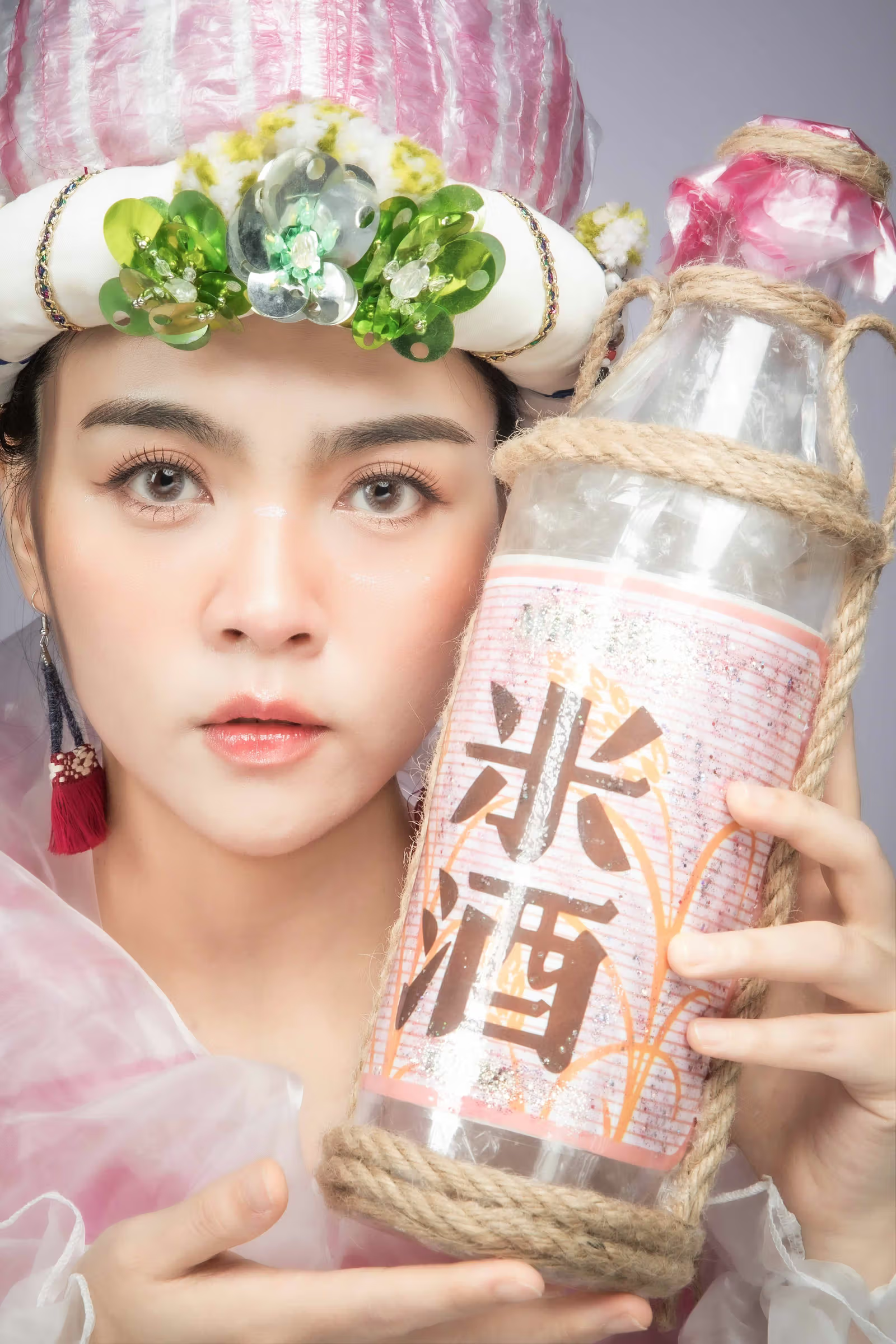
Lawa’s album publicity portrait uses a rice-wine prop to echo the grocery-store theme.
A grocery store sets a local scale for storytelling
Lawa comes from Mingli Lower Village in Wanrong, Hualien, and grew up in a grocery store passed down by her grandmother. Her father tending the shop, neighbours’ greetings, snacks, rice wine and children pausing after school form the family setting. This choice locates culture in everyday exchanges, conversation and care, alongside ceremonies and stages. For listeners unfamiliar with Truku, the shop’s people and routines provide concrete ways into the songs.
The songs address ritual, comments about appearance, her father, her grandmother’s memories of leaving home, water-spirit legends, deceased relatives and kindness. Indigenous-language writing is not confined to a single emotion. 神豬泡泡 approaches ritual through a playful childlike perspective, while 不要問我幾公斤 responds humorously to comments about body size. Together, these subjects show a mother tongue handling jokes, self-defence and longing, beyond a historical text to preserve.
Harmonies begin during writing, rather than as final decoration
Previously a member of the vocal trio 大女孩, Lawa brings experience of multipart singing into composition. With producer PiA, she spent six months breaking down and rewriting songs, designing harmonies alongside the main melody from the outset. The release notes position the voice as the central instrument: harmonies contribute to emotion, imagery and narrative, rather than merely backing a lead. This method shifts attention from how high a singer reaches to how different parts answer each other.
Lawa’s album publicity portrait, rather than a concert photograph.
Arrangements combine pop, traditional Truku melodies and everyday sounds with Qawqaw jaw harp, Tatuk xylophone and Pgagu flute. These are materials placed alongside contemporary arrangement and vocal design, rather than a checklist of identity symbols. The publisher describes 雜貨店的米酒 as a song of longing for her father that brought tears while recording its demo, later transformed into a bright Latin-pop piece. The memory retains feeling without requiring only a heavy musical expression.
Eight tracks move from ritual pigs towards kindness
Digital platforms list 神豬泡泡, 不要問我幾公斤, 雜貨店的米酒, 熊寶貝, 摟單姆, 山海 and 太魯閣姑娘, ending with 善良就夠了. Their Chinese titles refer respectively to a ritual pig and bubbles, not asking someone’s weight, the shop’s rice wine, a bear-like beloved, Rudan Mu, mountains and sea, a Truku girl, and kindness being enough. Titles appear alongside Truku names, offering narrative clues across languages. Eight songs keep the family shop, personal feelings and cultural memory on a shared line without asking one representative track to stand for an entire people.
Physical and digital editions have been released together, and Wind Music’s official listening link connects to platforms including Apple Music and LINE MUSIC. For listeners exploring Taiwan’s Indigenous-language pop, the significant shift is authorship: Lawa brings her experience of ensemble singing, covers and the stage into her own lyrics and melodies, placing vocal writing at the centre. The grocery store becomes more than a nostalgic album setting; it is a place where the language continues to speak about life now.