Korakrit’s Love After Death in Bangkok: cinema, light and myth until November 14
BANGKOK CITYCITY GALLERY presents Korakrit Arunanondchai’s autofiction through moving-image installation. Four work and installation photographs offer clues, from an abandoned Lopburi cinema to a Lanna legend.
A room for moving images can resemble a cinema, a bedroom and a body receiving light at the same time. Korakrit Arunanondchai’s Love After Death is on view at BANGKOK CITYCITY GALLERY from September 25 to November 14, 2026. It edits together video, performance and scenes filmed in an abandoned cinema in Lopburi, Thailand, with the artist’s fictive narration. This is an ongoing solo exhibition, rather than an event opening today.
Begin with the room: bulbs and projection share the view
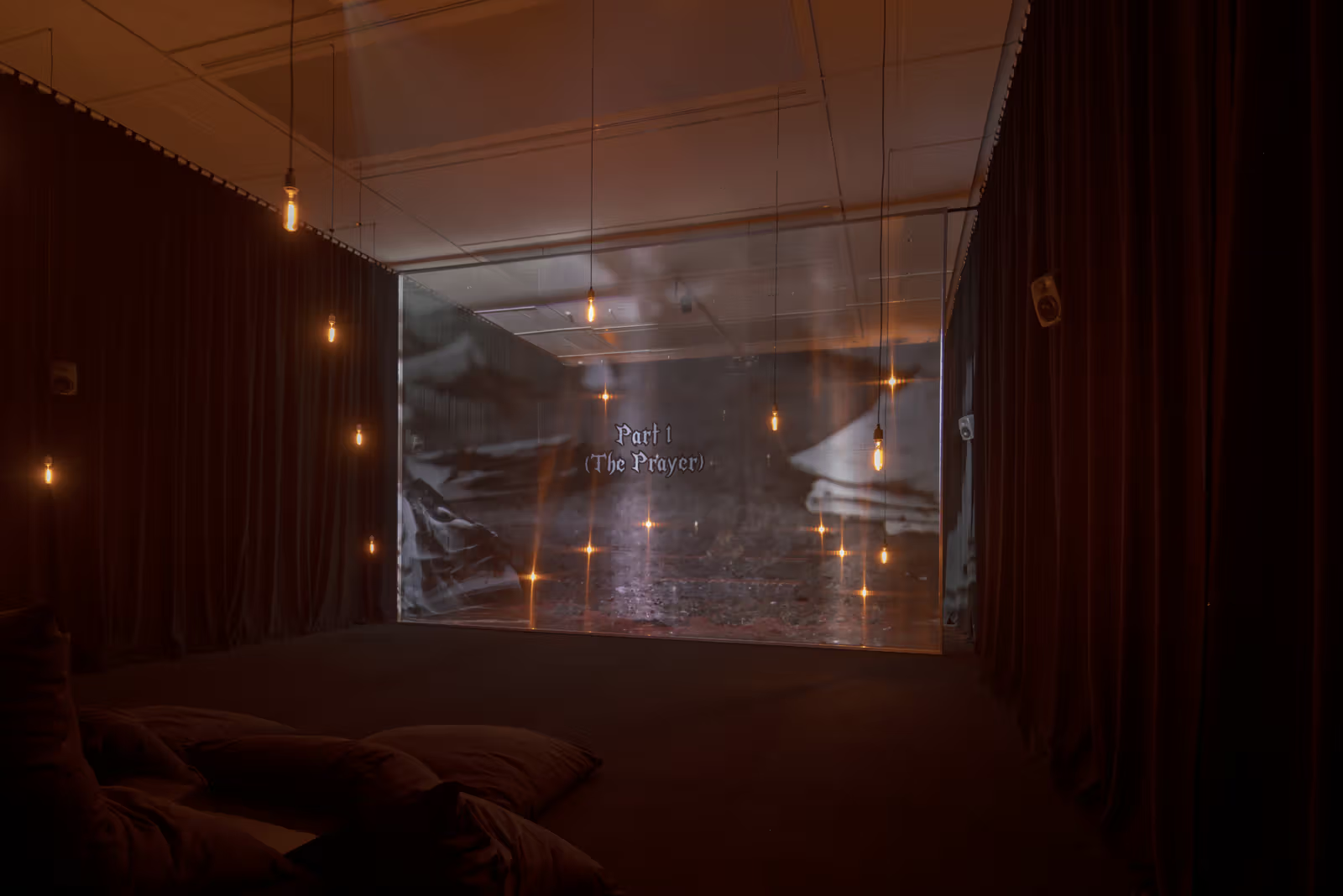
Official installation photographs show dark curtains, several hanging warm-light bulbs and a large projection, with cushions on the floor in front. When the projection displays Part I (The Prayer), the bulbs remain visible, sharing the space with the image. Read the photograph in three layers: the depicted scene, the actual suspended lights and the places where a viewer might stay. The exhibition is more than a wall playing a film; objects within the room also participate in the composition.
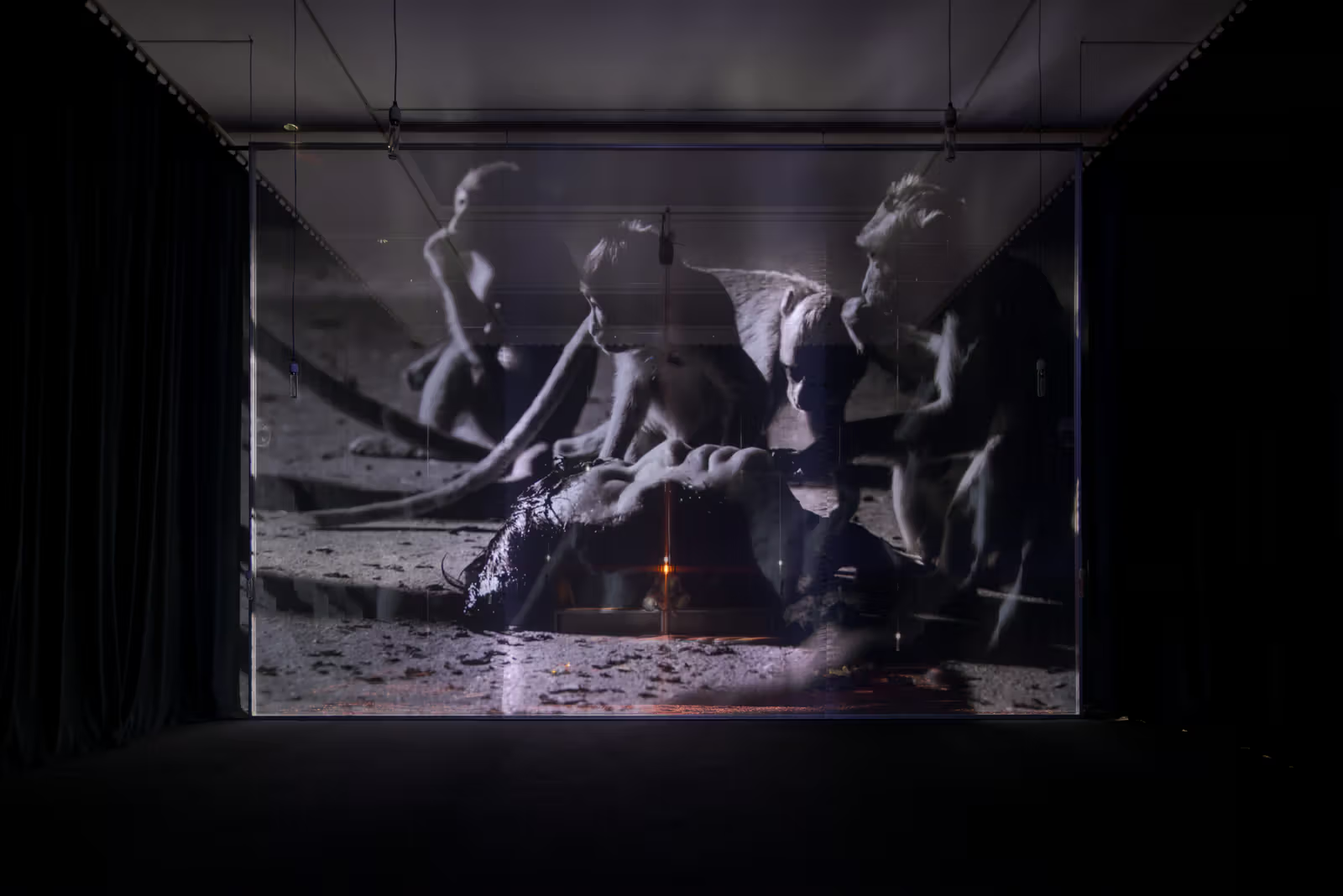
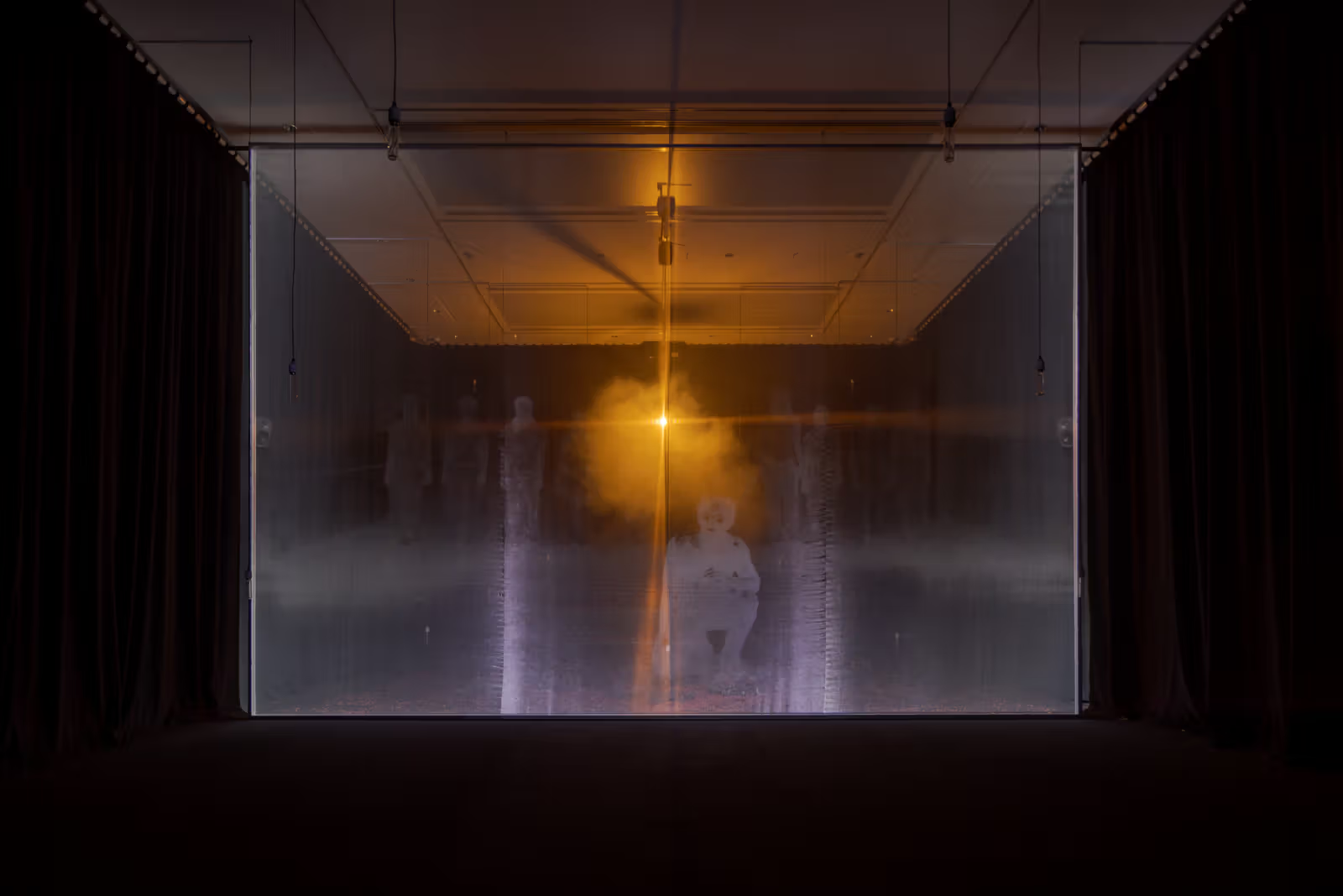
In another black-and-white scene, a reclining person’s profile is enlarged among monkeys; a third photograph superimposes pale figures and an orange-yellow glow. The photographs capture separate moments and cannot stand for the full film sequence, but they pose a useful question. As an image changes in brightness, which lights, curtains or human outlines become noticeable first, and which recede? For anyone drawn to cinema imagery or stage design, the division of roles between light and space rewards attention.
A black-and-white projection shows a person’s profile surrounded by monkeys, overlapping with the installation’s lights.Another projected scene overlaps a central warm light, bringing figures, a cloud-like form and the room’s structure into view together.
From a coal-eating myth to a still surface
The narration draws loosely on the Lanna legend of the Sihuhata, a mythical creature venerated for consuming coal and producing gold. The gallery reads the work alongside ghost-cinema traditions and shifts between the roles of artist and spirit medium. These are mythological and curatorial contexts, rather than verification of supernatural phenomena. Holding coal, heat, light and transformation in mind before returning to the installation’s warm lighting and moving images offers another route into its materials and narrative.
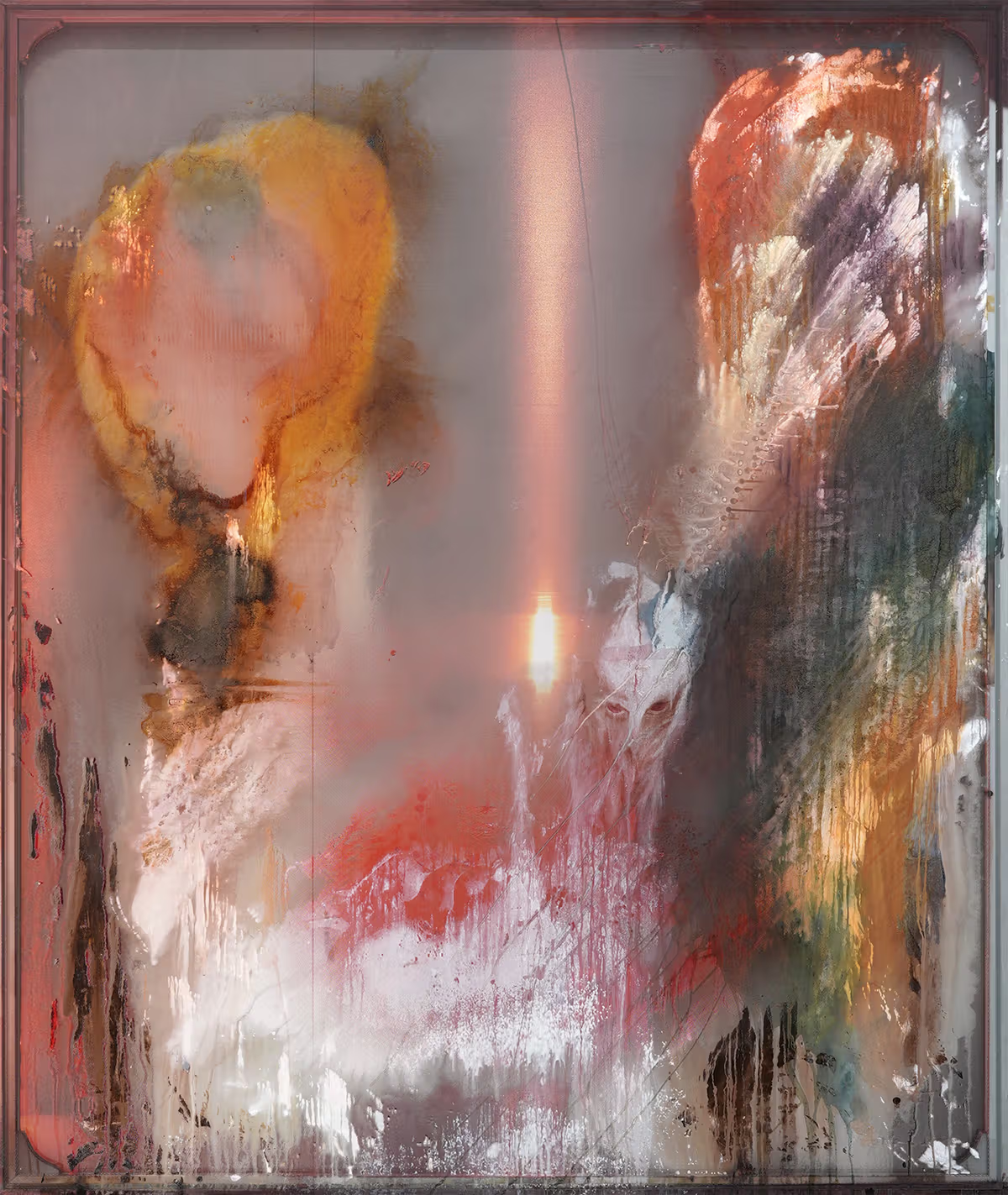
Beyond the installation views, the selected works include After, Prometheus and Love, all from 2026, alongside three works titled Excerpt. The image of Love selected here shows red, yellow, grey and white areas, fine lines and forms suggesting outlines. It offers a different pace from the black-and-white projection, allowing attention to remain on boundaries within a single surface. Moving from a time-based fragment to a still work can bring back colours and shapes that might pass quickly in a film.
Korakrit Arunanondchai’s Love (2026), with interwoven red, yellow, grey and white forms.
Open Thursday to Saturday, until November 14
Born in 1986, Korakrit lives in Bangkok and New York. His practice spans visual art, filmmaking and storytelling and involves sustained collaboration with other makers. His 2012–2555 (2012) was shown at MoMA PS1 in New York in 2014, and he co-founded Ghost Foundation in 2018. Those points place this exhibition within his continuing engagement with moving images, performance, death and rebirth, without requiring every scene to yield a single autobiographical answer.
The gallery is at 13/3 Sathorn 1, South Sathorn Road. Its currently listed hours are Thursday to Saturday, 13:00–18:00; Sunday is outside regular opening days. Lumphini MRT Exit 2 provides a starting point for planning the onward walk. The exhibition continues until November 14; consult the official exhibition and work pages. Alongside following the narrative, allow time to notice how an image alters the light and darkness of an entire room.