Let's start with one number: the Volkswagen Group's European overcapacity exceeds 500,000 vehicles. This isn't just abstract financial jargon — it's the starting point for every layoff, plant closure, and brand-cutting decision that follows.
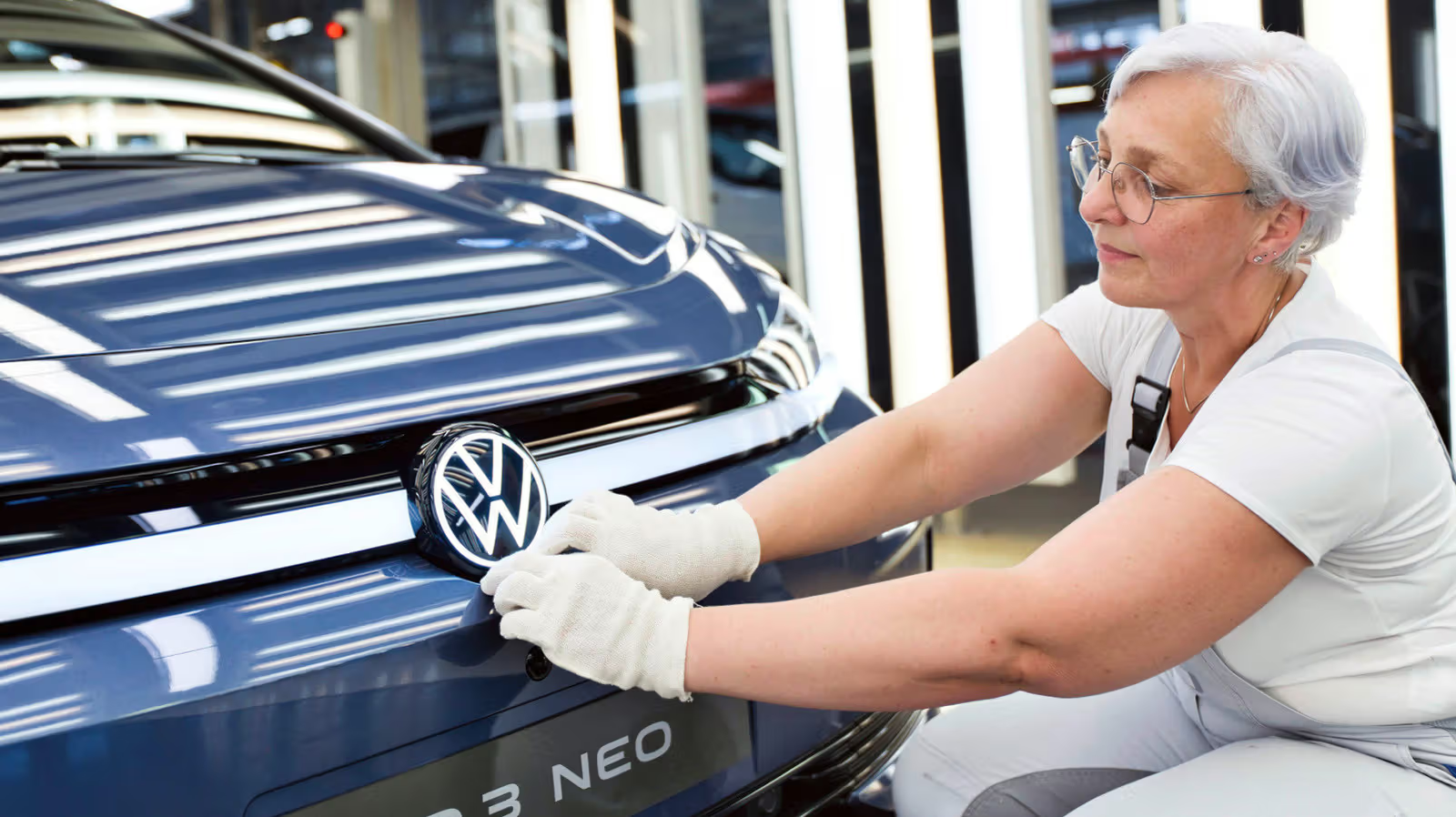
Volkswagen's executive board has officially approved "Future Plan 2030," which the company internally describes as "the most profound strategic transformation" in its history, aiming to lift its operating margin to 9% by 2030. The plan confirms 50,000 job cuts, with management positions also on the chopping block. Earlier this year, Volkswagen had already floated the idea of cutting 50,000 jobs, citing pressure from Trump-era tariffs and Chinese domestic automakers eating into market share — China currently being the world's largest auto market. By June, reports briefly suggested the cuts could balloon to as many as 100,000, but the final number has settled back at 50,000.
As for the plants, there's no answer yet — just a timeline. Volkswagen has acknowledged that the gap between European capacity and demand exceeds 500,000 vehicles, and it's currently evaluating whether its four German plants — Emden, Zwickau, Hanover, and Neckarsulm — will be restructured or shut down outright, with a decision expected by the end of June 2027. In other words, workers at these plants will be left waiting nearly two years to learn their fate.
The product lineup is also facing major cuts: the model range will shrink by 50%, product complexity will drop by 75%, and underperforming models will be axed outright. According to a report from German outlet WirtschaftsWoche, Volkswagen Group's Spanish brand Seat is headed for the exit. Notably, Cupra — the brand originally spun off from Seat — is not on the chopping block. Volkswagen plans to keep Cupra alive, concentrating resources on a handful of strong-selling models and boosting efficiency through higher-volume production.
Volkswagen has not yet given an official statement on the specific timeline or next steps for Seat's exit.