Westwing × Victoria Beckham Brings Chains, Hammered Texture and Hunter Green to the Table
Presented by Westwing: Serving Style translates fashion details into chain-patterned porcelain, textured cutlery and slender glassware. The collection is already available through the brand’s UK website.
A design language can move from wardrobe to table without relying on oversized logos. Serving Style, the dining collection by European home brand Westwing and British designer Victoria Beckham, translates chain motifs, elongated proportions and hunter green into tableware, glasses and decorative objects. The original introduction is commercial partnership content labeled Presented by Westwing. Its October 14 report describes a collection already available on the brand’s website.
How a fashion chain becomes a porcelain border
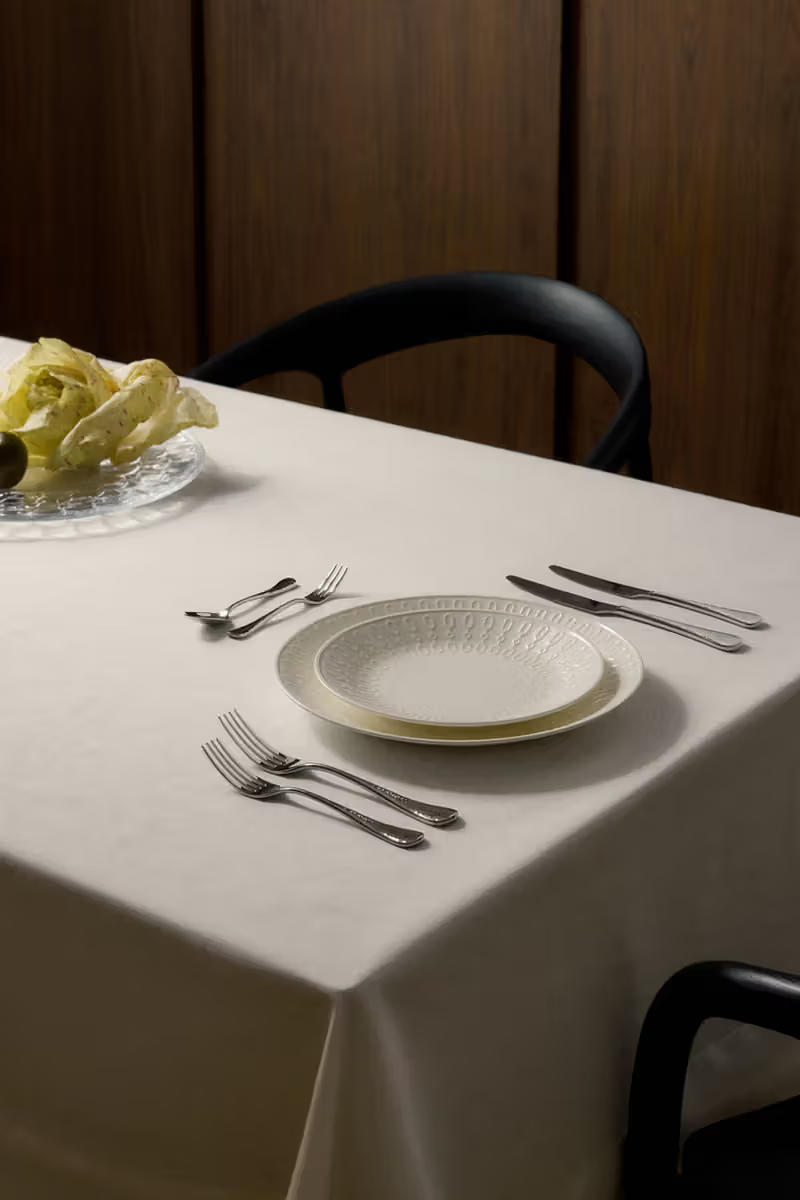
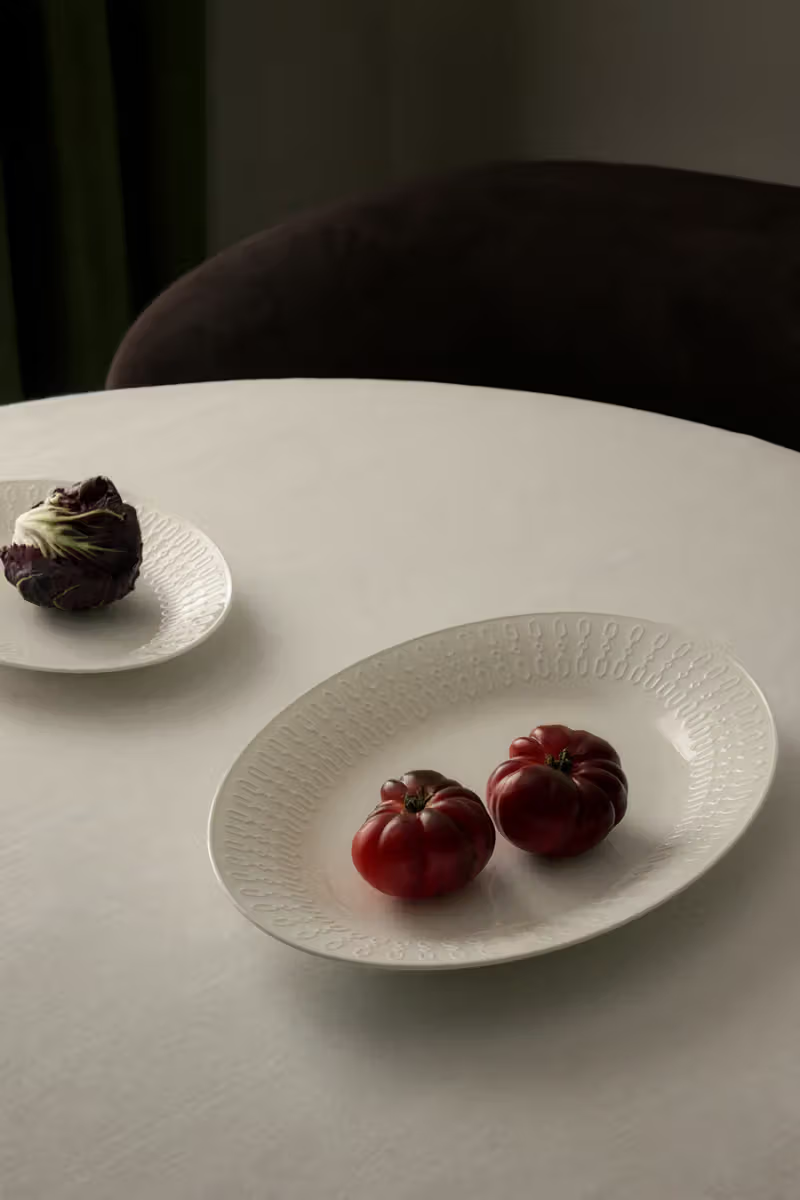
The official presentation positions the collaboration as the designer’s first application of her design perspective to the table. Dover porcelain provides the clearest connection. Small chain motifs frame the white plates, referencing more than jewelry in general: the recurring ready-to-wear detail originally drew on the strap of a vintage men’s watch. The rim becomes a point of connection between clothing and interiors, while the central area for food retains a relatively quiet expanse of white.
Chain motifs around white plate rims frame the food and leave the centers clear.
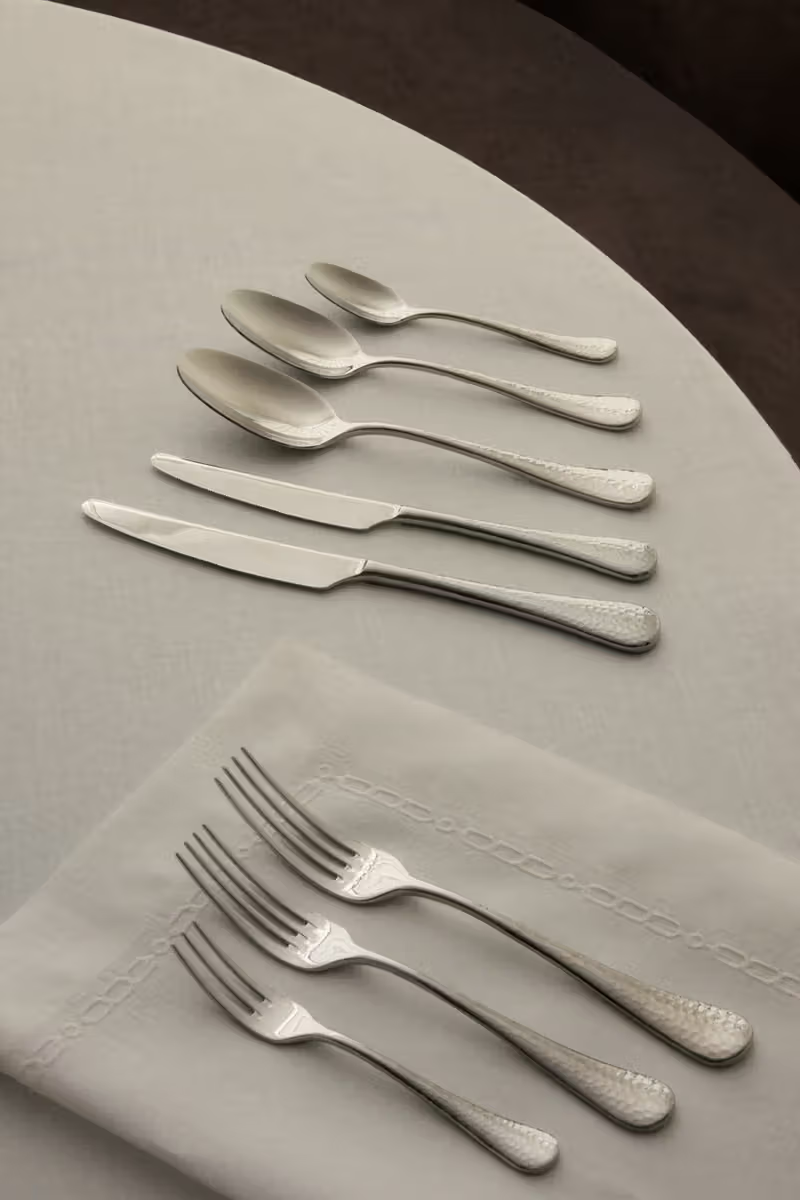
Against that regular chain pattern, Addison cutlery uses hammered handles and irregular reflections to add texture. The original introduction associates the metal objects’ treatment with the nineteenth-century Arts and Crafts movement, but this is a design reference, not evidence of antique origin or a craft certification. Nor does a silver-colored finish mean solid silver. Official product listings identify stainless steel for some cutlery and butter dishes, so materials should be checked item by item.
Hammered cutlery handles contrast with the chain embroidery on a napkin.
Shells, stems and green accents need not form a matching set
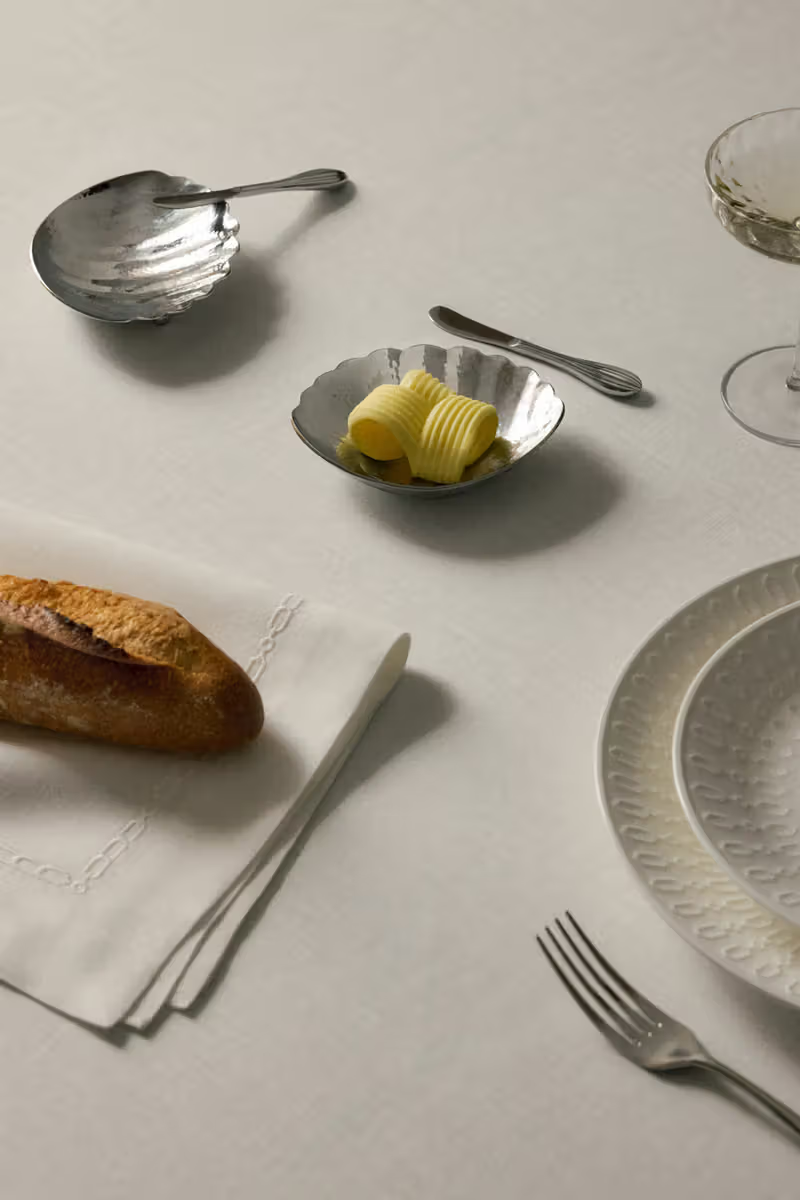
The Isla range brings natural forms to smaller objects, including spiral serving dishes and shell-shaped salt and pepper dishes. In the photographs, butter sits on a shallow textured dish with slender knives and spoons nearby. Their uses are clear, but the shapes resist a strictly rectangular arrangement. If a table already has simple white plates, a single shell outline or a hammered utensil can introduce a contrasting texture without replacing every piece of tableware at home.
A shell-shaped dish holds butter beside slender knives and a white napkin.
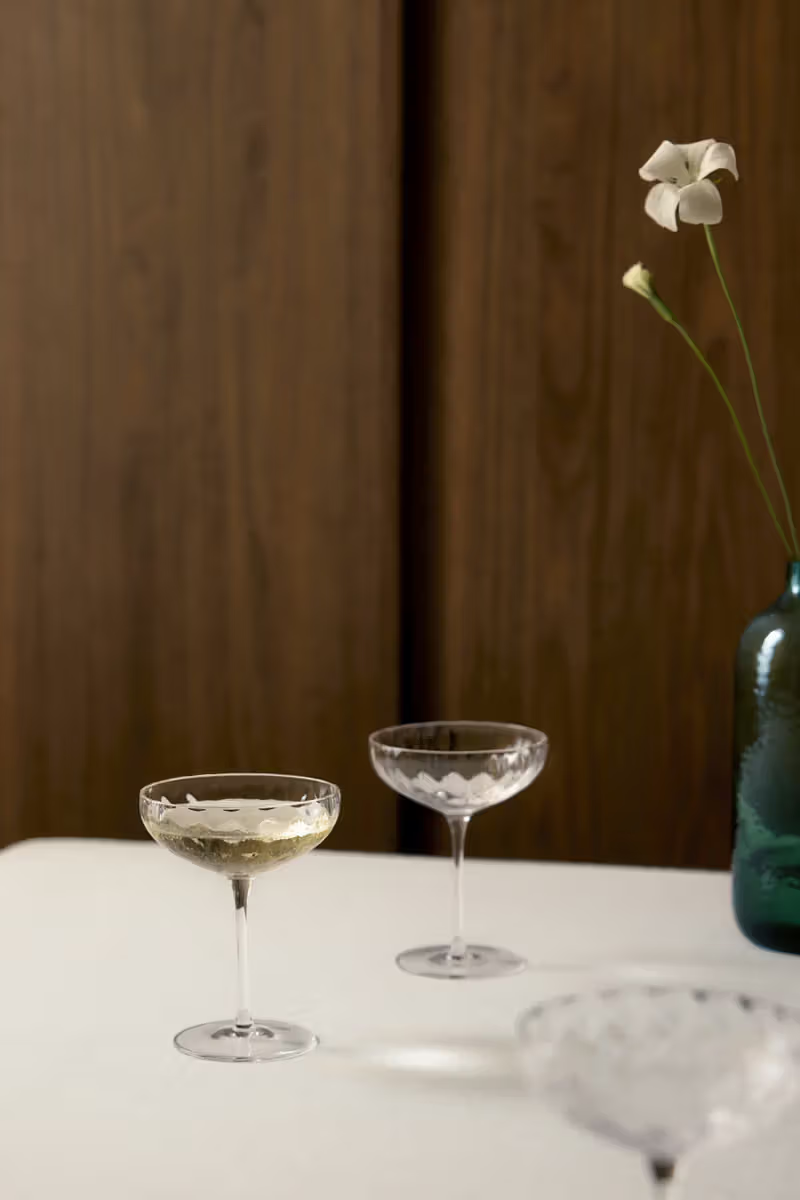
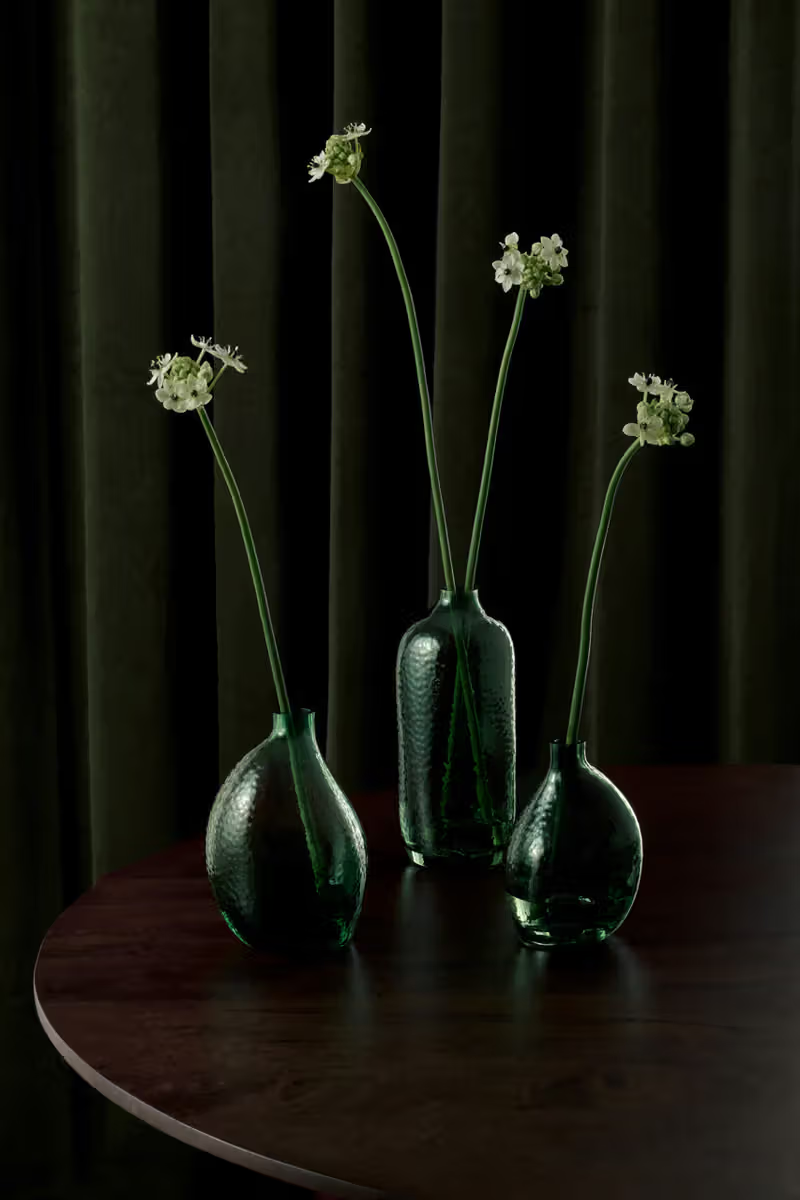
Aubrey champagne coupes catch the light through slender stems and subtly faceted bowls, which the brand links to Beckham’s approach to proportion. The collection imagery also brings together clear and green vases, white linen and silver-toned objects. Green acts as a small tabletop accent as well as a background color. These are styling relationships visible in the photographs, not an indication that every chair, ingredient or interior fitting pictured is part of the collaboration.
Slender champagne coupes catch the light through their textured bowls.Three green vases vary in height and silhouette.
UK prices and practical questions before purchasing
The UK website currently lists an Isla stainless steel butter dish at £57.99 and a set of four mouth-blown Aubrey champagne coupes at £94. These are different products and quantities: the set price is not the price of one glass. Dover plates and table linens are also sold separately. Check names, quantities and dimensions before considering available storage space. Glass, porcelain and metal do not necessarily share the same cleaning requirements; dishwasher suitability must be checked against each item’s care instructions.
The Westwing UK collaboration page lists the current assortment. Sterling retail prices are not the total cost of delivery to Taiwan, and international delivery coverage, shipping charges and returns require separate confirmation. The brand also proposes keeping the custom packaging as storage boxes, a suggested use rather than a quantified environmental benefit. The collection’s interest lies in how fashion’s lines and small ornaments change a table’s rhythm, making everyday dining an exercise in personal arrangement.