Rossi & Rossi’s Classical Selection 2026 opens in Hong Kong: from carved drapery to a 14th-century painting
The Wong Chuk Hang exhibition extends into a newly inaugurated 12th-floor classical-art space through November 28, comparing materials, figures and ornament across stone sculptures and painting.
Wong Chuk Hang’s gallery circuit gains another entry into classical art today. Rossi & Rossi’s Classical Selection 2026 opens on October 27 and runs through November 28, extending from the 11th floor of M Place into a newly inaugurated 12th-floor space dedicated to classical Himalayan art. Sculpture and painting offer a chance to compare how drapery, faces, gestures and ornament construct an image, rather than treating old objects only as specimens of a distant age.
Comparing drapery and jewellery in two early sculptures
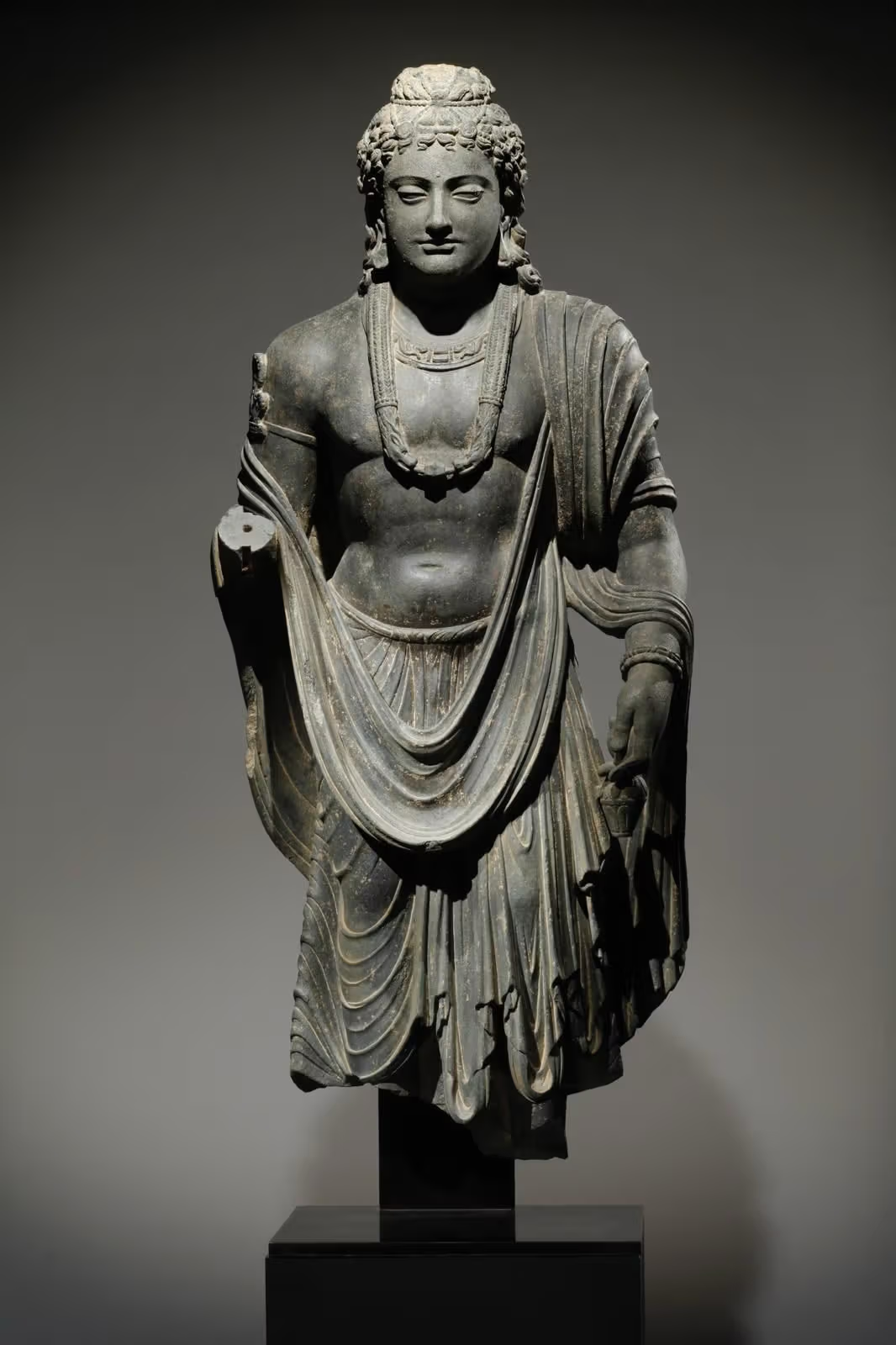
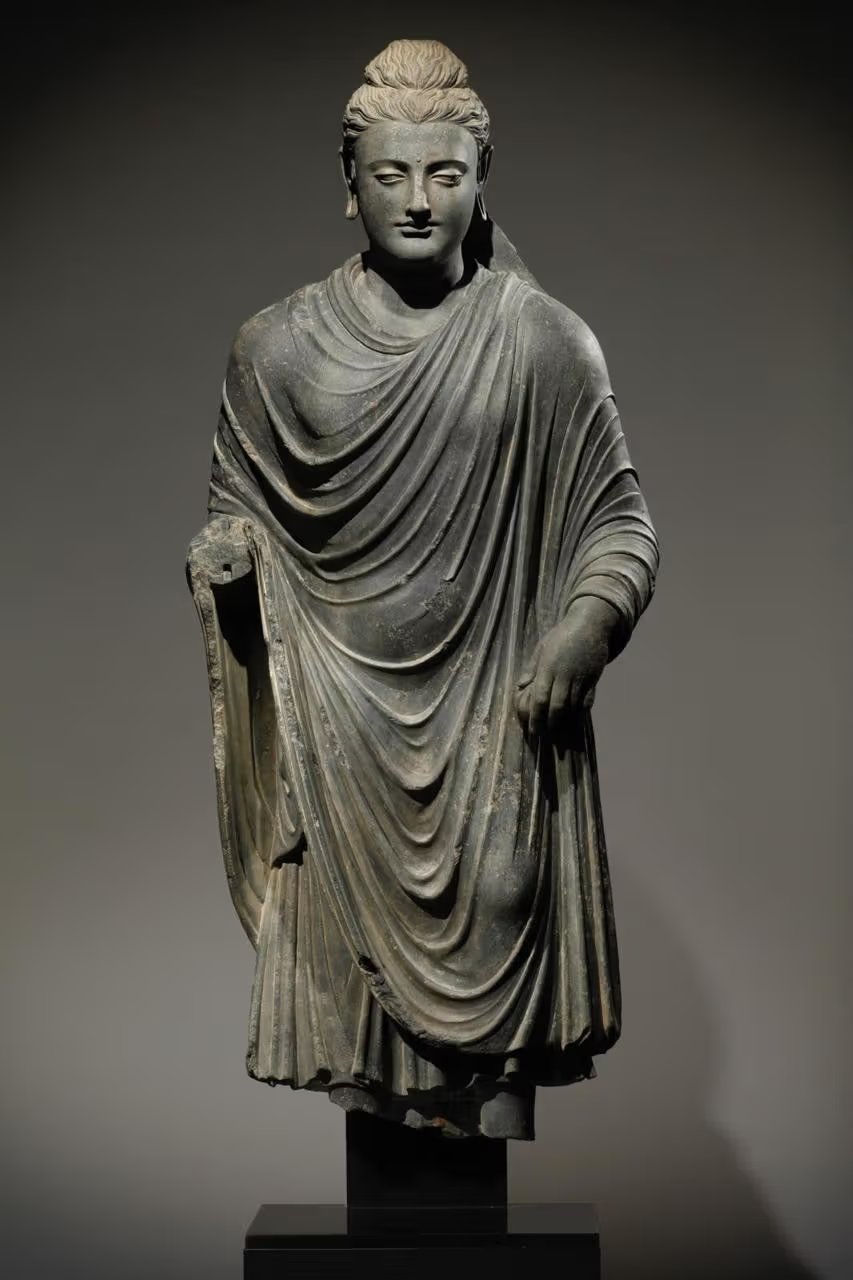
Two grey-schist works dated to approximately the second–third century CE offer a direct comparison. Standing Buddha wraps the body in descending layers of drapery, with its weight organised along a vertical outline. Bodhisattva Maitreya Holding A Flask creates a different surface rhythm between torso, necklaces and robe. The gallery situates the latter within Gandharan art, pointing towards the encounter between Graeco-Roman formal elements and Buddhist imagery. Compare whether fabric becomes deep grooves or shallow lines, and which parts are made smoother.
Descending folds form the standing outline of Standing Buddha.
This way of looking also connects with present-day design. Carved folds are not soft fabric: shadows communicate weight and direction. Jewellery is not wearable metal either, but raised lines convey identity and layering. Moving from “what ornament is used?” to “how does the material make ornament visible?” helps make sense of the carved surface. Existing breaks and wear belong in that viewing process alongside the surviving forms, without mentally restoring every missing part.
How stone relief and painted cloth organise figures
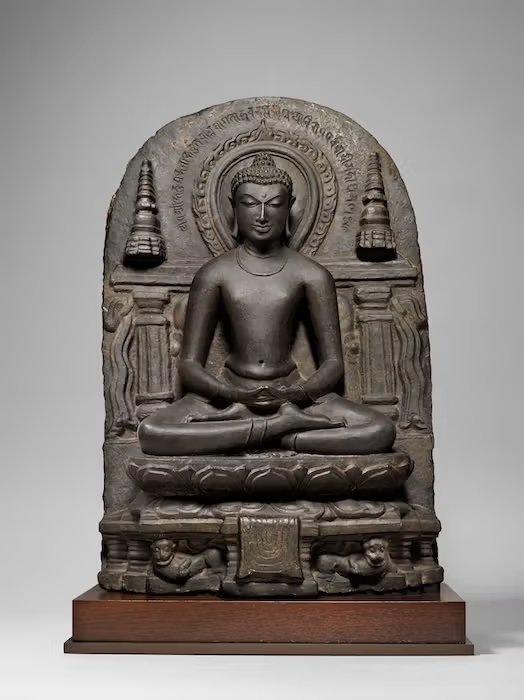
Sakyamuni Buddha’s Enlightenment is a grey-stone work from eastern India’s Bihar region, dated to the late tenth–eleventh century under the Pala dynasty, and measuring 48.9cm high. Its central seated figure, lotus base, architectural elements at either side and arched upper section divide the stone into layered spaces. Unlike a standing figure, it relies on framing, a halo and a base as well as bodily outline to establish a centre. Even at a relatively small scale, details guide the eye between different parts.
Sakyamuni Buddha’s Enlightenment layers a seated central figure within an arched framework.
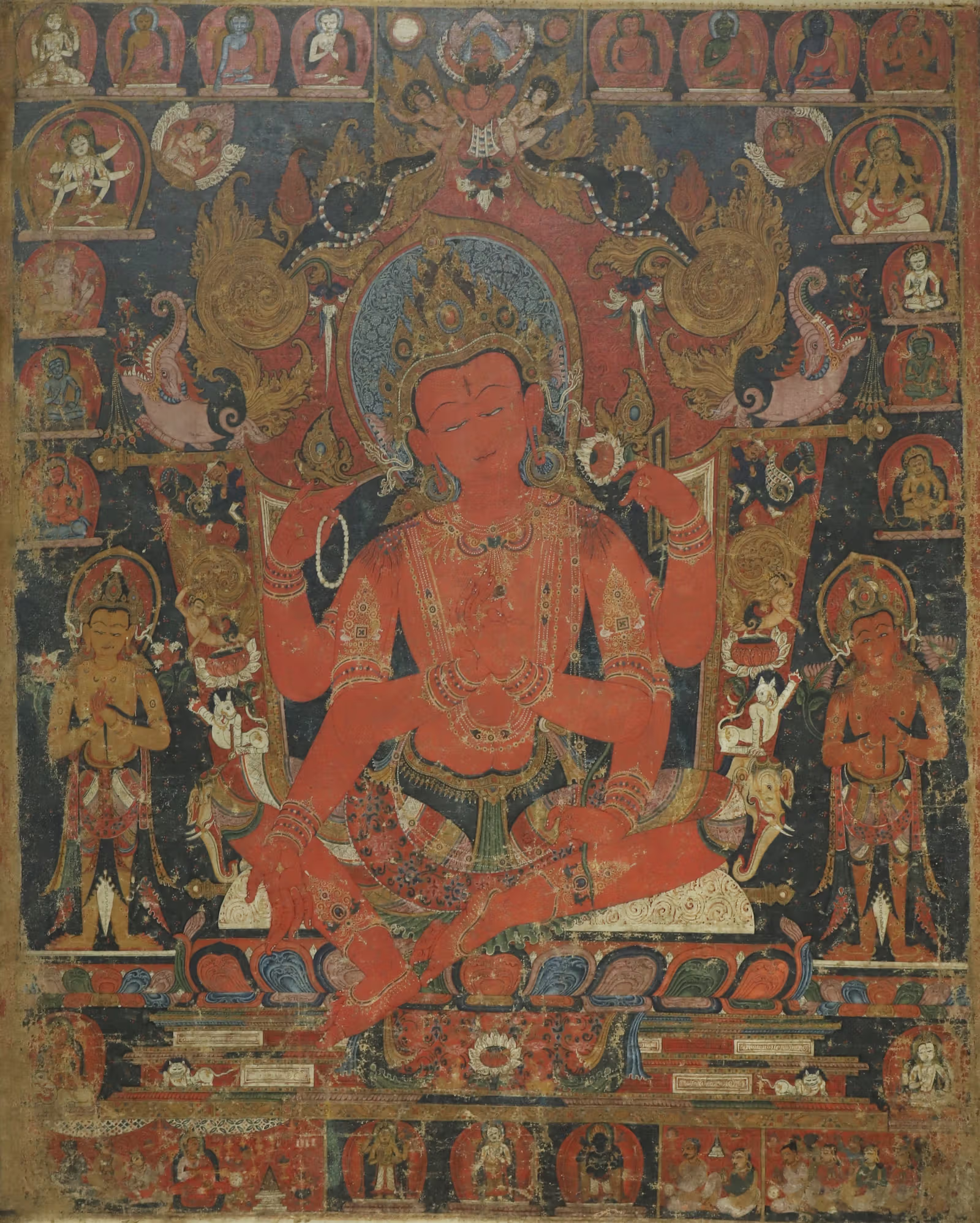
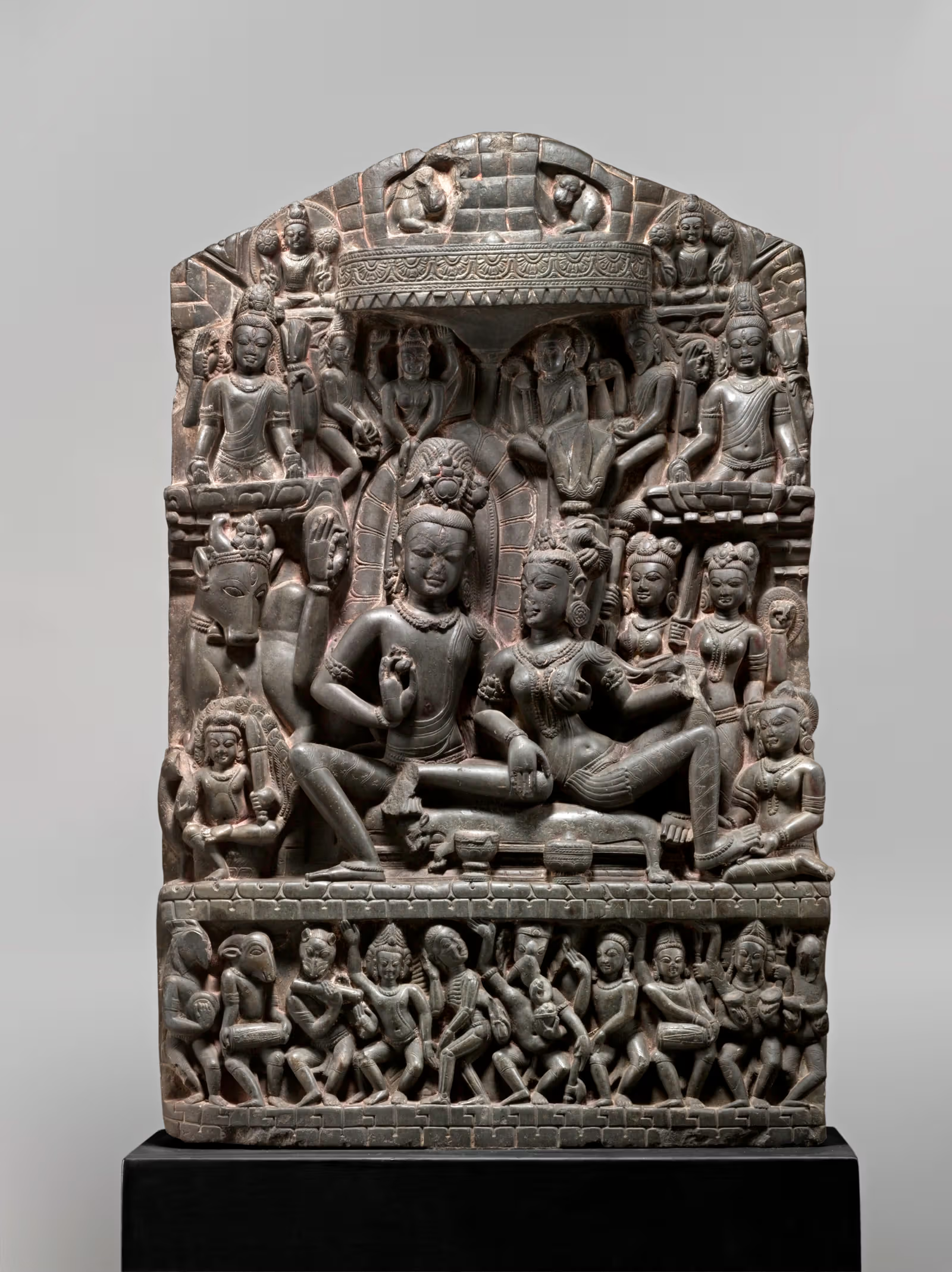
The two-dimensional works include the fourteenth-century Bodhisattva Avalokiteshvara, in distemper on cloth, measuring 69.5 × 55cm. The red central figure and smaller surrounding images establish clear differences of scale, with jewellery and throne ornament unfolding against a dark ground. The tenth-century Nepalese stone sculpture Umamaheshvara introduces a different subject: the whole exhibition should not be grouped as one type of Buddhist image. Its main figures, smaller surrounding figures and lower horizontal register offer a way to compare how a group is compressed into a single stone surface.
The fourteenth-century Bodhisattva Avalokiteshvara places a red central figure among smaller images on cloth.Tenth-century Nepalese Umamaheshvara arranges layers of smaller figures around its principal subjects.
A new Wong Chuk Hang space and ways to look
Visitors more familiar with contemporary painting can approach the exhibition as an exercise in reading surfaces. Begin with the complete object, then choose one element—drapery, halo or border—to compare across works. Sculpture uses light to articulate relief; painting on cloth uses outlines, colour and figure size to organise depth. Their methods differ, but both address how to hold attention and organise many details into a legible whole.
The gallery is at 11/F, M Place, 54 Wong Chuk Hang Road, Hong Kong, with this exhibition also extending to the 12th floor. Regular hours are Tuesday to Saturday, 11am–6pm; telephone +852 2116 5282. Works and dates are on the Rossi & Rossi exhibition page. These images show classical objects rather than artworks newly made in 2026. Alongside contemporary-art stops in the Southern District, leave some time for the materials and lines of older imagery.