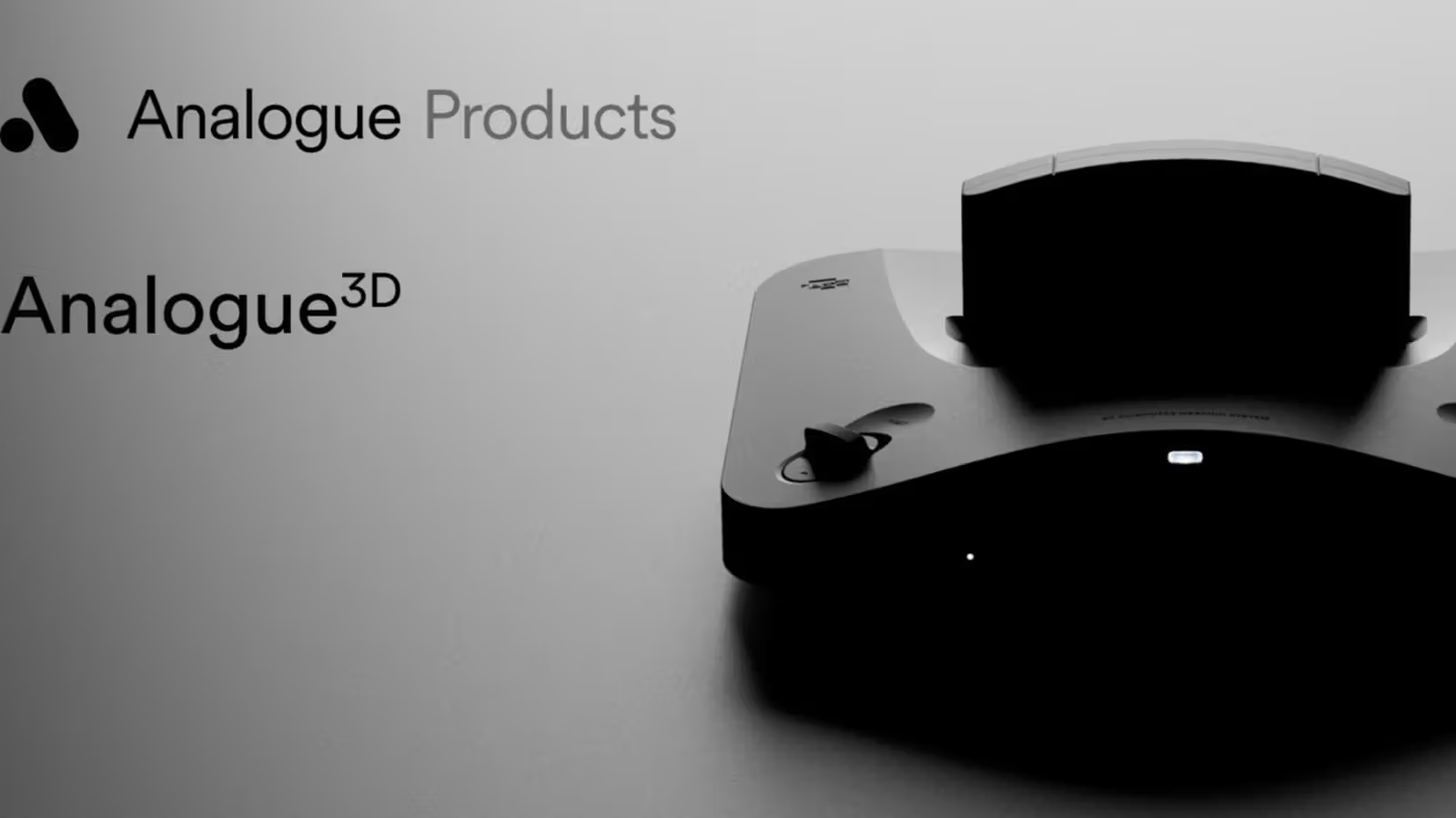
Does the Analogue 3D Really Turn N64 Games Into 4K? Breaking Down How This Retro Console Actually Works
The Analogue 3D's HDMI output does hit 3,840 x 2,160, but most original N64 games only ran at 320 x 240. What this $250 FPGA console actually does is something else entirely.
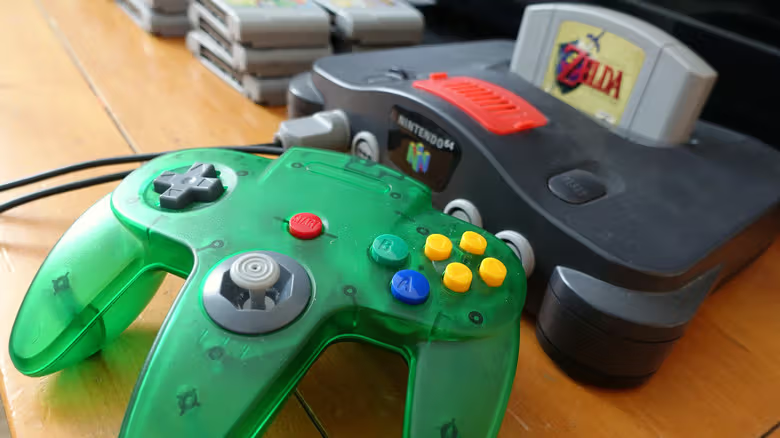
Let's get one thing straight first: the "4K" in Analogue 3D refers to the output signal, not the game content itself. The console's HDMI signal can run at 3,840 x 2,160 pixels on a compatible TV, but back in the day, most Nintendo 64 games only rendered at resolutions like 320 x 240 — a handful of titles that reached 640 x 480 were already considered high-end. In other words, the Analogue 3D isn't going to conjure up finer textures, geometry, or animations out of thin air. Whatever couldn't fit on a cartridge in the mid-90s isn't going to magically appear now.
What it actually does is process the image before sending it to the TV. The Analogue 3D can strip away the blur filter baked into the original N64 system, preserve 32-bit color, adjust texture filtering and anti-aliasing, and even double the horizontal resolution — all before outputting through 4K HDMI. This works along the same lines as the upscaling smart TVs have been doing for years, except the Analogue 3D intervenes right at the source, rather than having the TV stretch an already-degraded analog signal after the fact.
Scanlines and that phosphor glow, recreated on a 65-inch 4K panel
If what you're nostalgic for is the scanlines and phosphor glow of an old CRT TV, the Analogue 3D's built-in Original Display Modes can simulate that vibe on a modern big screen — though this feature only activates on 4K displays, and Analogue officially recommends pairing it with a 4K TV for the best results. The console also supports variable refresh rates, NTSC and PAL cartridges, and offers a 1080p output option as a fallback beyond 4K. The blurry picture, heavy color banding, or weird signal processing you get from hooking up an original N64 to a modern TV via an adapter — that's exactly the problem this console was built to solve.
At its core is an FPGA — a programmable chip that Analogue has configured to recreate how the N64 originally worked, rather than relying on traditional software emulation. This is also how it manages to operate without touching Nintendo's trademarks. The company says the console is compatible with all original N64 games, but the official hardware doesn't support reading ROM files — it only accepts physical cartridges. The unit comes with four controller ports, supports original accessories, and offers both Bluetooth and USB controller connectivity, with no region locking.
It's priced at $250. For anyone who's held onto a stash of N64 cartridges and wants to revisit them on a 4K TV, this console's purpose is clear: it's not a remaster, and it won't turn Super Mario 64 into a different game. Instead, it takes the experience from that era and carries it over to today's screens intact — just with a cleaner, more stable signal and a lot less noise.