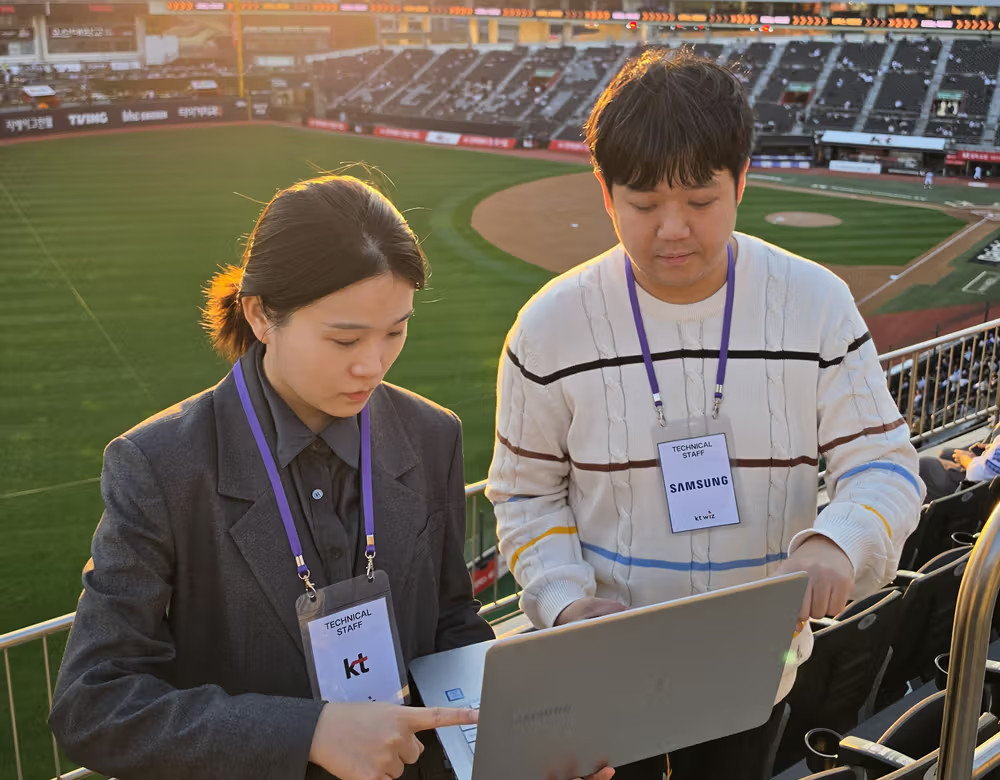
Samsung and KT have brought AI to the baseball stadium, working on the 5G connections behind the stands. On November 2, the companies announced that they had validated AI and digital-twin technology on a commercial network at KT Wiz Park in Suwon, Gyeonggi Province, South Korea. AI proposes base-station settings, tests take place in a virtual environment, and the selected plan is applied to the real network. The approximately three-month trial began in July and focused on shifting communications demand as spectators arrived, watched videos and shared social posts.
Connection hotspots move with the crowd
Data demand at a baseball game has no fixed distribution. Crowds move before and after the game, while video viewing and social sharing can occur within the same stand during play. For a mobile network, the question includes whether nearby base stations can share suddenly concentrated traffic. Testing at an actual stadium puts those changing demands into the optimization process.
Previously, specialists analyzed field data and adjusted base-station settings directly, checking the result after applying them. Samsung and KT move preliminary testing into a digital twin to respond to a frequently changing environment. AI continuously analyzes commercial-network data, identifies interactions between base stations and proposes candidates including adjustments to antenna-beam direction and width.
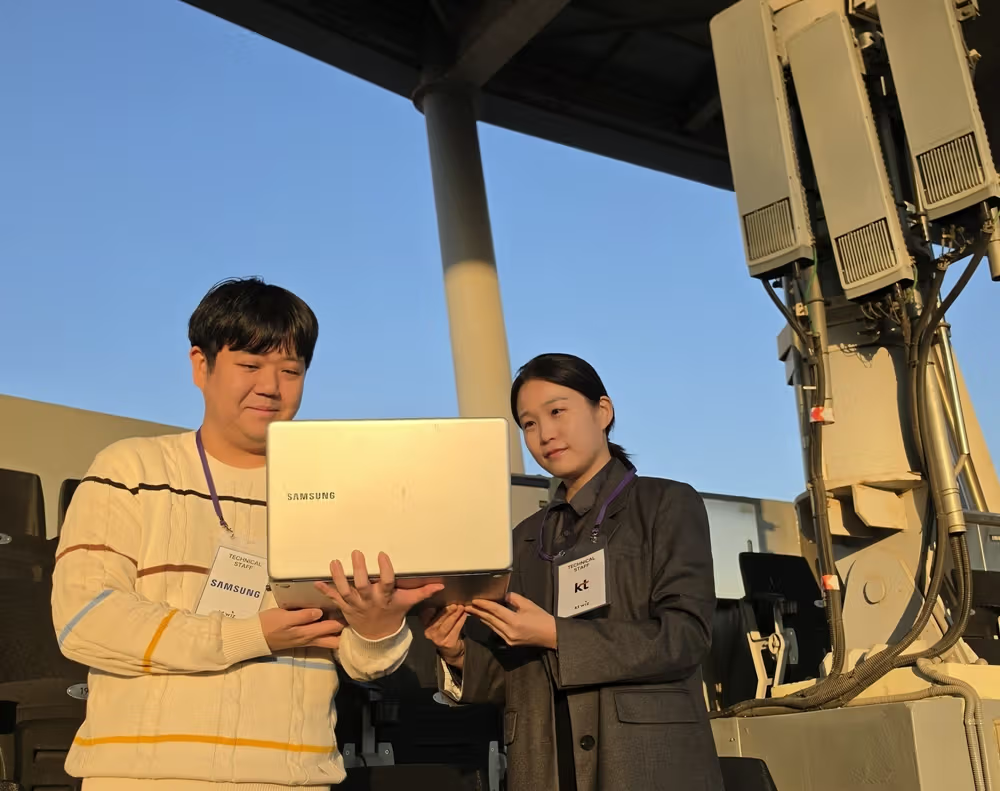
Technical staff check the system beside stadium antenna equipment.
Test virtually before applying settings to the real network
Here, a digital twin serves as a test environment for predicting each base station’s performance after a configuration change. Samsung builds real terrain and building structures into a three-dimensional space, alongside user distribution and movement, radio propagation, traffic characteristics, and the operating behavior of base stations and devices. Candidate settings can then be compared before deployment.
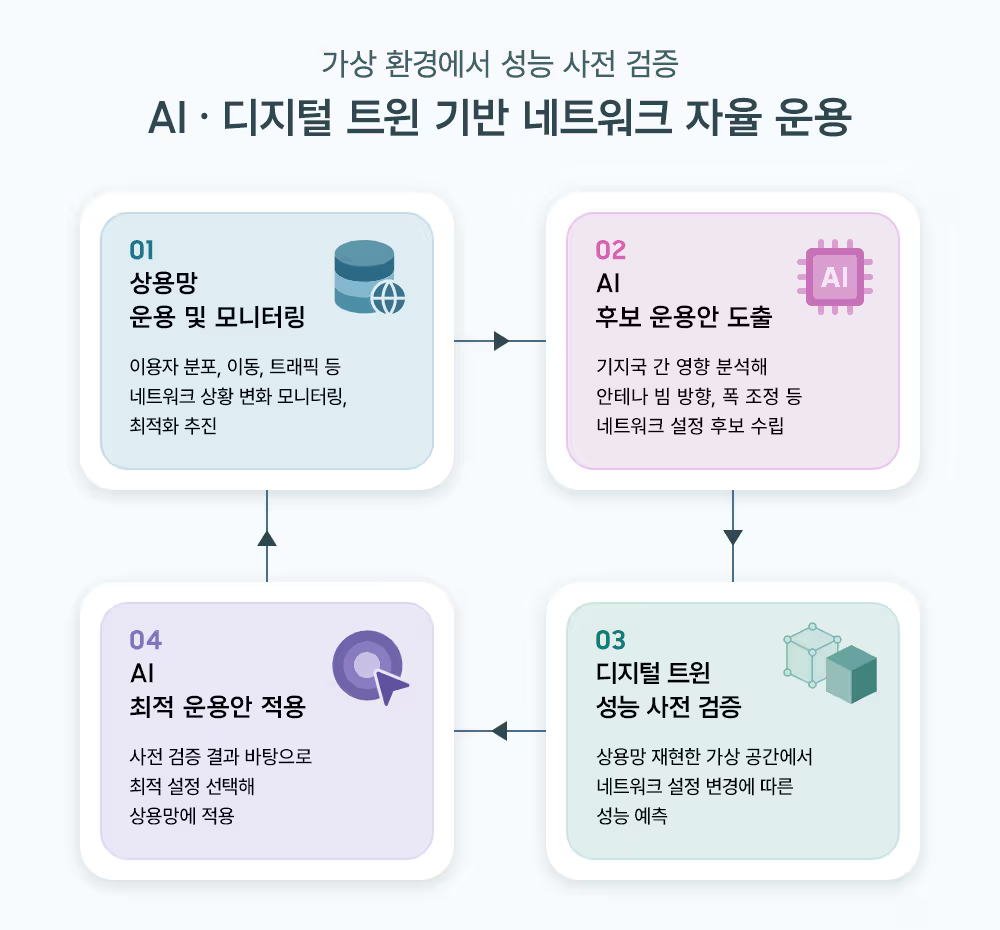
Monitoring, candidate generation, preliminary validation and application form a cycle. AI identifies possible adjustments; the digital twin compares their predicted results; AI selects a plan based on that validation and applies it to the commercial network. For spectators, the underlying technical goal is a more even distribution of traffic across neighboring base stations and more efficient use of existing network resources.
Official diagram of monitoring, AI candidates, digital-twin validation and application.
What do 34% and 16% measure?
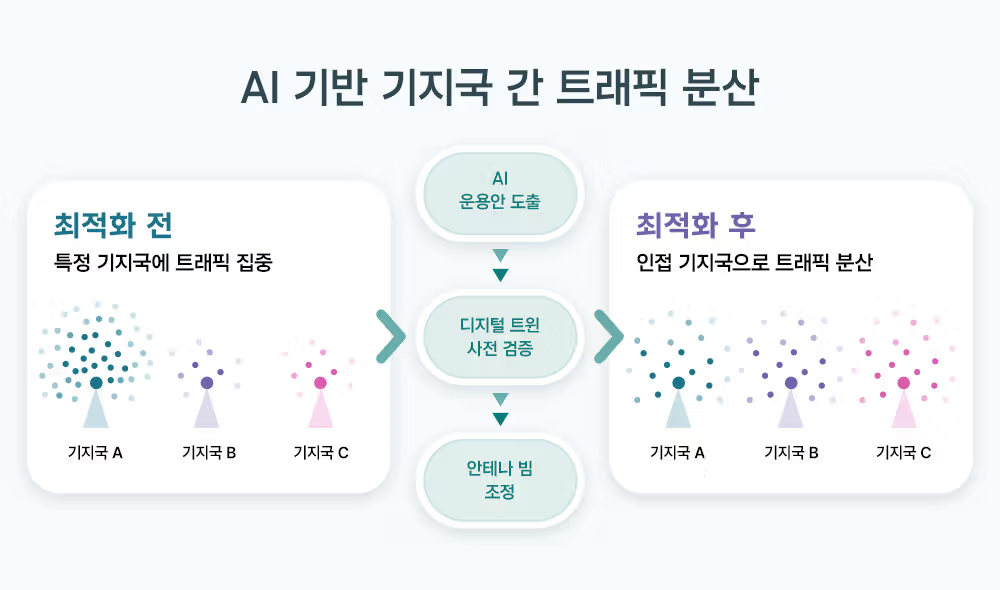
The companies report that the trial reduced the communications-load deviation reflecting imbalance between base stations by up to 34%, and the load concentrated on a particular base station by up to 16%. These figures describe load distribution and concentration, rather than percentage increases in phone download speed. They also say the digital twin’s predictions closely matched performance observed on the commercial network.
Official schematic showing traffic redistribution among neighboring base stations.
The result currently concerns a stadium trial on a commercial 5G network. Samsung plans to work with operators and partners to extend digital-twin prevalidation to more operating environments, while continuing research toward autonomous networks in the 6G era. From uploading a clip in the stands to contacting friends after the game, the project illustrates AI moving beyond features inside a phone and into the infrastructure connecting it.