Athletes take the podium selfie: Samsung brings Victory Selfie to Dakar 2026 and phones into sports coverage
Samsung is bringing Victory Selfie to the Youth Olympic Games for the first time. Galaxy S26 Ultra complements broadcast cameras in skateboarding and taekwondo, with interactive experiences and mentoring in the Olympic Village.
After the competition, the athletes themselves can hold the camera for a podium selfie. On November 2, Samsung announced its Dakar 2026 Youth Olympic Games programming, bringing Victory Selfie to the Youth Olympics for the first time and incorporating Galaxy S26 Ultra into skateboarding and taekwondo coverage. The Games opened in Senegal on October 31 and run through November 13. For fans of sports imagery and phone photography, the interesting question is how a phone fits into three different settings: the podium, live production and the athletes’ village.
A podium selfie makes its Youth Olympics debut
According to the IOC, Dakar 2026 is the first Olympic sporting event held on the African continent, with approximately 2,700 young athletes across 25 competition sports. Activities take place in Dakar, Diamniadio and Saly, and the Youth Olympic Village is in Diamniadio. That setting makes interaction outside the camera frame part of the occasion too: young athletes from different countries share both competitive results and memories of their first major international sporting stage.
Victory Selfie lets medallists use a Galaxy smartphone to take a selfie on the podium, recording the moment with fellow athletes. It extends a program introduced at Paris 2024 and makes its Youth Olympic Games debut here. Compared with a spectator’s view from the stands, an athlete-held camera offers closer framing and expressions between competitors. The purpose is to preserve celebration, rather than introduce a separate photography contest or announce a new retail phone model.
Phones add perspectives, while the village adds experiences
For sports production, Samsung says Galaxy S26 Ultra will work alongside existing broadcast cameras in skateboarding and taekwondo, adding handheld, close-up and vertical perspectives. Phones supplement an established workflow instead of replacing the whole production system. Viewers can watch how different distances reveal an action, while actual picture quality and use in individual sessions should be judged from the coverage itself.
Samsung Open Station inside the village extends the experience beyond competition. Victory Wall uses Galaxy devices and AI to create personalized Olympic-themed photos or posters. Victory Talk records athletes’ Dakar experiences and future ambitions in short-form videos, while Victory Photo Zone recreates a podium setting for commemorative pictures. Social lounge space and device tips give competitors another way to meet between training and events.
Recording growth beyond the competition
The BEYOND THE MEDAL mentoring activity brings Olympians and IOC Athlete Role Models together with young competitors to discuss growth outside competition. Samsung positions these programs as athlete-centered experiences rather than only product displays. Open Station is inside the village and differs from consumer activities aimed at local communities. Visitors interested in public events should consult local organizers and Samsung’s venue and admission announcements separately.
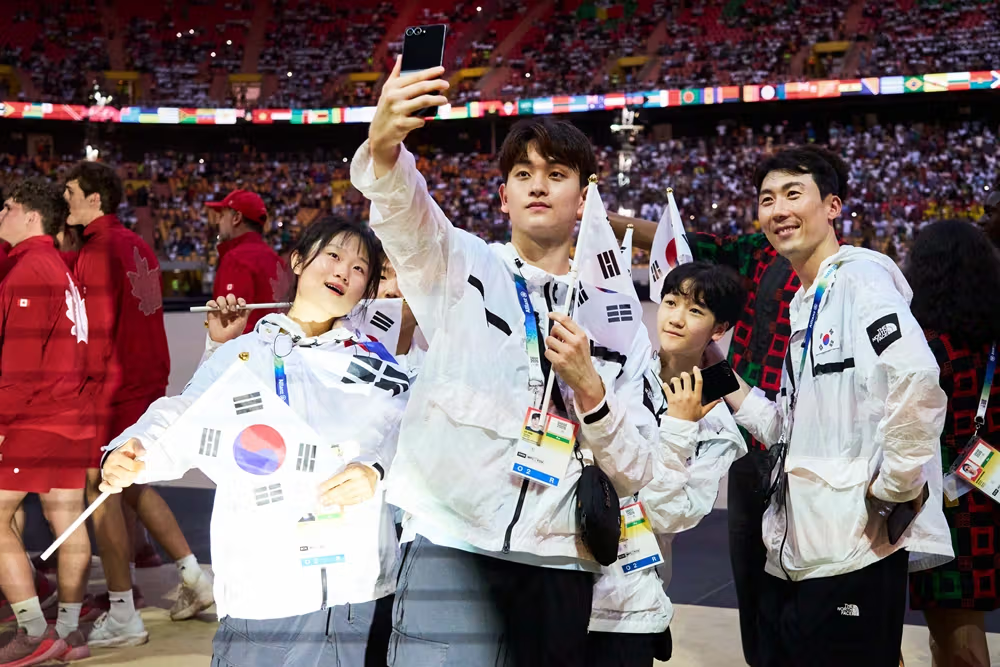
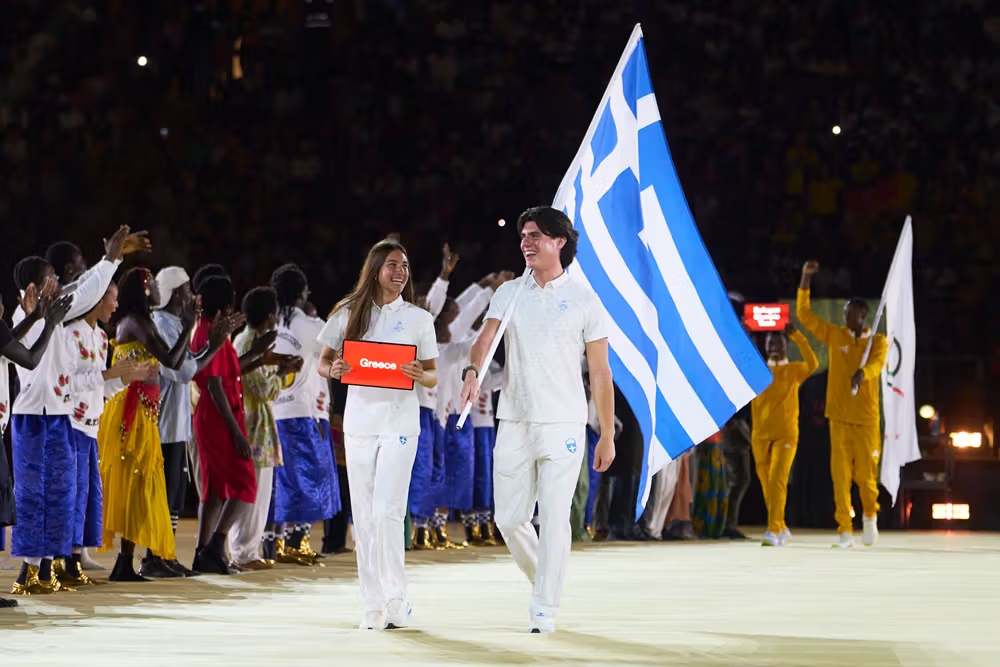
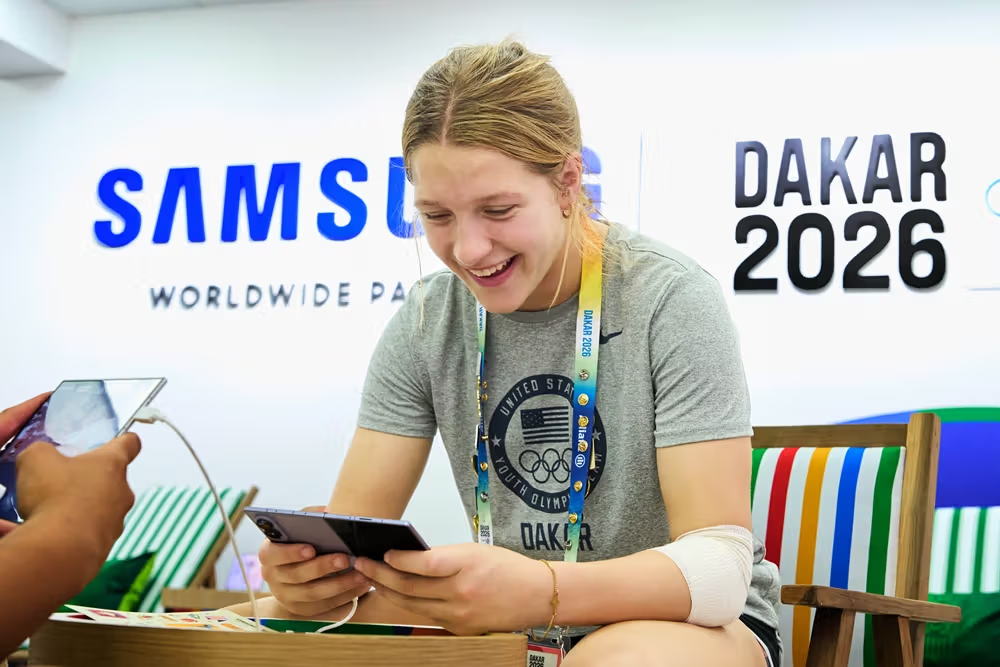
Official photographs already show several settings: Team Greece entering the Opening Ceremony with a Galaxy Tab S10 Ultra displaying its country name, Team Korea recording the occasion with Galaxy Z Flip8, and a USA women’s rugby player trying an interactive mobile game. These are supplied event images, not our on-site testing. From the teams’ arrival to post-competition selfies, Dakar provides another setting for observing how phone technology preserves athletes’ own memories alongside the sporting action.
Team Greece enters the Opening Ceremony holding Galaxy Tab S10 Ultra displaying Greece.USA women’s rugby player Chloe Gandy tries an interactive mobile game at Samsung Open Station.