Beyond speed, managing the whole race: Derek Bell at 85 and his Porsche endurance years
Derek Bell turned 85 on October 31. Four of his five overall Le Mans victories came with Porsche, and his career from the 917 LH to the 956 and 962 reflects endurance racing’s balance of pace, fuel, machinery and teamwork.
In a 24-hour endurance race, speed is only the beginning; carrying it through to the finish is the harder task. British driver Derek Bell turned 85 on October 31, 2026, and Porsche marked the occasion with a career retrospective: five overall Le Mans victories, four in Porsches, plus world endurance titles in 1985 and 1986. The record invites a look beyond trophies at how a driver sustains judgment between pace, machinery and team-mates over many hours.
From club racing to the long-tail 917
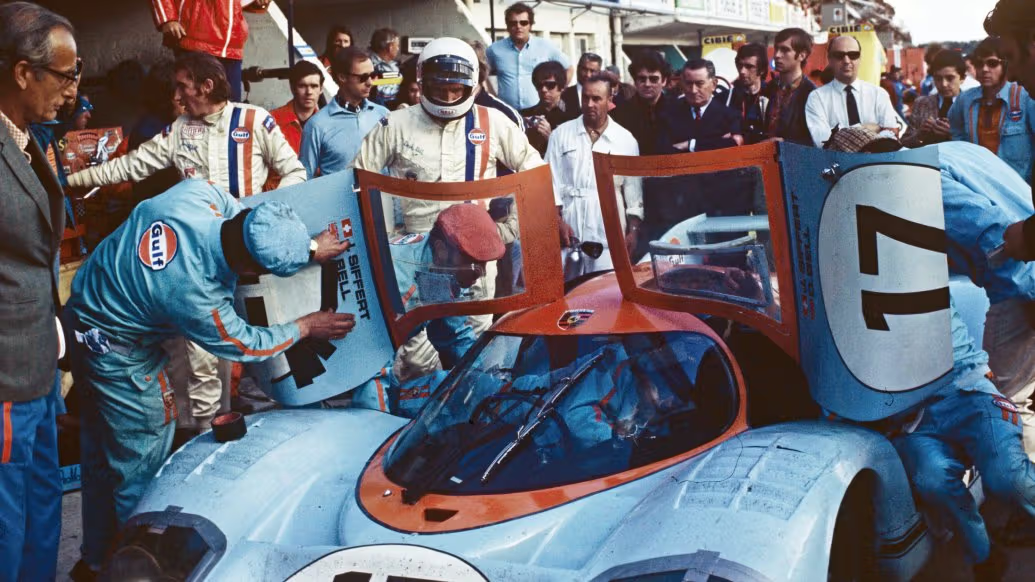
Born on October 31, 1941, in Pinner near London, Bell progressed from British club racing to Formula 3 and then Formula 2. His Porsche connection developed in early-1970s endurance racing, including the 1971 Le Mans 24 Hours in a 917 LH. The long-tail prototype was designed for speed on La Sarthe’s long straights, and became an important early chapter in a relationship spanning decades.
Porsche’s retrospective emphasizes consistency, calm and mechanical understanding rather than attacking at every corner. An endurance cockpit is more than a place to press the accelerator. During prolonged high-speed running, the driver observes the car, works with strategy and tells the team what the machinery is doing. Much of that unseen work reveals its value only after the race has continued for many hours.
The 956 and 962: pace must serve the distance
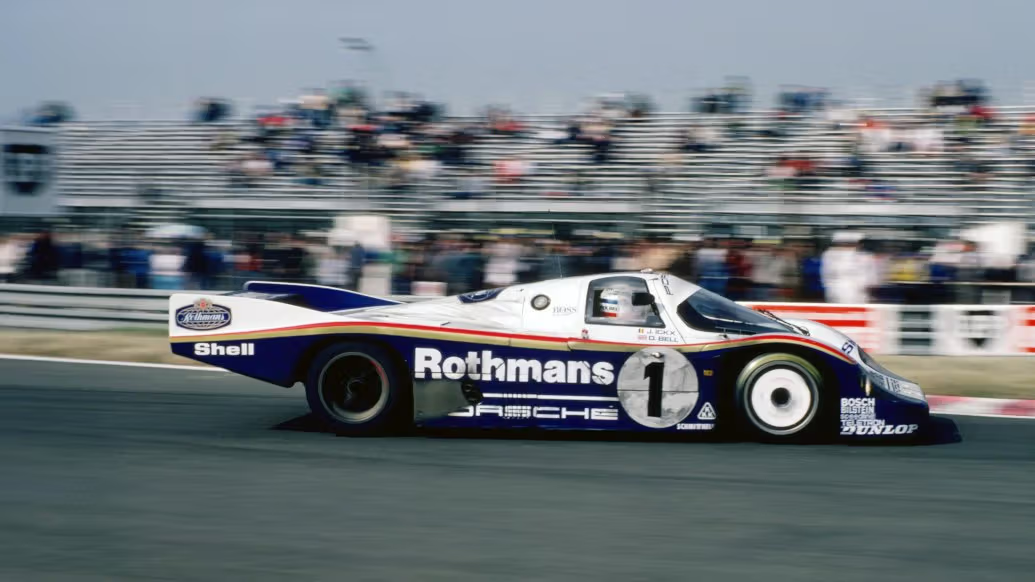
The 1980s Group C era was central to Bell’s Porsche years. The 956 and later 962 put aerodynamics, efficiency and stability into one competitive problem. Ground effect and turbocharging raised cornering speeds, while the regulations also required attention to fuel consumption. Drivers balanced lap speed with range rather than pursuing one fastest lap in isolation. Bell’s sustained partnerships with drivers such as Jacky Ickx also underline endurance racing’s shared-cockpit character.
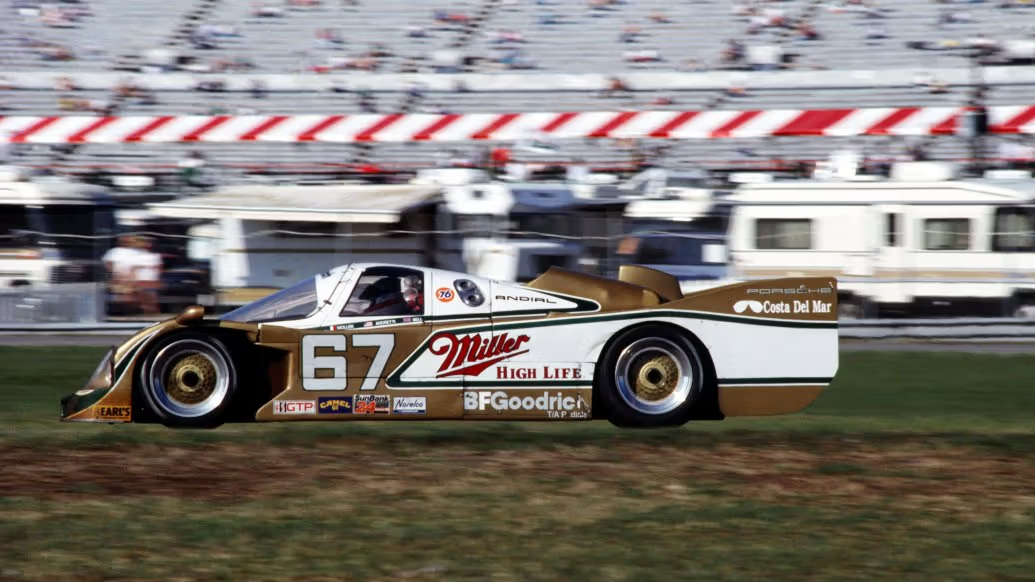
His four Porsche overall Le Mans wins came in the 936 in 1981, the 956 in 1982, and the 962 in 1986 and 1987. All five career victories should therefore not be attributed to Porsche. Across the Atlantic, Bell won Daytona’s 24-hour race in a 962 in 1986, 1987 and 1989. Success across different seasons and circuits illustrates an ability to deliver repeatedly over long distances.
Number 67 Porsche 962 IMSA at Daytona in 1989, with Derek Bell, Bob Wollek and John Andretti in the driver lineup.
Father and son add another memory
One chapter carries a family dimension. At Le Mans in 1992, Derek shared a Porsche 962 C with his son Justin Bell and Tiff Needell, finishing twelfth. It was not another entry in his victory list, but Porsche’s account preserves it as a meaningful collaboration. For those who have grown up watching motorsport, father and son sharing a team’s cockpit adds a connection across time beyond machinery and results.
The Porsche 917 LH at Le Mans in 1971; the official caption identifies the helmeted driver as Derek Bell.The number 1 Porsche 956 of Derek Bell and Jacky Ickx at Le Mans in 1983, not the 1982 victory.
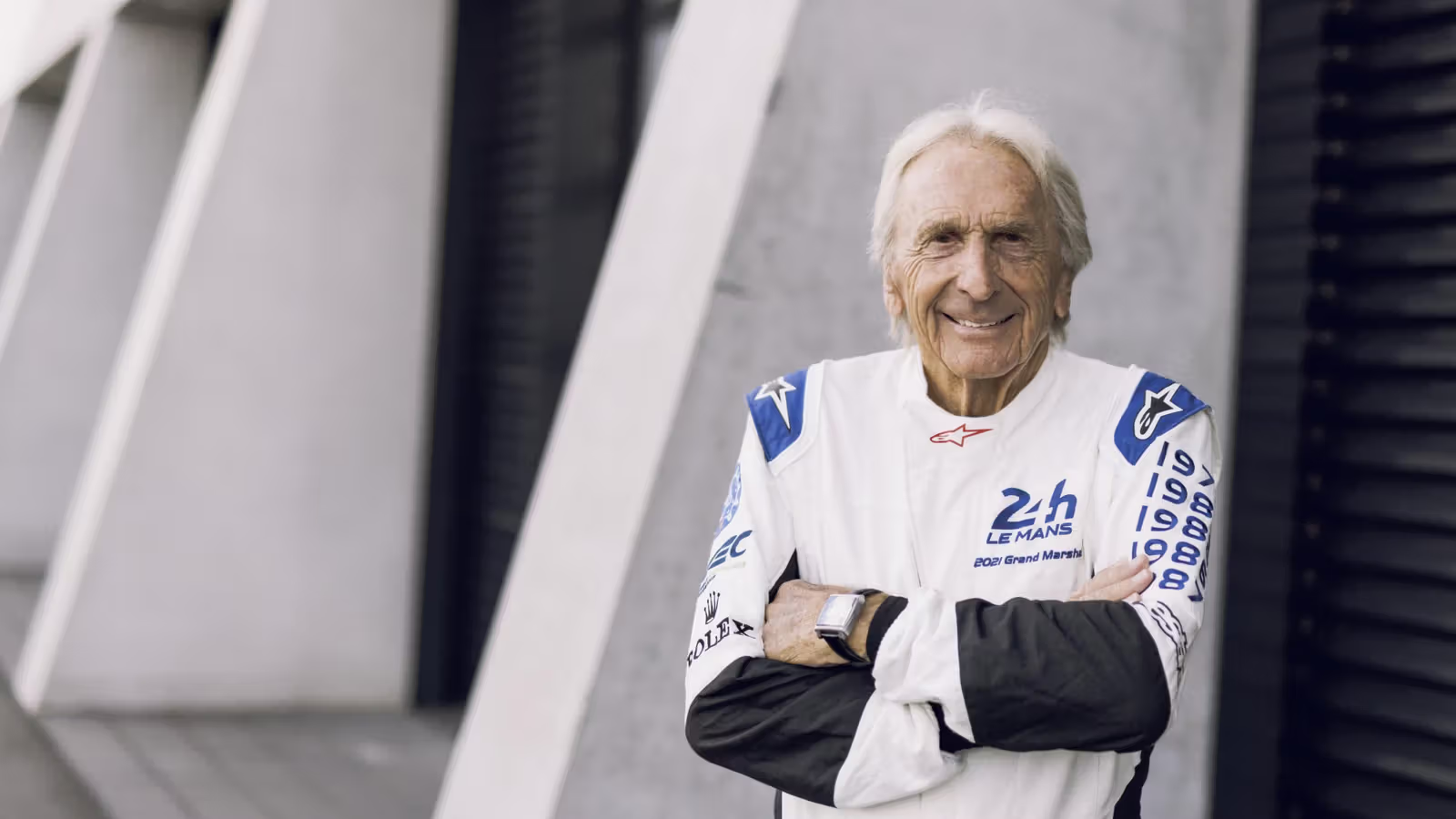
After retiring from active competition, Bell continued sharing experience at historic events, interviews and presentations. The images selected for this retrospective span a 2022 Leipzig portrait, the 1971 917 LH, the 1983 956 and the 962 IMSA at Daytona in 1989; they are historical photographs. His 85th-birthday milestone offers a view of endurance racing’s enduring appeal: a driver must be quick, understand the car, trust team-mates and place each decision within the distance of the whole race.