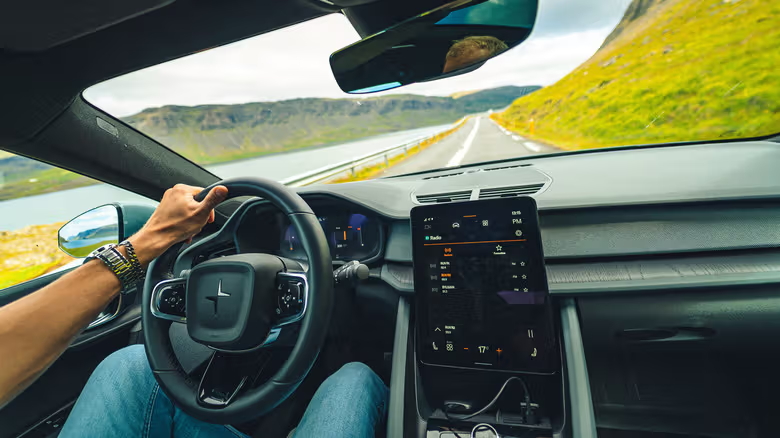
The names look like twins, but the lineage couldn't be more different. Android Auto and Android Automotive OS get mixed up all the time, but once you break it down, the difference really comes down to one thing: whether your phone is involved at all.
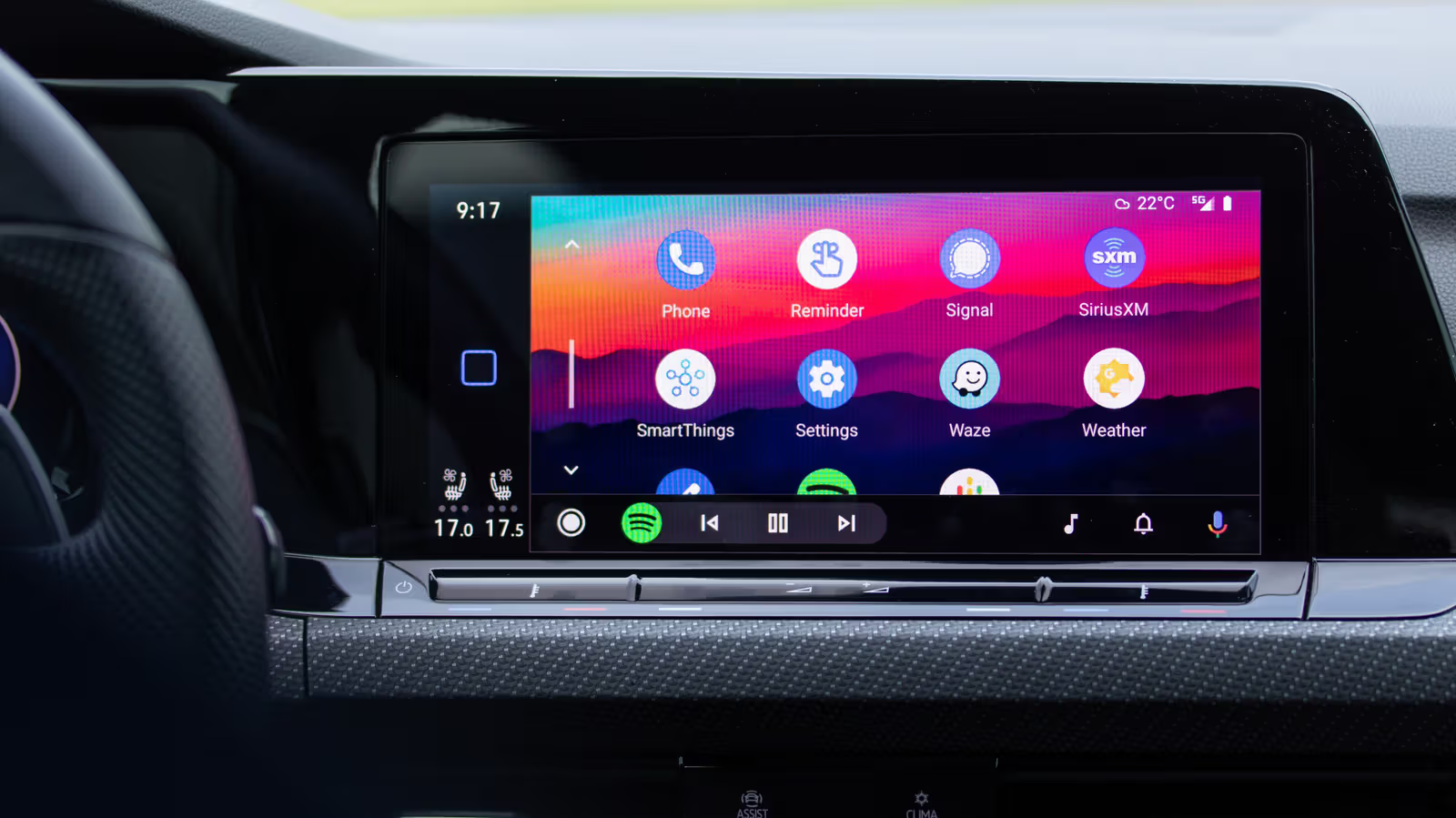
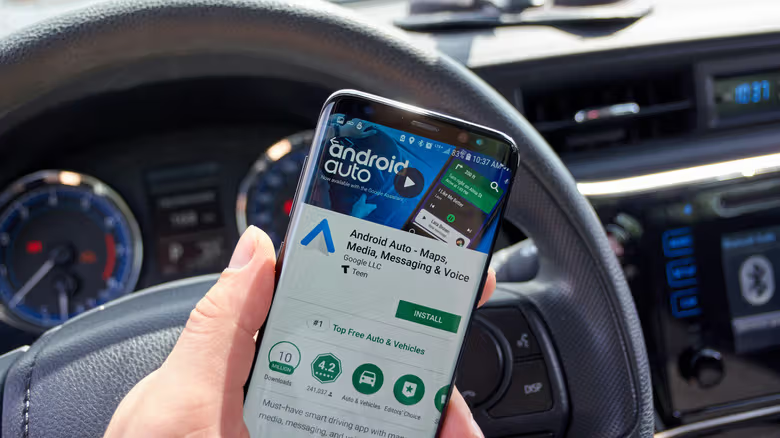
Android Auto is the one most people already know. It relies on an Android phone to do the processing, then projects a driving-friendly interface—navigation, music, messaging, and supported apps—onto a compatible car screen, connected via USB or wirelessly depending on your phone and vehicle. This is Google's answer to Apple CarPlay, and the logic is nearly identical: the phone is the brain, the dashboard is just a bigger, less distracting place to look at it. It doesn't replace whatever system is already built into the car—it just mirrors your phone's interface so you can use Google Maps, Spotify, or messaging apps without looking down at your phone. Switch to a compatible car and your accounts, preferences, and apps come right along with you, no matter what OS or proprietary software the car itself is running. If the automaker supports it, apps running on Android Auto can also pull certain vehicle data, like battery level or estimated range.
Apple CarPlay works on a similar concept, and even CarPlay Ultra—which extends across more screens and can control certain vehicle functions—still can't function without an iPhone.