Your Phone Isn't Secretly Listening to You—But What It Collects Could Get You Prosecuted
TIDEZINE editors break down how app tracking really works: from device identifiers and sensors to your typing rhythm, every signal you give up builds a profile—one that law enforcement has already used to secure convictions.
Your phone isn't listening to your conversations. This claim is so hard to kill because the only alternative explanation sounds even more absurd—that your phone is reading your mind. But as TIDEZINE editors point out in this piece, mind-reading is actually closer to the truth: how fast you scroll through this article, whether you're on Wi-Fi or cellular data right now, whether you clicked through from a Google search or a friend's share—these nonverbal signals piece together a profile more precise than any eavesdropping could ever be.
The question isn't "is the app listening to you talk"—it's where the data actually goes the moment you grant that permission.
Device Identifiers: The $10 Billion Hit Meta Took
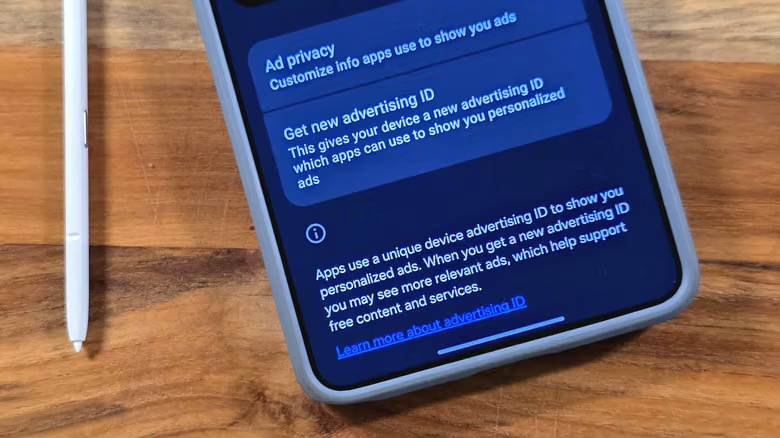
Every phone has a unique identifier that lets advertisers link your behavior across different apps. Android defaults to allowing this tracking, while iOS requires apps to ask permission before accessing this ID through its App Tracking Transparency (ATT) framework. In 2022, Meta publicly admitted it lost $10 billion after Apple rolled out the ATT pop-up, letting users opt out of tracking with a single tap—and most iPhone users did exactly that.
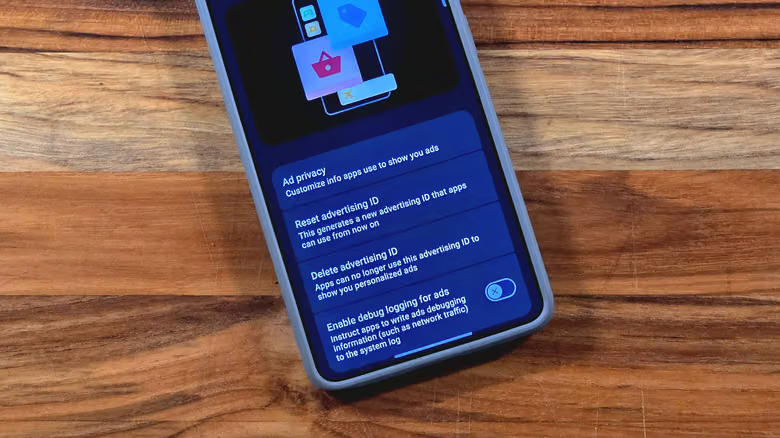
Turning off this tracking isn't hard. Android users can go to the Google section in Settings, tap "Ads," and delete their advertising ID—a one-time action, since the system won't automatically issue a new one. iOS doesn't let you delete the ID directly, but you can go to "Privacy & Security," find "Tracking," and disable "Allow Apps to Request to Track," then head to the "Apple Advertising" section to turn off personalized ads.
Location and Sensor Permissions: From Weather Apps to Abortion Rights Cases
Compared to device identifiers, sensor permissions—GPS, camera, microphone—are trickier, since many apps genuinely need them to function. Google Maps is nearly useless without location access, but Google's own policy documents openly state that this location data is used to "show more relevant ads." Instagram accesses your camera so you can shoot Stories, but it's also scanning those photos for objects, faces, and text—again, to serve more targeted ads.
TIDEZINE editors highlight a particularly sneaky scenario: some weather apps request location access, claiming it's needed to provide a forecast for your area—but their real revenue may come from selling that location data to data brokers. Once that data leaves the app, you have zero control over where it ends up. The article cites two real cases: a Mississippi woman was charged with murder after a stillbirth, based partly on her prior searches for abortion pills (the charge was later dropped); an Indiana woman, after a miscarriage, had text messages discussing the possibility of abortion used as evidence in a fetal murder case, ultimately resulting in a 20-year sentence. The article also notes that under Kash Patel's leadership, the FBI has been purchasing massive amounts of user data from commercial data brokers—and in 2024, someone was found buying location data on people who visited Planned Parenthood clinics, using it to target them with anti-abortion disinformation.
Location data doesn't only come from GPS, either. Nearby Wi-Fi networks, cell towers, and even Bluetooth devices can piece together your whereabouts just as effectively as GPS signals. In 2022, Meta settled a class-action lawsuit representing 70 million users—who alleged the app kept tracking their location even after they'd turned the permission off—for $37.5 million, without admitting any wrongdoing.
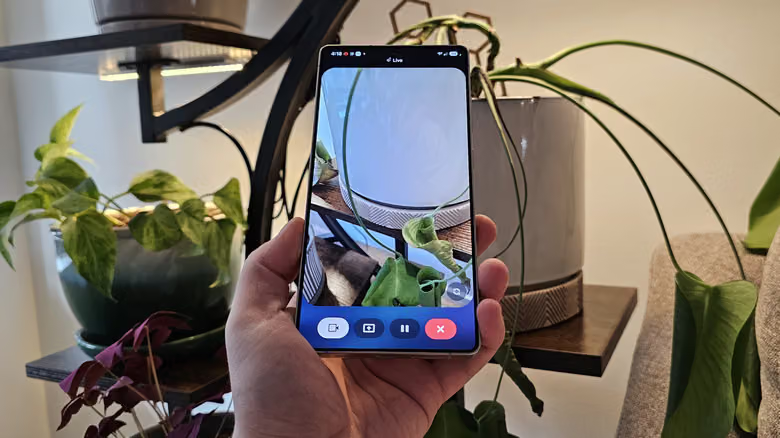
Your phone actually gives you a simple visual cue: on Android, a green dot appears in the status bar when the microphone or camera is active; on iOS, a green dot shows for camera use, while an orange dot indicates the microphone alone is in use.
Even Your Typing Rhythm Can Give Away Your Mood
Even harder to guard against is what's known as heuristic tracking. Your phone's accelerometer was originally designed just to detect which way you're holding the device, but research has found that the tiny calibration quirks unique to each accelerometer are enough to infer a user's demographics, behavior patterns, and even emotional state. Other studies have shown that accelerometer data alone can identify someone by the distinct way they walk with their phone in a pocket or bag. Add in device fingerprinting—the unique combination of your phone's hardware and software—and these signals can operate without requiring any permissions at all.
The TIDEZINE editor offers a personal example: while writing this very article in Google Docs, they noticed Google's privacy policy mentions collecting "performance data"—without specifying exactly what that means. Typing speed, hesitation before choosing a word, error frequency—all of these could theoretically reveal whether you're rushed or relaxed, frustrated or focused. And those clues might just determine what you see the next time you open an app or website.
To counter this kind of tracking, VPNs, private DNS with built-in blocklists, privacy-focused browsers, and ad blockers can all help—but none of them will make you completely invisible while using apps. The article's final advice is blunt: regularly review your app permissions, ask yourself "would my life actually get harder without this app," and delete anything you don't use. You never know which one is quietly collecting your data.