Tim Cook's Final Earnings Call: When Record Numbers Still Cost Apple $390 Billion
On the red carpet, they wore matching suits and matching "Believe" pins. On the earnings call, every number hit a record high. But Wall Street needed just 60 minutes to erase nearly $390 billion from Apple's market cap. This was Cook's curtain call — and the last report card before Ternus takes over.
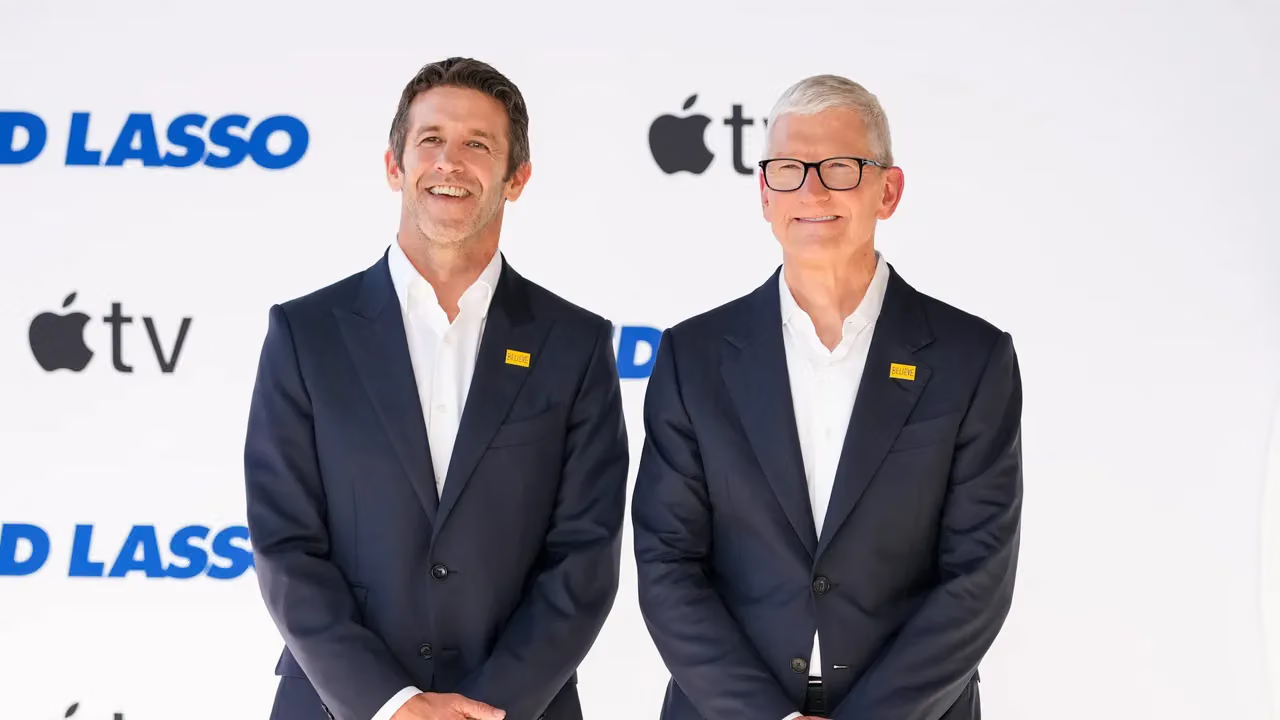
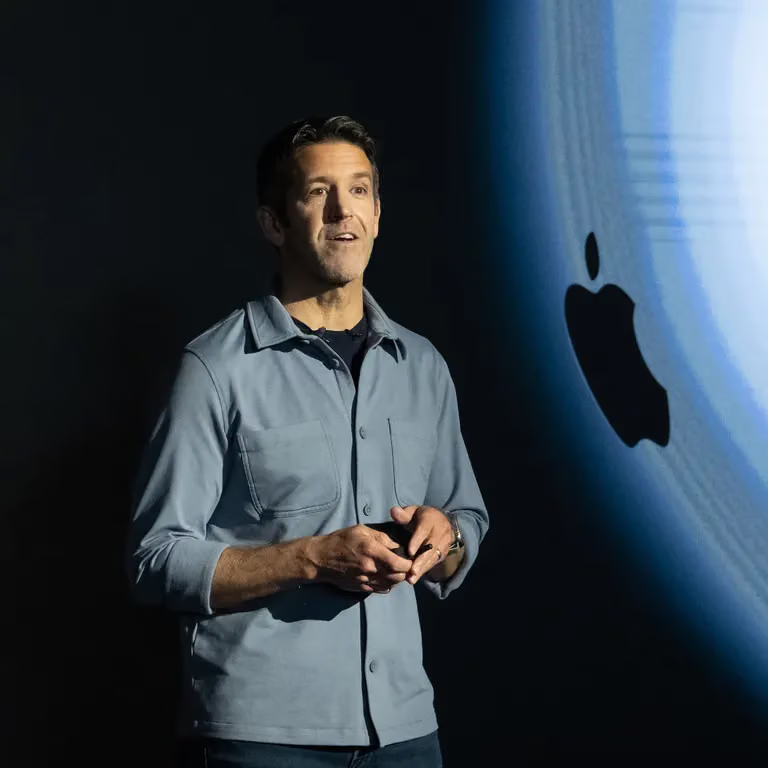
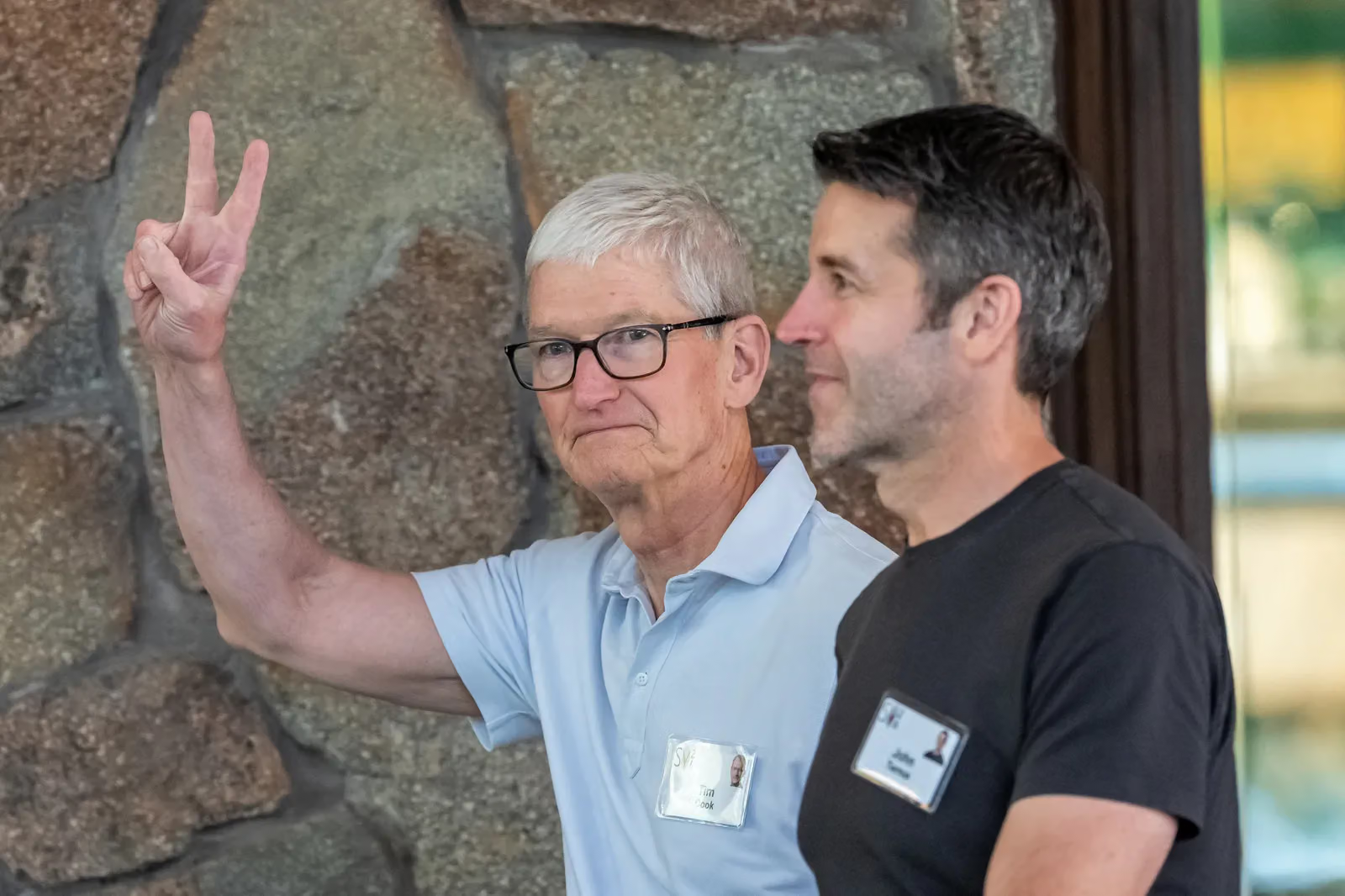
On the red carpet at the Academy Museum of Motion Pictures in Los Angeles, Tim Cook and John Ternus wore nearly identical navy suits, each with a matching "Believe" pin on the left lapel. In front of the cameras, Cook called Ternus "the perfect choice for this role." This picture-perfect pairing was, at its core, a carefully choreographed piece of PR theater, sending investors a clear signal: the leadership transition would be seamless, everything already in place. On September 1, Ternus officially takes over as CEO.
But just days earlier, Cook had dialed into his 90th — and final — earnings call. He delivered a report card with records across the board. Wall Street took just 60 minutes to wipe out nearly $390 billion in Apple's market value.
On paper, the quarter looked stellar: revenue of $109.4 billion, up 16% year-over-year; net profit of $29.789 billion, up roughly 27%; EPS of $2.02, up 29%. iPhone, Mac, and Services all posted record June-quarter highs. iPhone revenue hit $54.3 billion, up nearly 22%, a record for the traditionally slow season. Mac revenue reached $10.4 billion, up nearly 29%, driven by the MacBook Neo — Ternus's brainchild that stuffed an iPhone chip into a laptop shell. Services revenue came in at $30.7 billion, marking twelve straight quarters of double-digit growth.
Strip Away the Sugar Coating, and It's Just... Meeting Expectations
Shares dropped over 8% in after-hours trading — not because the market misread the numbers, but because it read them all too well. Gross margin for the quarter was 50.1%, of which roughly 2 percentage points came from U.S. government tariff refunds. Those same refunds contributed $0.11 to EPS. Strip out that one-time boost, and core gross margin sits around 48.1% — right in line with expectations, with no upside surprise. And there won't be another refund next quarter.
Services revenue of $30.7 billion came in nearly $500 million below Wall Street's $31.2 billion estimate. That gap is a rounding error against a company pulling in over $100 billion a quarter — but Services carries a 75.6% gross margin, generating over 40% of gross profit from less than 30% of revenue. It's the load-bearing pillar of Apple's entire valuation story. Any slowdown here forces a rewrite of the whole model. Greater China revenue landed at $18.8 billion, also below the $19.6 billion forecast. iPad revenue fell to $6.2 billion, down 6% year-over-year — a jarring result given price hikes across the board.
In short: the headline numbers screamed records, but a large chunk of the beat came from a one-time windfall, the Services engine lost momentum, and Apple's biggest overseas market underperformed — all while the company had just raised prices on most of its hardware lineup.
A "Once-in-a-Century Flood" and the 100 Days Before the Handoff
On the call, Cook revived the term "RAMageddon," describing the memory chip crisis as a once-in-a-century flood for Apple. Meta, Google, Microsoft, and Amazon have poured tens of billions into AI data centers, competing for the same HBM and DRAM chips that go into iPhones and Macs. When Apple's long-term procurement contracts — locked in through January 2026 — expired, the company was forced to buy at spot prices, and the cost bled straight into gross margin. In late June, Apple did something it almost never does: it raised prices mid-cycle across Mac, iPad, HomePod, Apple TV, and Vision Pro. Shares fell 6% that day, the steepest single-day drop since April 2025. The MacBook Neo, originally positioned to "change the laptop market" at a $599 starting price, now starts at $699.
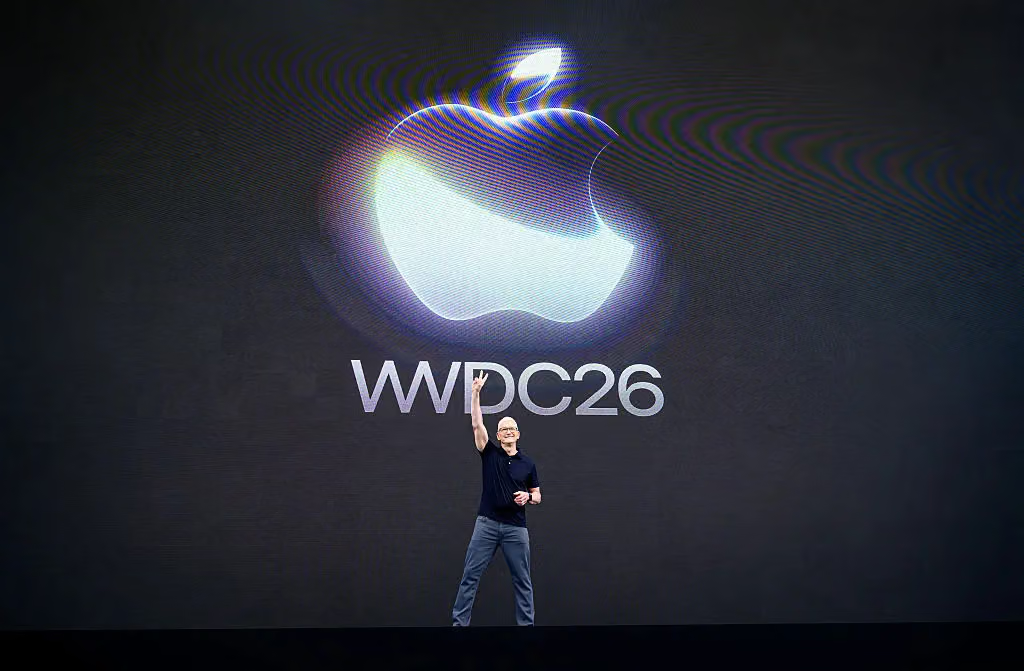
From the April 20 succession announcement to this final earnings call — roughly 100 days — Apple juggled multiple storylines at once. At WWDC 2026, it unveiled a completely rebuilt Siri powered by Google Gemini, the biggest overhaul of its voice assistant in fifteen years, though it won't launch on iPhone and iPad in the EU for now due to an unresolved compliance standoff over the DMA. The DOJ's antitrust case has already prompted policy changes on four of five core allegations, though Apple Watch interoperability with Android remains stuck — Apple is racing to settle before September 1. Amid all this, the MacBook Neo quietly posted 29% growth, becoming an unlikely reference point for the Ternus era: a product once dismissed as "not very Apple" turned out to be the quarter's most solid growth driver.
Cook inherited a company worth $350 billion and is handing off one worth nearly $5 trillion — roughly a 20x stock gain over his tenure. Apple Watch, AirPods, and the Mac's transition to Apple Silicon all happened under his watch, and Services grew from a side note into the company's second pillar. But when ChatGPT launched in 2022, Siri was still stuck setting timers. The rushed 2024 rollout of Apple Intelligence earned the nickname "Apple Ignorance" among users. It wasn't until the Gemini partnership that Apple closed the gap — at the cost of ceding control over its underlying AI model to another company. Cook called on-device AI a "competitive weapon" on the call, but that weapon still has no clear path to monetization.
What Cook leaves behind is a finely tuned machine: supply chain efficiency, ecosystem stickiness, gross margins hovering around 50%, and tens of billions in quarterly buybacks — all running like clockwork. What he hands to Ternus is a set of open questions: Will elevated memory costs become the new normal? Can Services find its next growth engine? Can Siri AI turn Apple from an AI-era follower into a leader? And just how much further can Apple push prices before consumers push back?