Even the iPhone 8 Can Score You Cash: Apple's Oldest Trade-In Model Is Worth Just $35
The oldest iPhone model Apple's official trade-in service currently accepts is the 2017 iPhone 8, which fetches just $35 in good condition. That old phone forgotten in your drawer might still be worth something after all.
If you've had an iPhone 8 sitting in a drawer for nearly a decade with an intact screen, you probably assumed it was worthless by now. But according to Engadget, Apple's current Trade In page is still willing to offer something for it—just a surprisingly small amount.
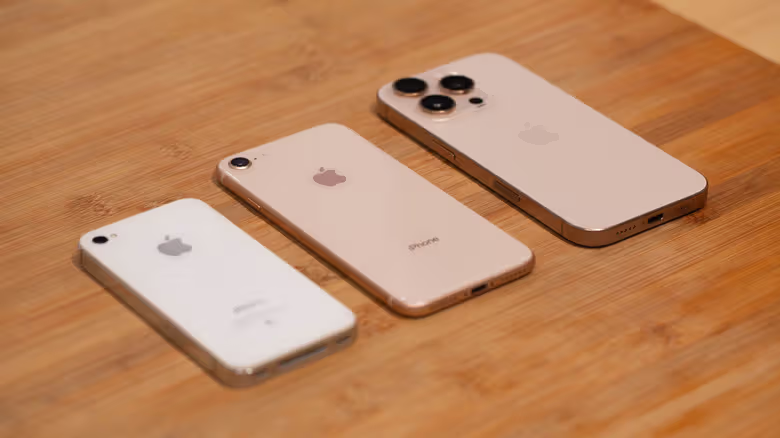
The oldest iPhone model Apple's trade-in program currently accepts is the iPhone 8, released in 2017, which can fetch $35 when in good condition. The bar for "good" is fairly lenient—even a phone with minor scratches or dents can still qualify for this tier. If you select Damaged, the system asks for more details, but even a fully functional unit with an intact body and screen may not get any credit at all given its age.
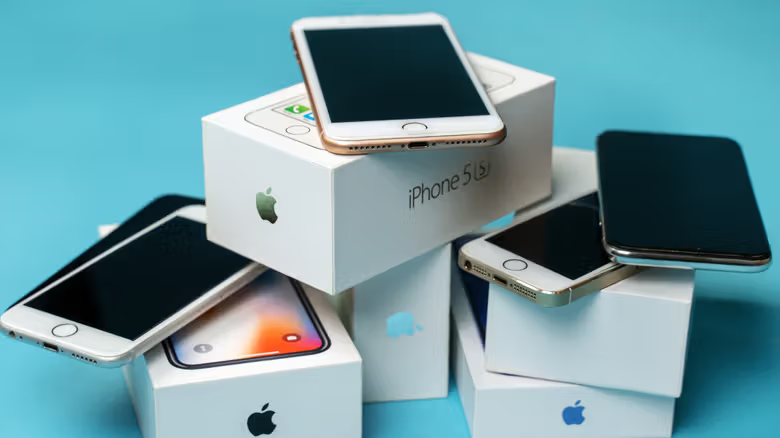
Two other phones from the same year face a similar fate: the iPhone 8 Plus is worth $40 in good condition, dropping to $10 with minor damage; the iPhone X can fetch $60 in good condition but gets nothing once it shows any damage. Apple's trade-in list actually goes all the way back to the iPhone 5, but these older models no longer qualify for cash credit—the company will only handle recycling for them.
What Other Devices and Android Phones Are Worth
The phone with the highest trade-in value right now is the iPhone 16 Pro Max, which can fetch up to $720—a phone that originally launched starting at $1,199. Given that it still has several years of usable life left, trading it in now may not actually be the smart move. Beyond iPhones, Apple also accepts trade-ins for iPads (up to $690), Macs (up to $2,045), and Apple Watches (up to $305), all of which require entering a serial number to get a valuation. HomePod, Apple TV, and AirPods, meanwhile, can only be sent in for recycling with no cash value attached.
Those looking to jump ship from Android are also covered. Apple currently accepts trade-ins for Samsung Galaxy, Google Pixel, OnePlus, and Huawei devices, with one extra question during valuation—storage capacity—a step that doesn't come up for iPhone trade-ins. Take the Pixel 9 Pro as an example: the 128GB version in good condition is worth $255, while the 1TB version fetches $315. But for something like the Pixel 6 Pro, the trade-in value is a flat $50 in good condition regardless of storage size. Overall, non-Apple devices don't command particularly high valuations.
The Trade-In Process—and Third-Party Options Worth Comparing
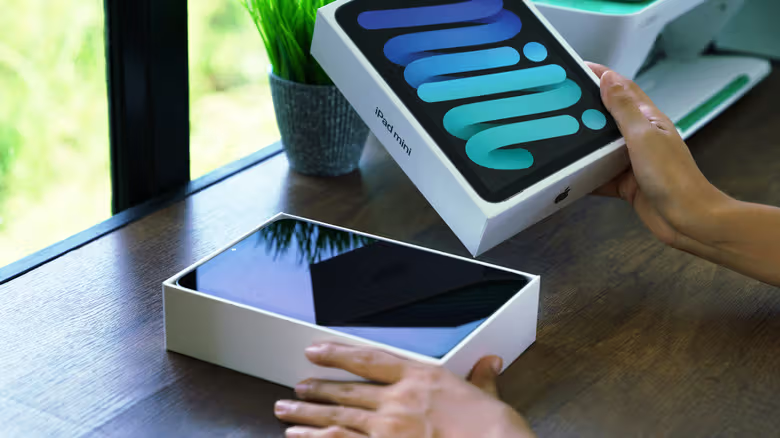
If you choose the online trade-in route, Apple will mail you a box and a prepaid shipping label. Once your new device arrives and you've finished transferring your data, you follow the instructions to drop off your old device at a UPS or FedEx location. You can also head straight to an Apple Store—no appointment needed, though booking a time slot in advance can save you the wait. Before heading in, Apple recommends backing up your data, signing out of your Apple ID, and unpairing your Apple Watch, and advises against wiping your device yourself before staff have had a chance to evaluate it.
How the trade-in credit gets applied depends on how you paid: if you paid in full, the credit is refunded directly to your original payment method once your old device is verified. If you're financing through Apple Card, a carrier installment plan, or the newly launched Apple Upgrade Program to lease a new device, the credit instead shows up as a reduction in your monthly payments. If you're not ready to buy a new device yet, you can also opt to receive the trade-in value as an Apple Gift Card.
If you're after a better price, it's worth checking out third-party options. For instance, Mac Me An Offer will pay up to $425 for a 512GB iPhone 15, beating out the $320 Apple currently offers. Comparison site SellCell lets you check rates across multiple platforms at once. You could also sell directly to a buyer through eBay or Facebook Marketplace, which typically nets a better price—at the cost of spending more time on photos, negotiating, and completing the transaction. The amount at stake may be modest, but in the end, it comes down to how much of your time you're willing to trade for that extra bit of cash.