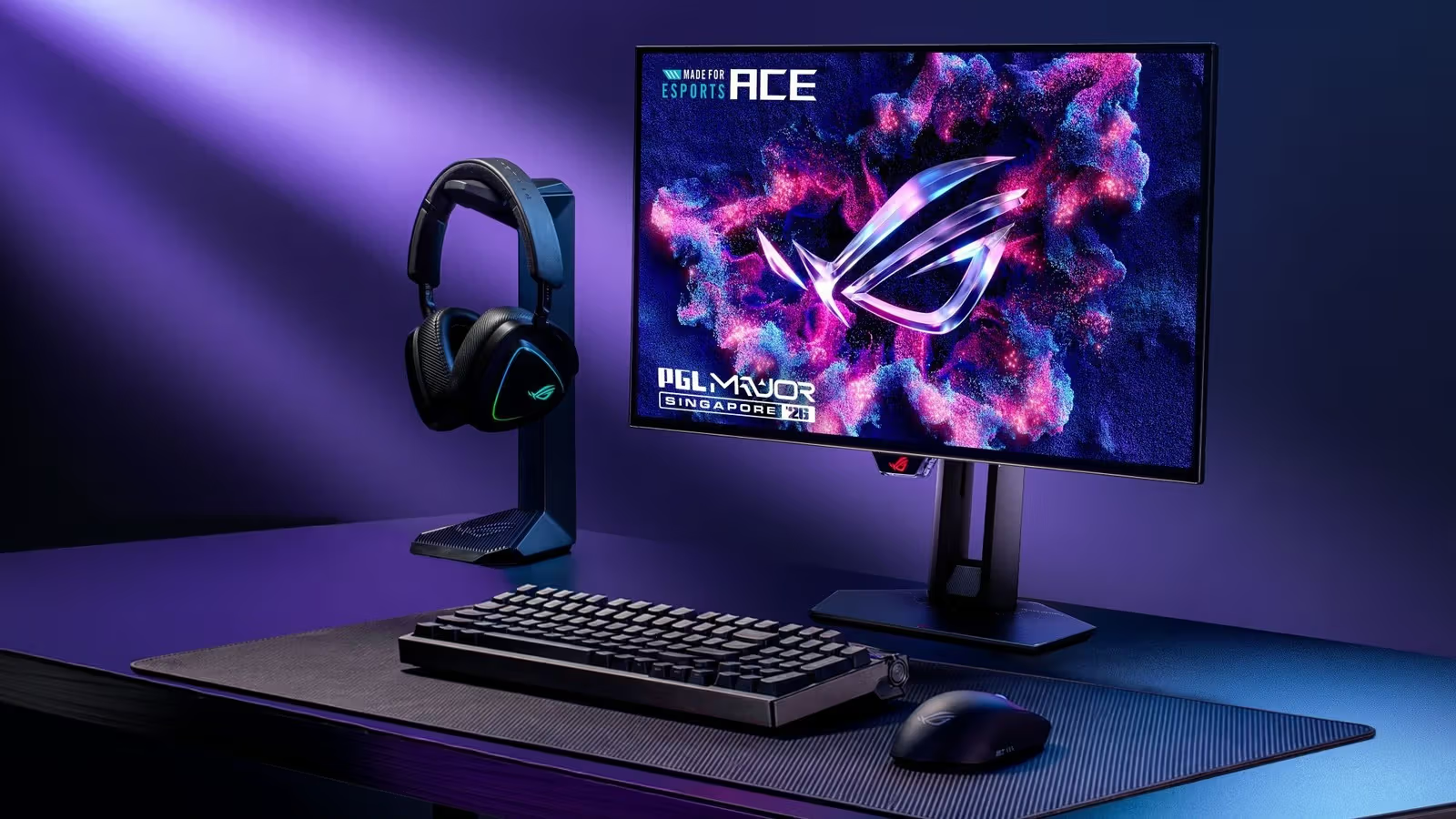
The most intriguing thing about the Ace series of e-sports screens launched by ASUS at Gamescom 2026 this time is not the refresh rate number, but the size. In the past, ASUS's high-end OLED gaming screens were mostly 27 inches. This time, the three new products have all been reduced to 24.5 inches. For players who compete in various competitions for a long time and need to stuff the screen into their luggage, this size change is closer to the actual needs than any specification improvement.
The most powerful ROG Swift OLED PG259QWS Ace is equipped with a 1080p Tandem WOLED panel with a refresh rate of 720Hz, a peak brightness of 1,700 nits, and supports Dolby Vision. It also has a function called "Position Sensor" by ASUS, which can measure the current height and tilt angle of the screen and display it directly on the screen, allowing players to quickly restore their familiar placement settings after moving the field. The screen is expected to be available early in the fourth quarter of this year, priced at US$1,099.
The other two models taking the QD-OLED route offer different trade-offs. ROG Strix OLED XG259QDPG Ace has a refresh rate of 560Hz. It adds ASUS's so-called "BlackShield" coating and anti-glare coating. Officials say it can improve the black level perception by up to 40% and increase panel hardness. ROG Strix OLED XG259QDNS Ace uses the same coating and coating combination, but the refresh rate is reduced to 360Hz. ASUS said that this specification trade-off is to keep the price down. ASUS has currently only announced the price of the lower-end ROG Strix OLED XG259QWPG Ace, which was also unveiled at Computex 2026, at US$699, and is also expected to be launched in early fourth quarter; the launch time and price of the XG259QDNS Ace have not yet been announced, and the price of the XG259QDPG Ace has also not been seen in this wave of announcements.
In addition to these four screens, the Ace series also includes an ergonomic gaming mouse, which shows that ASUS is promoting the entire set of competitive peripherals as one series this time. Compared with the two 27-inch OLED gaming screens previously released at CES, the 24.5-inch model with details such as the Position Sensor is more like it is tailor-made for the mobile scenarios of professional and semi-professional players, rather than simply increasing the refresh rate number.