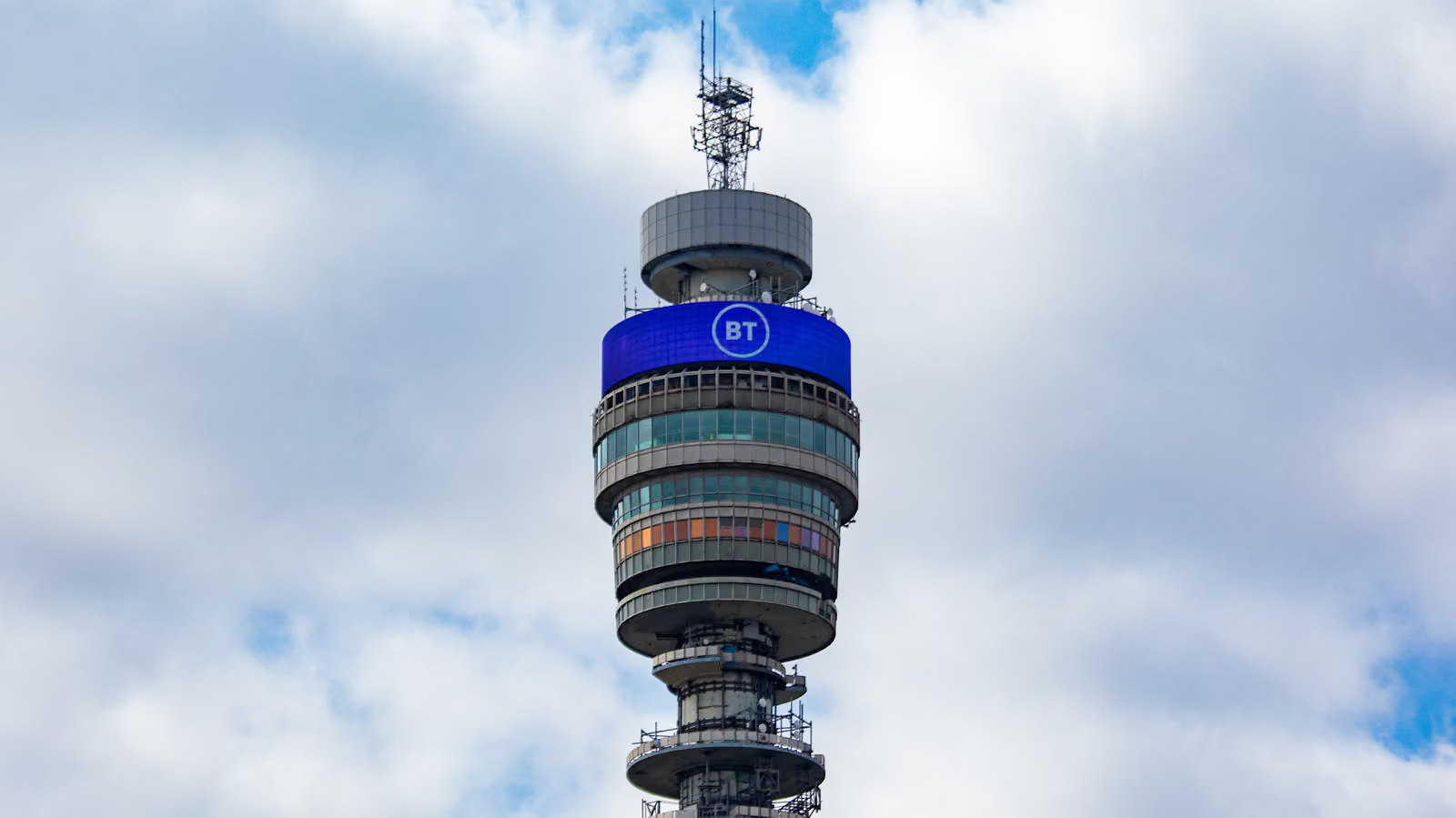
In 1868, British MP George Goschen stood up in the House of Commons and didn't hold back: the government's plan to get the General Post Office to make country folk "hunger for the telegraph" was, in his words, "absurd," since writing a letter was far cheaper. Parliament ignored him, and within a few years bought up the private telegraph companies wholesale, folding them into the postal system. That episode is actually the most honest piece of the puzzle behind BT Group's claim to be "the world's oldest telecom company" today — this bloodline was never a straight line to the present.
BT sets its starting point at 1846, the year William Fothergill Cooke and businessman John Lewis Ricardo founded the Electric Telegraph Company, commercializing the telegraph technology Cooke had developed with Charles Wheatstone. In 1855, the company merged into the International Telegraph Company and was renamed the Electric and International Telegraph Company; in 1870 it was entirely absorbed by the General Post Office. In other words, BT can trace back to 1846 thanks to a family tree — not because one single company has survived nearly two centuries intact.
BT isn't the only one playing this "claim the ancestor" game. Sweden's Telia traces itself back to the national telegraph authority of 1853, Telecom Egypt points to the first telegraph line in 1854, and Norway's Telenor counts from the Norwegian Telegraph Administration of 1855. France goes even further back, all the way to the optical telegraph network of 1794. But all these claims share the same problem: the history is tangled up with government agencies, reorganizations, and commercial companies founded later — picking a single "world's oldest" turns out to be far messier than comparing birthdays.
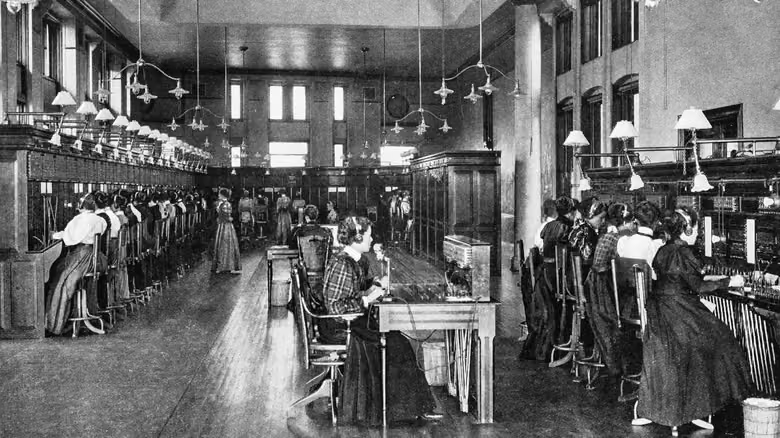
From Telegraph to Telephone, With Plenty of Twists Along the Way
After the telegraph network was nationalized in 1870, telephone service followed a similar path: the National Telephone Company was absorbed into the postal system in 1912, Post Office Telecommunications was renamed British Telecom in 1980, and British Telecommunications formally took over the postal service's telecom and data processing business the following year. It wasn't until 1984 that the government began selling off a majority stake in the newly formed BT plc, kicking off privatization. From the telegraph line of 1846 to the listed BT plc of 1984, there's no straight line to be drawn.