Capella Kyoto Opens in Southern Gion: An Urban Regeneration Building by Kengo Kuma
Capella Kyoto opened on March 22, 2026 in southern Gion, adjacent to Kennin-ji Temple. Designed by Kengo Kuma & Associates on the site of a century-old elementary school and a former Miyagawacho dance practice hall, it offers 89 guest rooms, 29 of which are suites.
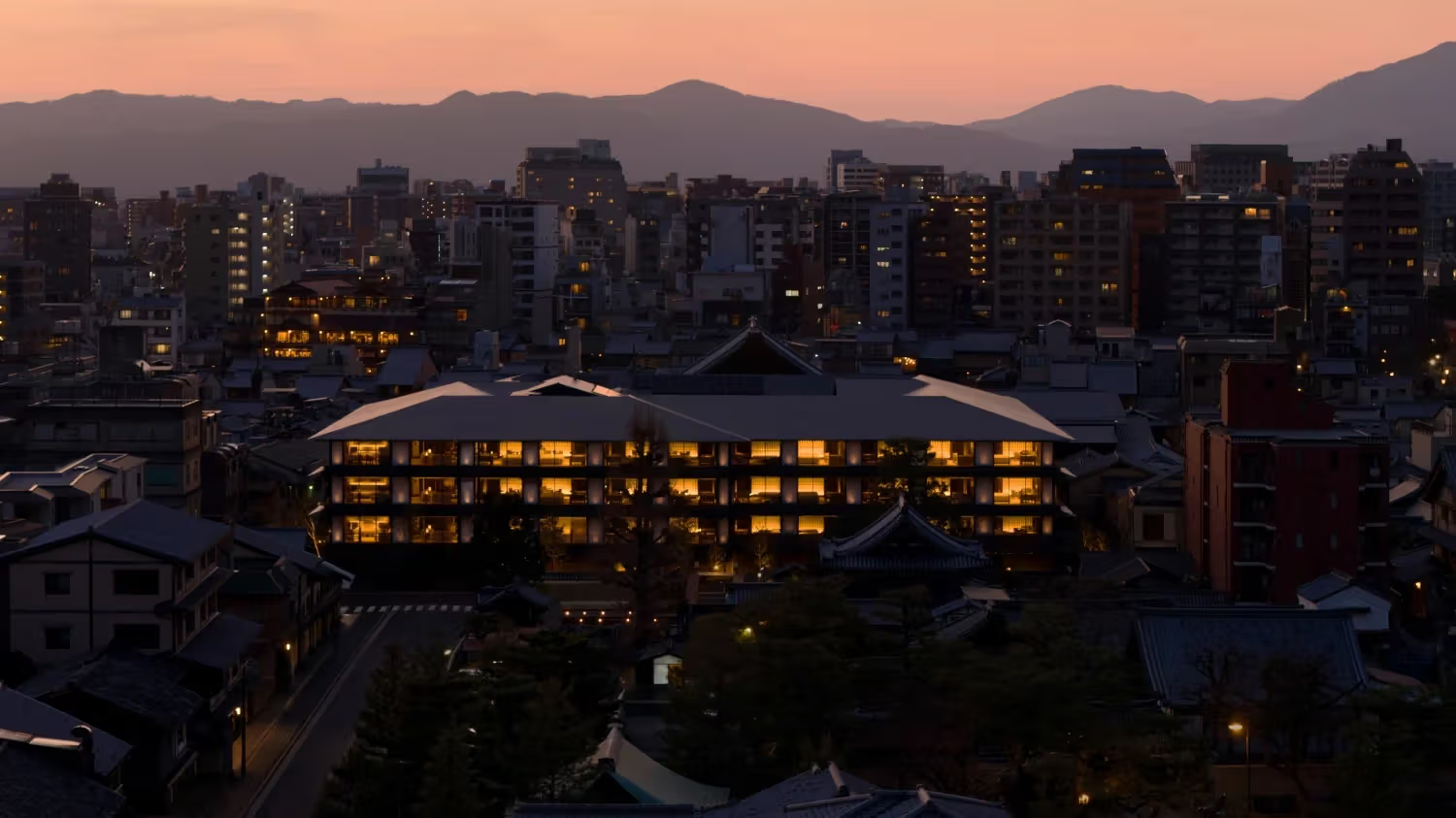
Capella Kyoto officially opened on March 22, 2026 in southern Gion, Kyoto, on a site adjacent to Kennin-ji Temple that was formerly home to a century-old elementary school and a Miyagawacho dance practice hall, making it an example of urban regeneration. The building was designed by Kengo Kuma & Associates, while the interiors were handled by Brewin Design Office. Together, their collaboration connects the new hotel to the fabric of the surrounding Higashiyama neighborhood, rather than presenting it as a standalone landmark.
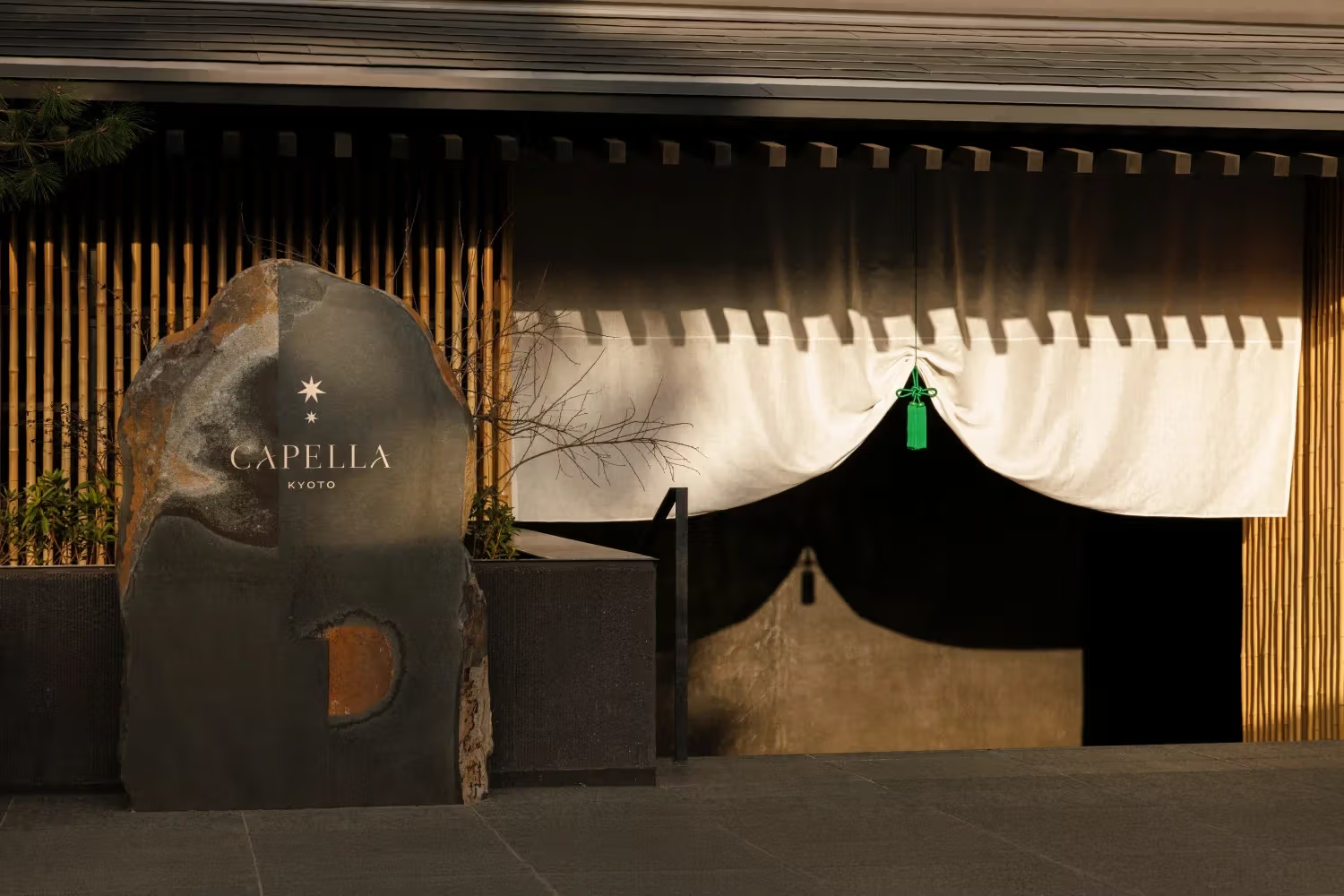
The hotel site is adjacent to Kennin-ji Temple and was formerly home to a century-old elementary school and a Miyagawacho dance practice hall. Image: Capella Kyoto
The renovation of the former dance practice hall retained the vocabulary of its large overhanging roof, with the exterior rendered in black to deliberately echo the tones and massing of the surrounding machiya townhouse cluster. The hotel spans 4 floors in total, with 89 guest rooms, 29 of which are suites, including 6 Onsen Suites, with room sizes starting from 50 square meters.
How Does the Architecture Respond to the Neighborhood's Fabric?
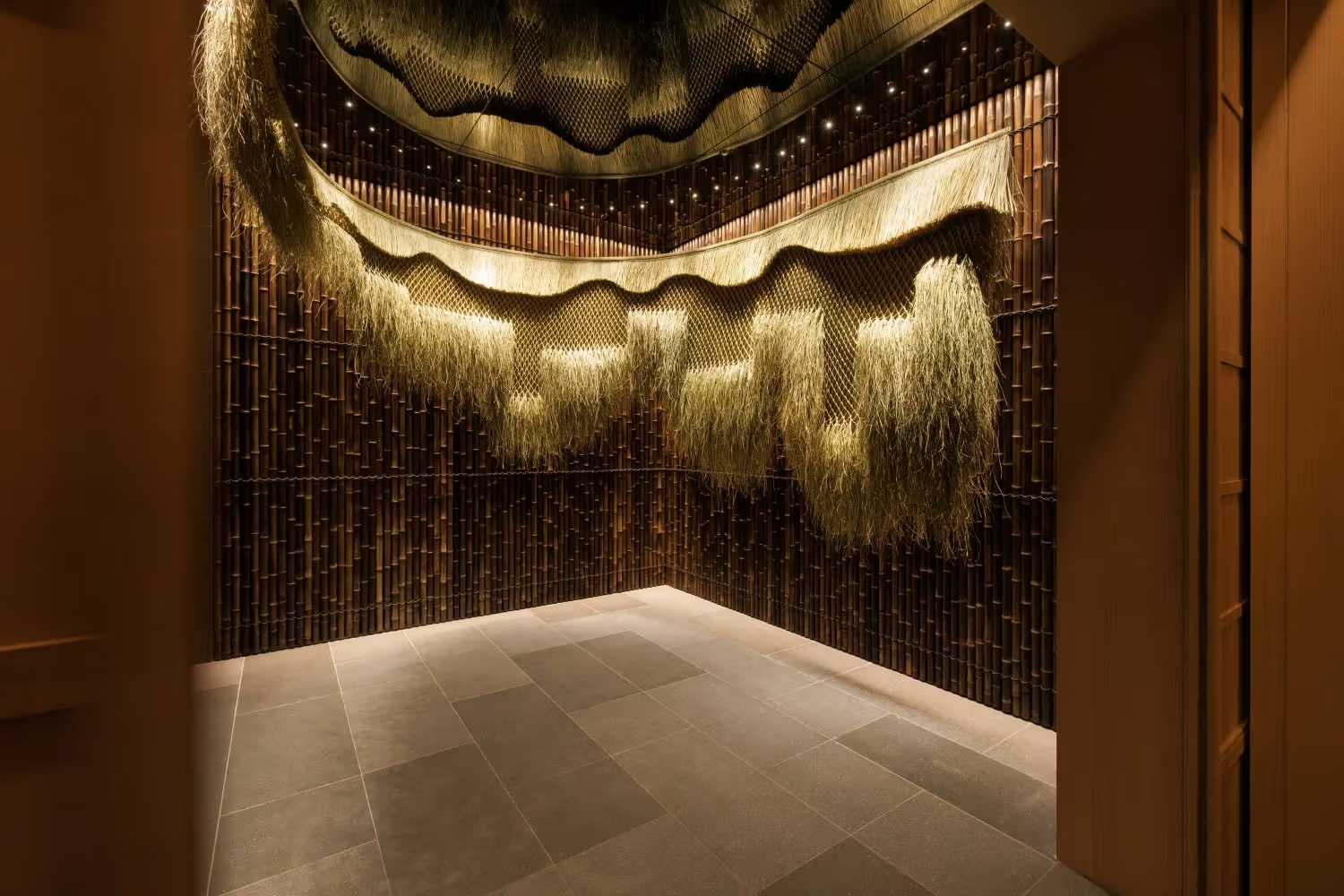
The lobby's sloped ramp design runs parallel to the road outside, a technique that makes guests' movement from the street into the hotel feel continuous, rather than being separated by an obvious turn or a heavily ceremonial entrance. The entrance space also features an installation by craftswoman Momoko Fujii, created using traditional wara (straw weaving) techniques, serving as the first visual pause point before visitors enter and echoing the hotel's design logic of connecting with local craft traditions.
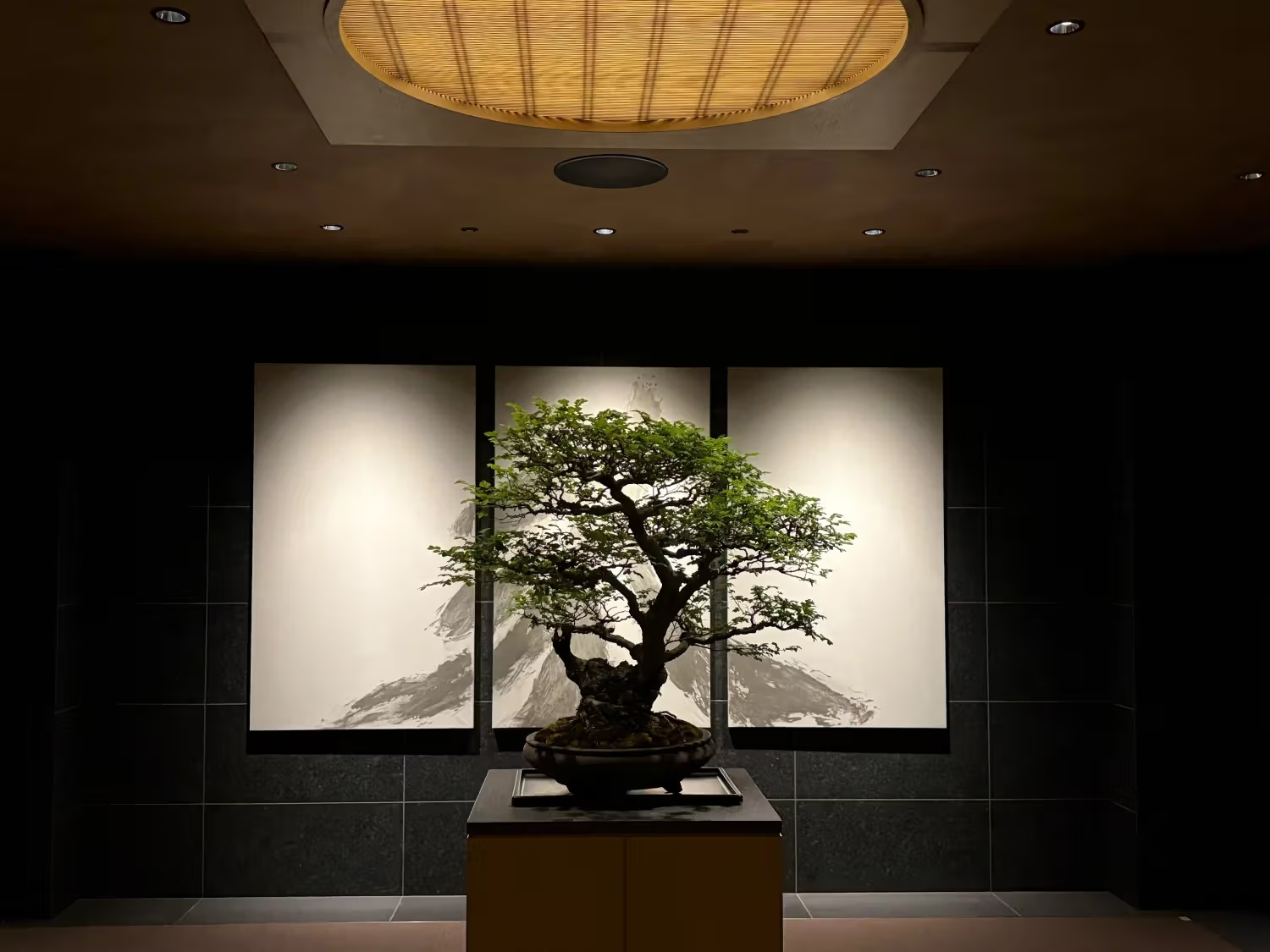
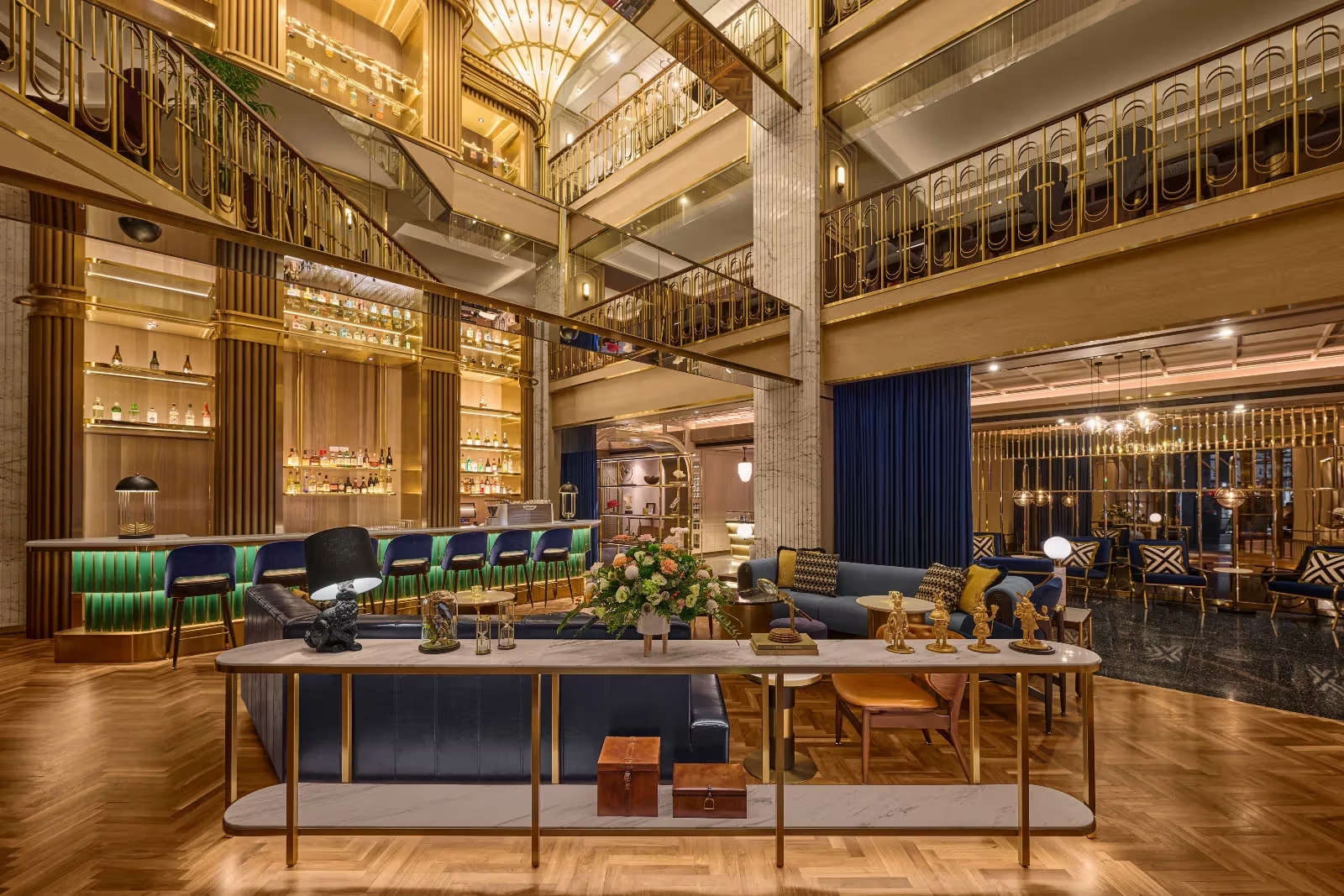
The lobby's sloped ramp runs parallel to the street, guiding guests into the hotel's interior. Image: Blues ToInterior space of Capella Kyoto. Image: Blues To
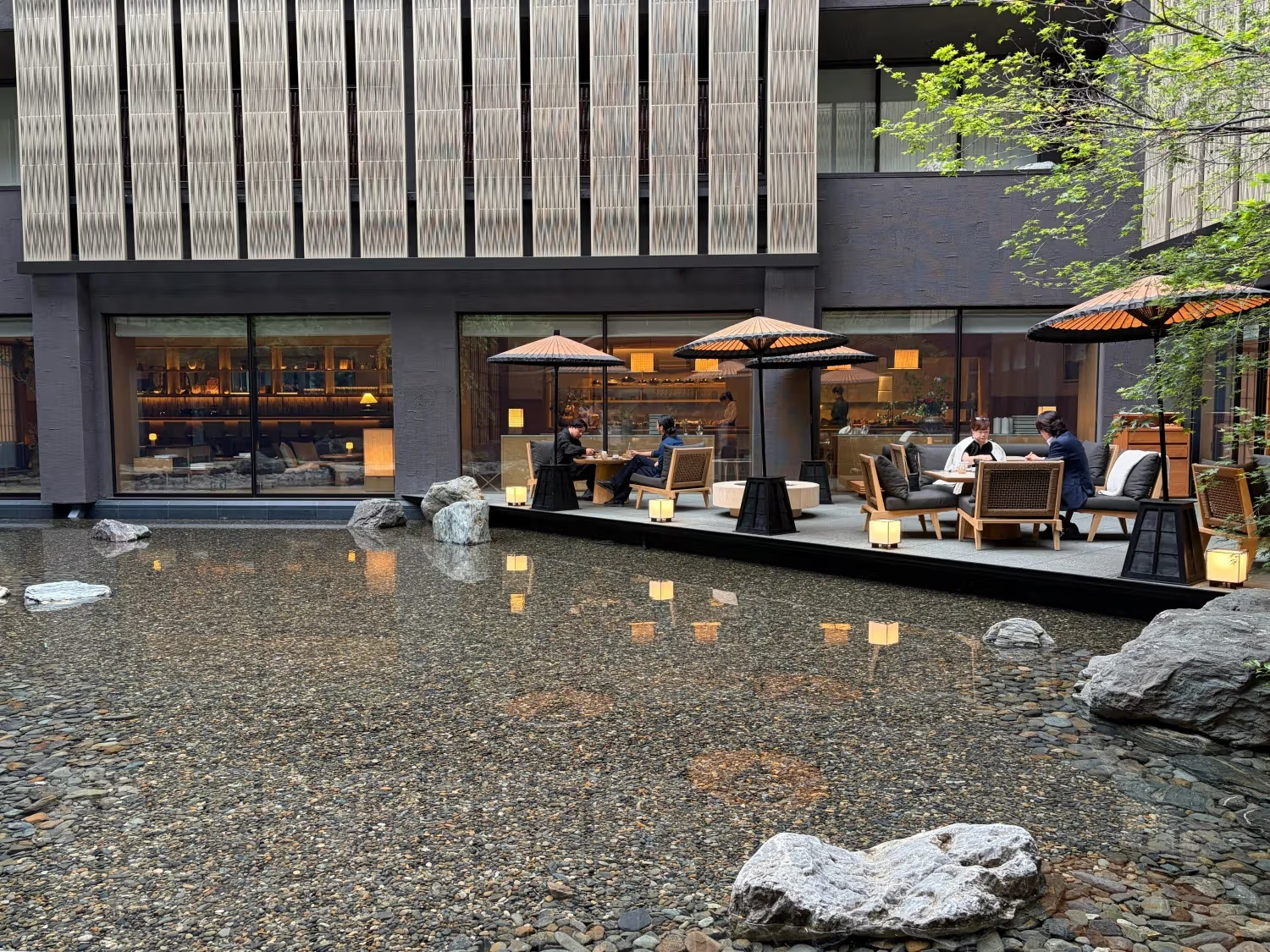
The lobby and restaurant are arranged around a courtyard with a reflecting pool, which preserves an old cherry blossom tree from the site's days as a school campus, forming a physical link between the building and the site's history. The basement level houses Auriga Spa, where the circulation incorporates boulder and flowing water landscaping, contrasting with the straw-and-wood material vocabulary used upstairs.
The installation in the entrance space was created by craftswoman Momoko Fujii using traditional wara weaving techniques. Image: Capella Kyoto
What Is the Relationship Between SoNoMa Restaurant and SingleThread?
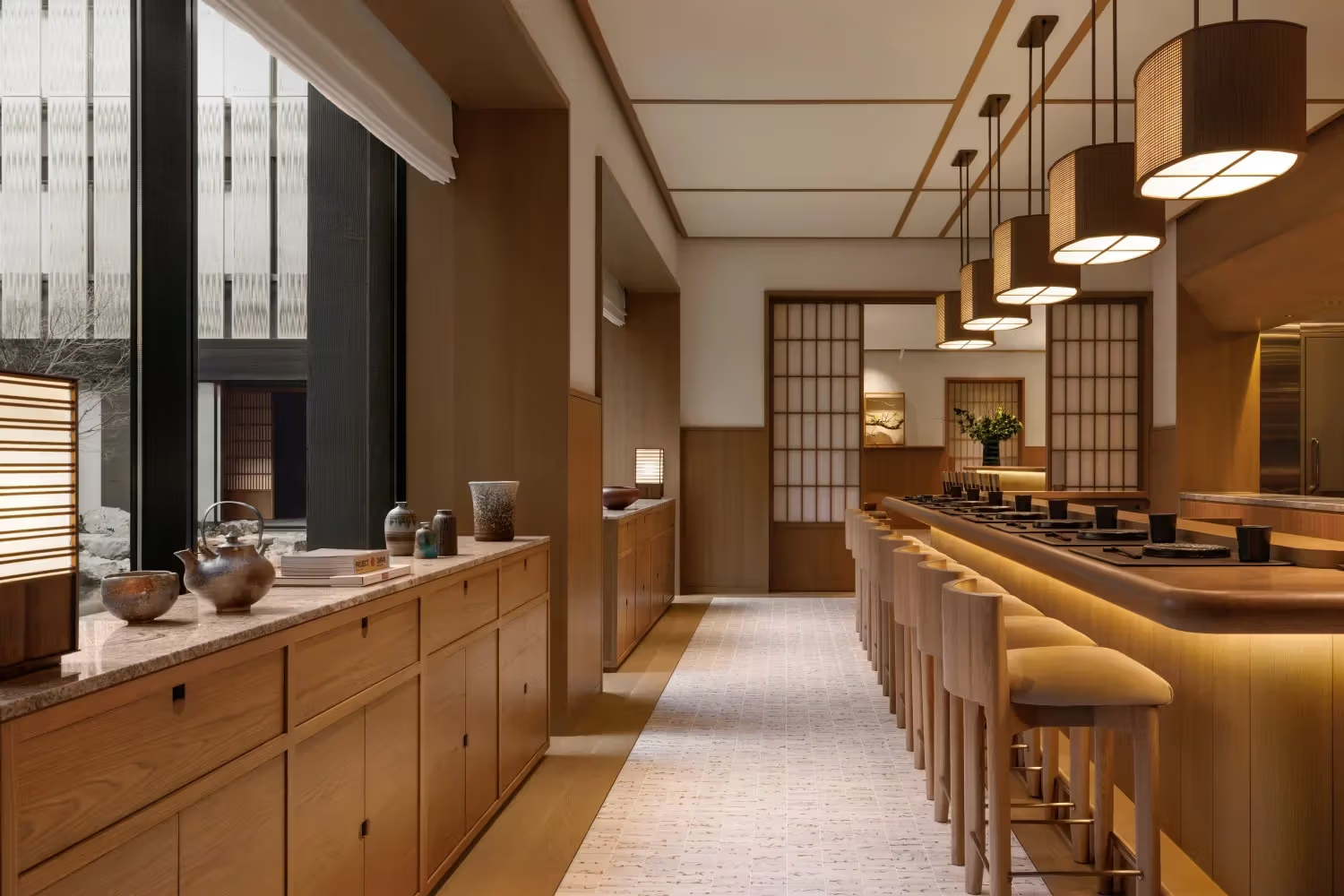
The hotel's restaurant, SoNoMa, is operated by the team behind California's three-Michelin-starred restaurant SingleThread, with only 14 counter seats, a scale notably smaller than a typical hotel flagship restaurant. The three-Michelin-star rating mentioned here refers to SingleThread's original location in California; the team's collaborative background and SoNoMa Kyoto's own rating are two separate matters.
SoNoMa, operated by the SingleThread team, offers only 14 counter seats. Image: Capella Kyoto
The scale of 14 counter seats versus 89 guest rooms is also a reminder to readers that hotel accommodation and dining arrangements at a specific restaurant are not the same booking. Those hoping to fit SoNoMa into a Kyoto itinerary should check seating times, availability, and applicable conditions through the restaurant's official reservation channel, and should not assume a hotel room booking secures a dining seat.
The Current State of Craft Experiences and Room Distribution
The hotel's design incorporates traditional Japanese craft vocabulary in many places, from the wara-woven installation at the entrance to lacquerware and kintsugi-inspired cultural experience offerings, both echoing Capella Kyoto's direction of connecting with local artisan traditions. Cultural experiences and room bookings are separate items, so travelers planning a visit should confirm current offerings, languages, and scheduling with the hotel.
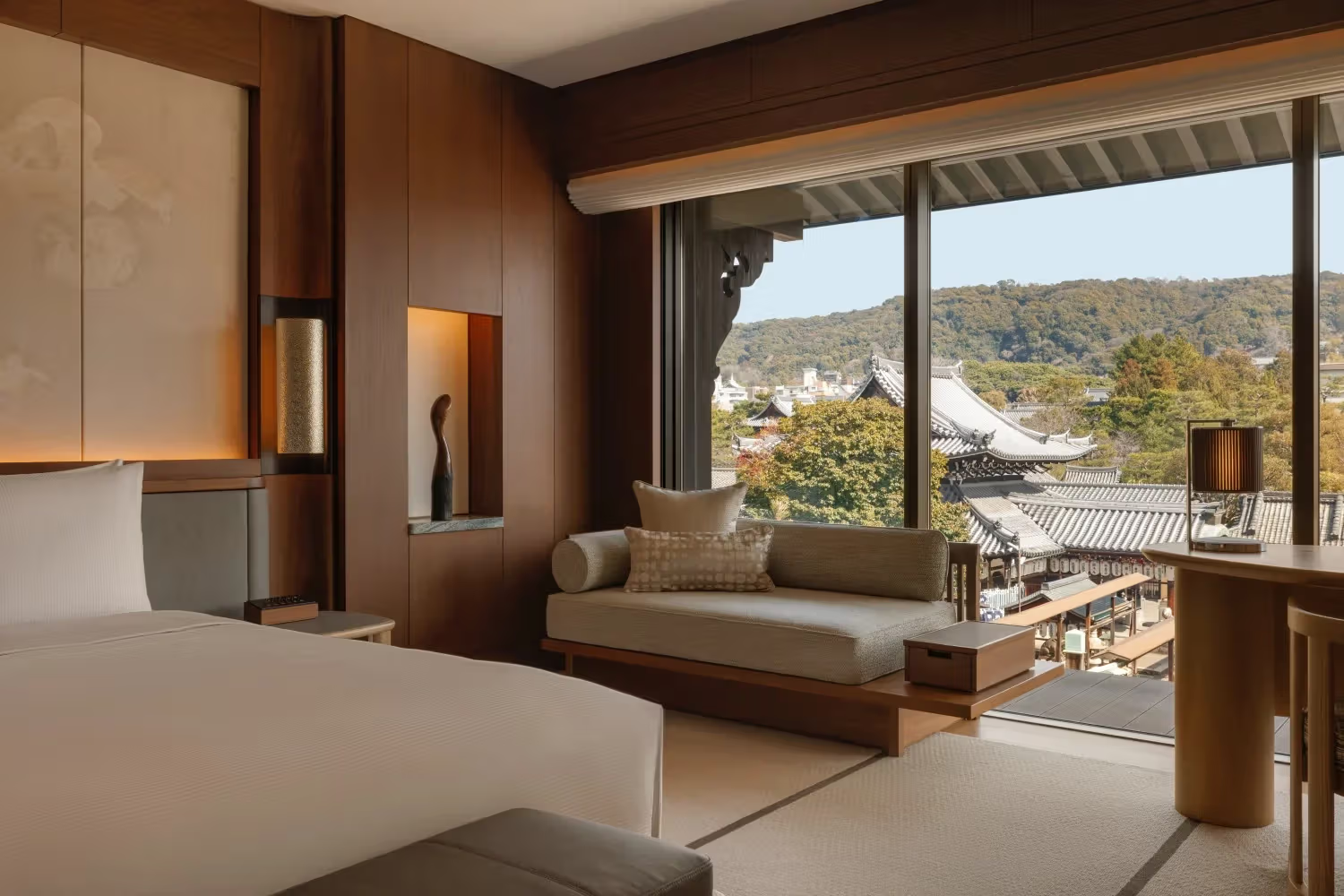
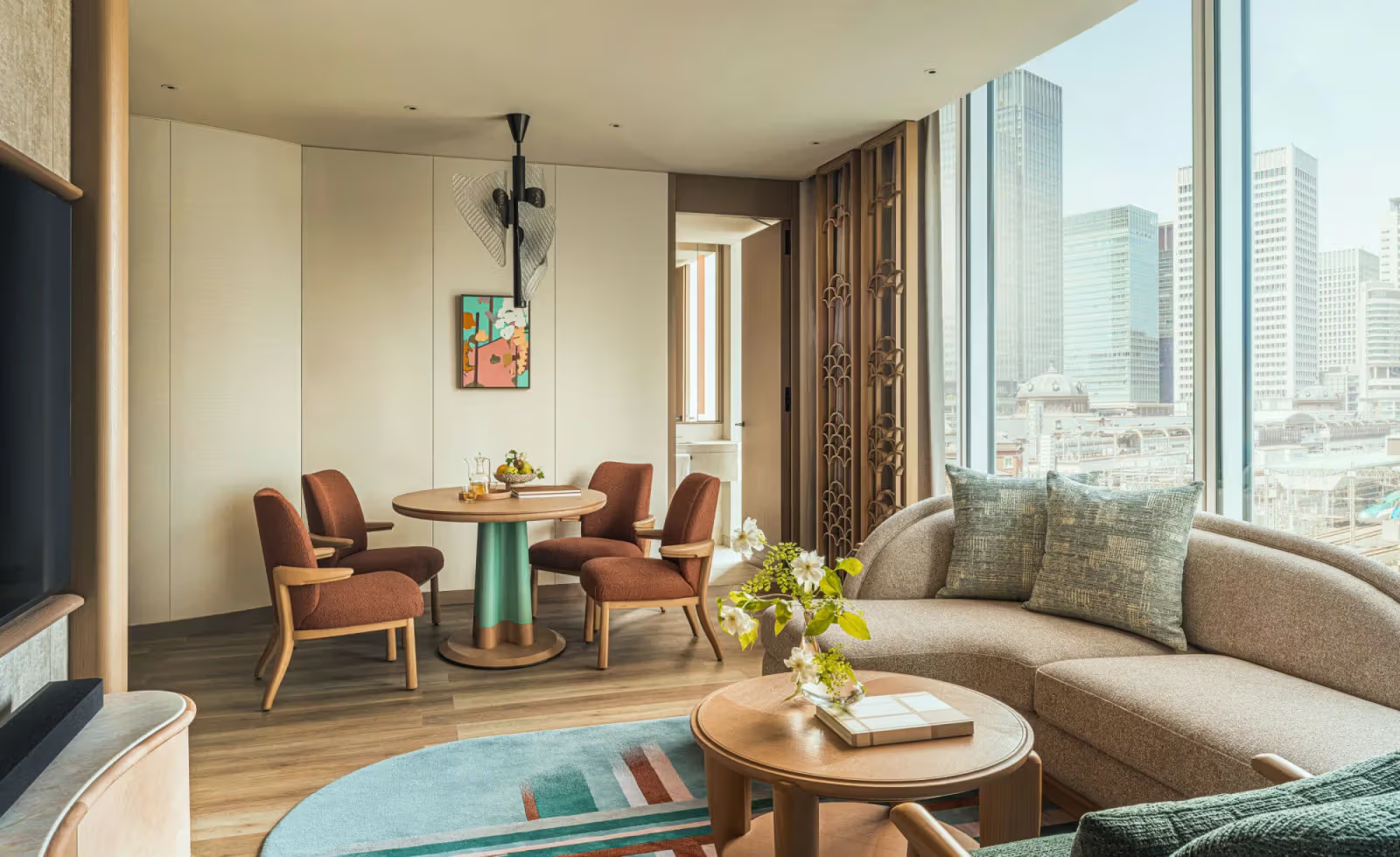
A Junior Suite at Capella Kyoto. Image: Capella Kyoto
As for room distribution, it has been made clear that among the 89 guest rooms, 29 are suites, 6 of which include Onsen Suites layouts — meaning Onsen Suites do not represent the room type across the entire property. When choosing a room, guests should still confirm the size, bathroom facilities, and other amenities based on the actual room type, then compare rates according to their intended check-in dates.