It's 2026 — Are Digital Cameras Still Worth Buying? The Answer Depends on Whether You're Willing to Do That Extra Step
Smartphone photography is already good enough for everyday use, but as Engadget points out, the value of a digital camera has never been about replacing your phone — it's about giving more control to those willing to invest the time and money, whether that's a $500 entry-level body or a $5,000 flagship setup.
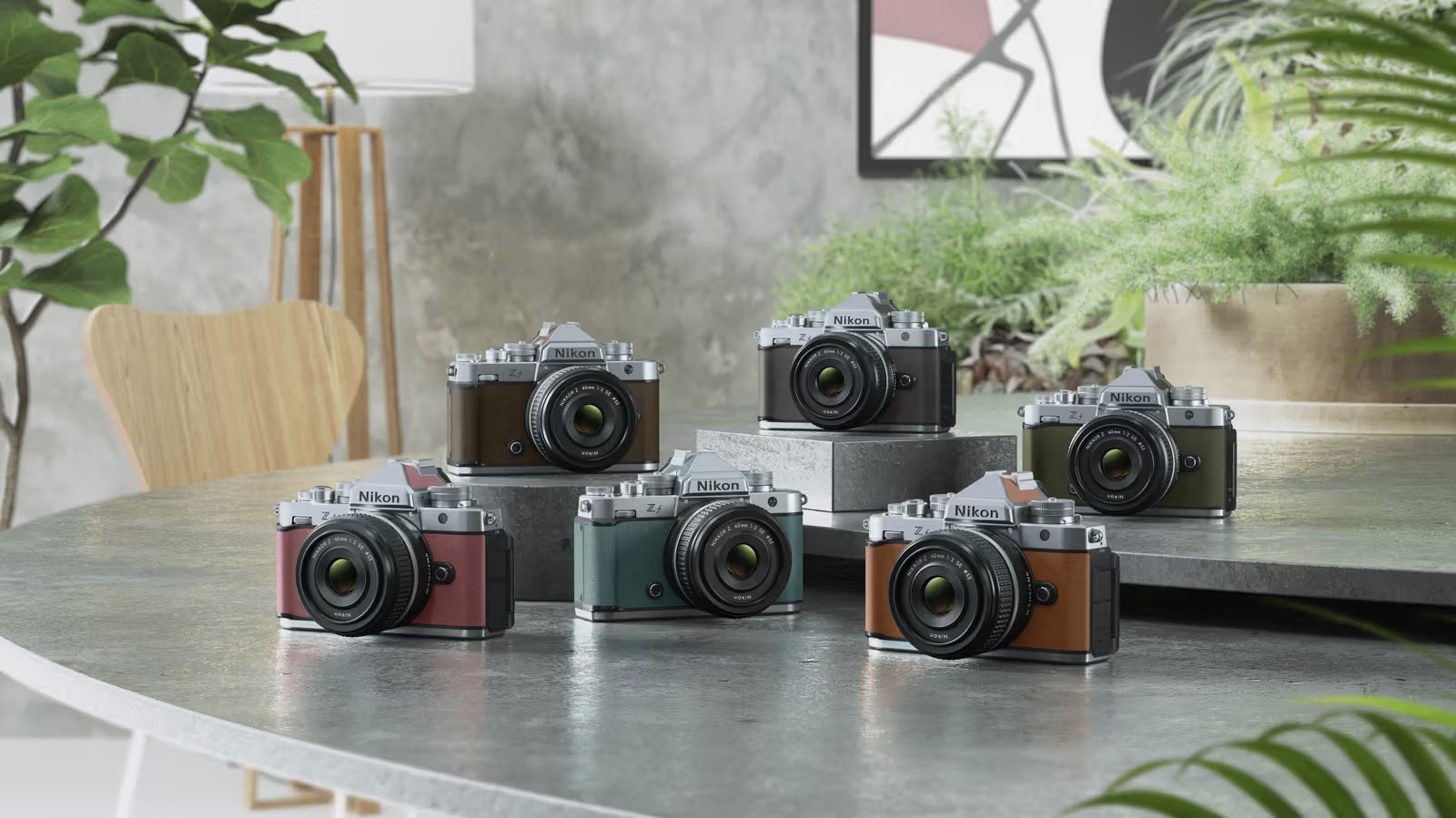
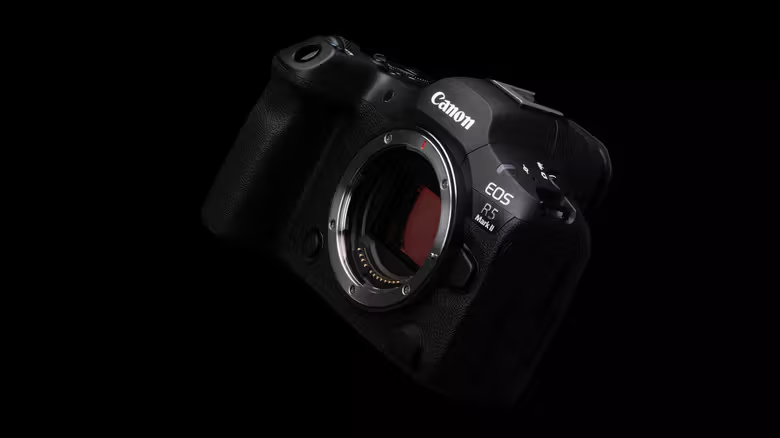
$500 is roughly the price of a mid-range smartphone — and also the entry point for a beginner digital camera like the Canon EOS R100. The difference: for the same budget, a camera gives you a much larger sensor, which translates into more detail and more room to crop. That's the first concrete piece of evidence Engadget offers when tackling the question of whether digital cameras are still worth buying in 2026.
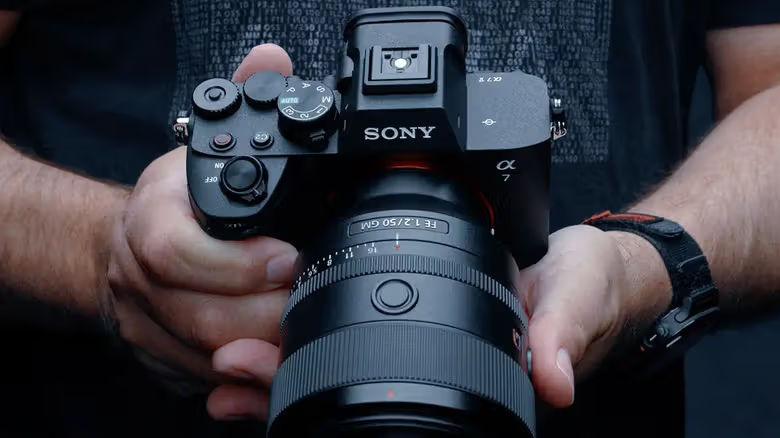
The answer is yes — with a caveat: you have to be willing to put in a bit more work for a better photo. Smartphones are already more than capable in most everyday situations — quick snapshots, social media posts, daily documentation are all a breeze. What really justifies a digital camera are the scenarios phones still struggle with. Modern mirrorless cameras like the Sony A7R VI retain a wealth of detail even in high-contrast or extremely low-light conditions, whether you're shooting fast-moving events or sweeping landscapes. If you need a portable, fixed-lens solution, the Sony RX10 V comes with a 24-600mm optical zoom lens, covering everything from group photos to distant wildlife shots. For action, there's something like the GoPro Mission 1 Pro to handle the sports scenes, while the Sony ZV-E1's flip screen and auto-framing features are built with vloggers in mind.
Phones are indeed moving in this direction too — the iPhone's Portrait Mode lets you adjust the aperture effect, and apps like Halide offer more manual controls. But the freedom a digital camera provides goes further than that: deliberately underexposing a shot to leave negative space, or using panning techniques to create motion blur — these are adjustments that a phone's post-processing algorithms still can't fully replicate. The trade-off is straightforward too: after shooting, you have to move the photos from the memory card to a computer, then tweak the parameters one by one in editing software — unlike a phone, where most of the post-processing is already done the moment you press the shutter.
Price is another barrier. A top-tier mirrorless camera body alone can easily run around $5,000, buying you smarter autofocus, faster burst shooting, and a wider dynamic range — and that's before you even factor in the cost of lenses. Even fixed-lens pocket cameras like the Canon PowerShot or Sony RX100 series start at several hundred dollars. On top of that, unlike a phone, a camera isn't something you can just slip into your pocket at all times — carrying it around is a commitment in itself.
Add it all up, and in 2026, buying a digital camera isn't really a multiple-choice question — it's more of a threshold test: if all you need is a photo good enough to post, your phone will do. But if you're willing to spend the extra time fine-tuning focus, editing afterward, and lugging your gear around for that shot, a digital camera still delivers a payoff that's hard to ignore.