TIDEZINE.

Your Phone as a Car Key Is Convenient, Alright — But Here Are 3 Risks You Should Know First

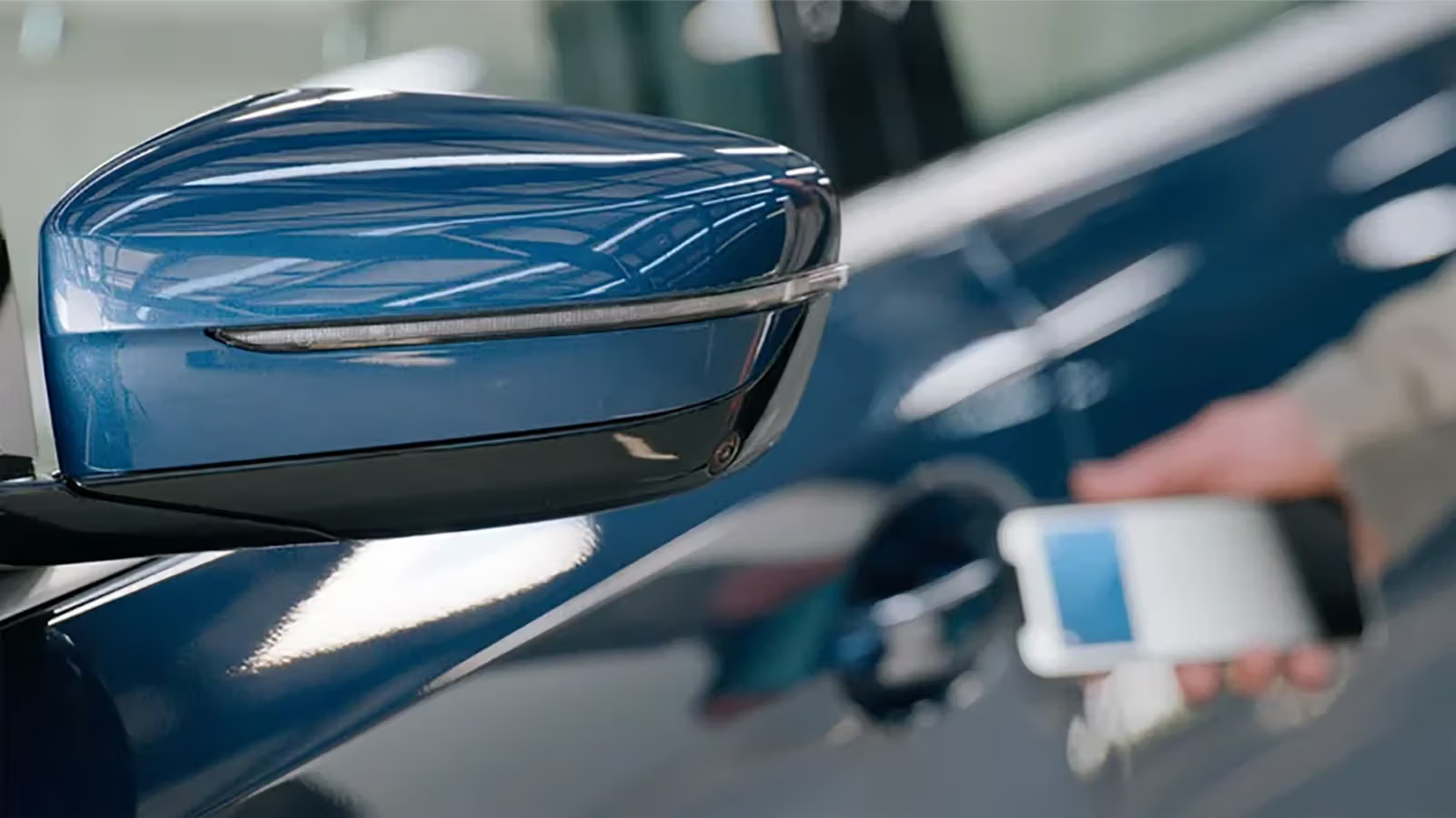
Both Apple Wallet and Google Wallet let you stash your car key right on your phone — lock, unlock, even start the engine, all from one device. Convenient as it is, Engadget has rounded up the real-world snags you might actually run into: dead batteries, lost phones, and system crashes.

Jordan Lin, Deputy Editor
Your Phone as a Car Key Is Convenient, Alright — But Here Are 3 Risks You Should Know First

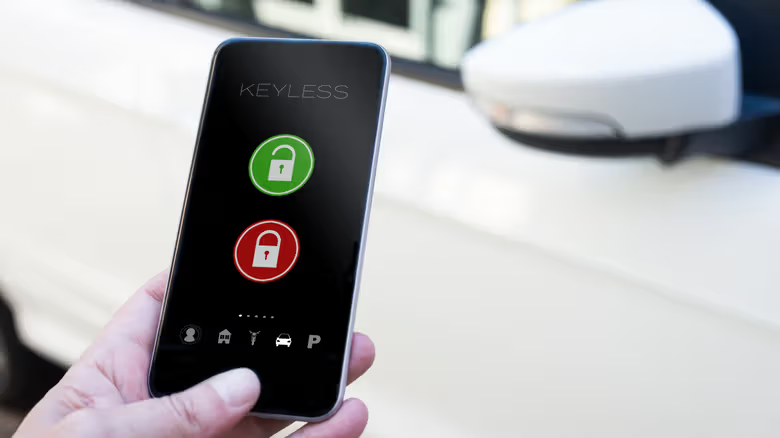
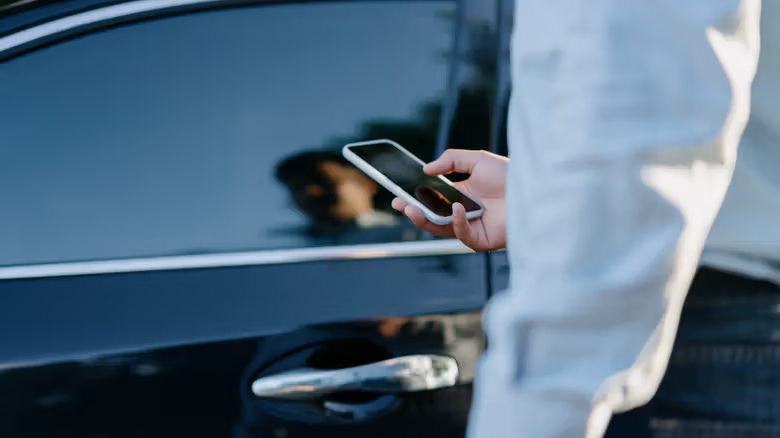
Tucking your car key inside your phone sounds like it cuts your hassle in half — no more patting your pockets for keys, no more lugging around a fob the size of a keychain. iPhone users have Apple Wallet, Android users have Google Wallet, and Samsung has its own digital key tech. Pair any of these with a compatible car, and locking, unlocking, even starting the engine can all be done from your phone. The whole setup runs on a standard the Car Connectivity Consortium laid down back in 2018 — not exactly cutting-edge tech, but it's only now that it's actually gone mainstream in everyday driving that a once-hypothetical worry like "my phone died and now I can't get into my car" has started to feel real.
手機變車鑰匙方便是真的,但這三個風險你該先知道

Digital car keys rely on ultra-wideband (UWB) or near-field communication (NFC), which means the car only unlocks once it actually detects your phone is physically nearby — unlike traditional fobs, which are more vulnerable to relay attacks that can trick a car into thinking the key is closer than it really is. But the risk just shifts shape: lose your phone, or have it stolen, and your car key goes right along with it. Most automakers layer an extra authorization step on top of the digital key, so a stranger — or your own underage kid at home — can't just grab the phone and drive off. But that only works if you've actually locked down your phone's security in the first place: two-factor authentication, a strong passcode, and remote wipe should all be table stakes. On iPhone, for instance, marking the device as lost automatically locks out Apple CarKey. Some systems also let you use a second device to suspend the digital key until the phone turns up again.
手機變車鑰匙方便是真的,但這三個風險你該先知道

The other obvious worry is a dead phone battery. The good news: both Apple's and Android's digital key systems are mostly built with a backup in mind. Even after your battery dies, the phone can keep running NFC off reserve power for up to five hours — the same logic as keeping a spare physical key hidden in a traditional fob. What's actually more likely to trip you up is the app crashing, freezing, or catching you mid-update, or the automaker's cloud servers going offline — though big companies usually have backup servers in place for exactly that scenario. Bluetooth or NFC hardware itself failing is comparatively rare.

The direction toward digital keys is clear at this point. But the more cautious move is still to keep a physical fob within reach — on you or somewhere at home you can grab it anytime — as an emergency backup. As long as you keep your phone charged and your app updated, day-to-day use of a digital car key shouldn't throw up many surprises. What's actually worth thinking through ahead of time is simple: if your phone goes missing or dies, do you have a way out?

Related

Siri Ignoring You on CarPlay? The Problem Usually Isn't Siri Itself
Tech

Siri Ignoring You on CarPlay? The Problem Usually Isn't Siri Itself

Calling out to Siri while driving and getting nothing back? Don't be so quick to blame the voice assistant. The real culprit could be hiding in your iPhone settings, a wired or wireless connection issue, or even the car's own infotainment system. Working through each one methodically beats randomly poking at settings.

The Price of Mini PCs: Cooling, Upgrades, and Repairs All Bow to Size
Tech

The Price of Mini PCs: Cooling, Upgrades, and Repairs All Bow to Size

From Geekom and Beelink to ASUS's ROG NUC 16, mini PCs squeeze a full computer into the palm of your hand—but that comes at the cost of cooling, upgradability, and repairability. Here's what you should know before buying one.

Higher Efficiency in Cold Weather Doesn't Mean More Power: The Temperature Myth About Solar Panels
Tech

Higher Efficiency in Cold Weather Doesn't Mean More Power: The Temperature Myth About Solar Panels

Solar panels hit peak efficiency under standard test conditions of 25°C and 1,000 watts of sunlight per square meter, but actual power output also depends on hours of sunlight, cloud cover, and installation angle. Temperature coefficients published by REC and Qcells reveal just how much real-world output is lost in hot weather.

What Did the 400-Pound Camera Make Tom Holland Think? Why IMAX Film Is Still a Game for the Few
Tech

What Did the 400-Pound Camera Make Tom Holland Think? Why IMAX Film Is Still a Game for the Few

A mix-up on the set of "The Odyssey" reveals why most Hollywood directors still shy away from 65mm IMAX film cameras—leaving Nolan as one of the last holdouts still going all in.

SATISFY and COROS Team Up for the First Time, Building Training Plans Right Into the Watch Software
Tech

SATISFY and COROS Team Up for the First Time, Building Training Plans Right Into the Watch Software

Running brand SATISFY and wearable maker COROS have dropped the APEX 4 collab. Beyond the ice-textured black titanium bezel, even the built-in training programs were personally designed by SATISFY's own athletes. Priced at $520 USD.

Shokz Launches Two Open-Ear Headphones on Same Day: OpenFit Air 2 Drops to 7.2g, OpenRun Air 2 Focuses on Anti-Bounce Design
Tech

Shokz Launches Two Open-Ear Headphones on Same Day: OpenFit Air 2 Drops to 7.2g, OpenRun Air 2 Focuses on Anti-Bounce Design

Shokz has simultaneously announced the OpenFit Air 2 and OpenRun Air 2 — one an air-conduction ear-hook design, the other a bone-conduction over-the-head design. Both launch on August 27 at the same $130 price point.