Garmin Cirqa review: A screen-less bracelet with solid workmanship but no reason to exist
Garmin launches Cirqa, a $200 screen-free health bracelet. The hardware and tracking capabilities are as reliable as ever, but the software lacks AI insights and is not even as cost-effective as its $150 Vivosmart 5.
A wristband sells for $200, but it can’t even beat its own $150 cheaper product. This is the conclusion reached by Engadget senior editor Daniel Cooper after testing Garmin’s latest screen-free health bracelet Cirqa. He gave it a score of 7.4 (out of 10). The reason was not that the hardware was bad, but that the product "did what it was supposed to do, but there was no reason why people had to buy it."
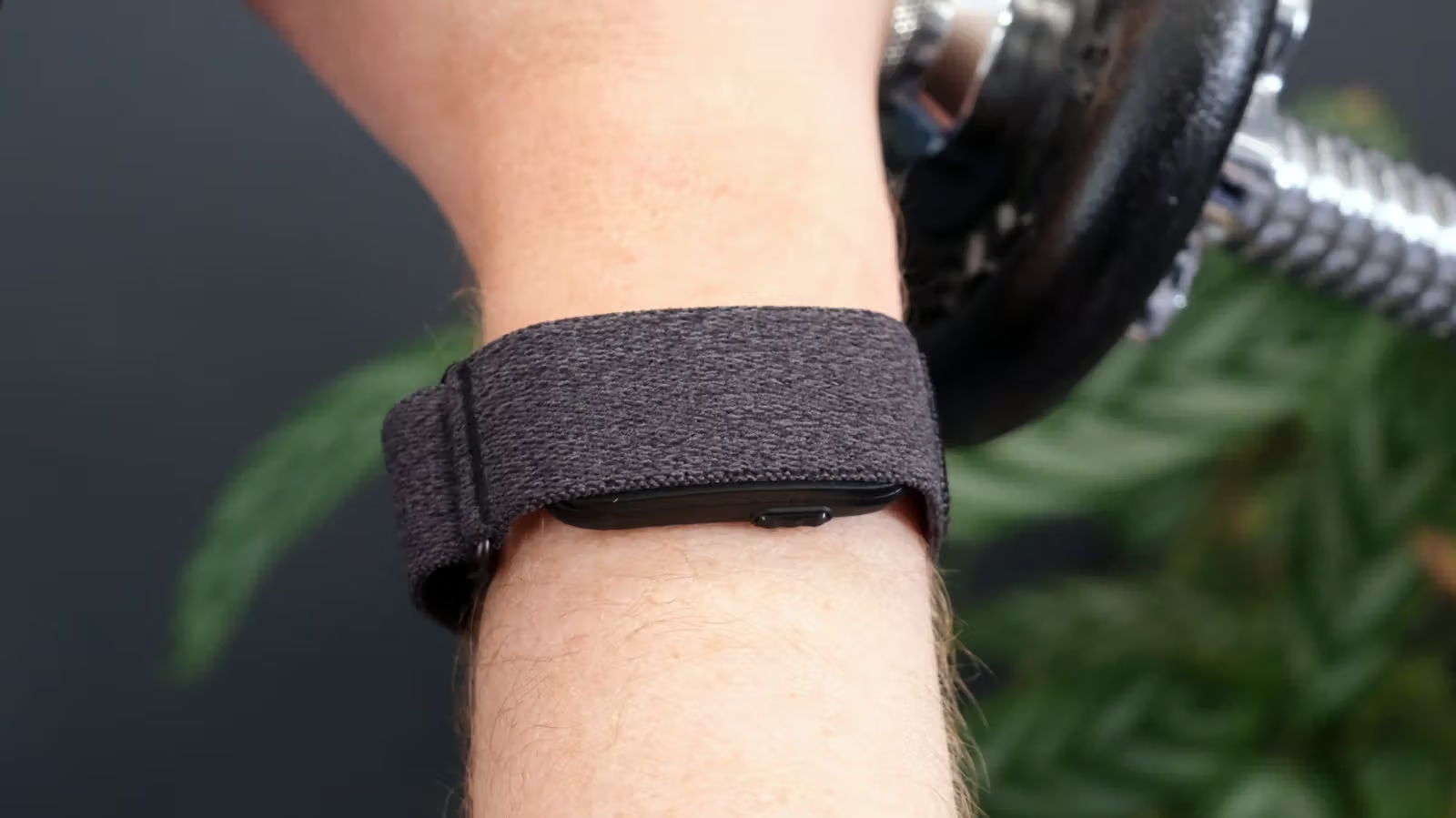
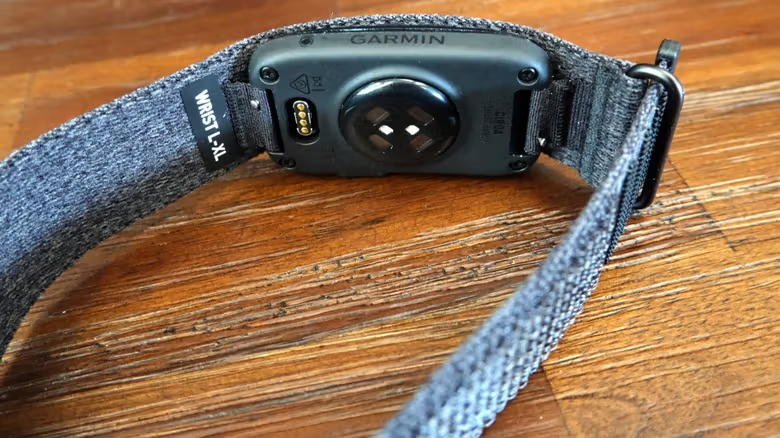
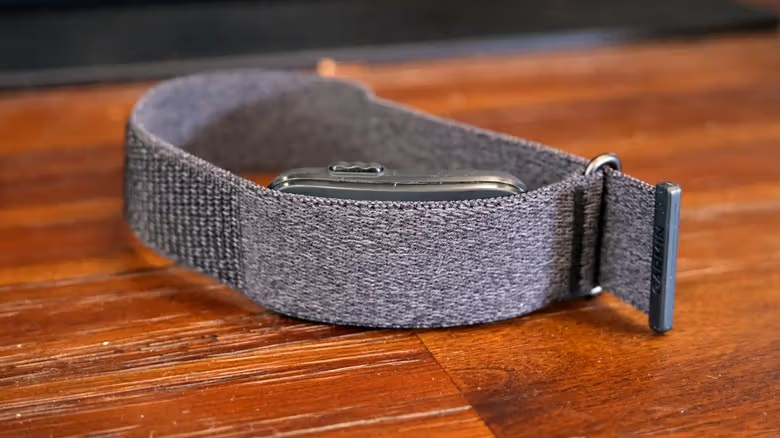
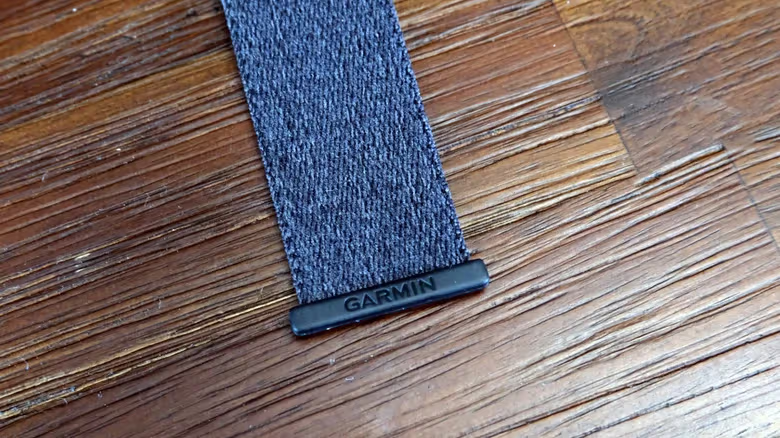
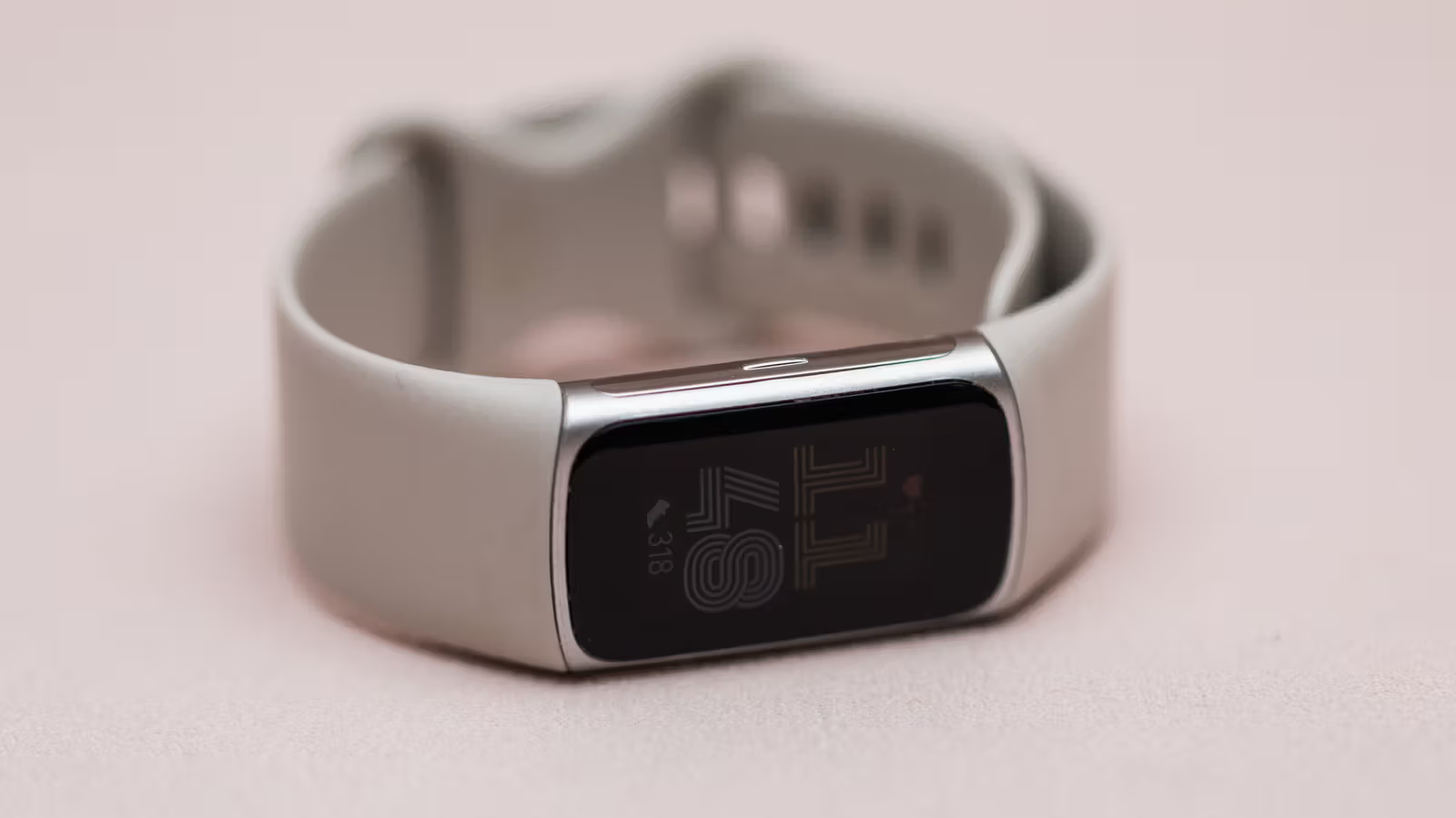
Cirqa is a 2-inch by 1-inch plastic square with hanging ears on both ends to secure a woven watch strap, and the overall weight is a little over an ounce. It has a built-in optical heart rate sensor and accelerometer, and the battery life is rated at 10 days, but it does not have GPS - this is consistent with similar products such as Whoop and Fitbit Air. The charging method is Garmin's own USB-C dedicated cable, which needs to be pushed hard to align it with the interface. In appearance, Cooper described it as like shrinking the Index sleep monitor launched last year, or cutting the Vivosmart 5 in half from the long side and discarding the upper half of the screen. On one side of the device is the Garmin logo and a multi-color LED, and on the other side is the only control button. All interactions must be completed through the mobile app.
Garmin’s expertise in this piece of hardware has not diminished. Cirqa supports 24-hour heart rate, breathing, stress and activity monitoring, as well as sleep, menstrual cycle and body temperature tracking. The performance of automatic activity recognition made Cooper regret having manually turned on recording when training in the gym - instead he wanted to see how the system automatically disassembled each training stage. The app will give you sleep scores and recommended bedtimes, and the accuracy is as reassuring as ever.
The problem is in the details and the software. Cirqa's smart alarm clock requires a long press of the button to turn it off. Once the timing of pressing is not correct, or if it is pressed twice in succession, the system will misjudge it as a manual trigger for activity recording. After a few minutes, the alarm clock will vibrate again because it "has not been turned off yet." Another time, Cooper's phone had been in zero-disturb mode for several hours, and at 10:46 p.m., Cirqa still vibrated to remind him when the battery was 20% left - this kind of information could be left until the next morning.
Garmin Connect gave a lot of numbers but no answers
The first sentence of Garmin's marketing emphasizes "24-hour health monitoring and fitness functions, no subscription required." It is clearly aimed at competitors such as Whoop, Fitbit Air, Oura, and Ultrahuman that require paid subscriptions. This sentence is technically not a lie, but Cooper feels that he cannot afford to ask more carefully: the subscription fees for products such as Whoop and Fitbit are not actually hardware, but an AI coaching system that translates massive health data into specific suggestions such as "You feel tired this morning because you ate too late last night and your heart rate did not drop down." Garmin Connect is good at spreading data into neat dashboards and color-graded rings, but it rarely gives such conclusive insights. Cooper has had the same criticism about the software depth of Garmin Connect since he reviewed the original Venu in 2019. Seven years later, he believes that this is now a matter of Garmin’s choice rather than a question of capability.
The paid version of Garmin Connect+ only provides AI-generated insights, food records, nutritional recommendations, real-time activity tracking, coaching functions and annual reports, but some features such as Outdoor Trails are not even compatible with Cirqa. The Body Battery score launched by Garmin many years ago - using a number from 0 to 100 to combine sleep and consumption status, and recommend whether to exercise or rest - is to some extent Garmin's own answer to "AI insights", but it is already a standard feature of almost every wearable device.
Persuasiveness that $200 cannot buy
Put Cirqa into the market, the situation is even more embarrassing. Whoop 5.0 is available on a subscription basis, with Whoop One priced at US$199 for a year, Whoop Peak at US$239 (including wireless charging and health lifespan tracking), and the top-tier Whoop Life at US$359 (including electrocardiogram and atrial fibrillation detection). The bracelet itself is included in the subscription fee. The Fitbit Air hardware only costs US$100. The free version has activity, sleep, heart rate, blood oxygen and physiological indicator tracking. Upgrading to Google Health Premium can add AI functions and adaptive training plans for US$9.99 per month. If you are considering a smart ring, Oura is priced at US$399, and the monthly subscription is only US$6 (or annual payment of US$70). Even if you stop subscribing, the device can still retain some functions; the Ultrahuman Ring Pro is priced at US$479, with no subscription required.
Cooper’s conclusion is straightforward: If you’re looking for a cheap version of Whoop, Cirqa can’t do “what Whoop should do.” If you just want a lightweight activity tracker, Garmin has its own options that are cheaper than it and have more complete functions. He described Cirqa as "breaking a good product in half and leaving only one half" - the hardware is solid, but there is no reason for people to pay an extra $50. The material does not provide the launch time and price in Taiwan. The US price of US$200 is compared with the US$150 of Vivosmart 5.