Lange marks 20 years of the Datograph Perpetual with a platinum edition
Limited to 50, reference 410.136 E pairs a 950 platinum case and bracelet with diamond indices. Its hand-wound L952.1 runs for 36 hours; price is available on request.
A. Lange & Söhne marks the Datograph Perpetual’s 20th anniversary with a 50-piece platinum edition, reference 410.136 E. The family combined a chronograph, perpetual calendar and outsize date in 2006; today, a 950 platinum case, matching bracelet and diamond indices change its appearance while the hand-wound L952.1 remains at its heart. A newly started timing interval and a calendar spanning months and leap years must both remain readable on the same dial.
Understanding the displays within 41 millimetres
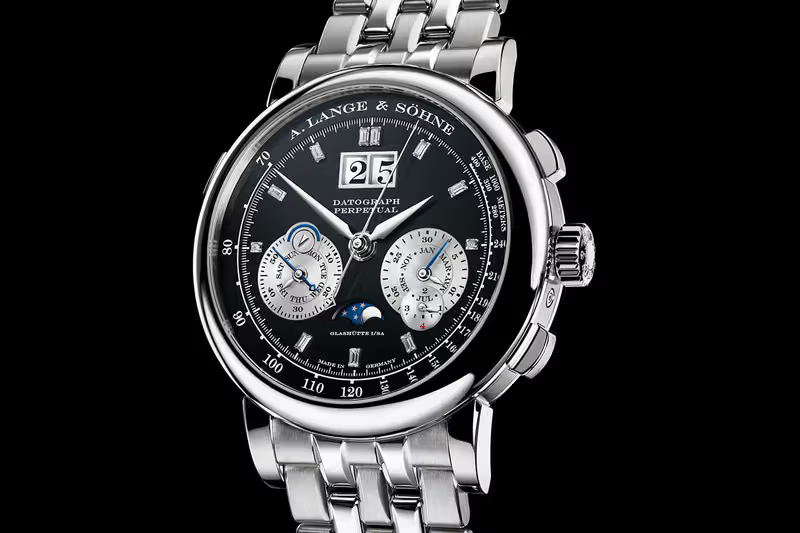
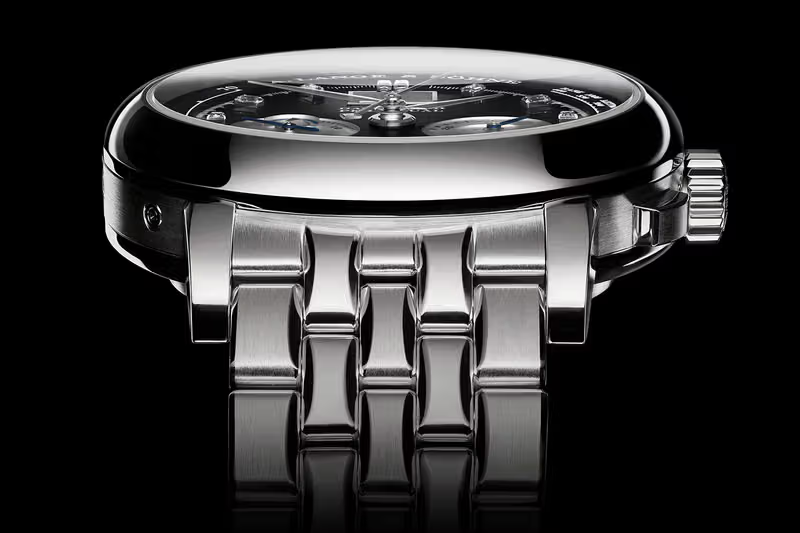
Official dimensions are 41mm across and 13.5mm thick. The 950 platinum extends from the case to the metal bracelet and folding clasp. Front photographs contrast a black main dial with silver-coloured subsidiary dials, while elongated diamond indices introduce changes in light. Side views distinguish the polished bezel, lugs and links. The material presence comes from the complete metal configuration, extending beyond a similarly coloured replacement strap.
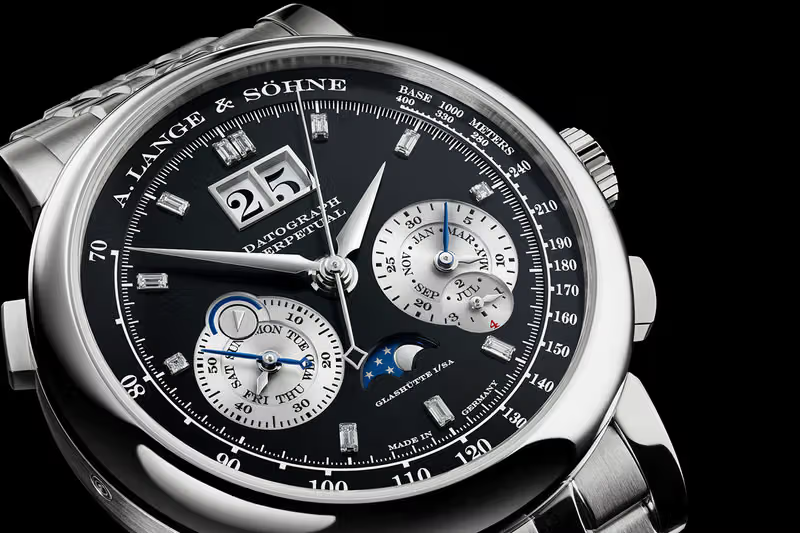
A close view of the outsize date, subdials and diamond indices.The side shows case height, pushers and bracelet links.
The outsize date at 12 o’clock provides an entry point. At 9, the subdial combines small seconds, weekday and day/night indication; at 3, it holds the jumping chronograph minute counter, month and leap-year cycle. Moon phase sits at 6. This distribution allows several information types to coexist without requiring a search through every small marking. Silver tones against black, and a blue moon-phase display, separate timekeeping, calendar and lunar information into visible layers.
Flyback timing and a perpetual calendar answer different questions
A column wheel controls the chronograph, while its jumping minute counter advances distinctly across each minute. Flyback allows one press to end a running measurement and begin another. Its operating logic suits comparing successive intervals, rather than separately stopping, resetting and restarting. Short elapsed-time readings cooperate within the same mechanical system as the longer cycles represented by weekdays and months.
The perpetual calendar accounts for month lengths and leap years, with conditions attached: correctly set and kept running, it needs a one-day correction on March 1, 2100, because of Gregorian calendar rules. The moon-phase display is designed to accumulate a one-day discrepancy after 122.6 years of continuous operation. These figures concern calendar and lunar displays, rather than promising millisecond-perfect daily timekeeping. If power runs out, the indications still require resetting.
Hand winding shapes the daily routine
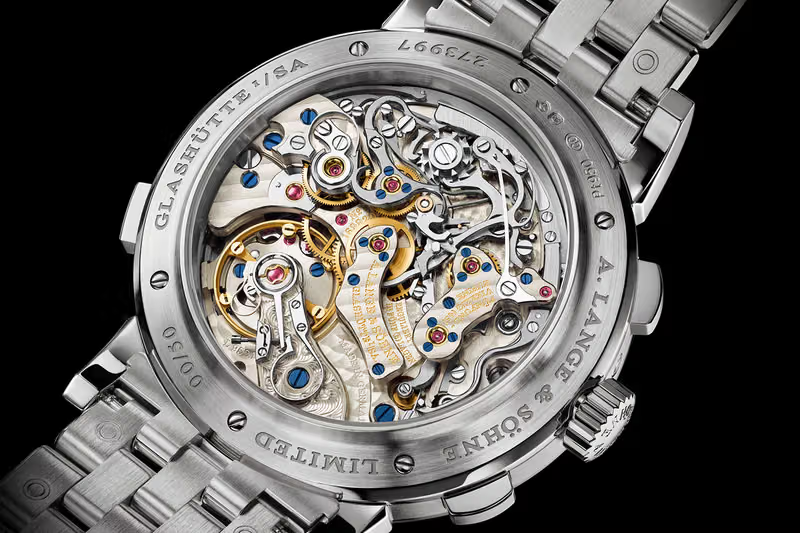
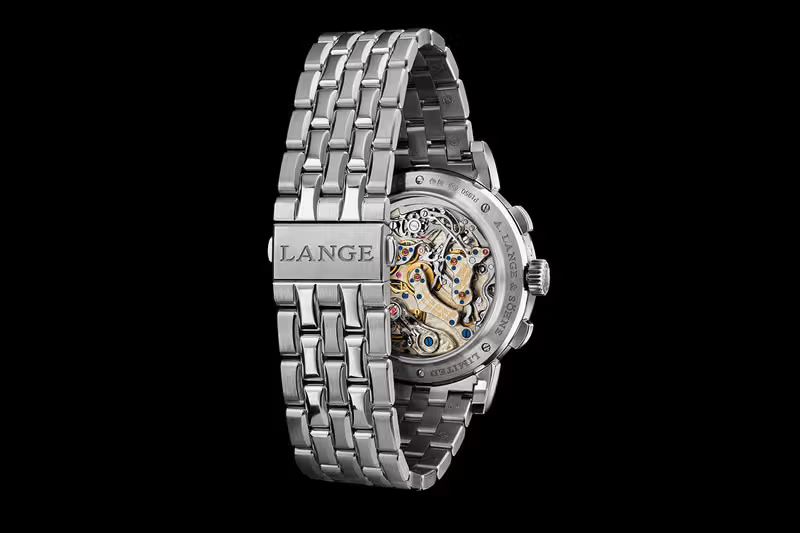
A sapphire back reveals the layers of the L952.1. It contains 556 parts, including 223 for the calendar mechanism. Official specifications state 18,000 semi-oscillations per hour, or 2.5Hz, and a 36-hour power reserve. Hand winding means the wearer replenishes energy through the crown. For a watch carrying several calendar indications, keeping it running also affects the adjustments subsequently needed.
The transparent back reveals mechanical and decorative layers.The full rear displays the bracelet, caseback and folding clasp.
The official reference page lists price on request, without a universal retail figure or live stock quantity. Water resistance is rated at 3 bar. Identify reference 410.136 E before asking the brand about supply and operation. Beyond platinum and gemstones, the interest lies in how chronograph, perpetual calendar, moon phase and winding frequency together define daily life with a complicated watch.