Making an OLED panel has traditionally required first producing a fine metal mask (FMM) riddled with microscopic holes, through which light passes to deposit organic light-emitting material onto the panel, pixel by pixel. This mask is notoriously troublesome and expensive to make, and once you scale it up — say, for a TV panel — it tends to sag under its own weight, throwing off alignment precision. This is the decades-old headache LG is now tackling head-on.
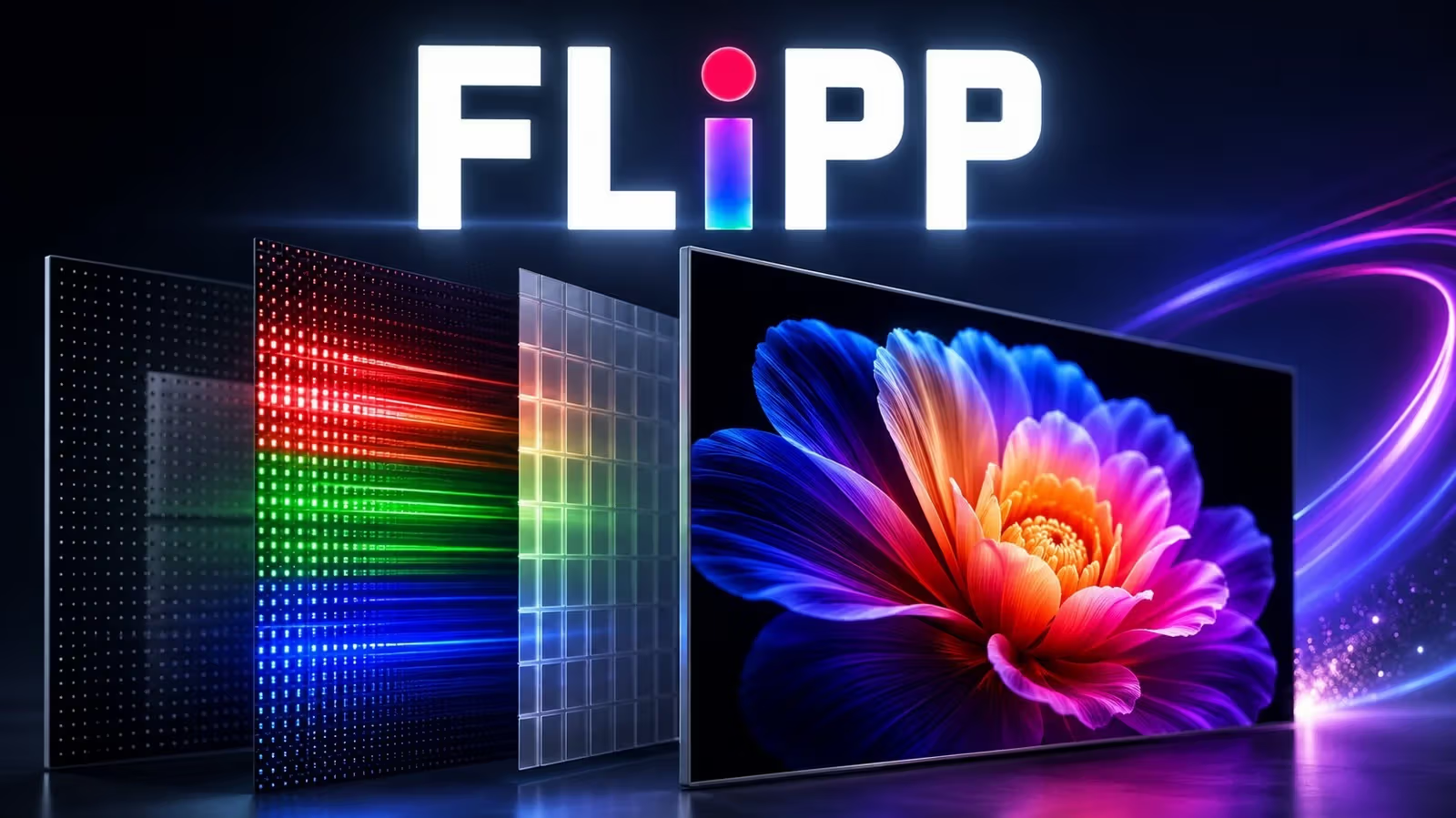
LG's new tech is called FLiPP (FMM-less Innovative Pixel Patterning) — and as the name suggests, it eliminates the metal mask entirely. Instead, RGB pixels are printed directly onto the panel in precise sequence, then a photolithography process using UV light "etches" away the excess material to complete the pixel pattern. LG's numbers are specific: panel brightness can be boosted to 1.6 times the original, lifespan extended to 2.4 times, and power consumption cut by another 13%.