When a silo holds more than materials: LuxuryLogico turns wind, memory and bodies into interfaces at AaltoSiilo
At Oulu’s AaltoSiilo until October 25, INTER-FACE:ing LuxuryLogico brings three physical installations and three VR works into dialogue with industrial architecture. A closing performance will add live bodies and sound to the encounter.
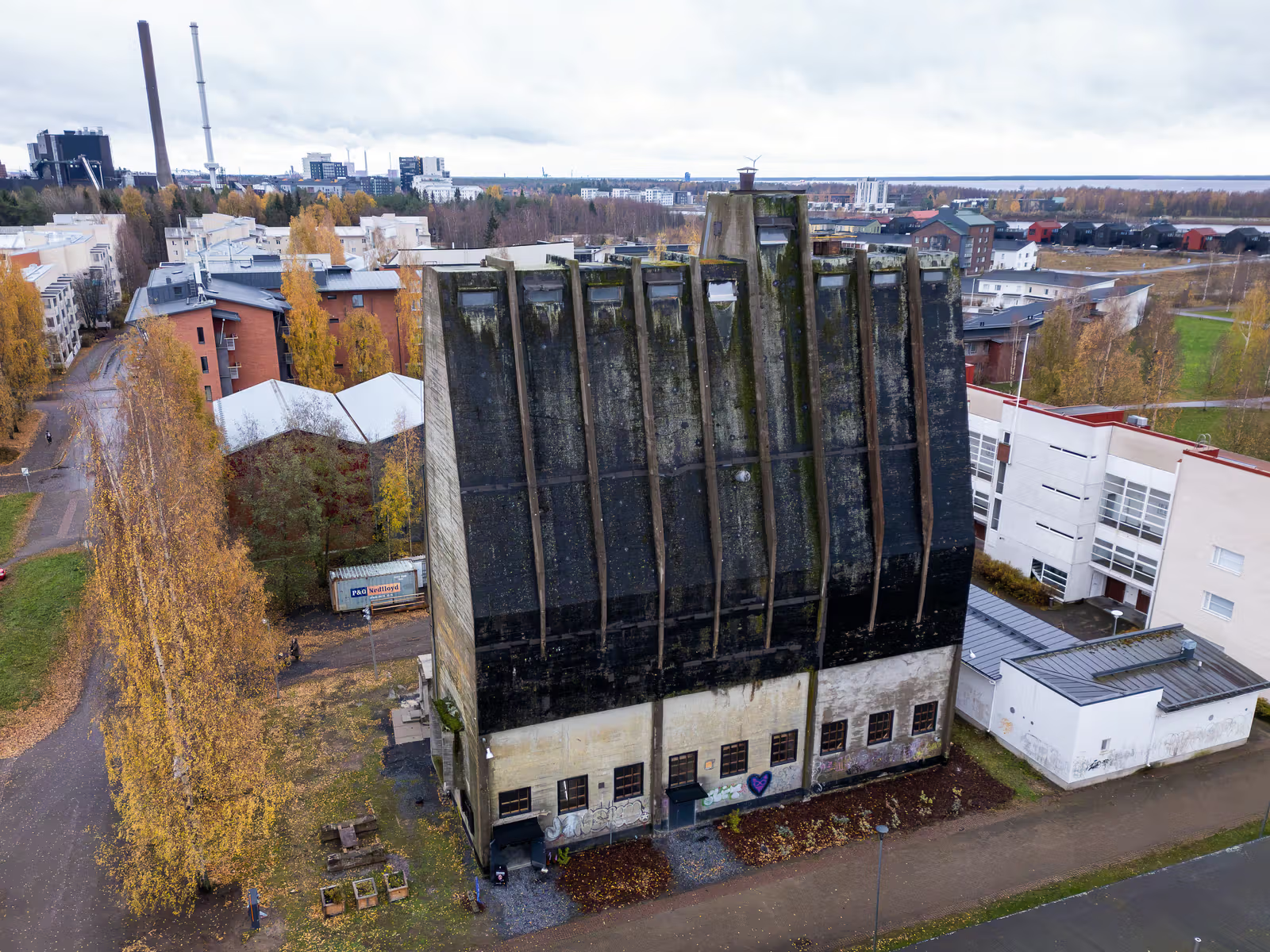
Technology-based art need not begin with a pristine screen. In Oulu, Finland, LuxuryLogico has brought six works into AaltoSiilo, a former silo serving the timber industry. Old concrete, vertical space and industrial traces are not backgrounds to conceal; they become part of looking. Curated by Shuchen Wang, INTER-FACE:ing LuxuryLogico opened on October 15 as an official Oulu2026 European Capital of Culture project and runs until October 25. Its question is less how spectacular technology can be than how people can relate to their environment when perception increasingly depends on devices.
Read the building before the installation
Built in 1931 and designed by Alvar and Aino Aalto, AaltoSiilo differs from a conventional white-cube gallery in more than appearance. Its scale, materials, acoustics and former purpose all enter the reading of the works. A beam of light against a wall without visible history asks different questions from one inside a building once dedicated to production.
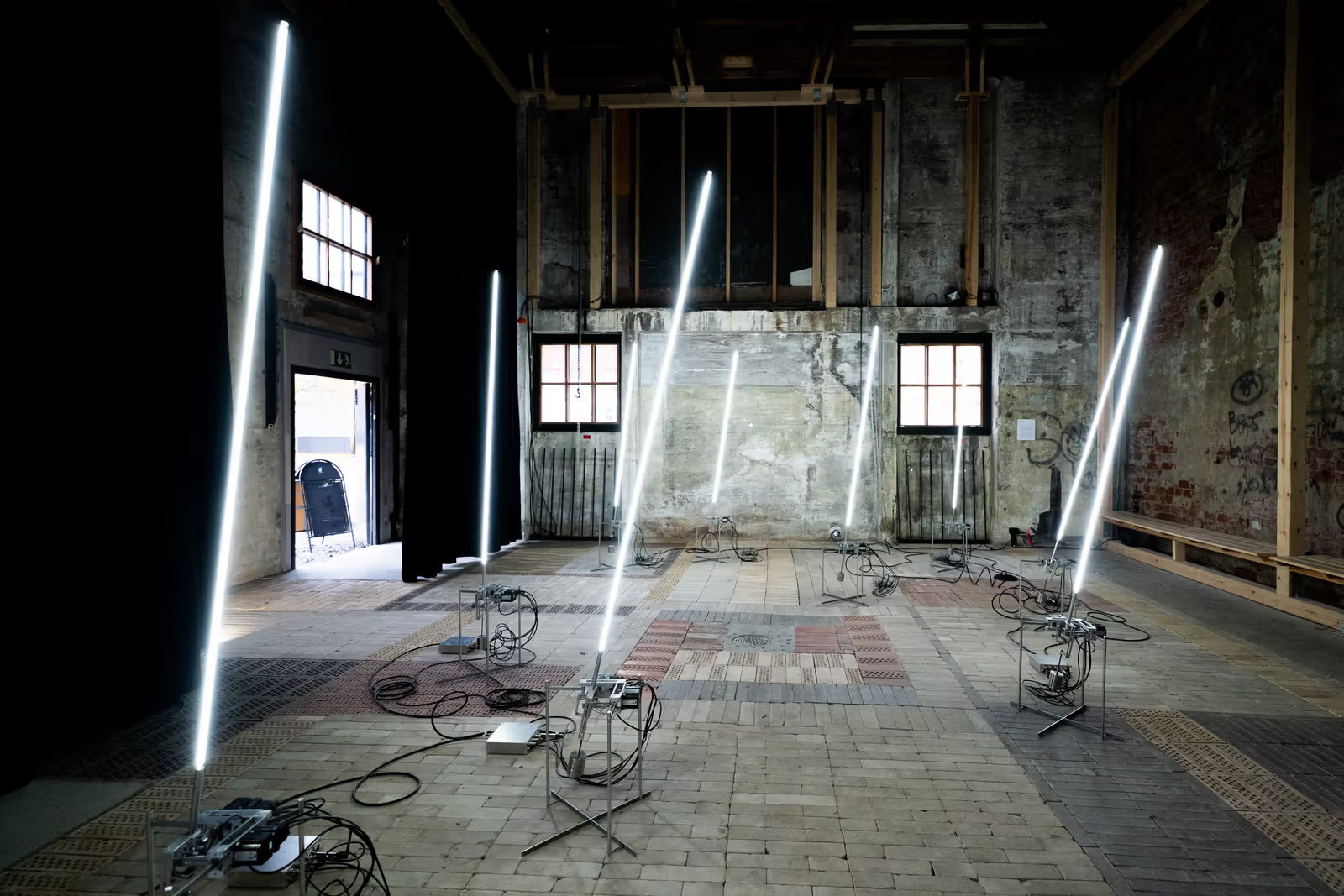
Official exhibition photographs show Wind Field II’s slender illuminated elements, mechanical bases and cables standing directly within an interior marked by time. The new system does not wrap the old space in a smooth replacement surface. This juxtaposition is worth noticing: the building provides more than volume. It allows a viewer to consider both how an environment was used and how it is now sensed anew. This is a reading of photographs and curatorial materials, not an account of an on-site visit.
The “interface” in the title is therefore more than a touchscreen. The curatorial concept treats bodies, architecture and landscapes as places where encounters occur; “-ing” suggests relationships that remain unfinished. Set the silo’s former storage function beside its current accommodation of light, sound and visitors, and a shift becomes legible: from managing objects to allowing different experiences to share a space.
Six works, not six technology demonstrations
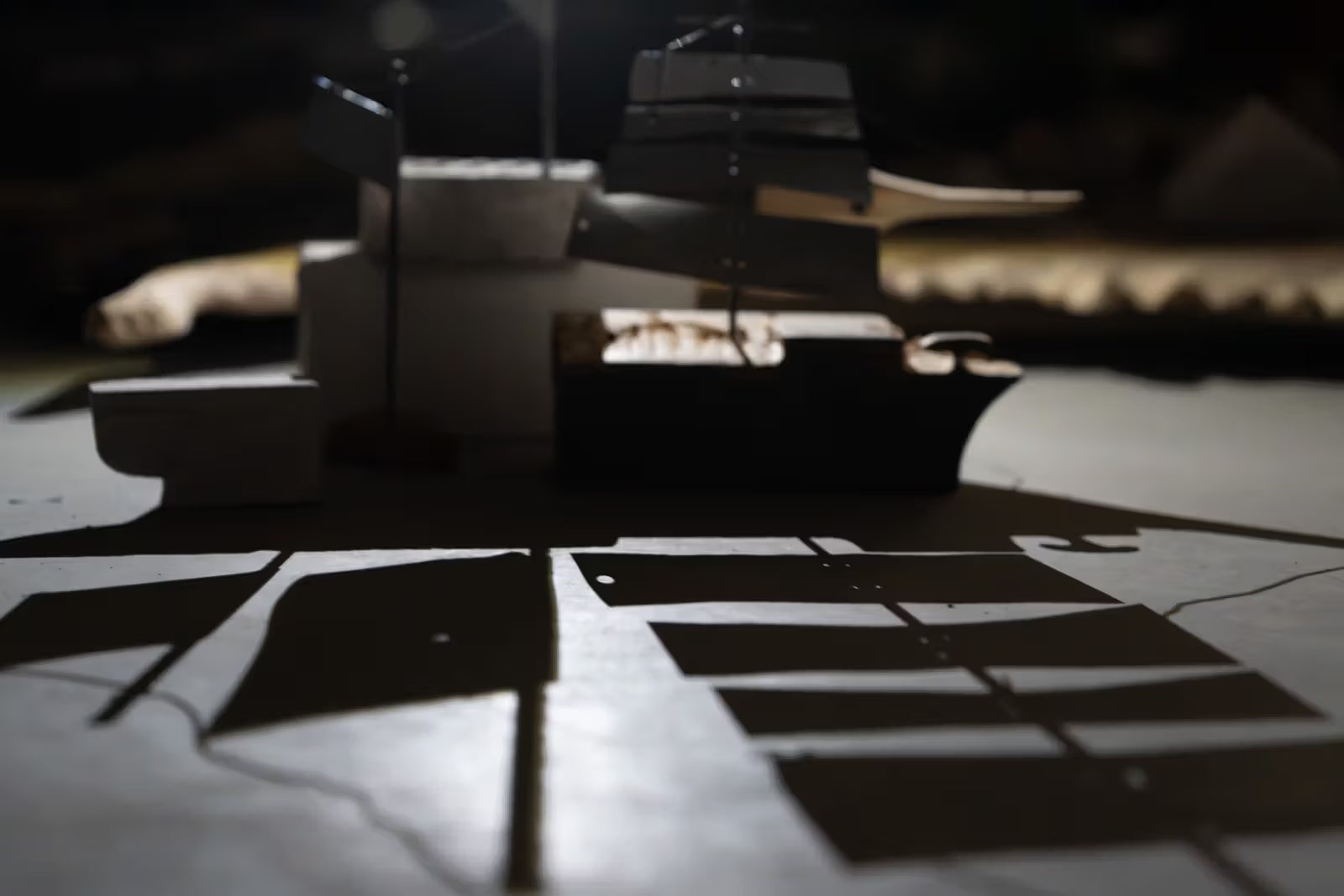
The exhibition comprises three physical installations and three immersive VR works. The Past Is a Foreign Country starts with Finnish tar production and its industrial and environmental traces, bringing local history into a narrative of light and sound. Accord-Désaccord considers how relationships between people, and between people and their surroundings, are negotiated across differences. These works offer an entry point beyond understanding a particular technology: they ask us to recognise that technology and history have never been separate.
Wind Field II turns wind speed, direction and sound into data, computation and rhythms of light. Something that cannot be held can nevertheless be measured, translated and returned in another form. The useful question is not whether the installation successfully copies nature. It is what becomes visible when nature is treated as a readable signal—and what sensations remain outside the model.
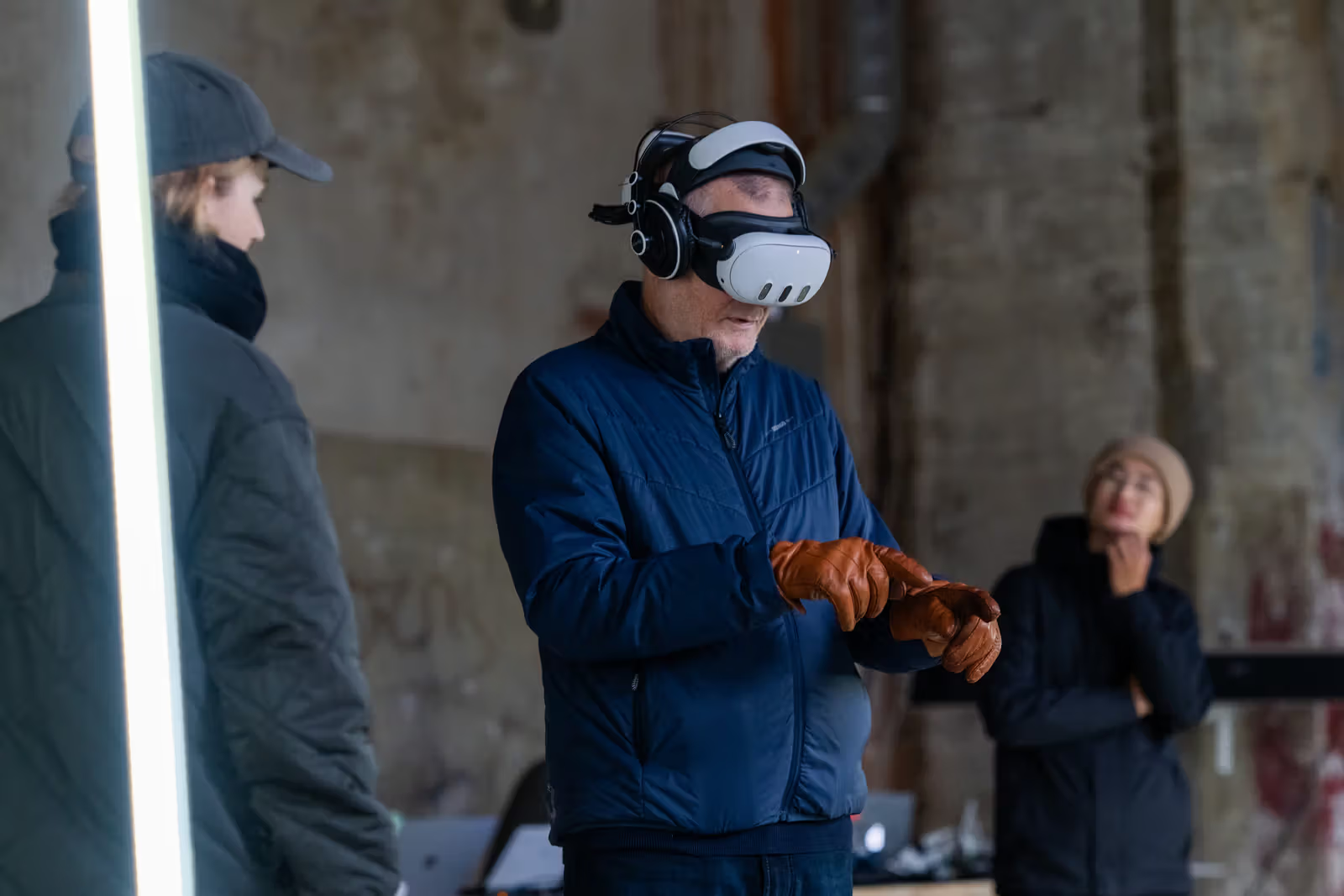
Presented in VR, Rain Haze II, Solar XI and Space 201 address marine debris, an artificial sun and imagined co-evolution between humanity and emerging forms of life. Their scale moves from the material leftovers of consumption to the pull of screens on our gaze, then outward to the cosmos. VR need not function only as an escape from reality here. It can also create a distance from which to return, rearranging relationships that are difficult to see together in daily life.
Luxury need not mean more; collaboration need not be a list of names
Beginning with the collective’s name, LuxuryLogico, the exhibition places luxury in the context of time, nature, human connection, coexistence and freedom. This is not a claim that machines and digital devices directly solve ecological problems. It proposes a different measure of value: asking only how new the equipment is or how striking the visuals are may obscure questions of environmental responsibility and living together.
Taiwan–Finland collaboration also enters the works themselves. Finnish composer and sound artist Lau Nau contributes music to The Past Is a Foreign Country. The closing event on October 25 will feature Oulu-based TaikaBox and sound artist Jussi Alaraasakka. When living bodies enter the space of kinetic installations, an interface is no longer simply a relationship between visitor and device. It also includes how performers respond to space, machines and one another. The forthcoming performance leaves one last open question: how will bodies change our reading of these installations?
Founded in Taipei in 2010, LuxuryLogico has long brought sculpture, mechanics, programmed imagery, music and performance together. Within that trajectory, the exhibition’s point is not to attach a technology label to each work but to observe how different media transform one another. For readers interested in cities and design, AaltoSiilo offers a concrete example: industrial reuse does not necessarily require erasing the past before new cultural activity can happen.
Visiting and the closing event
INTER-FACE:ing LuxuryLogico runs October 15–25, 2026, at AaltoSiilo, Paalikatu 21, 90520 Oulu, Finland. Admission is free. The official Oulu2026 event listing gives opening hours of Tuesday–Friday, 15:00–20:00, and Saturday–Sunday, 12:00–18:00. The finissage and live performance begin at 14:00 on Sunday, October 25. All times are local to Finland; check the latest official notice before travelling.