Magnum’s Fact/Fiction Print Sale: 75 Images, Prices From US$110 and the Six- and Nine-Inch Formats
Magnum’s Square Print Sale runs through November 1 Eastern Time. European and US images frame a guide to visual illusion, paper sizes, white borders, signatures, stamps and prices.
Magnum Photos opened its “Fact/Fiction” Square Print Sale on October 26, 2026, with 75 images in the official selection and sales running through November 1. Bringing documentary scenes, visual illusions and narrative photographs together, it asks how photography sits between what we see and what we understand. Unframed 6-by-6-inch prints start at US$110, while selected works introduce a 9-by-9-inch option for the first time. It offers a smaller-format route into photographic prints, with specifications that vary by image.
Why can a real street scene feel fictional?
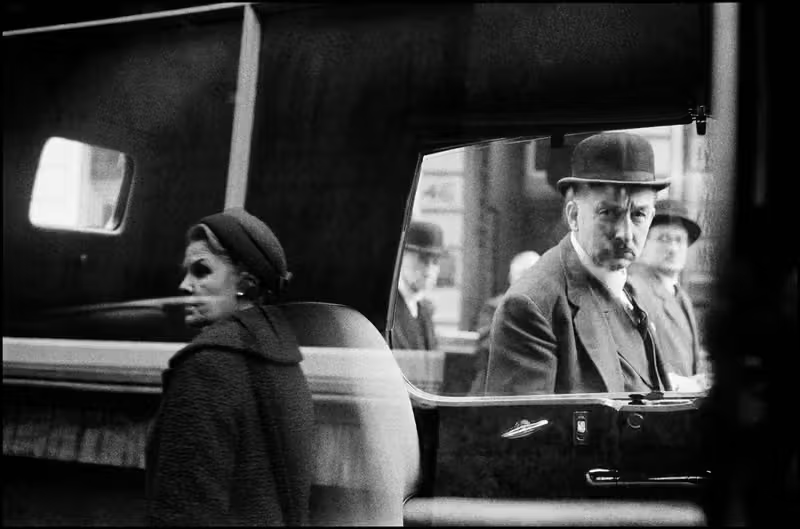
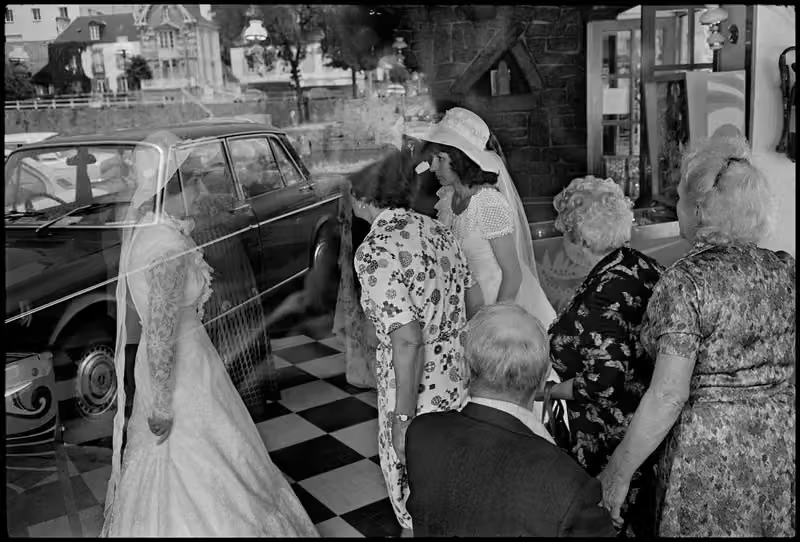
Bruce Davidson’s 1960 photograph in London layers a man, a woman, the street and the car interior across a window. Viewers must decide what lies in front of the glass and what is reflected before the relationships become clear. Guy Le Querrec’s 1978 wedding photograph in Auray, France, extends that uncertainty: it depicts the wedding of triplet sisters, so the similar brides are not simply mirror images. Knowing the context changes a second look at the glass and the crowd, loosening an initially confident reading.
At the 1978 wedding of triplet sisters in Auray, France, glass and a crowd complicate the brides’ positions.
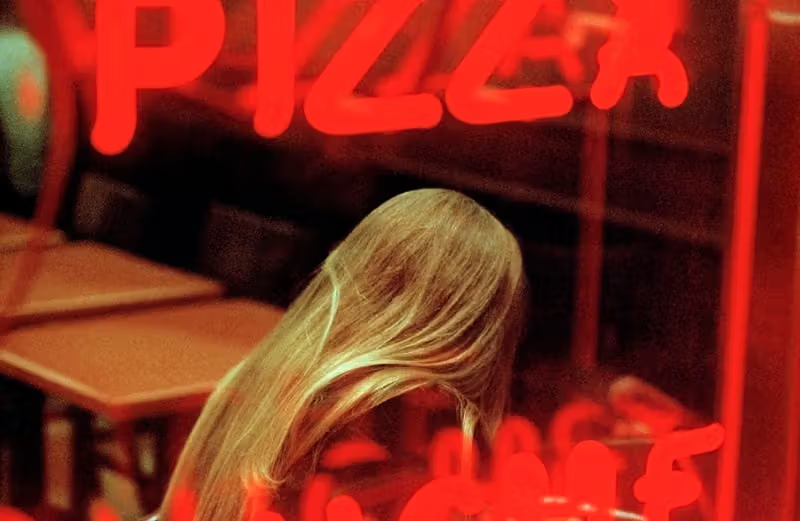
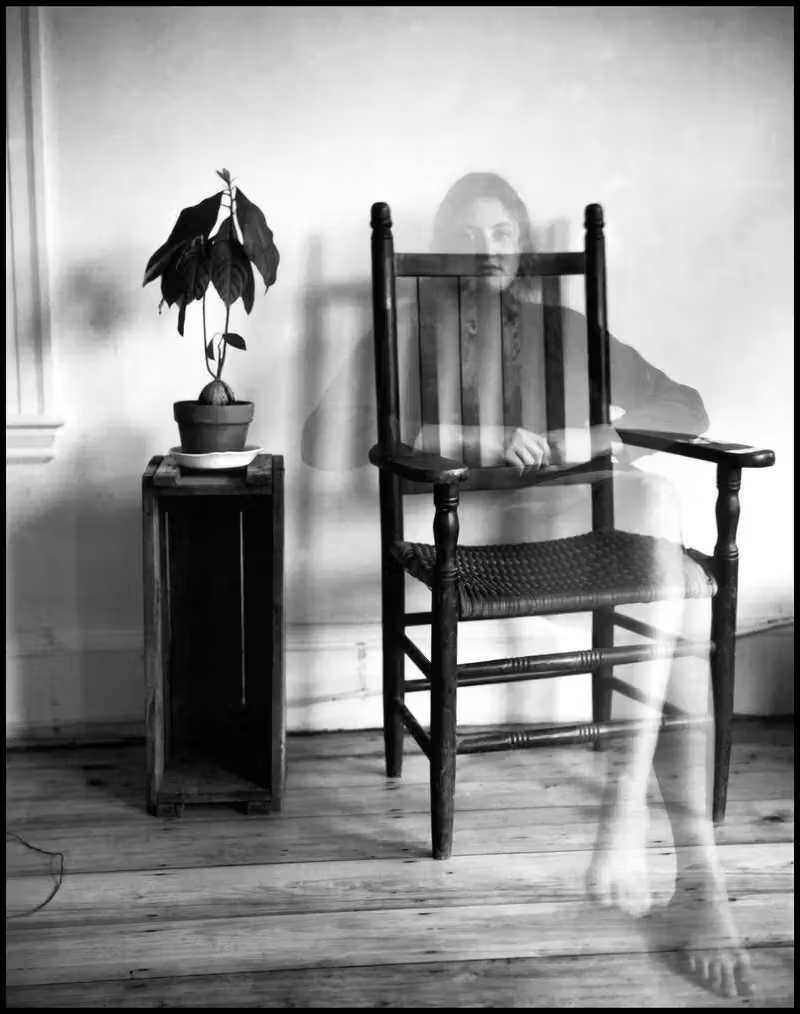
In her self-portrait made in Cambridge, Massachusetts, in 1970–1971, Susan Meiselas leaves a translucent figure beside a wooden chair. A plant and floorboards complete a quiet but unstable interior. Constantine Manos’s 2005 New York pizza-parlor photograph creates distance through overlapping red lettering, glass and a young woman. Together, these images make fact versus fiction more than a choice about whether an event happened. It also concerns viewpoint, light and the way an image organizes information.
A 2005 Times Square pizza-parlor photograph layers red signage and a figure into saturated color.In a Cambridge self-portrait from 1970–1971, a translucent figure appears beside a wooden chair and plant.
Six and nine inches describe the paper, not a square crop
Product specifications list a Digital C-Print on Fuji Crystal Archive Matte paper. Six-by-six-inch paper measures approximately 15.24 centimeters square, with an image up to 5.5 inches, or about 14 centimeters, on its longest side. Nine-by-nine-inch paper measures approximately 22.86 centimeters square, with an image up to 8.25 inches, or about 20.95 centimeters, on its longest side. Photographs retain their proportions and white borders. Horizontal streetscapes and vertical portraits are not automatically cropped into squares, so those borders also matter when choosing a frame.
Larger-format availability is decided by each photographer or estate. Authentication also differs by work: Davidson’s print is described as stamped, Manos’s as estate-stamped, and the Le Querrec and Meiselas prints as hand-signed. The archival labels are attached to the backs of the prints. Each purchase is a print with a particular paper, size and authentication method. Seeing an artist’s name on a page does not mean every option carries a personal signature on the front of the photograph.
Prices, closing time and how to choose
The starting price of US$110 applies to an unframed six-inch print. Framing or a larger size changes the cost. For example, the nine-inch unframed version of Manos’s pizza-parlor photograph costs US$275. Measure the intended display space before comparing: a small print invites close viewing, while a larger one changes the relationship between figures, lettering and the wall. Shipping is calculated at checkout; final taxes and delivery conditions depend on the destination and order page.
The official shop lists a closing time of November 1 at 11:59 p.m. Eastern Standard Time, equivalent to November 2 at 12:59 p.m. in Taiwan. Visit Magnum’s official selection for this sale to compare images, photographers, paper sizes and framing options. These photographs originated in different decades and places but now meet under one theme. Reading their contexts alongside the images reveals more of the selection’s appeal than choosing only by whether a picture matches a wall color.