Ditching the Mirror: DSLR vs. Mirrorless, How to Choose in 2026
Breaking down the mechanical differences between DSLR and mirrorless cameras — and pointing out that the real dilemma isn't for beginners, but for longtime shooters who already own a full lens collection.
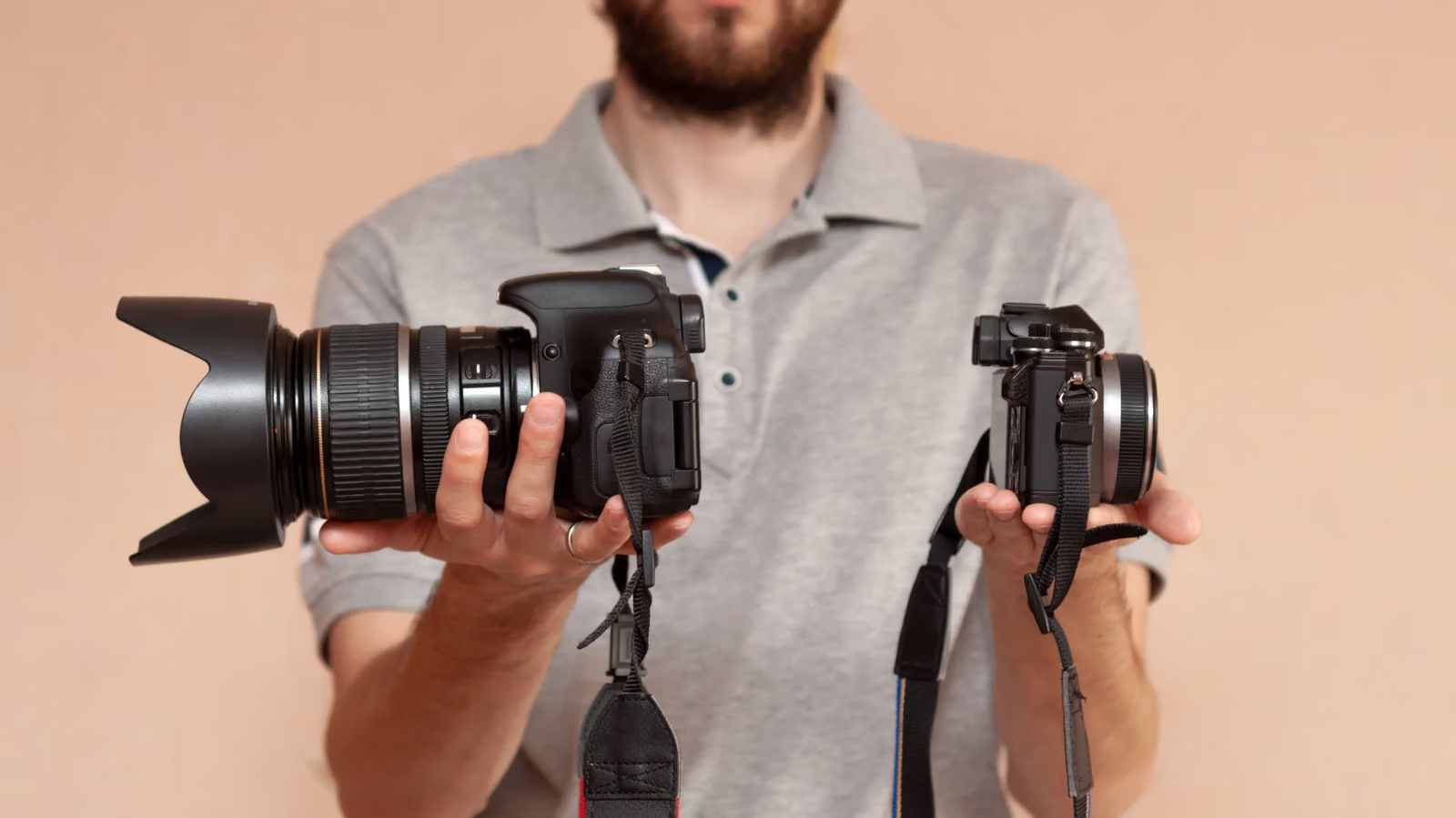
The moment you press the shutter, a mirror inside a DSLR flips up, redirecting light onto the sensor. Mirrorless cameras skip that mechanical step entirely — light hits the sensor directly, and what you see through the electronic viewfinder or rear screen is exactly what the sensor is capturing. DSLR stands for digital single-lens reflex camera. Both types are digital cameras; the only real difference is how the light gets routed.
Breaking this down bluntly: for anyone buying their first interchangeable-lens camera, the answer barely requires thought — just go mirrorless. The real headache is for longtime shooters who've already built up a full lens collection and are weighing whether to switch systems.
Removing the mirror changes more than just size
Because the sensor is constantly exposed to the scene, mirrorless cameras can pack far more autofocus points across the entire frame, tracking eyes, animals, or vehicles as subjects — and they can show you what your exposure will actually look like before you even press the shutter. Without the mechanical slap of a flipping mirror, electronic shutters can also fire off extremely fast burst sequences. These aren't minor tweaks — they fundamentally change how "what you see is what you get" the shooting experience feels, making it much easier for beginners to pick up.
The trade-off is battery life. A DSLR's optical viewfinder doesn't rely on a screen to display the image, so composing a shot doesn't drain extra power — battery performance is usually more durable than on mirrorless bodies. Without the mirror mechanism, camera bodies can indeed be made smaller, but strap on a big telephoto lens and that "pocket camera" fantasy falls apart pretty fast.
Image quality itself isn't really the deciding factor anymore — as long as the sensor and lens are good enough, either format can produce great photos. Where mirrorless truly pulls ahead is in autofocus, burst speed, video capabilities, and overall shooting experience — which is exactly why Canon and Nikon have shifted their resources toward mirrorless systems.
If you've already got a bag full of DSLR lenses
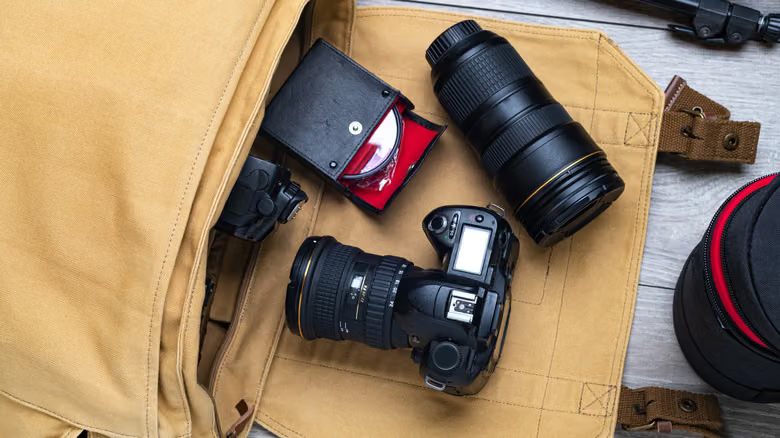
For anyone buying their first interchangeable-lens camera, the choice is simple: just go mirrorless. But if your camera bag is already stuffed with Canon EF or Nikon F lenses, a full set of familiar gear, and a body that can handle anything you throw at it, switching systems might mean spending a fortune to solve a problem that doesn't actually exist. An adapter can at least make the transition period less painful.
The market is undeniably tilting toward mirrorless. A Shotkit survey of 1,000 photographers found that 63% of professional respondents use mirrorless cameras — though the sample was drawn from Shotkit's own readership and photography community, not a representative cross-section of all working photographers. Nikon denied in 2022 that it was discontinuing DSLR development, calling such reports mere speculation — but in reality, it hasn't released a new DSLR model since 2020, with all recent releases focused on the Z mirrorless system. Pentax is the notable exception, with parent company Ricoh Imaging stating it remains committed to SLR technology. That leaves DSLRs in an awkward spot: bodies are still perfectly usable, millions of photographers already own the gear, and the used market can be a good deal — but building a DSLR system from scratch in 2026 is a tough case to make. In 2025, mirrorless cameras accounted for roughly 90% of interchangeable-lens camera shipments.