Looks Like Wear OS, Fakes Like a Knockoff: The Moto Watch 2026's Split Personality
Priced at $150 with a 47mm aluminum case and steel crown, it looks every bit like a Wear OS smartwatch — but underneath, it's running on a barebones RTOS system. Engadget's hands-on review exposes this watch's biggest flaw: it's a high-fidelity impersonation.
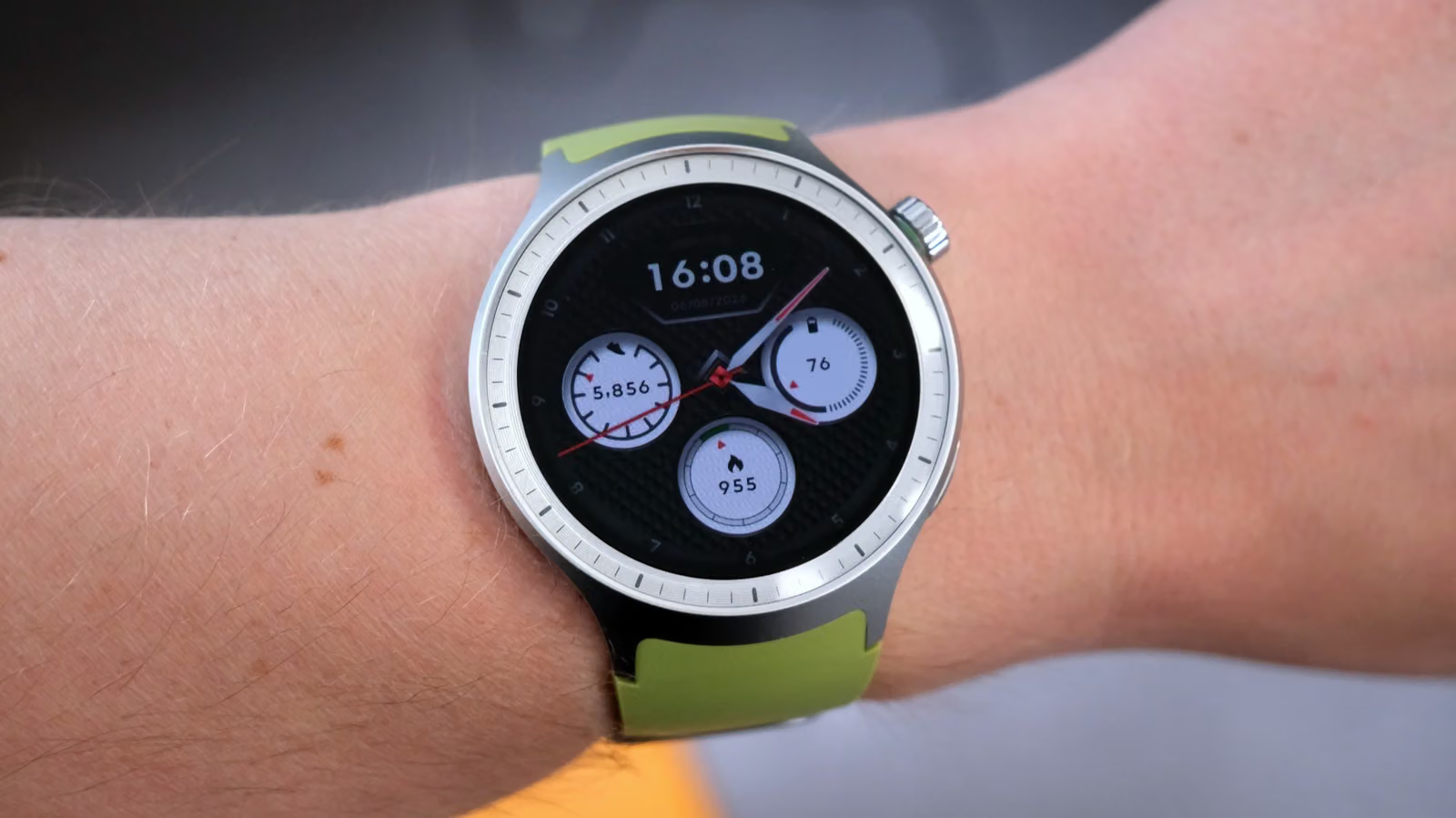
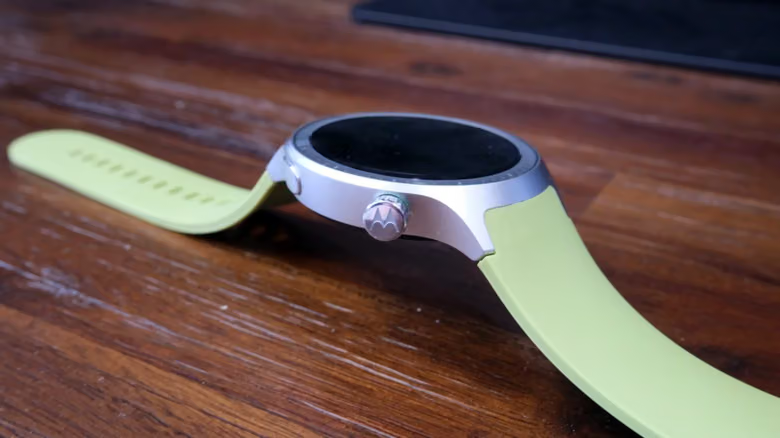
The moment Engadget's Daniel Cooper pulled the Moto Watch out of its box, his first thought was: there's no way this only costs $150. A 47mm aluminum case, "Designed by Motorola" etched onto the body, a satisfyingly mechanical stainless steel crown — the weight in hand rivals watches costing twice as much. Compared to the likes of the Fitbit Charge 6, which sits in the same price bracket but often feels more like a glorified fitness band, the Moto Watch wins on looks alone.
The problem is everything else.
This watch doesn't run Wear OS — it runs Real Time OS, a low-power architecture originally designed for embedded systems. The interface is skinned to look nearly identical to Wear OS, with icon layouts and navigation logic close enough to fool you at a glance. But start actually using it and you hit walls fast: no third-party apps, no Google services, no mobile payments, and music has to be manually synced from files already on your phone. Cooper describes the uncanny familiarity as making the disappointment worse — you expect it to do what Wear OS does, and then discover it was never built that way to begin with.
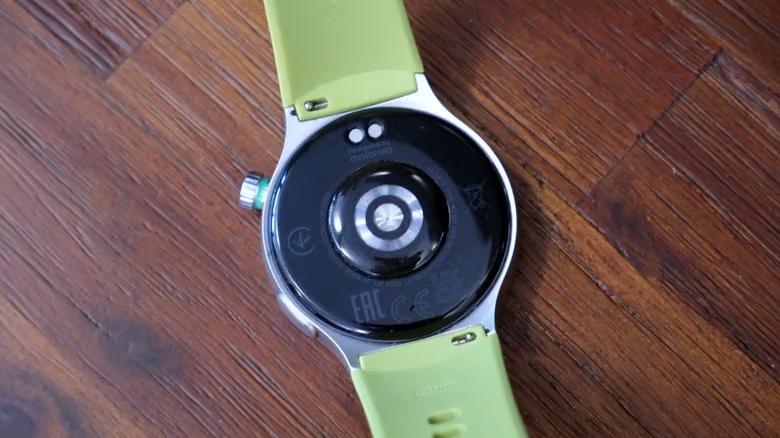
Even who actually made it remains murky. Previous generations of Motorola watches were manufactured under license by Canadian OEM CE Brands/Vitalist, and the official contact listed on the "About Us" page is still CE Brands — yet the retail packaging lists Motorola Mobility as both manufacturer and importer. When asked, Motorola's PR team said they "couldn't provide further details." The 2019 revival of the Moto 360 followed a similar playbook.
On the hardware side, Cooper's review unit was a special edition that came with both a metal link band and a green silicone sport band in Pantone's "Herbal Garden" shade. Swapping the band, however, immediately caused a pin from the metal bracelet to pop out and fall to the floor — a common flaw with cheap straps, and one that set the tone for the rest of the experience. The display is a 1.43-inch round OLED covered in Corning Gorilla Glass 3, with IP68 water resistance — specs that read no differently from many actual Wear OS watches on paper. As for the chipset inside, Motorola again offered nothing beyond "unable to disclose."
Setup was rocky from the start: the companion app crashed twice before even reaching the setup screen. The interface suggests you can activate the watch without linking a Motorola account, but skip that step and the app simply freezes, forcing a restart and eventually your email address anyway. The onboarding animations stuttered throughout. Notifications don't sync from your phone's settings by default — you have to manually select which apps get to push alerts, meaning something as basic as Google Calendar reminders can easily get overlooked.
Health tracking comes courtesy of a partnership with Polar, and the app's health dashboard actually looks quite polished — a triple-ring display for steps, calories burned, and active time, with sleep, recovery, heart rate, and stress metrics broken out below. But Cooper points to one glaring omission: there's no automatic workout detection. Go for a run or a walk, and the watch won't start tracking on its own — you have to manually start it every time. The quick-start workout menu, on the other hand, is exhaustively comprehensive, covering everything from boxing, jazz dance, judo, and kabaddi to hula hooping, kite flying, tug-of-war, and darts — ironic given that the promotional photos mostly show people in casual clothes, not the type of serious athletes who'd bother manually opening an app to start a timer.
GPS is advertised as dual-band, but real-world testing showed inconsistent results — dropping location fixes even in open outdoor areas where signal has never previously been an issue, occasionally triggering pre-recorded voice warnings mid-drop. The one area where Cooper couldn't find fault was battery life: with the always-on display enabled, it still lasted 8 days before needing a charge, outperforming the official one-week estimate. He jokes that this might simply be because he was so reluctant to actually use the watch that the battery lasted longer than usual as a result.
Cooper's verdict is blunt: the word that kept coming to mind throughout testing was "fake." Not as an accusation against the manufacturer or the brand's intentions, but because the overall experience feels less like a complete, original product and more like a convincing counterfeit of Wear OS. From a distance, it looks like a budget smartwatch built with genuine care; up close, it falls apart under scrutiny. Engadget scores it 6.5/10 at $150 — praised for battery life and build quality, but held back by restrictive software, no automatic workout detection, and zero compatibility with the Wear OS ecosystem.