Mume Plans Kanazawa Dinner; The Front House and Brisé Launch Autumn Menus
Michelin-starred Mume in Taipei will hold a one-day collaboration dinner with Respiración in Kanazawa on November 5, while Kaohsiung's The Front House and Taipei's Brisé each launch autumn tasting menus with distinct aging and pairing approaches.
Taipei's Michelin one-star restaurant Mume will travel to Kanazawa, Ishikawa Prefecture, Japan, on November 5, 2026, to hold a one-day-only collaboration dinner with the local restaurant Respiración, co-hosted by San Pellegrino Japan. The event will be held in two seatings, lunch at 12:00 and dinner at 18:00, with all guests seated together at each sitting. The price is 38,000 yen per person (tax included, plus a 10% service charge). This marks a single-day pop-up collaboration in Japan led by Mume's culinary director Kai Ward and his team, bringing chefs from Taipei and Kanazawa together at one table to present their respective culinary languages.
How do Mume and Respiración interpret local ingredients?
Since opening in Kanazawa in 2017, Respiración has built its identity on modern Spanish cuisine incorporating local Ishikawa ingredients—an approach with a similar logic to Mume, founded in Taipei in 2014, which blends Taiwanese produce with Western techniques. Both reinterpret local ingredients through non-traditional culinary systems. This collaboration functions more as a side-by-side test of two methodologies built around "local ingredients × foreign technique." The announcement only confirms the two seatings with all guests dining together; the full menu has not yet been disclosed in available materials, so prospective guests should watch for further official details.
What do the autumn menus at The Front House and Brisé offer?
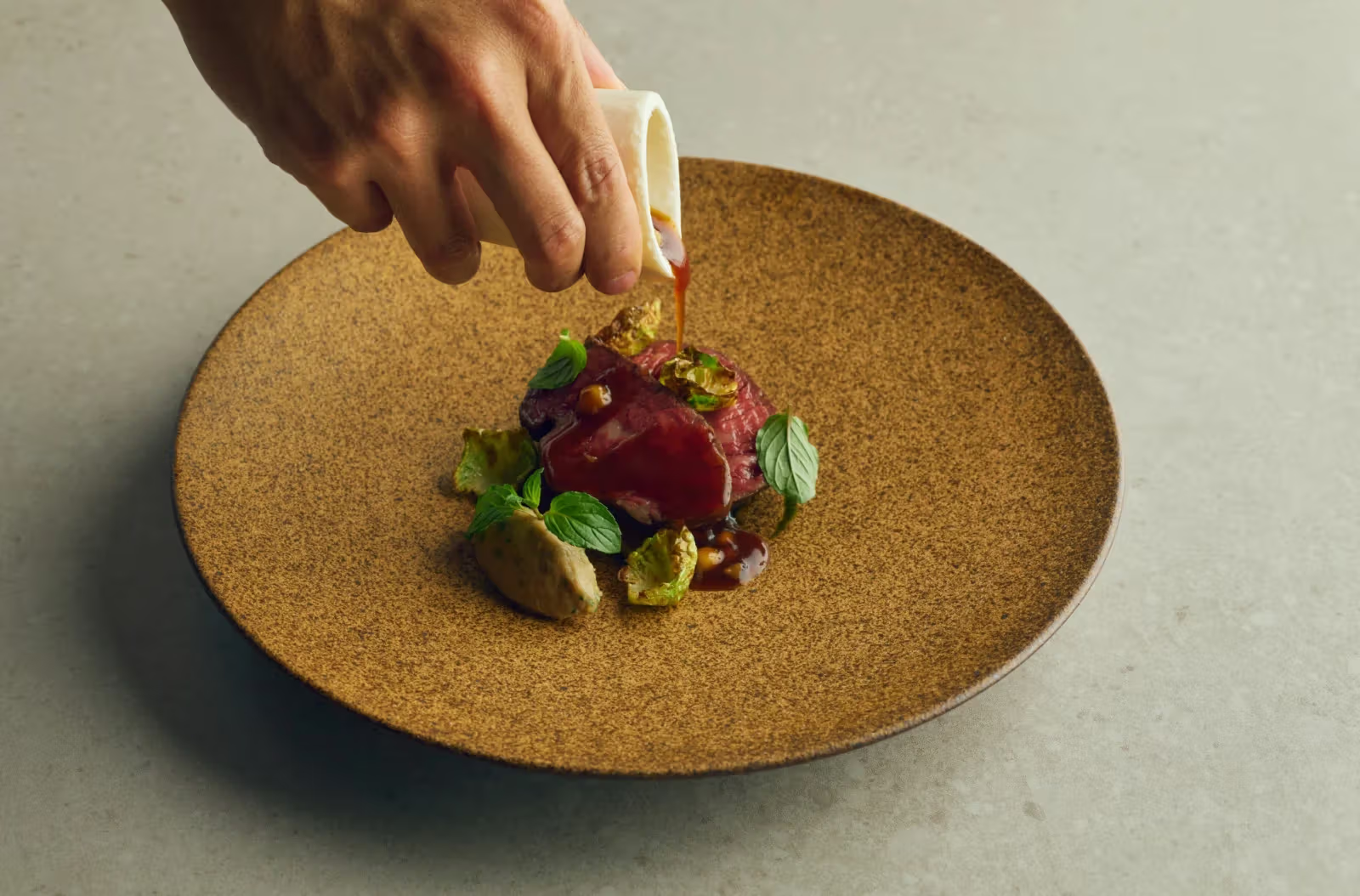
Kaohsiung's The Front House presents its nine-course autumn menu, "Seasons in Transition, Stored Through Time," priced from NT$3,680 plus a 10% service charge, concluding with tea or coffee. The main course offers a choice of New Zealand venison filet dry-aged for 3 days, or, for an additional charge bringing the total to NT$3,880, an F1 Ouu beef filet dry-aged for 7 days; since the two options involve different meats as well as different aging periods, the price difference cannot be attributed to aging time alone. A five-glass wine pairing is available for an additional NT$2,180. The Front House is run by chef Tsai Chung-ho together with his wife Chen Yu-chi; it opened in 2023, earned its first Michelin star in 2025, and retained that rating in the 2026 guide.
A dish from The Front House's autumn menu, "Seasons in Transition, Stored Through Time," featuring a choice of dry-aged venison or Ouu beef as the main course. Image: 方蒔 The Front House
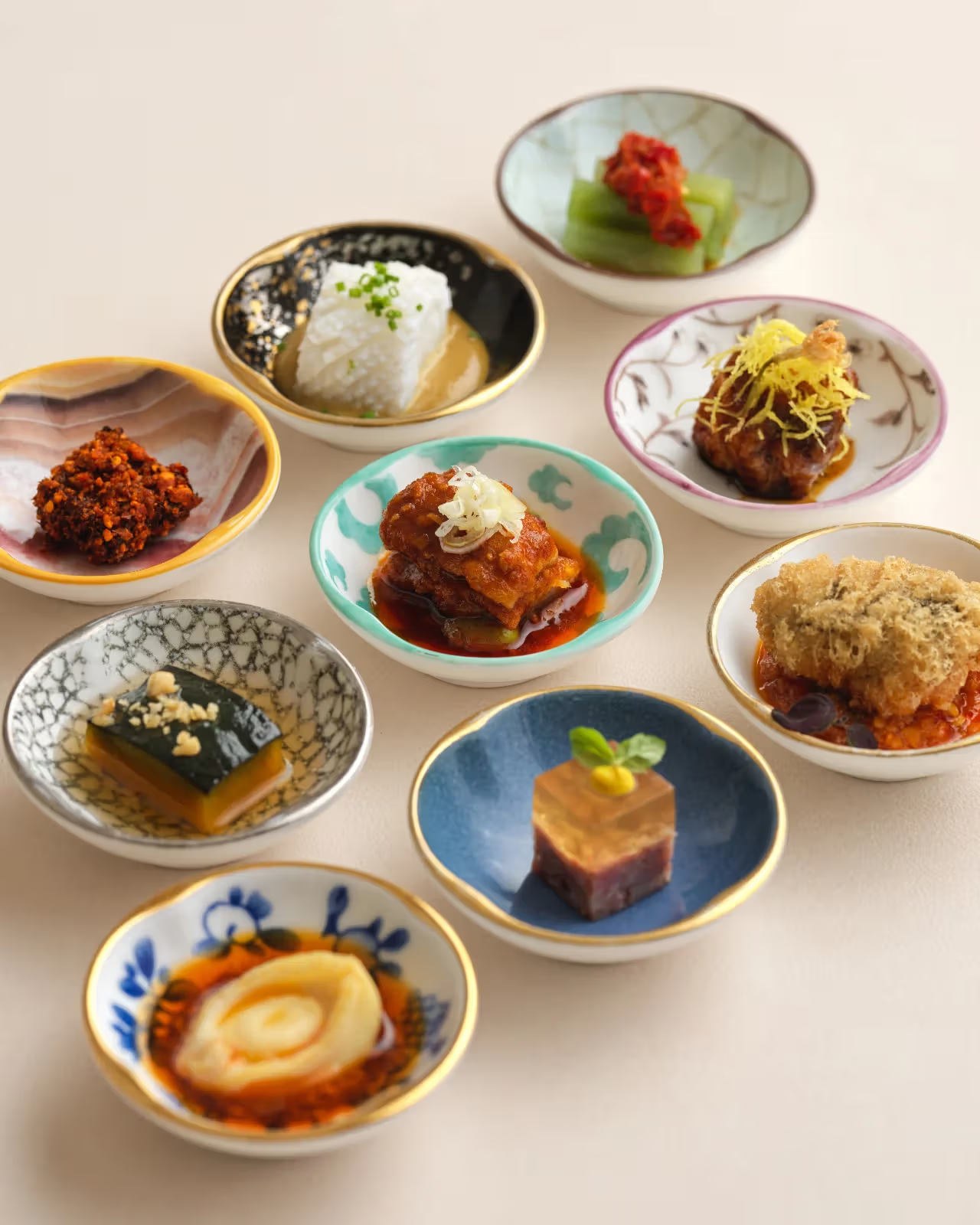
Taipei's Brisé has been serving its autumn menu, "Stored Autumn," since October 1, available in two formats depending on seating time: a six-course weekday lunch at NT$2,680, and a nine-course menu for weekday dinners and weekend lunches and dinners alike at NT$3,880, both plus a 10% service charge. The main course can be upgraded to Australian wagyu for an additional NT$680. Wine pairing options are more finely tiered: alcoholic pairings come in three glasses for NT$1,180 or five glasses for NT$1,980, while non-alcoholic pairings are offered as three glasses for NT$980 or five glasses for NT$1,480, effectively turning the pairing selection into a graduated menu. This season, chef Johnny Chiang introduces "Returning to the Stove," inspired by pickled mustard green and duck soup, while pastry chef Nana incorporates Hunan-style cured bacon into an ice cream dish—both dishes transform familiar comfort foods, a home-style soup and Hunan cured bacon respectively, into new forms.
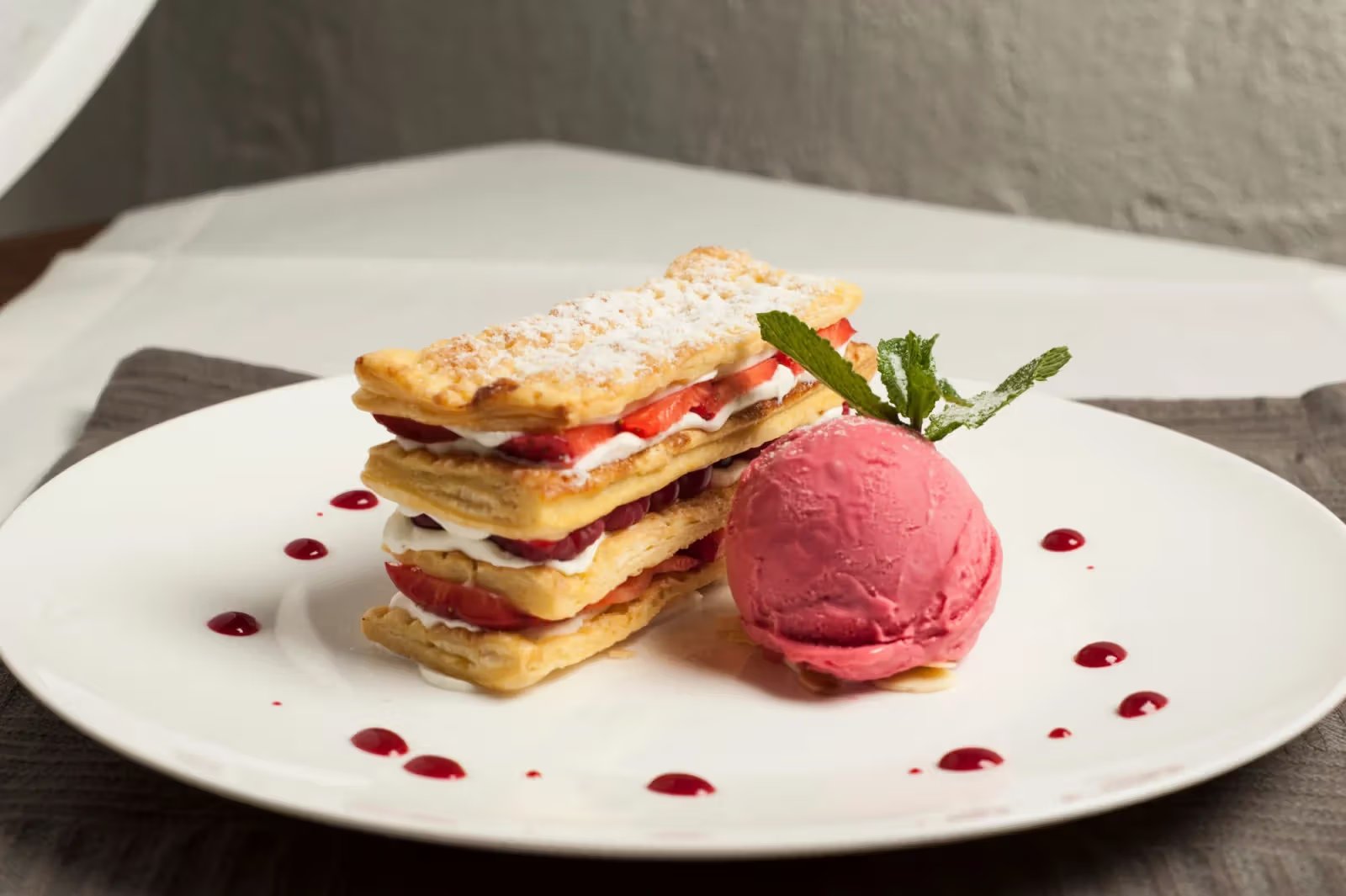
A dish from Brisé's "Stored Autumn" menu, in which this season's chef translates Taiwanese home-style ingredients into a French culinary structure. Image: 君尹 Brisé
Looking at the operating logic of autumn dining through three cases
Viewed together, these three cases share a common thread: each chef deliberately juxtaposes ingredients or techniques from different systems at the same table—Mume brings its Taipei experience into a Spanish culinary framework in Kanazawa, The Front House creates a flavor contrast using meats with two different aging periods, and Brisé wraps familiar Taiwanese home flavors into French pastry and soup structures. Rather than comparing the three simply by price, it is more useful to compare the specific nature of their crossovers—whether ingredient-based, technique-based, or regional—and then return to each restaurant's actual menu, dining hours, course count, and pairing options to verify the details.