Chuan Ya's New Seasonal Menu 'A Millennium of Ba-Shu, One Feast Across Ages' Retraces Official Sichuan Cuisine Craft
Michelin one-star restaurant Chuan Ya unveils a new seasonal menu by chef Wang Guozheng, drawing on Ba-Shu cuisine from the Han-Tang to Qing eras through dishes like liver-paste soup, chicken velvet, and oil-basted pigeon.
Located on the 46th floor of Breeze Nanshan at No. 17 Songzhi Road, Xinyi District, Taipei, the Michelin one-star restaurant Chuan Ya has launched a brand-new seasonal menu titled 'A Millennium of Ba-Shu, One Feast Across Ages,' designed by chef Wang Guozheng. This menu is not simply a seasonal refresh—it draws on the culinary traditions of Ba-Shu (Sichuan) cuisine from different historical periods, including the Han-Tang and Qing dynasties, attempting to trace the developmental path of official-style Sichuan cuisine through history, with each dish corresponding to a specific era's techniques or flavor logic.
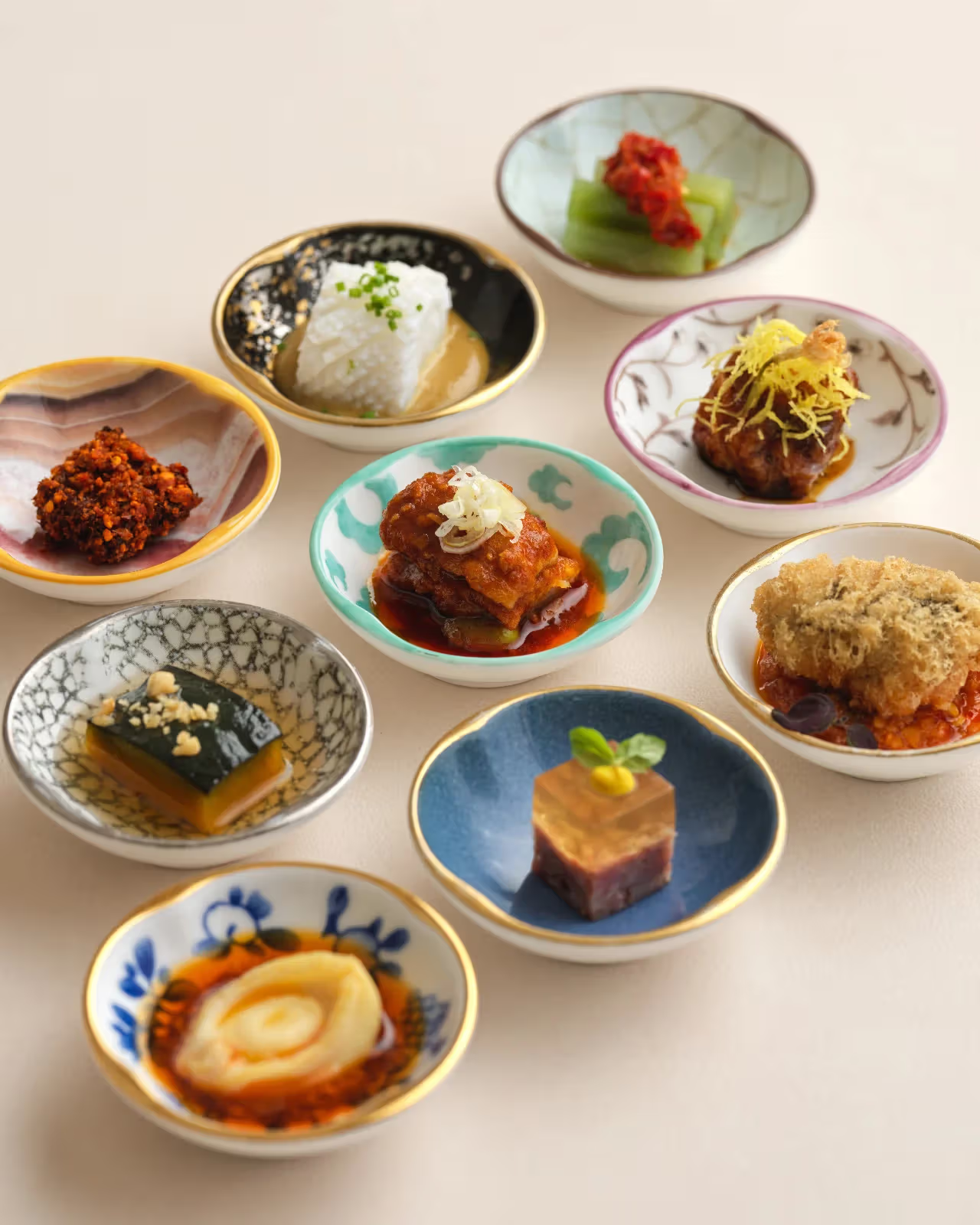
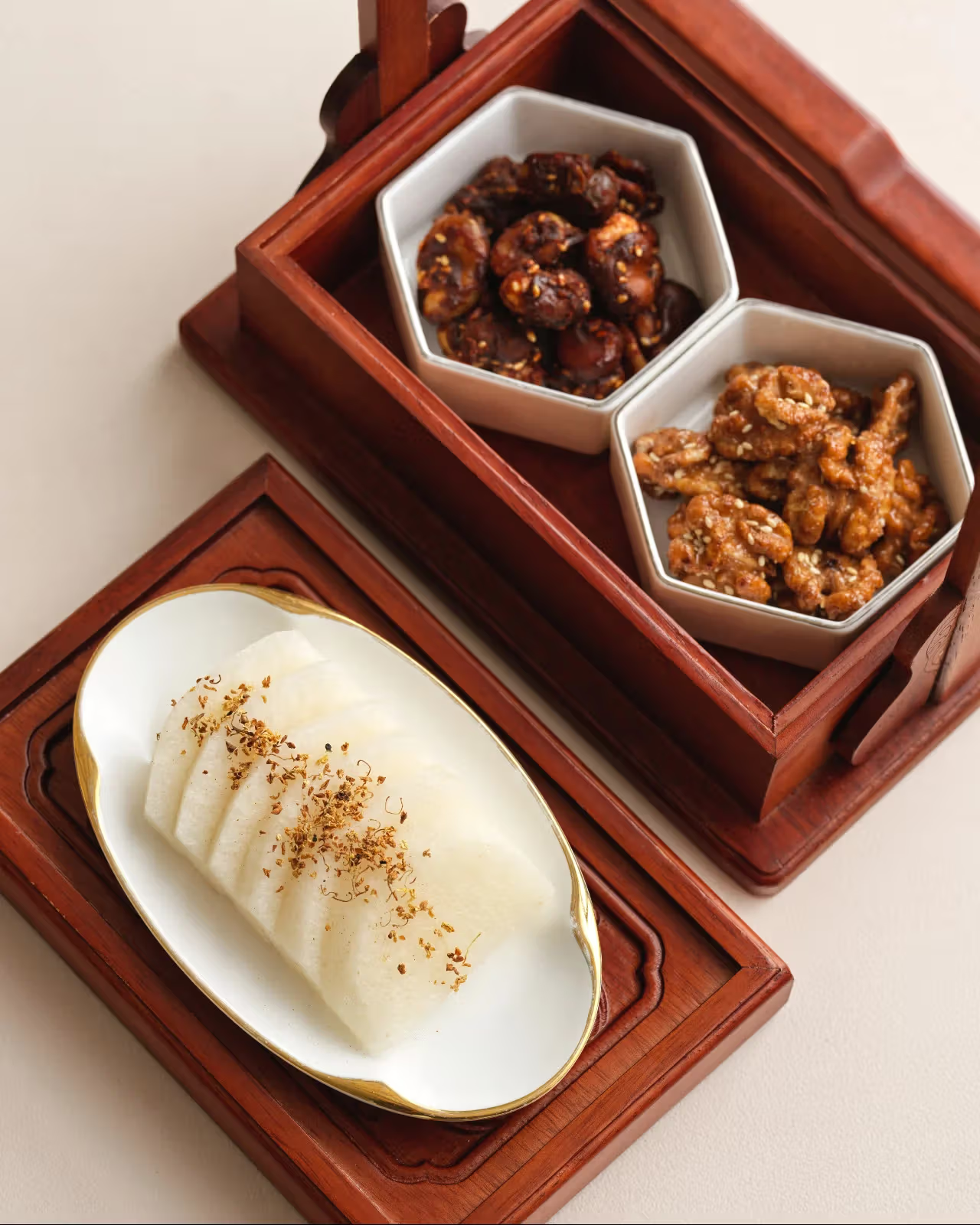
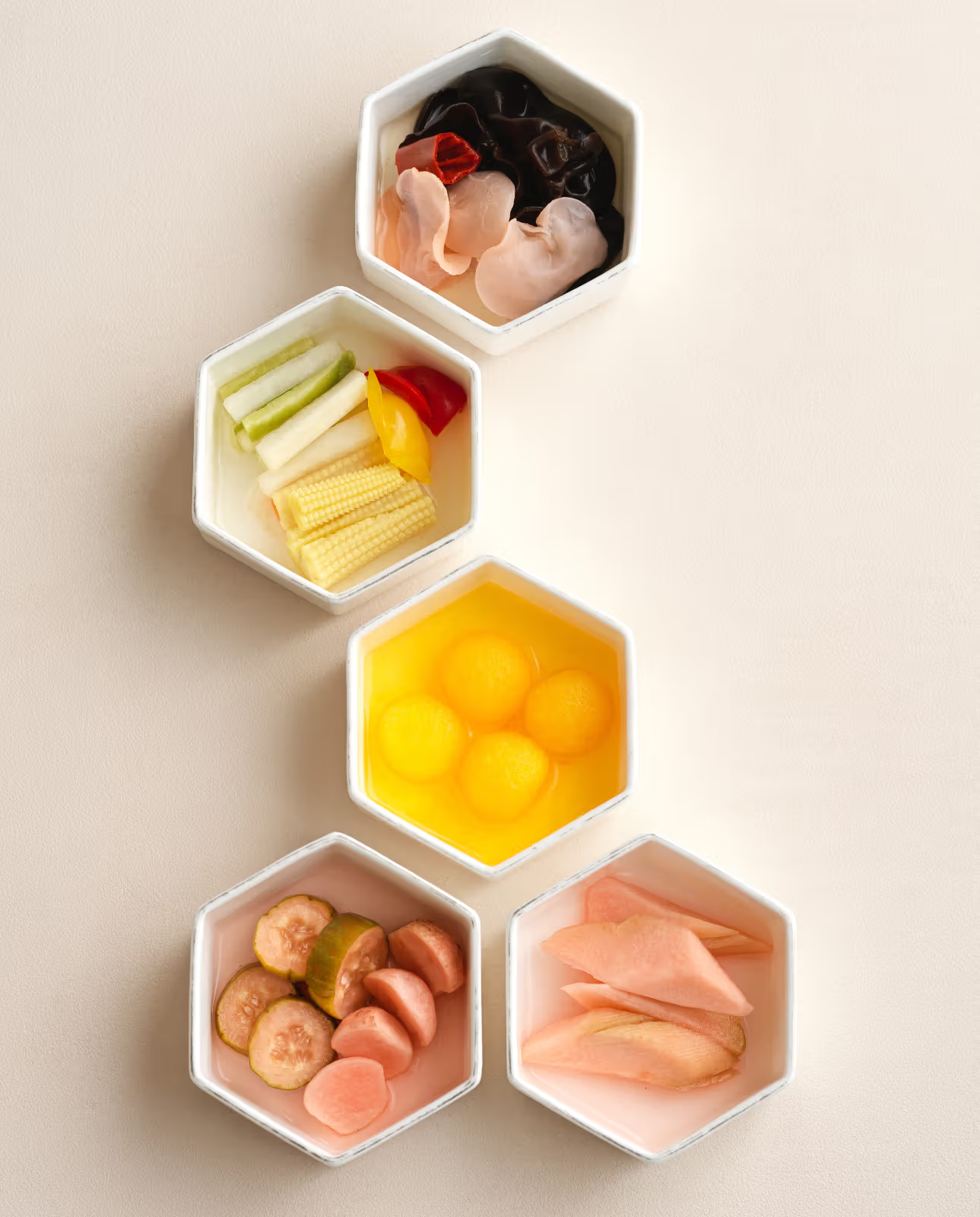
The opening 'Morning Array' presents fruit, walnuts, and fava beans to showcase the multiple layers of the 'strange flavor' profile. Image: Chuan YaSide dish "hand-kept kimchi". Image: Chuan Ya
How Does the Menu Weave Together Historical Threads?
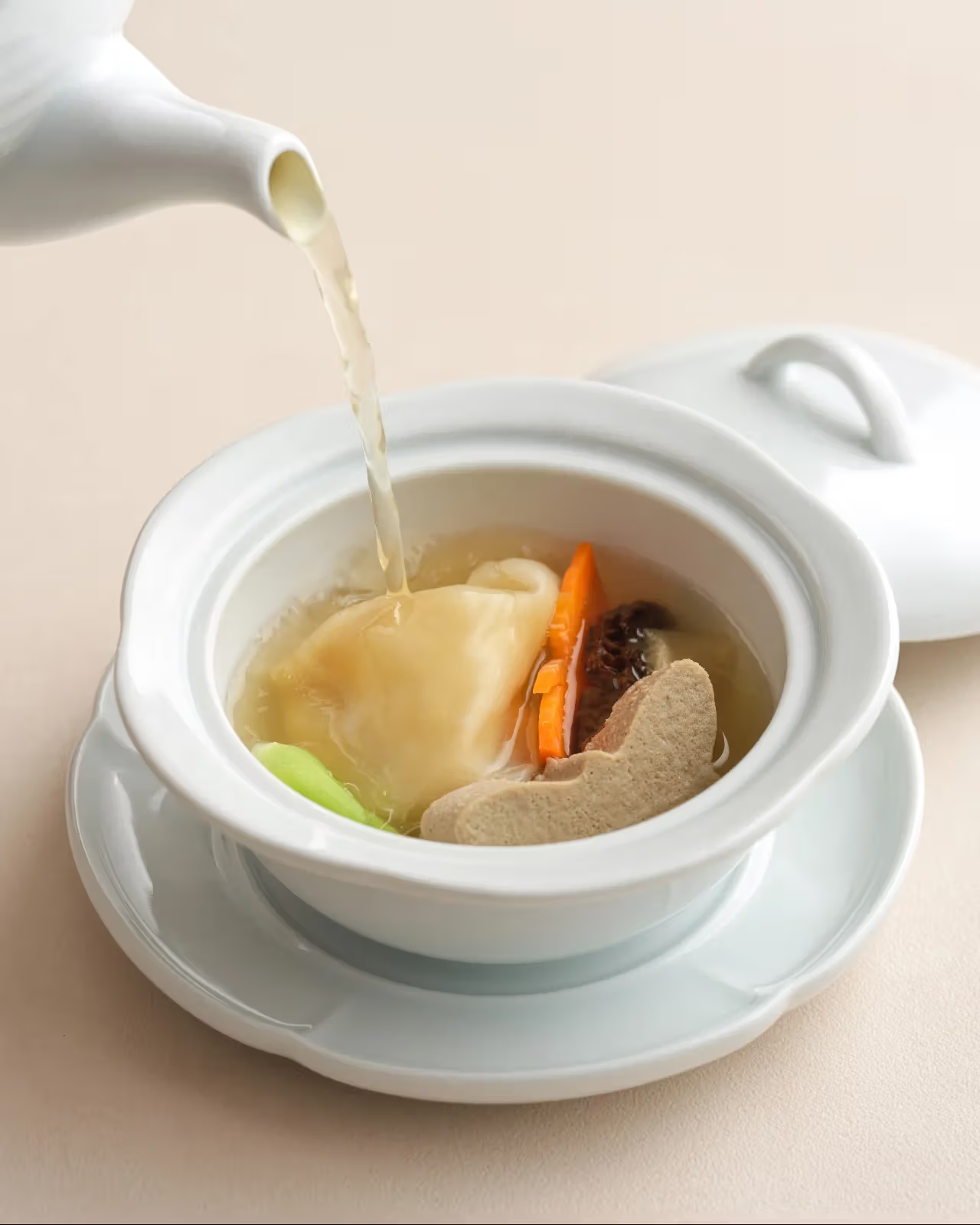
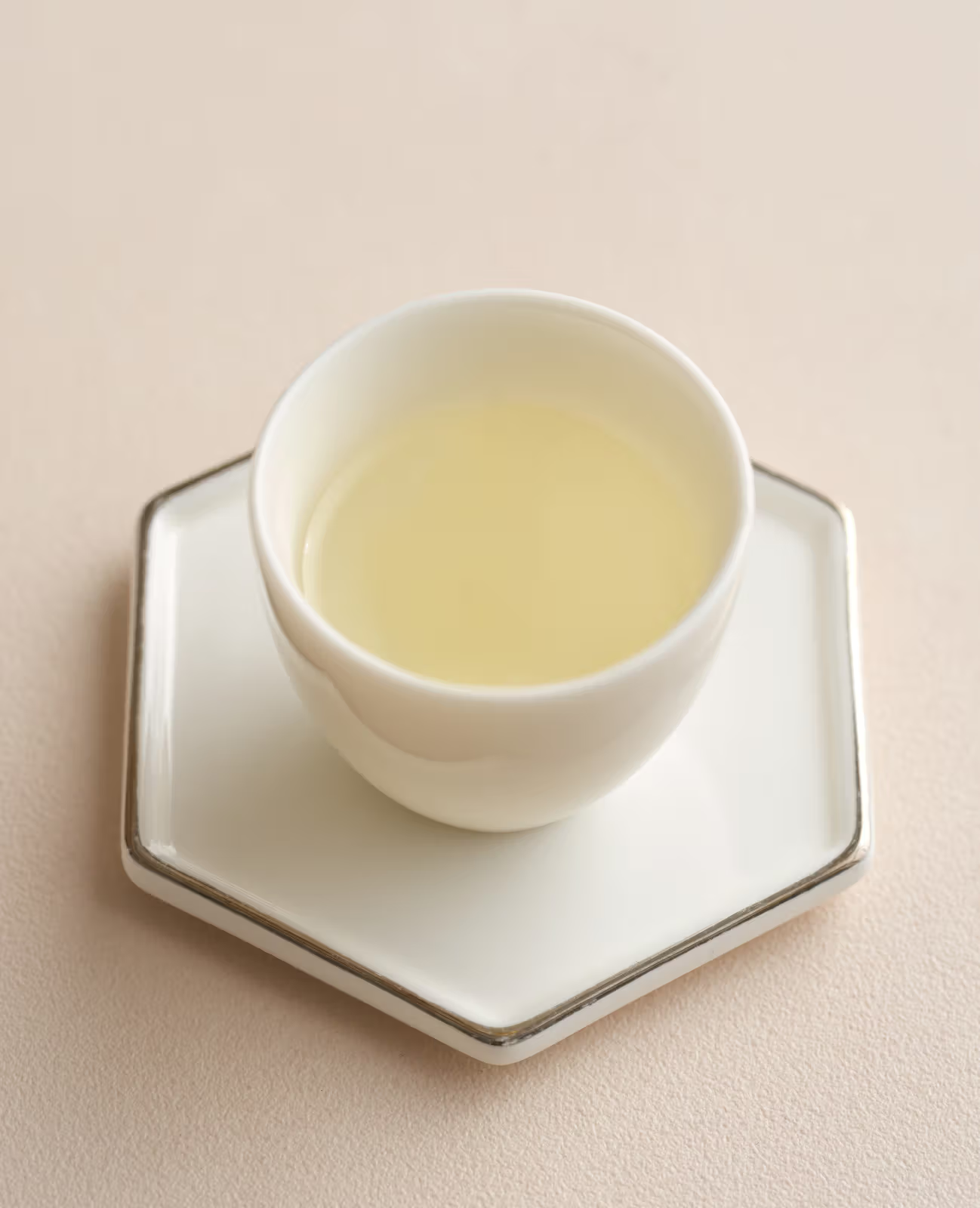
The opening course, 'Morning Array,' presents seasonal fruit, amber walnuts, and mysterious-flavor fava beans, using different ingredient textures to showcase the multiple layers of Sichuan cuisine's 'strange flavor' profile, serving as the taste prelude for the entire menu. This is followed by the 'First Soup'—liver-paste soup—made with delicate goose liver paste, paired with a broth clarified through a three-step 'soup-skimming' process. This technique emphasizes clarity of color and purity of flavor, a fundamental requirement for soups in traditional official cuisine.
The first-course liver-paste soup is made with goose liver, with broth clarified through a three-step skimming process. Image: Chuan Ya
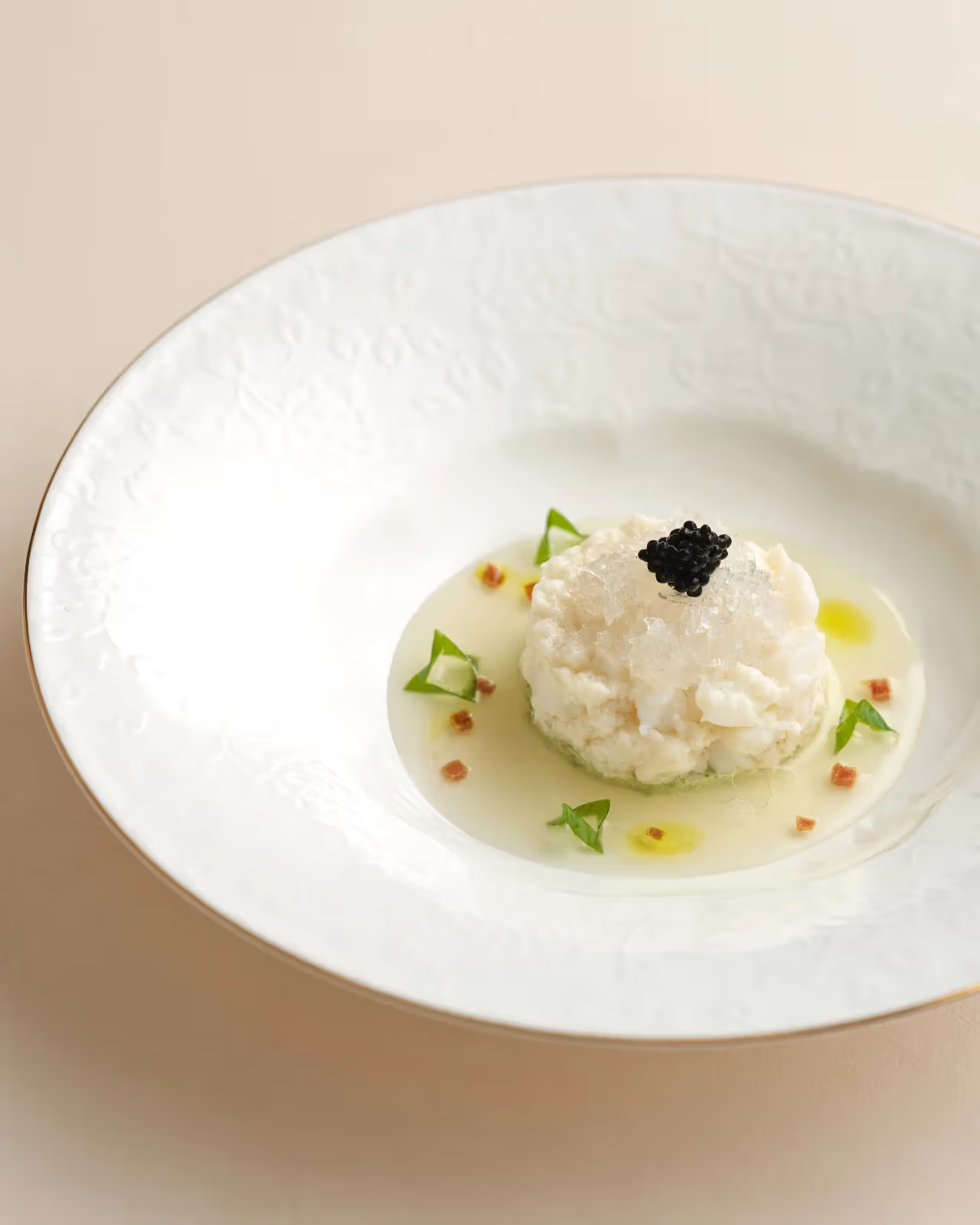
'Azure Clouds' chicken velvet is made by finely mincing chicken breast and slow-stirring it over low heat, paired with snow swallow, shrimp, and caviar, offering a silky texture alongside contrasting layers. Dishes like this, which require long hours of hand-processing to refine ingredient texture, are a concrete expression of official Sichuan cuisine's emphasis on meticulous technique.
The chicken velvet is made by mincing chicken breast and slow-stirring over low heat, paired with snow swallow, shrimp, and caviar. Image: Chuan Ya
Differences in Ingredient Selection and Fermentation Techniques
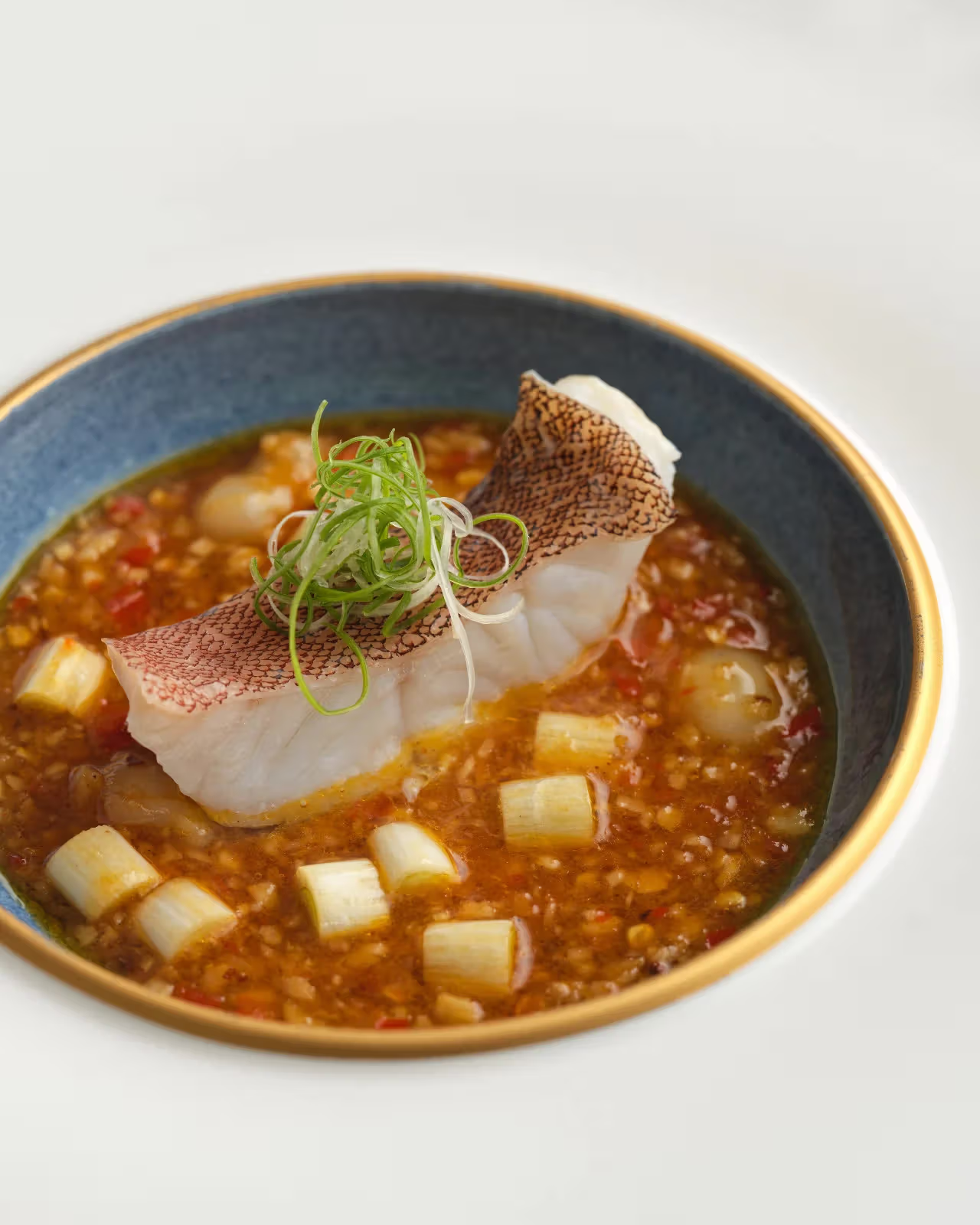
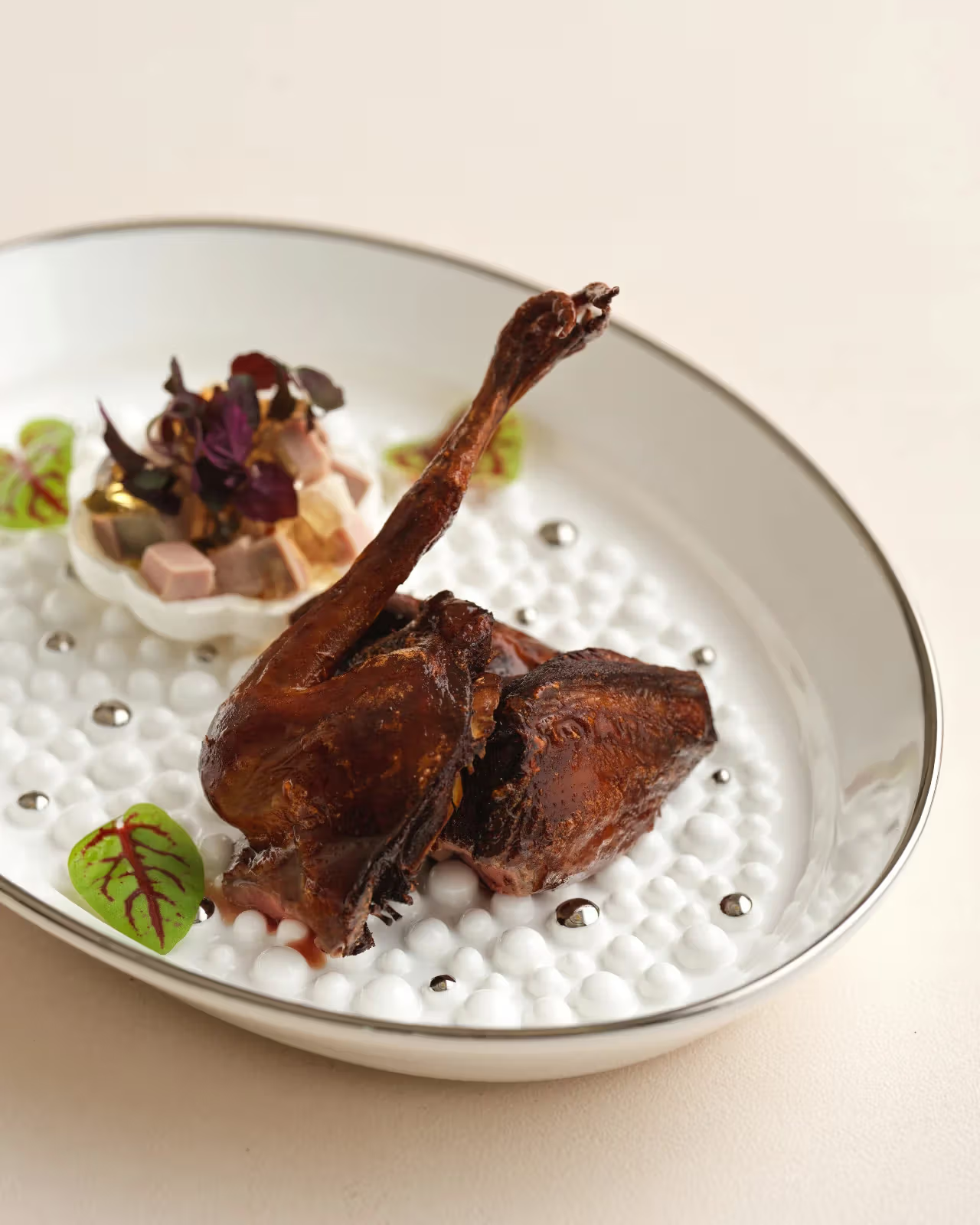
'Culinary Memory' coral grouper is presented in a lychee flavor profile, with a sauce made from dark broad bean paste fermented for one month in sealed jars according to the Songyun school method, establishing the sauce's flavor profile through a concrete fermentation process. 'Pillar Dish' Pengzhou oil-basted pigeon replaces the traditionally common goose with 22-day-old squab from Pingtung, braised and then repeatedly basted with hot oil, achieving a crispy skin while retaining moist meat—this substitution of ingredients also reflects the chef's adjustments between traditional technique and local ingredients.
The coral grouper is presented in lychee flavor, with a sauce made from broad bean paste fermented for one month in sealed jars. Image: Chuan YaThe Pengzhou oil-basted pigeon uses 22-day-old squab from Pingtung instead of traditional goose, braised then repeatedly basted with hot oil. Image: Chuan Ya"Rongcheng Grill Medley" from the menu. Image: Chuan Ya
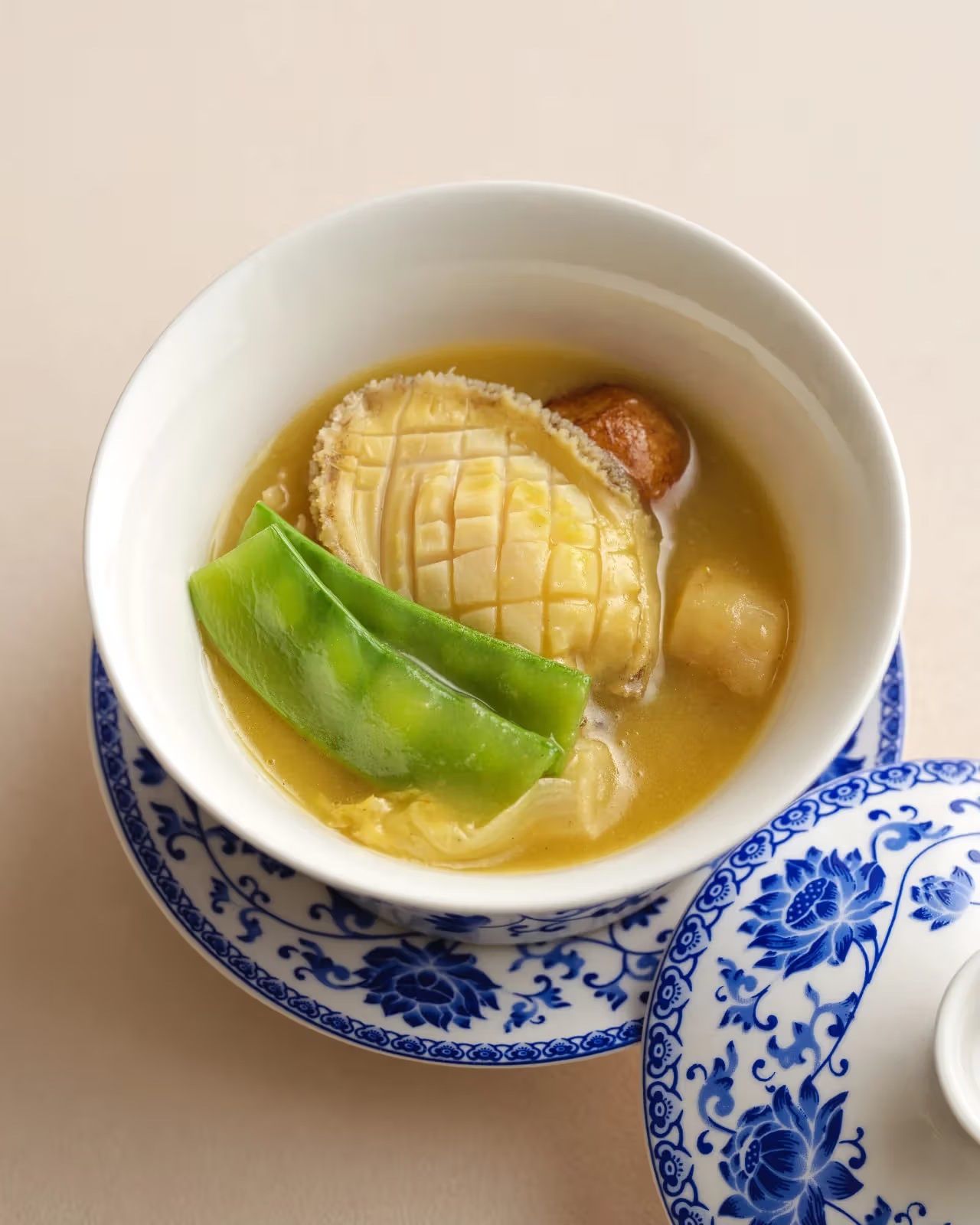
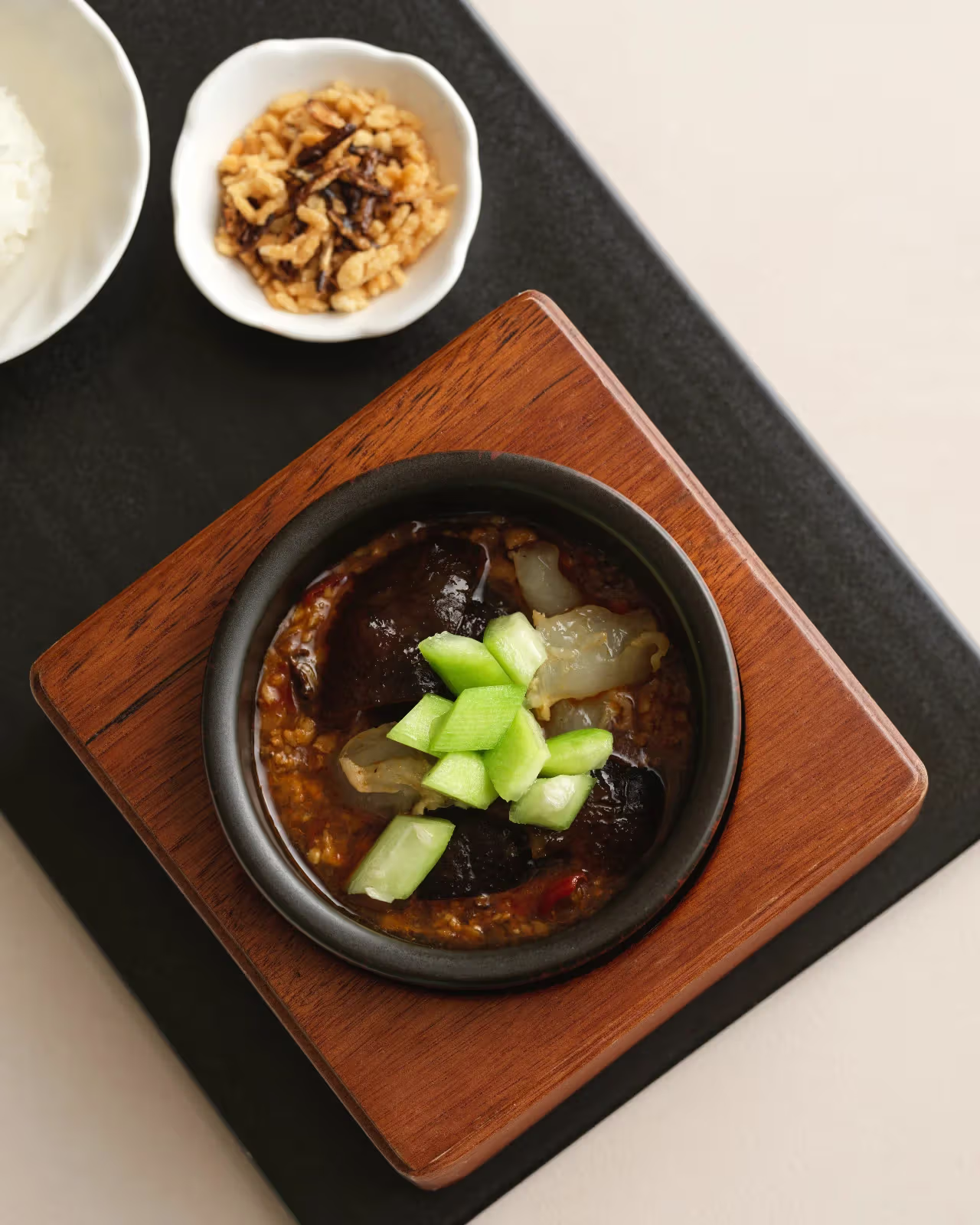
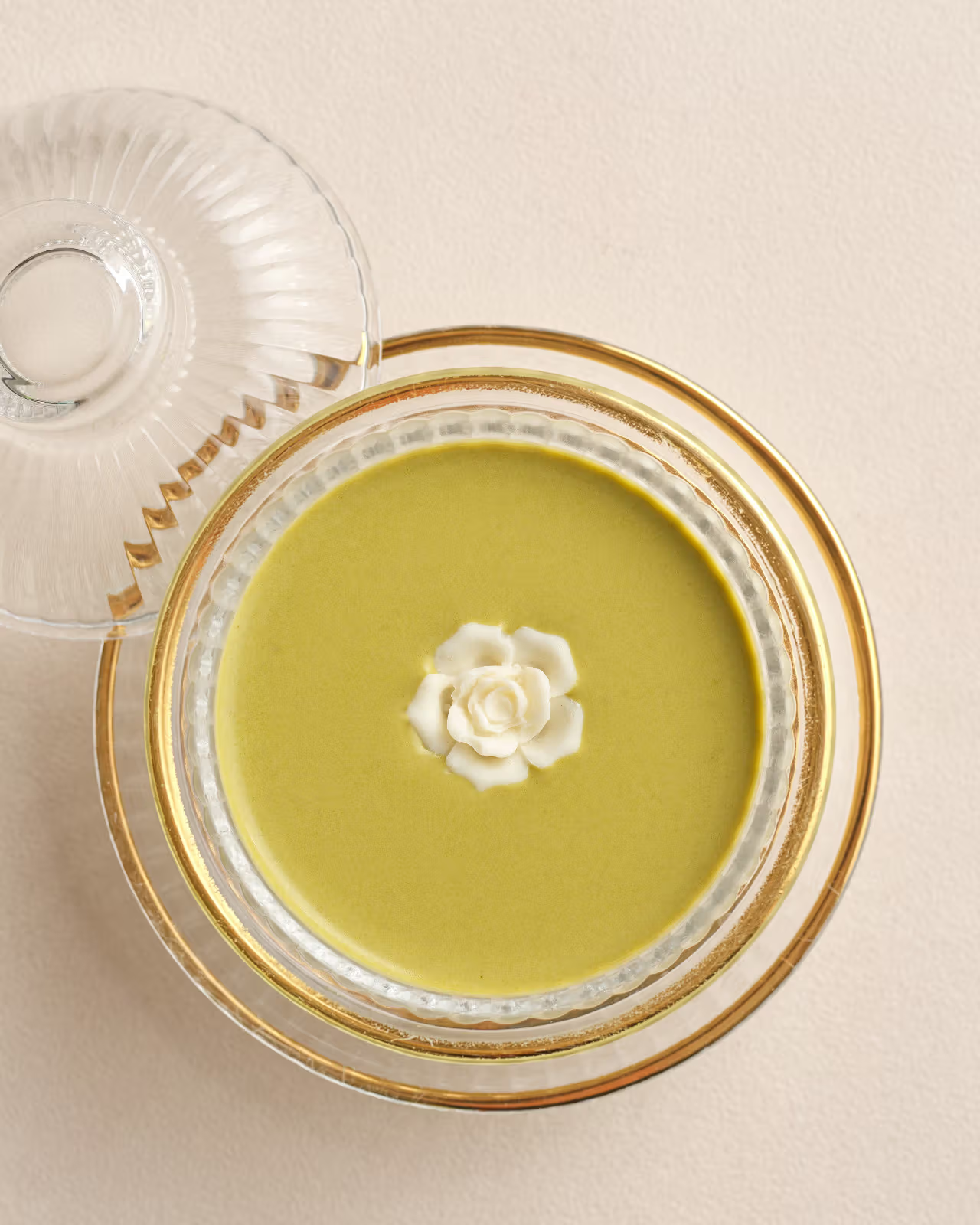
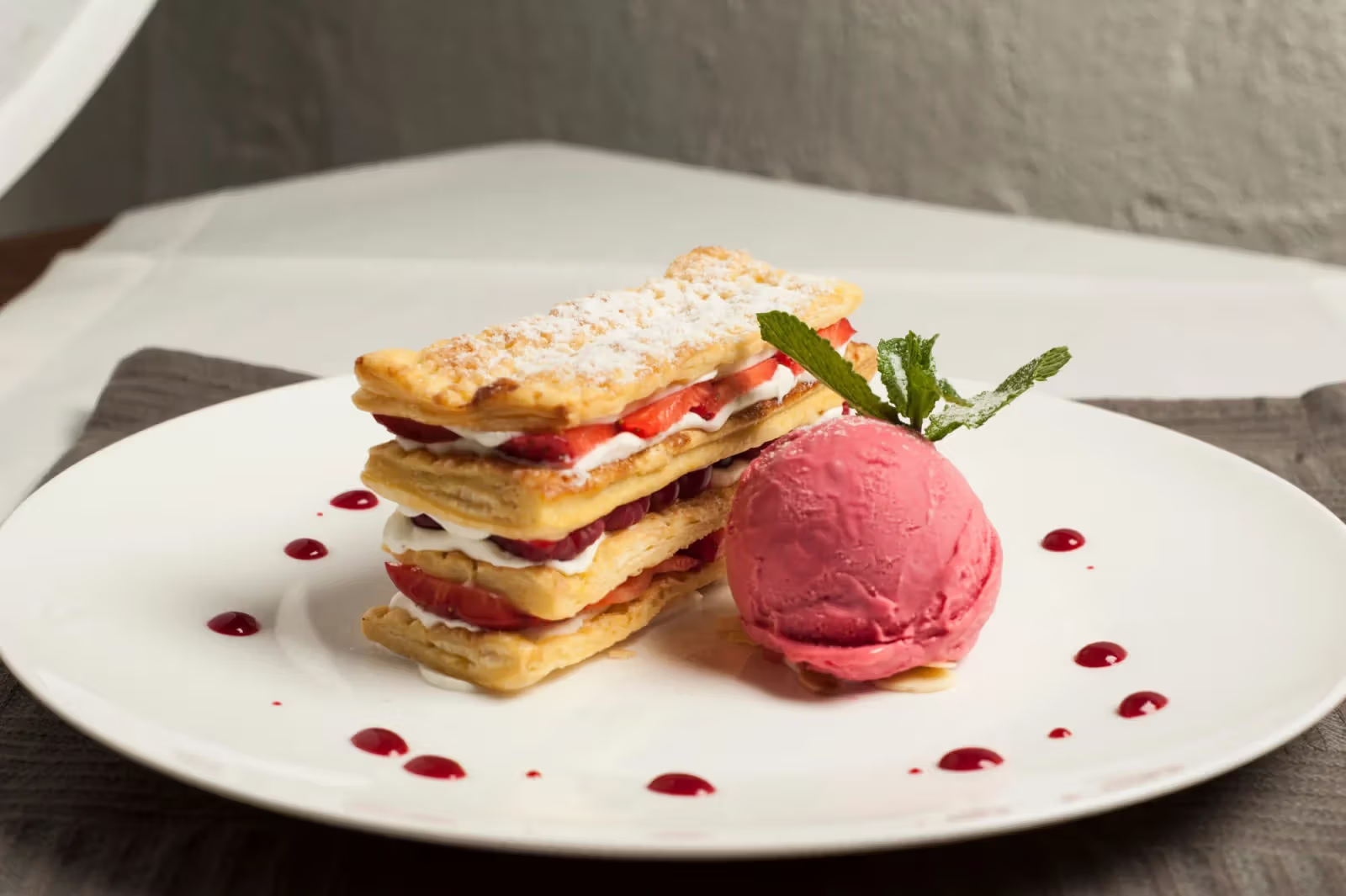
'Traveling Dish' Rongcheng braised medley is built on a milky broth base, bringing together abalone, dried squid, and dried scallops, each simmered separately before being combined and braised together in one pot—separate simmering and final combined braising are two distinct steps, allowing readers to understand the dish's composition through its process. 'Lingering Charm' dry-braised sea cucumber and tendon rice bowl uses the traditional dry-braising technique without thickening, paired with mandarin duck rice to present a contrast between soft and crisp textures, testing mastery of heat control and seasoning ratios. The dessert, 'Sweet Flavor' hazelnut ice cream cheese, is made with fresh milk, condensed milk, and pistachios, serving as the finale of the entire menu.
"One Spoonful Soup" in the course sequence. Image: Chuan YaThe dry-braised sea cucumber and tendon rice bowl uses no thickening agent, paired with mandarin duck rice for contrasting soft and crisp textures. Image: Chuan YaThe dessert, hazelnut ice cream cheese, is made with fresh milk, condensed milk, and pistachios. Image: Chuan Ya
Set Menu Prices and Service Times
The set menus come in three options: the 'Chuan Ya Signature Selection' at NT$3,680 per person, available for lunch only; the 'Chuan Ya Official Banquet' at NT$4,380 per person, available for dinner only; and a 'Weekday Business Lunch' at NT$2,080 per person, available Monday through Friday at lunchtime. The distinction among these three set menus in price and service time allows guests in different dining situations to choose the dish combination that suits them.
Reading through this season's Chuan Ya menu, one can first observe how the soup is clarified, how the minced meat is processed, and then look at steps such as fermented sauces and oil-basting after braising. These are all concrete, comparable Sichuan culinary techniques, distinct from classification based merely on spice level. The lunch and dinner set menus each have their own designated serving times, so the published menu and prices should not be assumed to be available as the same combination across all time slots—actual dishes and costs should still be confirmed at the time of reservation.