Picasso and Matisse at Bangkok’s Dib26: four days of Muse: Beyond Human
The free exhibition runs October 27–30, pairing Picasso’s 1967 work and Matisse’s 1920 portrait with contemporary art. Here are the location, hours and questions to bring.
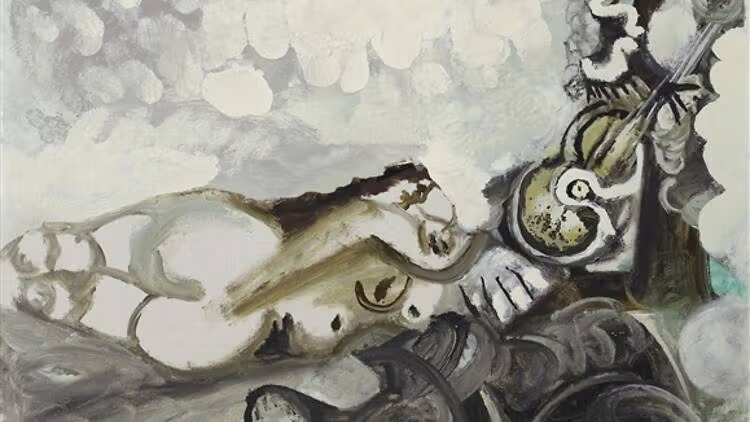
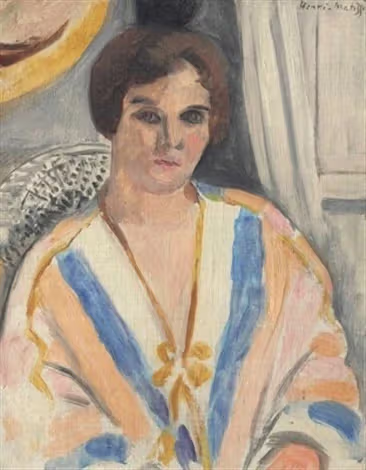
Names familiar from textbooks will enter a new conversation in a four-day Bangkok exhibition. Dib Bangkok and Christie’s present Muse: Beyond Human at Dib26 on October 27–30, 2026, with free admission from 10am to 7pm daily. Pablo Picasso’s Nu couché et musicien (1967) and Henri Matisse’s Femme en costume oriental (1920) will appear alongside contemporary art and selected collection works. The subject extends beyond two famous names to how artists transform the people they depict.
Henri Matisse’s Femme en costume oriental (1920), shown in reproduction.
Is a muse a person, or a way of seeing?
The relationship between artists and their sources of inspiration provides a thread for considering how portraits and bodies carry creative viewpoints. A figure in a painting is not necessarily a transparent record of someone’s appearance: composition, colour and omission all leave the maker’s choices visible. This is a question to bring into the exhibition, not a single answer written in advance for every work.
Begin by describing the pose, lines and space you actually see, then read the label, rather than judging first through an artist’s reputation. With friends, each person could identify where their eye stopped first and compare reasons. The discussion then returns to the image itself, without requiring everyone to memorise the entire history of modern art.
Reading two different figure relationships, from 1967 and 1920
Picasso’s work builds a relationship between a reclining figure and a musician; Matisse’s uses a figure in striped clothing for a different arrangement of colour and the body. Reproductions provide a reference for outlines, but the originals’ surfaces, proportions and colour layers must be judged in the exhibition. This publication has not attended and does not present enlarged-image observations as firsthand viewing.
The two works, separated by decades, can also be read alongside contemporary names including Peihang Benoit, Natee Utarit and Dana Schutz. Compare whether figures are depicted whole, fragmented or placed within more complex stories. Contemporary works need not be supporting material for two celebrated stars; they can make the meaning of a muse less fixed across time.
Four free days: distinguish the venue from the main museum
The address is Dib26, 59/44 Sukhumvit Soi 26, Khlong Tan, Khlong Toei. It should not be confused with another Dib Bangkok address simply renamed. The exhibition is a parallel programme of the Bangkok Art Biennale, supported by UOB and Bangkok University. Free admission does not make every related activity, journey or exhibition at another venue free as well.
Check registration requirements, last entry and photography rules again before travelling. With only four days, put the dates into an itinerary early rather than assuming it will still be open on arrival. Art valuations are not the main information needed to understand the exhibition, so unverified figures should not replace its content. Taking away the question “Whose viewpoint am I seeing?” brings visitors closer to its discussion than simply photographing a famous work’s label.