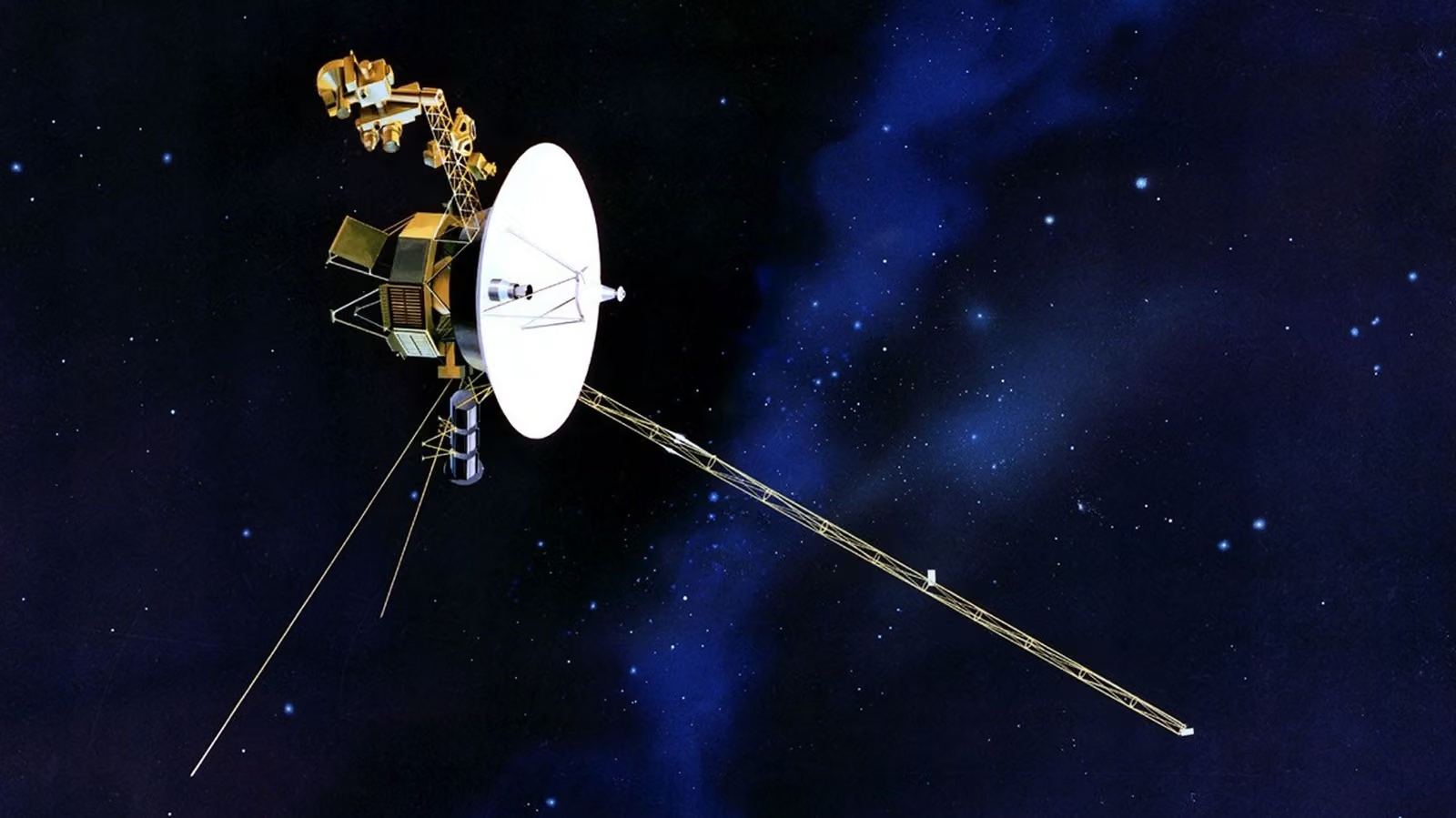
A signal traveling from Earth to the spacecraft has to cover 13 billion miles — that's the current reality for Voyager 2. NASA dubbed this operation "Big Bang," which sounds dramatic, but what actually happened was fairly modest: simultaneously switching off a few power-hungry components, swapping in more efficient alternatives, and making sure the probe doesn't freeze in the process.
The root of the problem lies in its heart. Voyager 2 runs on a radioisotope thermoelectric generator, which converts heat from decaying plutonium into electricity. As the plutonium continues to decay, the probe loses roughly 4 watts of power every year. When it launched in 1977, it carried 10 scientific instruments on board; over the decades, they've been shut down one by one, leaving only 3 still operating today. Had NASA not made this adjustment this year, one of those remaining instruments would have gone dark in the near future.