Natural-stone watch dials: four ways to look at Piaget, Rolex, AP and Bulgari
Stone marquetry, carnelian, turquoise and marble introduce different colours and textures. Understand the designs without confusing material variation with guaranteed value.
Natural-stone dials give watches an expression shaped by more than engraving, paint or a logo. Examples from Piaget, Rolex, Audemars Piguet and Bulgari introduce marquetry, mineral colour, turquoise patterning and marble into time displays. This is a material and design study, not a list of watches launched today. Several have been available for some time, and rare material does not guarantee appreciation.
Piaget: assembling an abstract portrait from stone
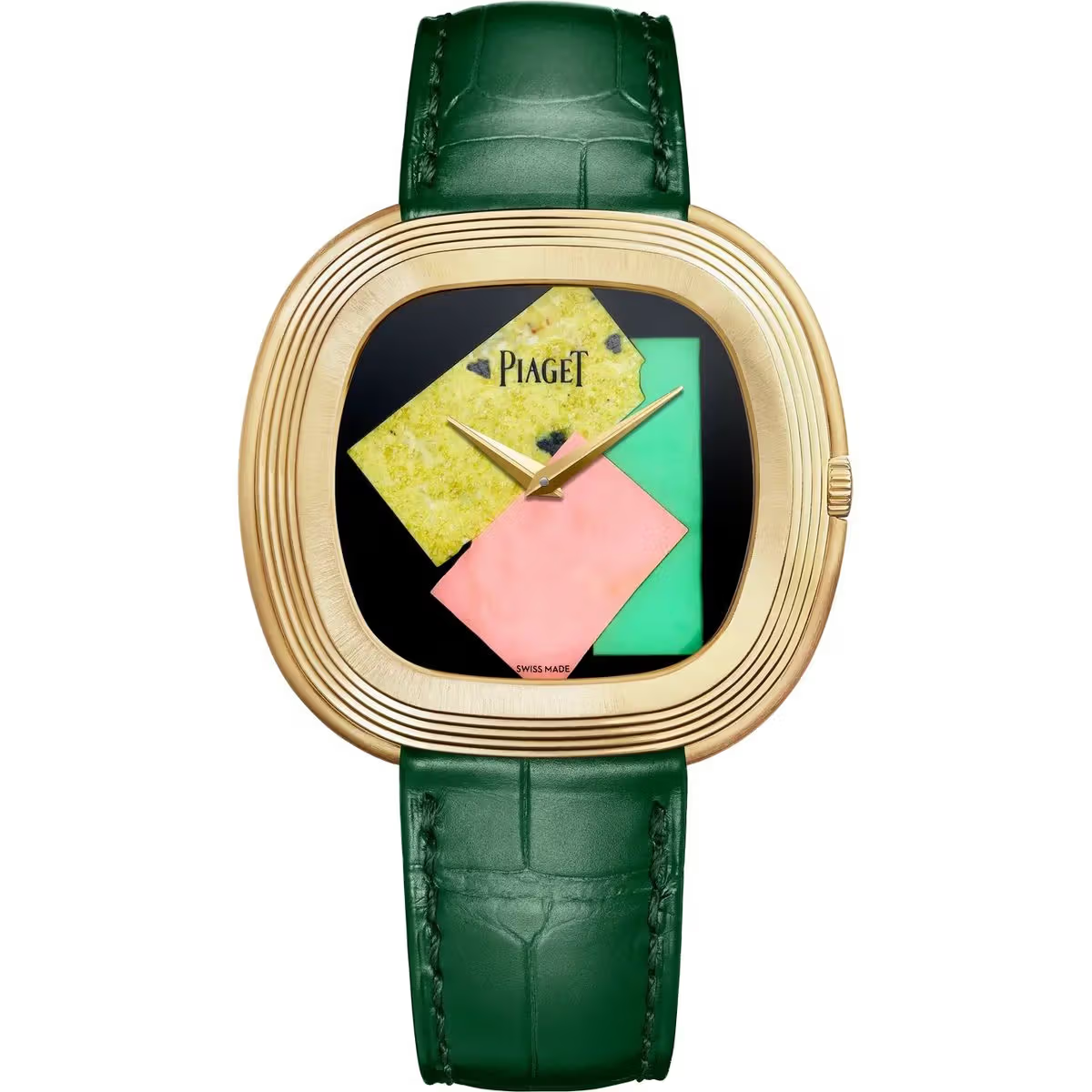
Limited to 50 pieces, the Piaget Andy Warhol Collage draws on the artist’s 1986 collage self-portrait. Black, pink, green and yellow-toned stones are cut and joined; colour relationships suggest the face instead of printing it on the dial. Look at the composition first, then the boundaries between pieces and the hands crossing them.
The brand’s tiger’s-eye designs instead emphasise natural bands. An abstract stone arrangement and strongly directional grain give similar case outlines different personalities. Compare frontal and angled photographs to judge whether the pattern distracts from reading time; distinctive natural variation still needs confirmation through the actual piece and maker’s information.
Piaget tiger’s-eye dial and stepped case.
Rolex and AP: familiar outlines around irregular material
Rolex Day-Date dials in carnelian, turquoise or green aventurine place colour within recognisable bezels, weekday windows and bracelets. Consider how the windows interrupt stone patterns and how markers contrast under different light. Attracting attention is only one task: the dial must still tell the time.
Rolex Day-Date with a green natural-stone dial.Rolex Day-Date carnelian dial.
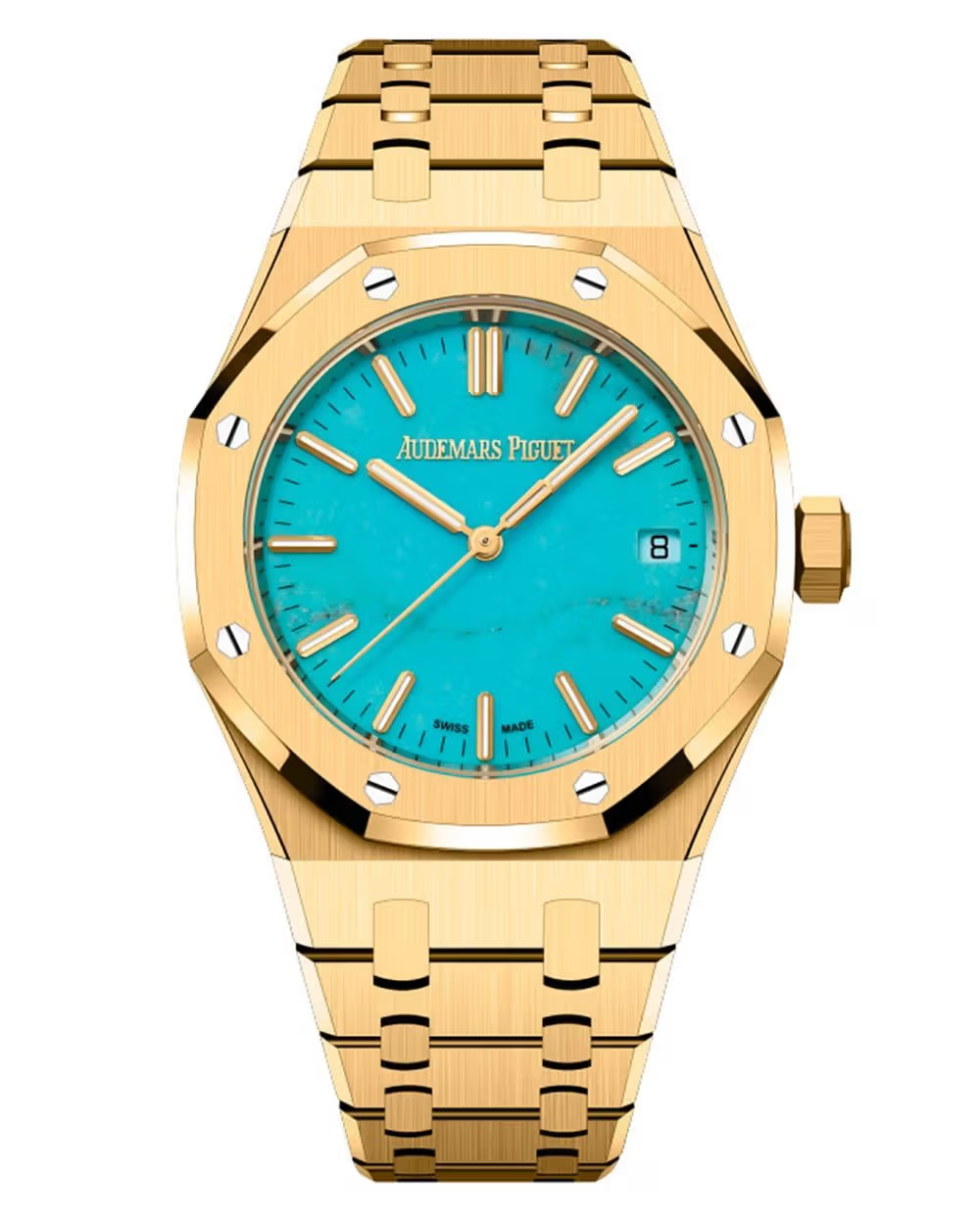
The 37mm Audemars Piguet Royal Oak Ref.15550BA.OO.1356BA.01 pairs yellow gold with natural blue turquoise. The octagonal bezel preserves the collection’s identity while stone replaces the familiar dial pattern. Comparing geometric case lines with natural grain makes the contrast particularly clear.
Audemars Piguet Royal Oak turquoise dial.
Bulgari: tension between marble and thin construction
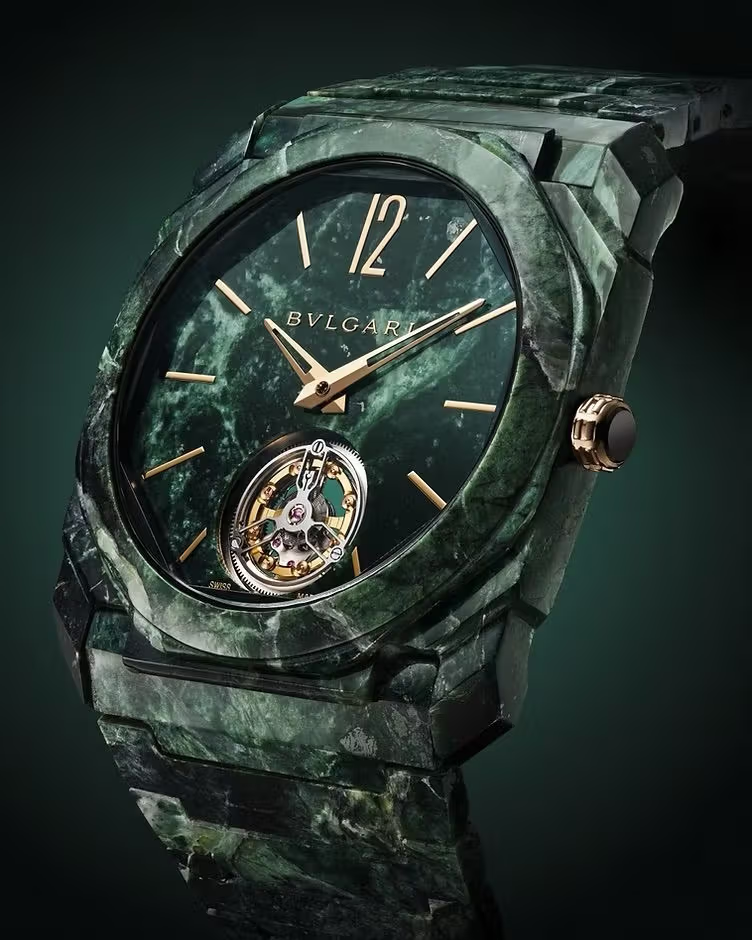
Green-marble Bulgari Octo Finissimo pieces use white veins against green for another rhythm. Tourbillon dials must also leave an opening for the mechanism, making stone, open space and a faceted case work together. Special editions from different years cover different areas with stone; an all-over marble appearance and a conventional stone dial are not interchangeable specifications.
Bulgari Octo Finissimo green-marble tourbillon watch.
Before choosing, confirm the reference, material and repair arrangements, then ask how the delivered dial might differ from the photograph. “Every pattern differs” does not mean every model is a unique piece, and unpublished supply arrangements should not become universal rules. The lasting detail is how one material works alongside hands, markers and case.