PSB iQ2 Review: No Voice Assistant, No Problem — Here's What $1,399 Buys You
The PSB iQ2 skips the voice assistant and morning briefings, putting every dollar into drivers, inputs, and BluOS instead. Engadget's review gives it an 8, while calling out its biggest weak spot: the phono input.
The moment Engadget's James Trew swapped his Sonos Arc for the PSB iQ2, he realized his old speaker had actually been "loud" all along — even at low volume. That was his most immediate takeaway from testing the iQ2: the sound settled down, the bass stayed controlled, and even the bombastic low-end of a Michael Bay trailer didn't send his hand reaching for the volume knob.
That's exactly what the PSB iQ2 ($1,399) is trying to prove. For the past decade, the multi-room smart speaker market has been dominated by phone makers and cloud service companies, with music treated as an afterthought. The iQ2 flips that equation: no voice assistant, no morning briefings — "smart" takes a back seat to "speaker." The bet here is on the strengths of a traditional bookshelf speaker, paired with the streaming-era convenience users now expect.
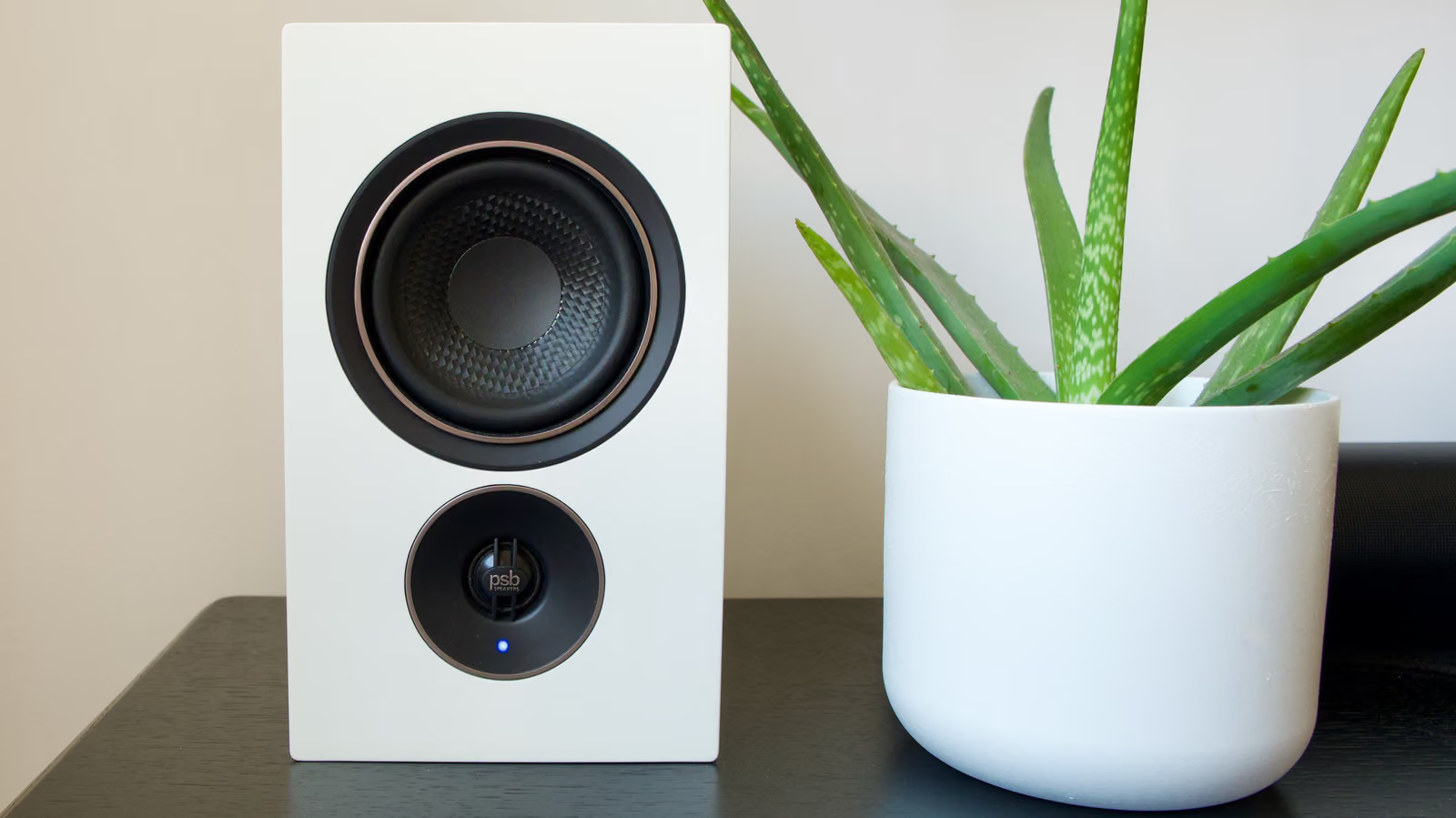
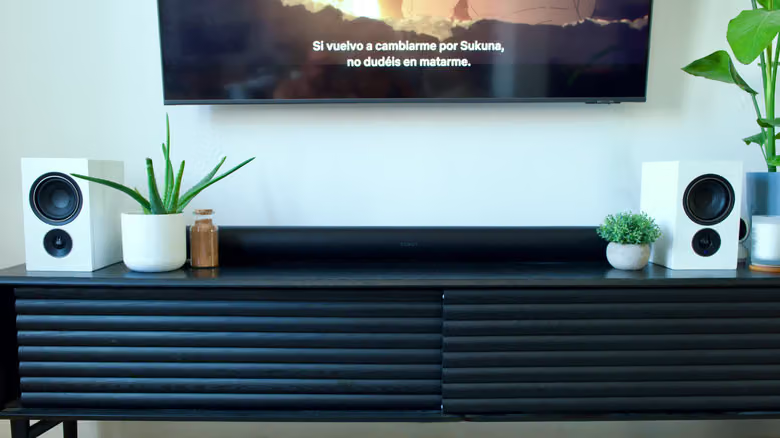
Visually, the iQ2 is a pair of modern bookshelf speakers, roughly 9x6 inches, small enough to sit comfortably on a TV console or even a desk. It comes in seven colors, from understated beige to bold red — Trew tested the white version, describing the overall look as "mature enough without tipping into stuffy hi-fi territory." No cable is needed between the two speakers; it's true wireless stereo pairing, which makes room placement flexible, though each speaker still needs its own power outlet. One unit serves as the hub, handling all the inputs and touch-based media controls, so whichever side you place it on won't affect your HDMI cable routing.
More Inputs Than Most Smart Speakers
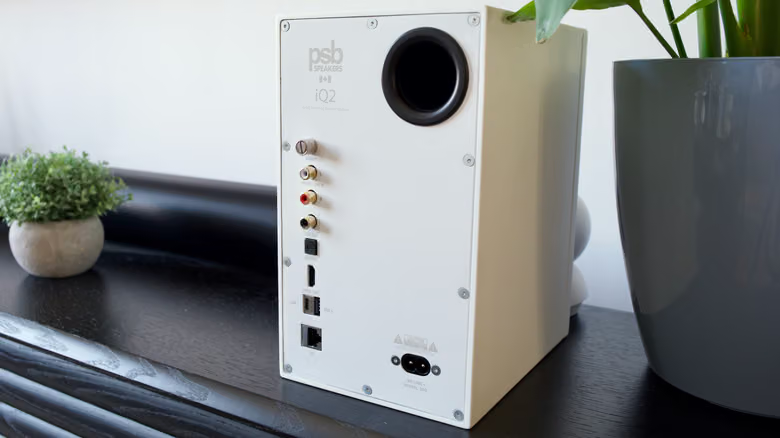
The iQ2's input list is genuinely solid: HDMI with eARC support, phono/line input, optical, one USB-A and one USB-C port, plus wireless options including Bluetooth with aptX Adaptive support and AirPlay, with network sharing also configurable. The only thing missing is a 3.5mm jack — if you're connecting an old phone or a portable CD player, you'll need to bring your own RCA adapter.
The control hub is the BluOS app, developed within PSB's parent company ecosystem, giving the iQ2 near-native-level integration. In Trew's hands-on test, he plugged it in, searched for the device, set which side would be the hub, and was streaming Spotify in under two minutes. The app interface puts frequently used inputs on the home screen, and switching sources, managing a local music library, or grouping multiple BluOS devices for synced playback all feel intuitive. The one minor hiccup: the phono input didn't initially show up in the "Most Used" section, so he couldn't immediately find how to switch to it — a quick Google search eventually led him to the settings menu. If you're planning to use the iQ2 as a TV soundbar replacement, remember to manually enable Auto Sense so the speaker automatically switches inputs when the TV powers on; this setting isn't global and needs to be configured per input source.
Sound quality consistently pleased Trew across music genres, especially electronic music — denser tracks like hard techno sounded more spacious thanks to genuinely separated left and right channels, while rock and acoustic genres came through with natural, non-fatiguing mids and highs. The one area where it fell short was vinyl: listening through the phono input, he described the sound as "slightly narrower." While the built-in preamp was strong enough to bring his 50-year-old turntable up to a listenable volume — finally letting him retire the standalone preamp from his living room — the overall soundstage just wasn't as open as with digital sources. PSB also issued a statement during the review period saying it would adjust the phono preamp based on "early user feedback," suggesting further tuning is still to come. Also worth noting: due to its compact size, the iQ2 isn't built to fill a large room at party volume — Trew said he never felt the urge to crank the volume all the way up, but anyone needing serious SPL might find it lacking.
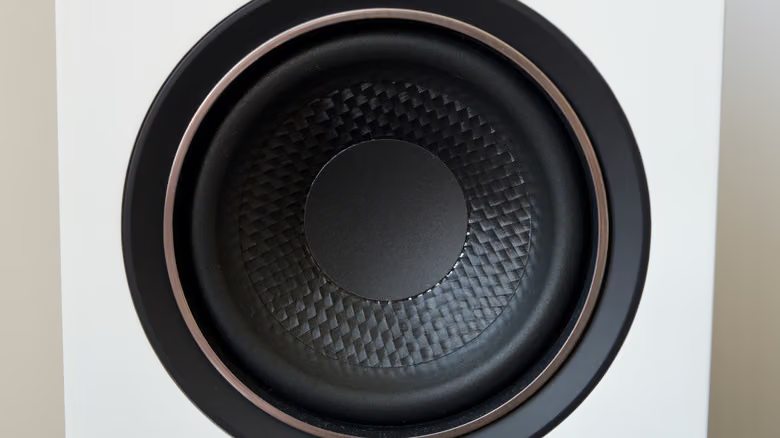
As for the competition, multi-room speakers are plentiful, but most sit below the iQ2's $1,399 price point, and few combine both HDMI and phono/line inputs. Sonos's Arc Ultra and Beam offer HDMI, but adding line-in and a phono preamp requires stepping up to the Sonos Amp. The true head-to-head rival is the KEF LSX II at $1,500, with nearly identical inputs and a more eye-catching design, though it lacks a phono preamp and uses a 3.5mm jack instead. If you already own speakers you love and just need a hub to tie sources together, the Wiim Ultra offers similar connectivity flexibility for just $329 — though that price doesn't include any speakers.
Engadget gave the iQ2 a score of 8. It clearly isn't trying to compete with the Amazon Echo or Google Nest — instead, it pours its entire budget into inputs, driver tuning, and a genuinely great BluOS experience. The phono performance is a weak point, and $1,399 isn't an impulse-buy price, but if you already believe good sound is worth paying for, the iQ2 makes a compelling case.