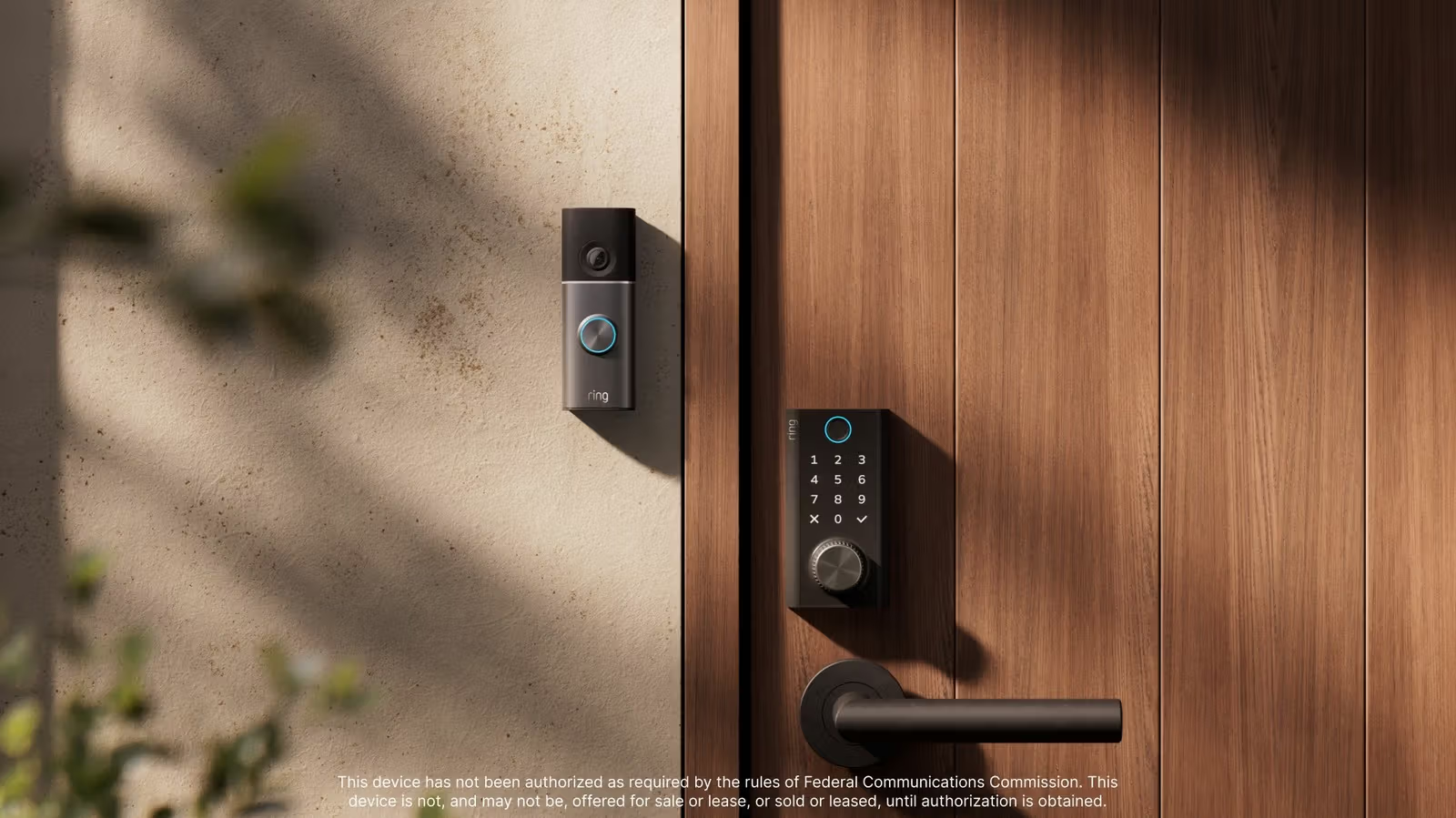
Spin the dial on the front of the lock three or four times, and a dead smart lock springs back to life—that's the problem Ring's new Smart Lock is designed to solve. "Keys don't need to be charged, and they've worked fine for thousands of years," says Ring founder Jamie Siminoff, who believes this is exactly why smart locks have never truly broken into mainstream households: users aren't worried about the tech not being smart enough—they're worried about being locked out the moment the battery dies.
The fix is refreshingly straightforward. A dial on the front of the lock connects to the deadbolt mechanism; crank it back and forth three to four times, and a small internal motor paired with a supercapacitor generates about three volts of power. This isn't some stripped-down battery-saver mode—it restores the entire lock to full functionality for roughly thirty seconds, enough time to use fingerprint ID, punch in a passcode, open the Ring App, or call out to Alexa. As a Ring product, it plugs directly into Amazon's smart home ecosystem.
Siminoff frames the crank as a "worst-case scenario" safety net, but he also points to another use case: spaces that aren't accessed often, like a remote cabin. As long as you can crank up some power on-site, the lock still works in these situations. That said, Ring emphasizes the crank is meant to be a rare backup—the lock's built-in battery lasts a full year on a single charge, so most users may never need to touch the dial at all. But knowing it's there offers a bit of peace of mind.