A SpaceX rocket that's been drifting through space for a year and a half, its fuel tank long since dry, will slam into the Moon's western near side early Wednesday morning at seven times the speed of sound. Nobody planned this impact — it's purely the result of a fuel miscalculation — but that accident has now become firsthand material for scientists studying the safety of future lunar bases.
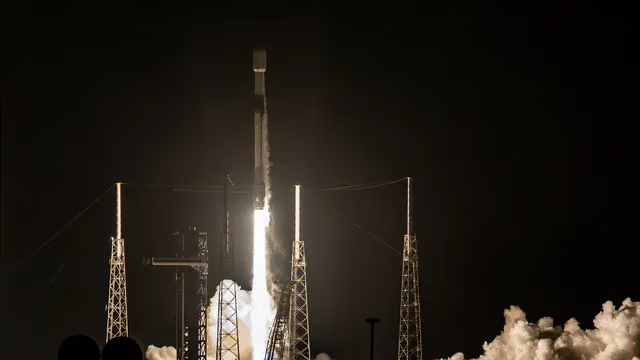
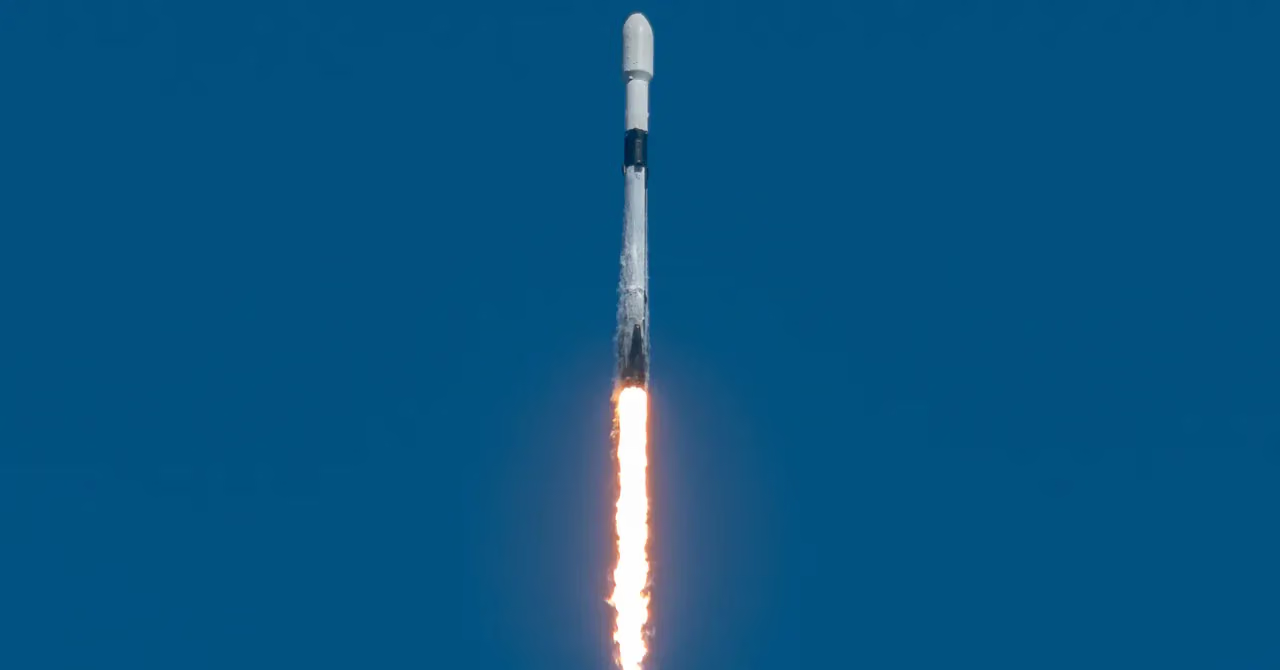
This Falcon 9 upper stage was once responsible for delivering a pair of lunar landers to the Moon's surface. The landers touched down successfully, but the rocket itself was left stranded: not enough fuel to return to Earth, and not enough to settle into a stable orbit. So it drifted through space for 18 months until gravity finally pulled it toward the Moon.
The impact will occur at 6:34 AM UTC on Wednesday, near Einstein Crater, with the Americas offering the best vantage point for observation. The rocket weighs 4 metric tons and will hit at roughly 5,400 miles per hour. With no atmosphere on the Moon to cushion the blow, the resulting explosion will pack the equivalent force of 3 tons of TNT, expected to carve out a crater up to 27 meters wide and 5 meters deep. The impact won't be visible to the naked eye, but through a decent telescope, observers should be able to catch a debris plume lasting several minutes.
This isn't the first time the Moon has taken an unplanned hit. In March 2022, a Chinese Long March 3C rocket body crashed into the lunar surface, leaving behind a 29-meter-wide crater. The difference this time is that someone calculated the trajectory in advance — Bill Gray, founder of Project Pluto, was the first to work out this Falcon 9's impact path, and he co-authored a preprint study published last month that turned this accident into a predictable, observable experiment.