Where should the subwoofer be placed? The answer is: direction is not that important
The bass wavelength is often close to 28 feet, and no matter how the speaker unit is turned, the impact will be limited. What really determines the performance of a subwoofer is its location in the room, especially the clear space in the corners and sound holes.
I bought a new sound system and I thought about the position of the speakers. The next thing I have to worry about is the subwoofer: Should it face the sofa? Is it better to tuck it into a corner or against the wall? This type of question sounds simple, but in fact it is easy for people to get caught up in various conflicting opinions in audio forums.
Low-frequency sound waves are disproportionately large. A 40Hz bass wave is about 28 feet (about 8.5 meters) from crest to crest. In comparison, the diaphragm unit of the subwoofer is so small that it is the entire room itself that really determines the sound performance. Therefore, the subwoofer emits sound almost omnidirectionally. It does not "shoot" the sound in a specific direction like ordinary speakers. If the direction is turned a little, the difference in listening experience is actually limited.
A well-placed subwoofer shouldn't theoretically be able to tell where it's hidden at first glance - the goal is for the bass to feel omnipresent, not to be able to pinpoint its location from across the room.
When does the direction really make a difference: models with sound holes
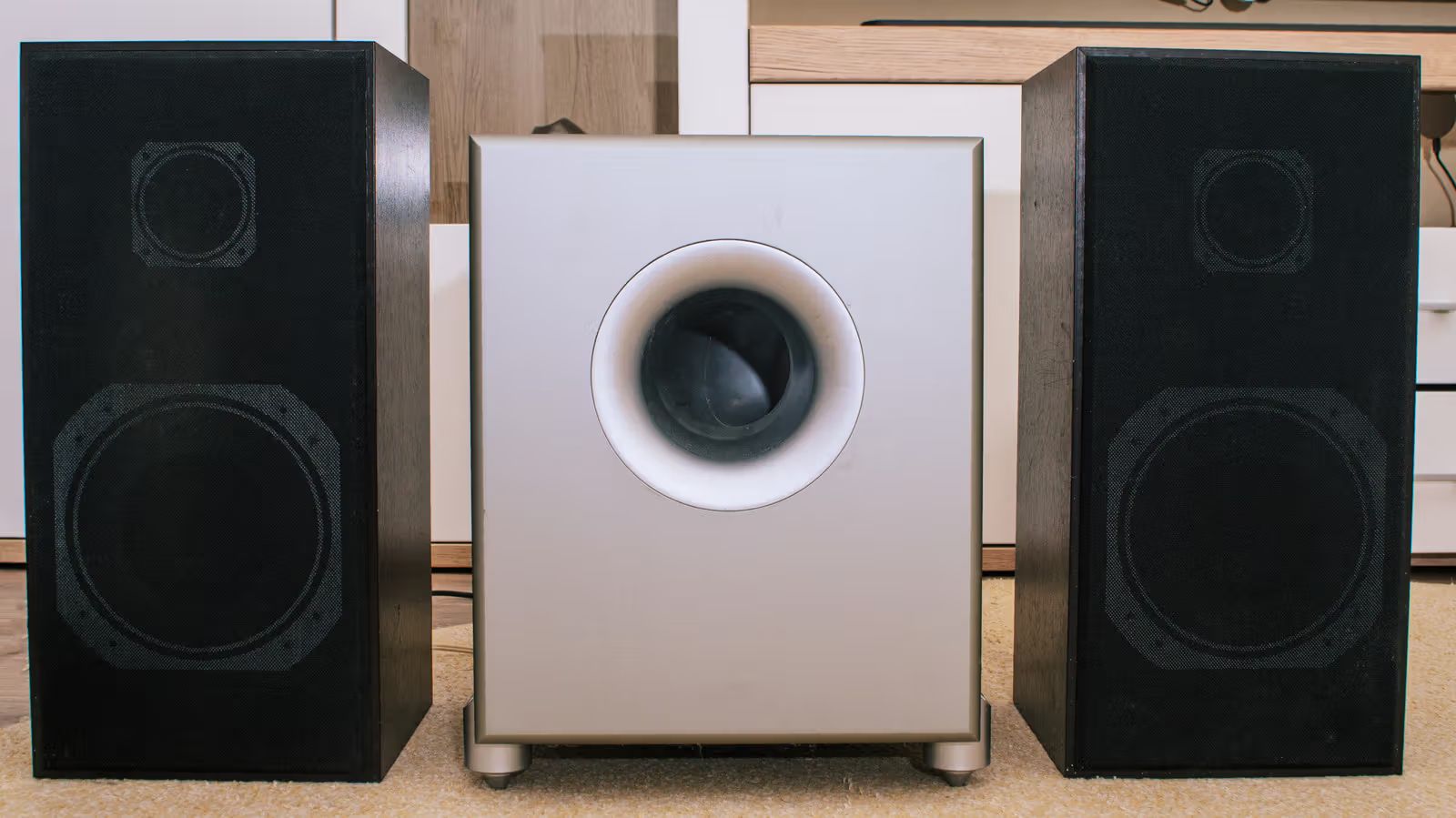
Orientation is not completely irrelevant. Subwoofers with sound holes (front, rear or bottom vents) need breathing space, and blocking the sound holes will significantly reduce the output. It is recommended to leave at least 2 to 4 inches (about 5 to 10 centimeters) of clearance between the sound hole and any surface, but more is okay. In contrast, a sealed subwoofer has no sound hole to worry about, and the direction is hardly an issue from an acoustic point of view.
Rather than facing the direction, first solve the placement: corners, front walls and double subwoofers
Instead of worrying about which direction the speaker should face, you should pay more attention not to force it into a blind spot where one side is next to the sofa and the other side is sandwiched between two walls. Theoretically, bass is omnidirectional, but if the sound wave hits too many objects as soon as it leaves the speaker, it will be easier for people to hear its location. If space is limited, it sometimes helps to have the diaphragm facing the wall rather than directly toward the listener.
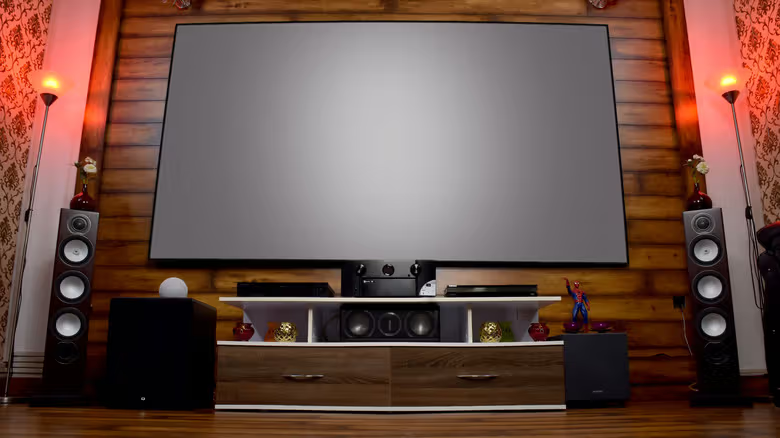
Several placement strategies you can try: Choose a corner and place the speakers facing the open space, which can reduce dead spots in the space and make the sound more balanced; or place it on the front wall, next to the main speaker, which usually blends better with the center channel and main channel; if it is a dual subwoofer configuration, it can be placed in two diagonal corners so that multiple seating positions can hear even low frequencies.
You can also test it yourself: play a bass track with a steady rhythm and repeated occurrences at the main listening position, and then move slowly around the room, stopping and listening at every possible placement point. The trick is to crouch down to knee level to listen - which means crawling around on the ground, which can be painful in the knees. The place where the bass sounds most balanced and full is where the subwoofer should be placed.
Direction is one of the least worrying decisions in the entire sound system. The room, placement and surrounding acoustic environment have a far greater impact on bass performance than which direction the speaker unit is facing. Try a few more positions and just trust your ears.