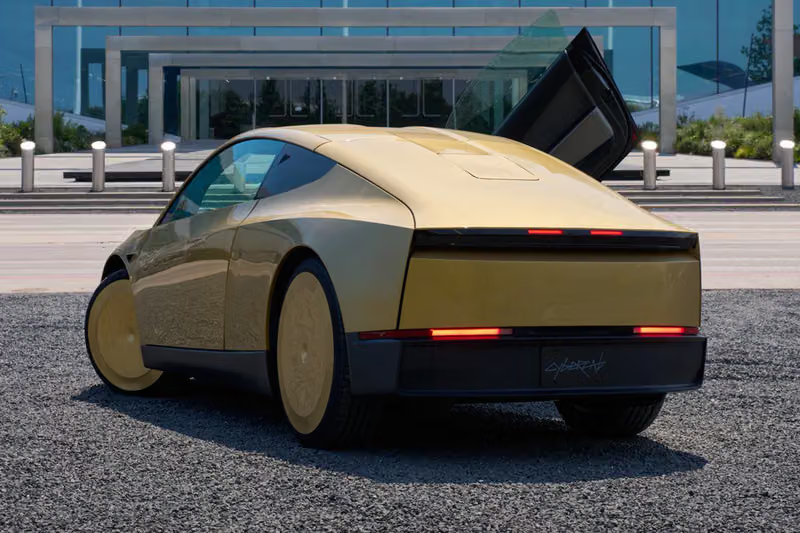
A gold Cybercab sat quietly outside the Giga Texas factory, an almost invisible antenna added to its roof. When Tesla's Robotaxi account posted the photos, the caption was just one line: "First Cybercab with Starlink integration." Last month it was renders — this time it's the real deal.
The antenna is a new Starlink V5 unit, embedded flush into the rear roof panel so it doesn't disrupt the Cybercab's minimalist silhouette. On paper, download speeds can exceed 375 Mbps, theoretically enough for passengers to stream 4K video, work on documents, or play online games at the same time — assuming anyone wants to do that in a driverless car.
The obvious question is: the Cybercab runs its full self-driving stack on Tesla's own AI4 computer, so driving safety has never depended on a network connection. So what's the antenna actually for? Ashok Elluswamy, Tesla's VP of AI software, says the satellite link handles "background tasks" like fleet management, remote customer support, and live navigation updates — none of which are tied to the act of driving itself.
Right now, Robotaxi testing is mostly happening in cities like Austin and Miami, where cellular coverage is already solid, so adding a satellite terminal to a $30,000 car isn't a cost- or weight-free decision. But flip it around, and it also means the fleet can stay connected even in remote areas without 5G or LTE coverage. Musk has previously said all future Tesla vehicles will eventually get Starlink terminals — and this gold prototype is the first physical proof that Tesla means it.