A black chair need not have only one kind of surface. Vitra’s Antony Limited Edition 2026 gives Jean Prouvé’s curved seat and back a black European chestnut finish above a deep-black powder-coated metal base, with a consecutively numbered label on each chair. Available through the brand’s website, the October 20 report concerns a new version of an older design, rather than a chair first designed by Prouvé in 2026. Its interest lies in retaining legible structure as both shell and supports turn dark.
How does the curved shell sit on its metal supports?
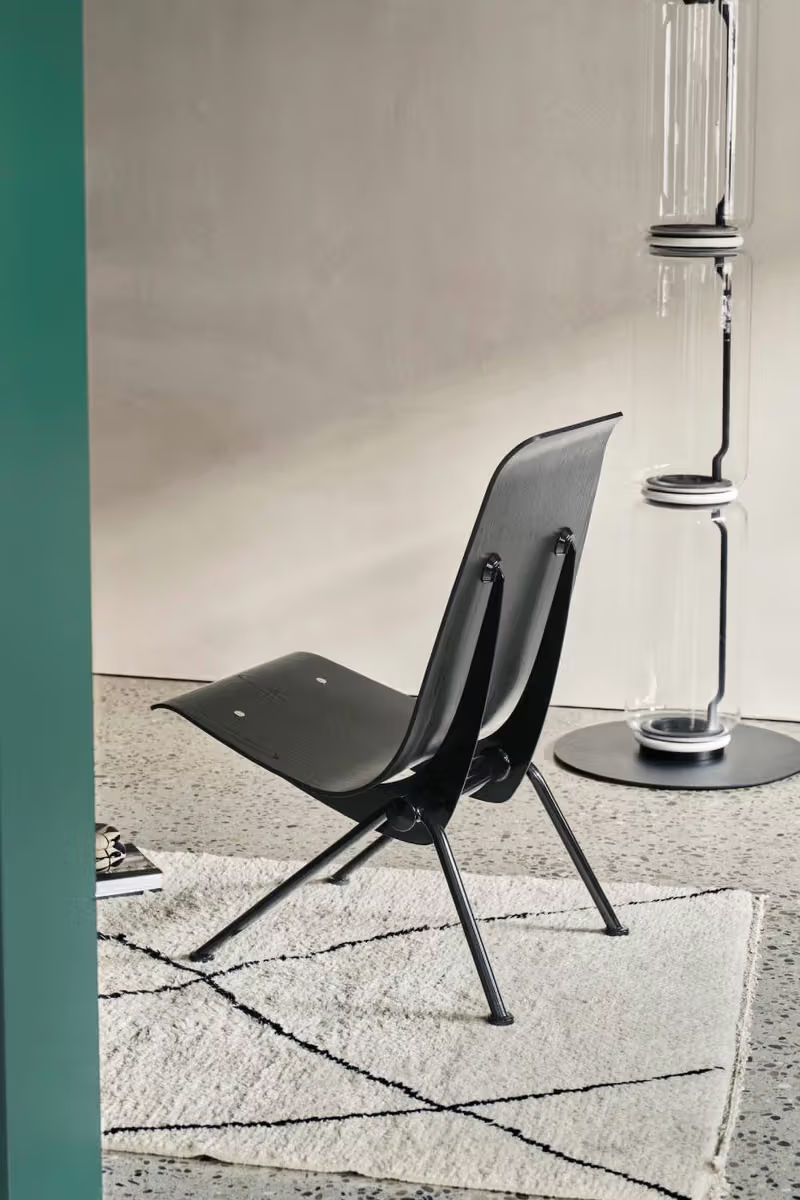
Antony’s seat and back form one upward-curving surface. The metal base divides into support points below, joined and stabilised by transverse tubing. Two sheet-metal brackets hold the moulded plywood shell. The apparent simplicity therefore has a clear structural arrangement, more readily visible from the side than the front.
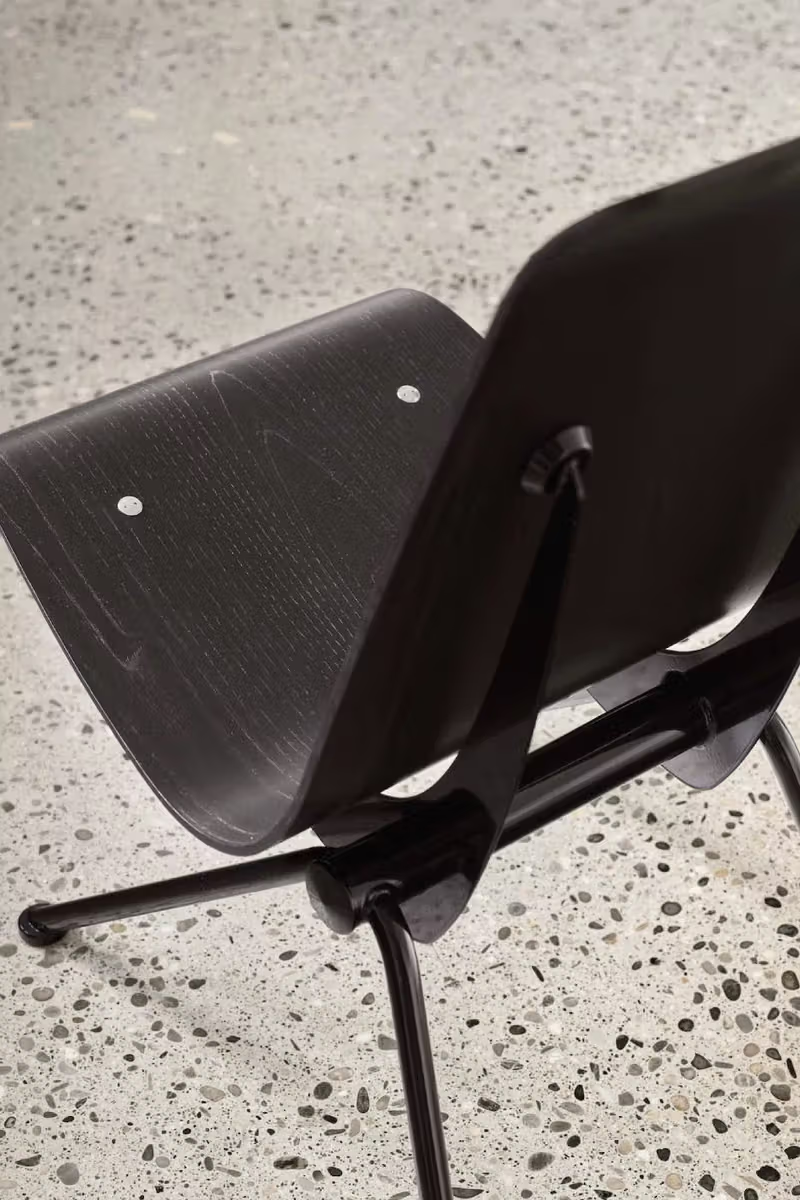
A closer view reveals grain, sheet-metal supports and joints.
From behind, grain follows the shell’s changing curve while joints and metal edges supply further details. Black reduces colour differences but increases the importance of sheen and material direction. A small product thumbnail can conceal the distinction between wood and metal; side, rear and interior views together better explain how the chair occupies space.
How did a student-residence design enter the living room?
Vitra identifies Antony as a Jean Prouvé design from 1954, originally connected with furnishing requirements for the Cité Universitaire student residence in Antony outside Paris. It entered production after a competition and later appeared in offices, waiting areas and homes. An object now discussed through design collecting also began with practical needs across many rooms.
The black 2026 edition retains tension between engineering and material rather than adding only a commemorative logo. European chestnut grain gives the dark surface natural differences, while powder-coated metal supplies more consistent lines. Numbering identifies the limited version; it does not guarantee future value or replace consideration of dimensions and use.
At home, consider side clearance and surrounding materials first
Interior photographs place Antony near shelving, rugs and lighter walls, making the black outline a clear pause. Its visually low centre and backward-extending shell require room for sitting down and standing up. When combining it with tables or other chairs, matching colour alone cannot settle seat height, support preferences or front-to-back clearance.
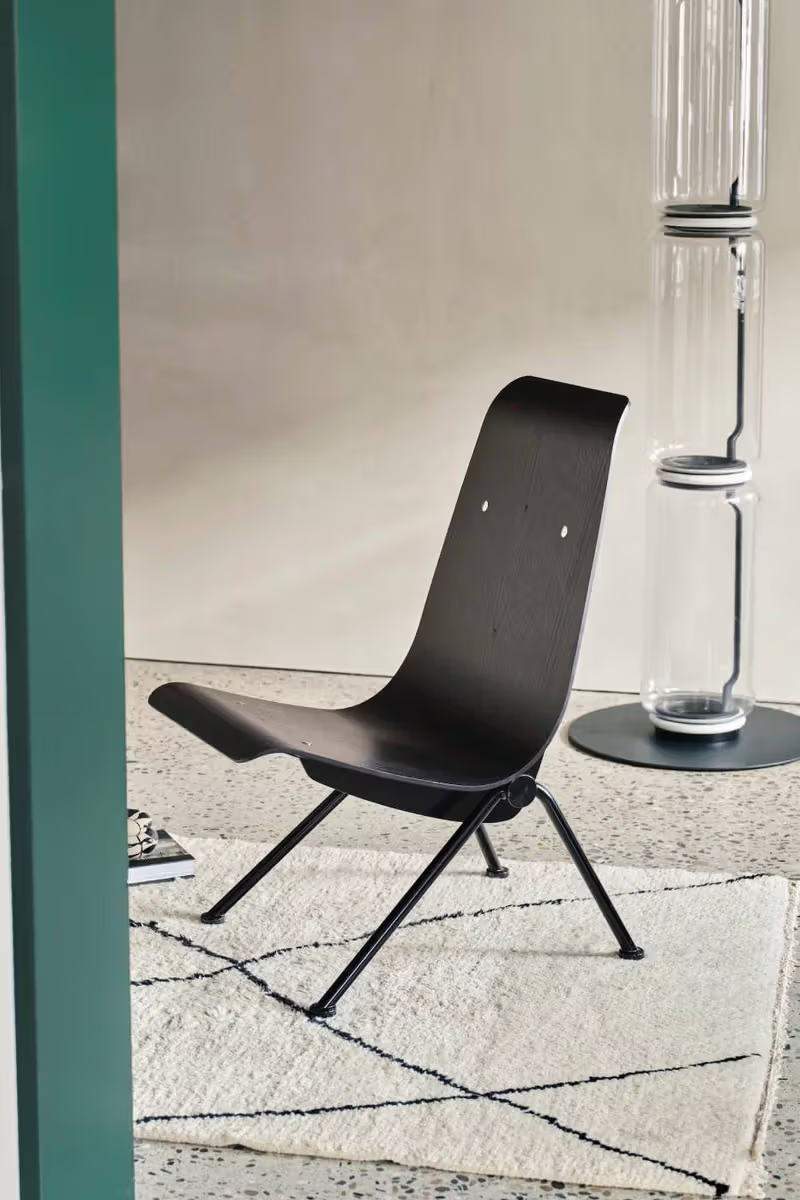
An angled front view brings seat, back and legs together.
Vitra’s official limited-edition page provides a product and regional information route. Prices and stock should be checked for the intended market. The chair shows how an older design can retain material differences within one colour. Understanding curve, grain and support points returns the collectible name to the everyday act of sitting.