Sinopac Small Shops opens applications until November 27: local craft beyond the exhibition
The fourth-edition show has ended, but the shops’ work continues. Taiping Blue, Shu’s Pottery and a community kitchen reveal links between craft, education and everyday neighbourhood life.
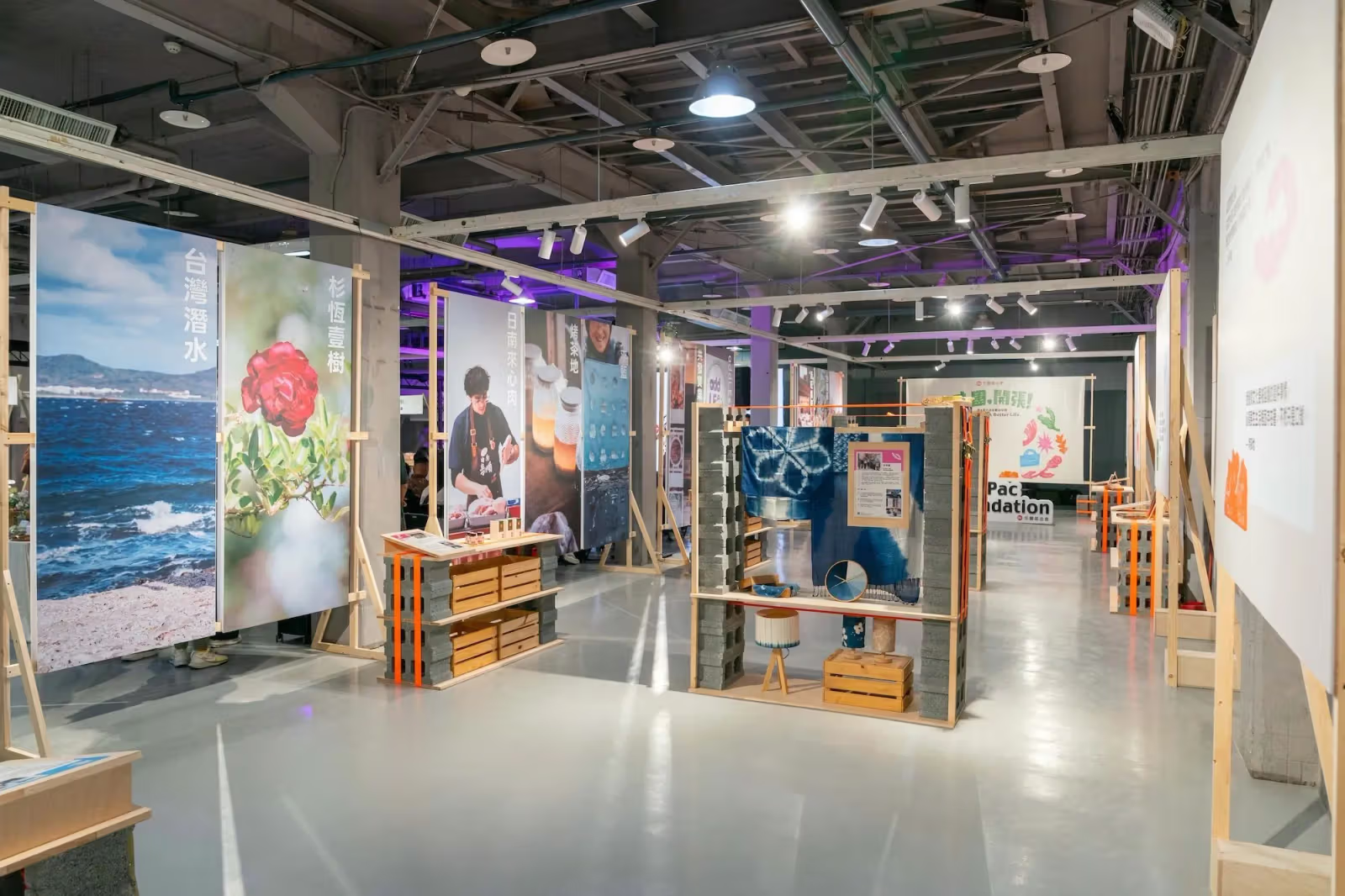
The fourth Sinopac Foundation Small Shops programme presented ten businesses working across food, craft, the environment and social participation. Its October 3–4 exhibition at Huashan has ended, while applications for the fifth edition run from October 1 to noon on November 27, 2026. The foundation provides funding and professional support, looking beyond a shop’s revenue to its role in the community. Reading that support alongside each business’s everyday methods makes the results more tangible than a list of selected names.
Taiping Blue turns orchard branches into another palette for craft
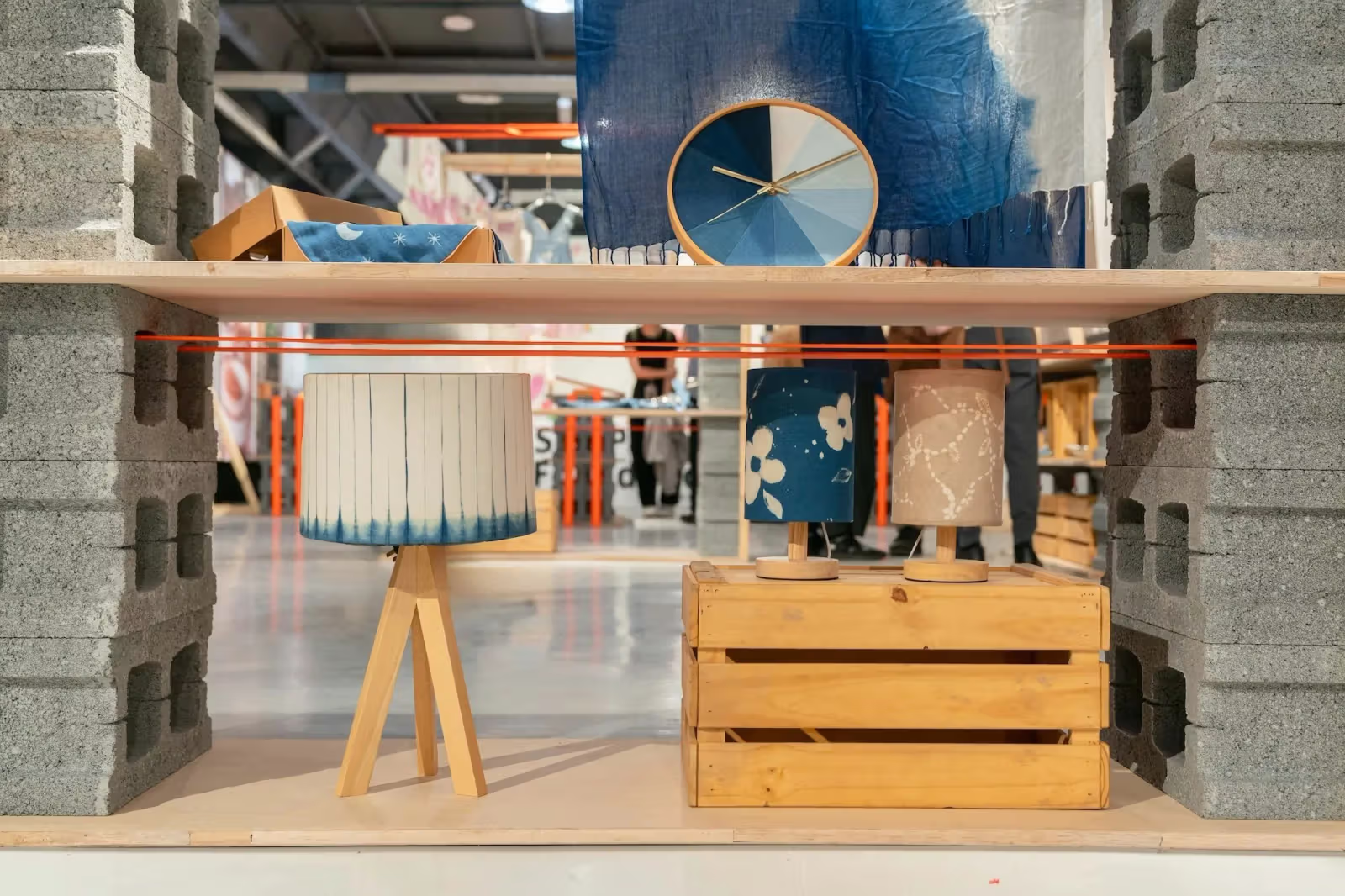
Taiping Blue in Toubiankeng, Taiping, Taichung, grew from Hakka indigo dyeing in the context of local cultural renewal following the 921 earthquake. When customers wanted colours beyond blue, the team developed plant dyes using pruned loquat, longan and lychee branches and leaves purchased from local farmers. Pale skin tones, pink and light brown entered the fabrics. Materials thus connect colour with orchard maintenance and neighbourhood collaboration.
The brand applies dyeing to fabric, stone and leather, and links local routes through small excursions involving beekeepers, wineries and a bat cave. The aim is to keep traditional craft accessible through objects, workshops and movement, rather than confining it to a display case. When pruned branches find a use and local businesses develop shared routes, a technique can become the everyday work of sustaining relationships.
Dyed fabrics and craft results displayed in the Taiping Blue section.
A pottery factory’s transition involves more than attractive interiors
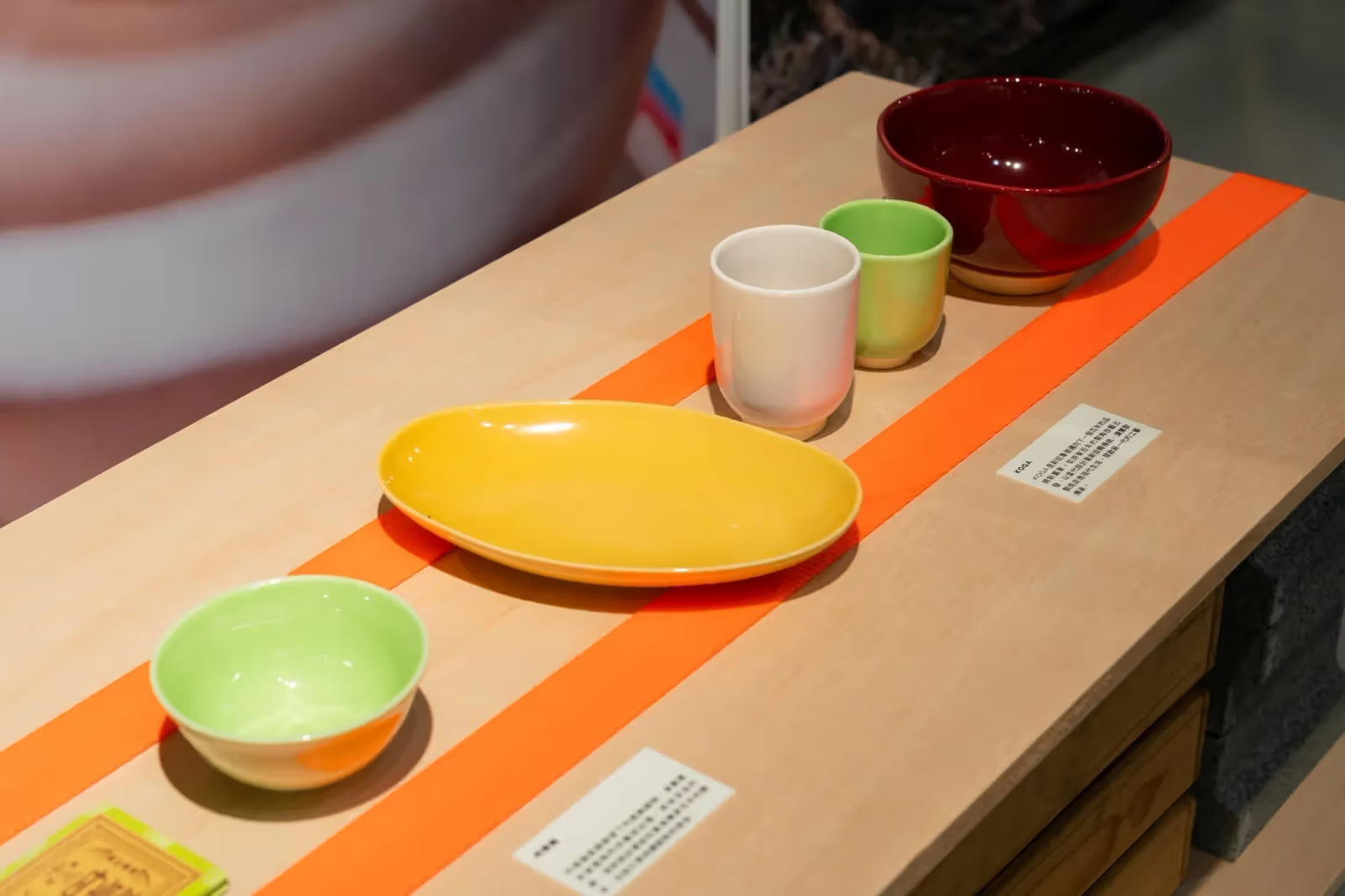
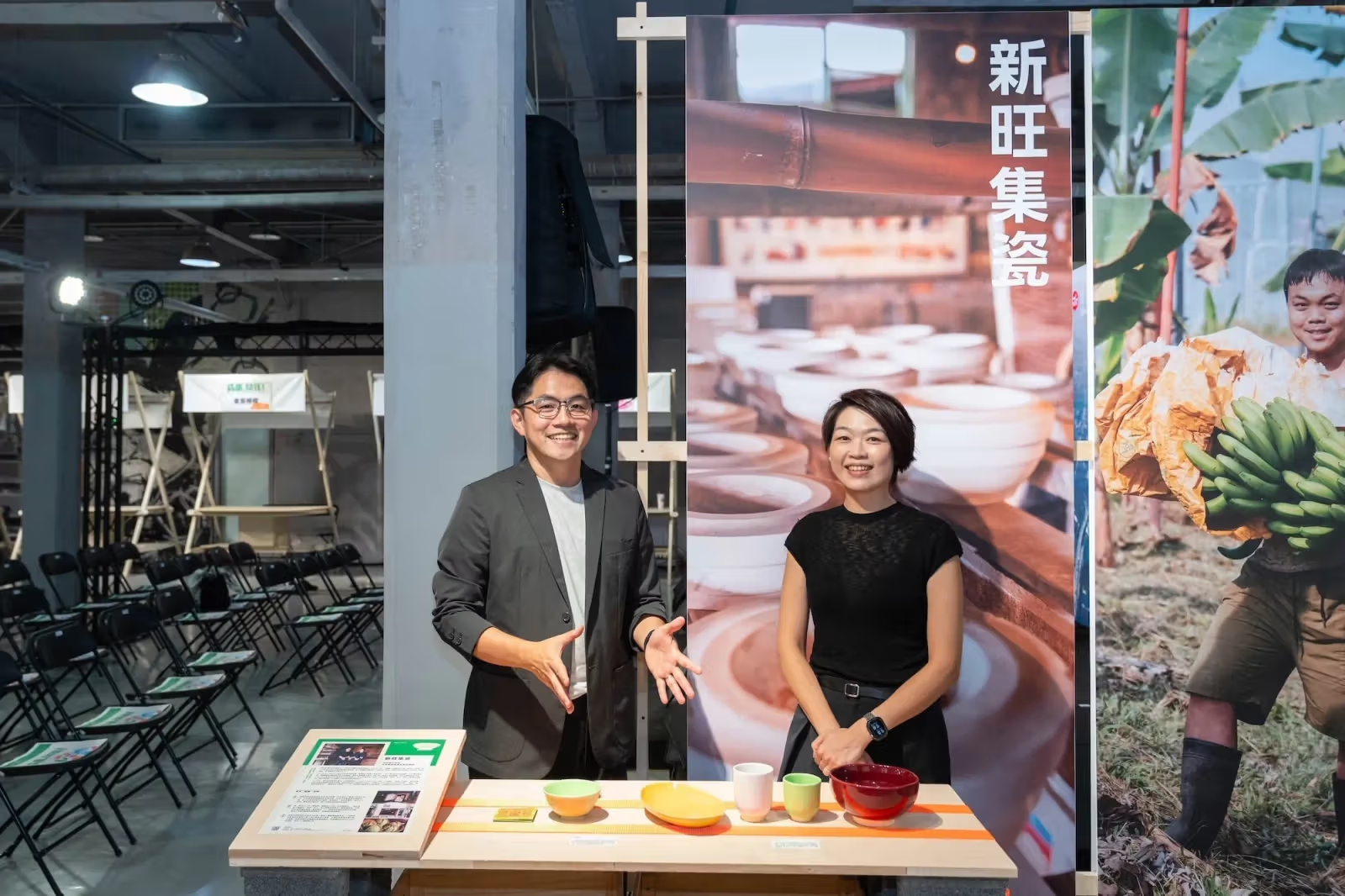
In Yingge, fourth-generation successors Hsu Shih-Kang and Wu Chia-Hua have gradually transformed the old factory of The Shu’s Pottery into a visitor-oriented factory and museum. The subsequent KOGA tableware brand reinterprets vessels through five colours rooted in the area: Xiexing red, kiln yellow, blue-green, Yingge white and Jianshan black. The palette brings local manufacturing memory into objects that still belong on a dining table.
Shu’s Pottery tableware arranged in different colours.Hsu Shih-Kang and Wu Chia-Hua in the Shu’s Pottery display area.
The team also works with neighbouring producers on an Yingge open-house initiative. With programme support, a multifunctional space on the museum’s second floor accommodates pottery courses and group use. Ceramic recycling and remanufacturing remain future directions, rather than a fully completed circular system. Connecting making, use and teaching brings more people into the production area and gives the transition a life beyond a single exhibition.
Marine volunteering and a shared kitchen extend the shop’s public role
Taiwan Diving in Pingtung moved from marine engineering into recreational diving, taking part in sea clean-ups and collaborating with an elementary school on an underwater graduation ceremony. Programme support helped establish a marine volunteer team. In Taichung, Rinan Lai Xin Rou has developed a butcher’s shop with more than twenty years of history into a shared community kitchen, working with small farmers on products. Both start from existing skills and redirect them toward community needs.
Official fifth-edition eligibility requires applicants to be Republic of China citizens aged at least 18 and to operate a registered business; proposals are submitted online. Assessment considers innovation, social impact, everyday practice and feasibility. Resources are allocated through review and project scale rather than divided equally among all applicants. Readers can support ongoing products, classes and partnerships; shop owners can first define the problem and assistance needed, then prepare for the November 27 noon deadline.