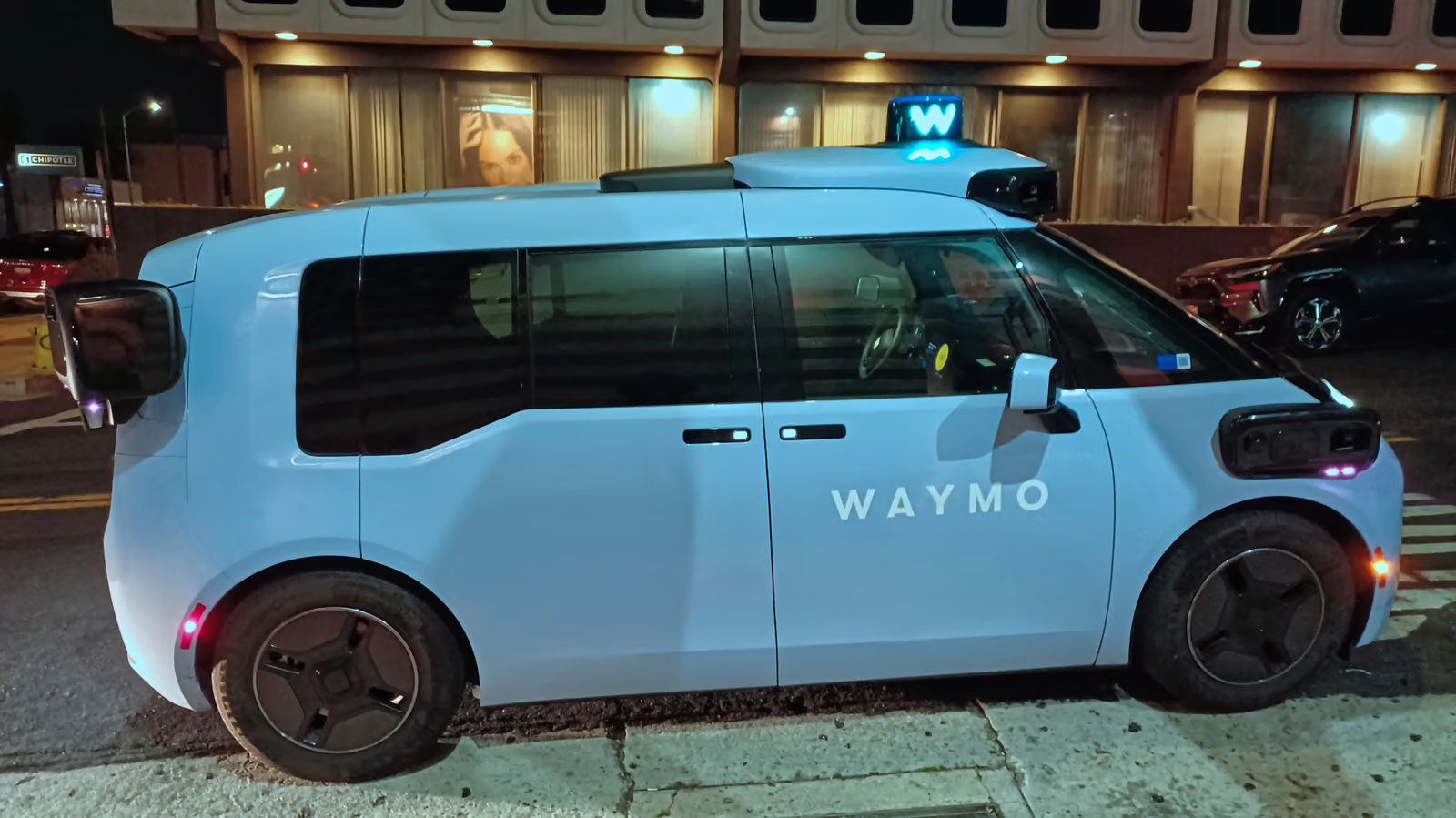
On the evening of August 14, Waymo broke the news on Twitter first: the California Public Utilities Commission (CPUC) had approved the expansion of its robotaxi service area. The official records hadn't been updated yet — the company's own announcement beat them to it. Behind that gap lies a process that started with an application filed back in January, hit a pause in review along the way, and finally got approved in August.
The approval covers a total of 18 counties across Northern and Southern California: Alameda, Contra Costa, Marin, Napa, Sacramento, San Francisco, San Mateo, Santa Clara, Santa Cruz, Solano, Sonoma, Yolo, Los Angeles, Orange, Riverside, San Bernardino, San Diego, and Ventura. Sacramento and San Diego are joining the service area for the first time, while the Bay Area and LA are seeing their existing coverage expanded.
Waymo had already signaled plans to enter San Diego back in November of last year, and mentioned Sacramento as part of its roadmap in February. This CPUC approval essentially puts an official stamp on those intentions for both cities. But the tweet also made things clear: "the expansion will be gradual and will follow our safety framework." In other words, getting the green light across 18 counties doesn't mean the fleet will suddenly show up on every street at once. Back in July, Waymo had already mentioned San Diego as one of the cities where it planned to test fully driverless robotaxi rides — with Denver, Tampa, and Las Vegas also on that same list.
Based on the application Waymo filed in January, the vehicles covered under this approval include the existing Jaguar I-Pace as well as the new Ojai — a custom-built minivan manufactured by Chinese automaker Zeekr. The mix of old and new models suggests this expansion isn't just a simple copy-paste of the existing fleet, but rather a move to bring the Ojai onto a wider stretch of California roads.
Engadget has reached out to the CPUC for more details on this decision and has not yet received a response.