Why an Empty Driver's Seat Is Still Only Level 4: The Gap Between Waymo and Level 5
Under the SAE's autonomous driving classification standard, Waymo's self-driving system remains Level 4, not Level 5. The key isn't how independently the vehicle performs, but how broad its designed operational range can get.
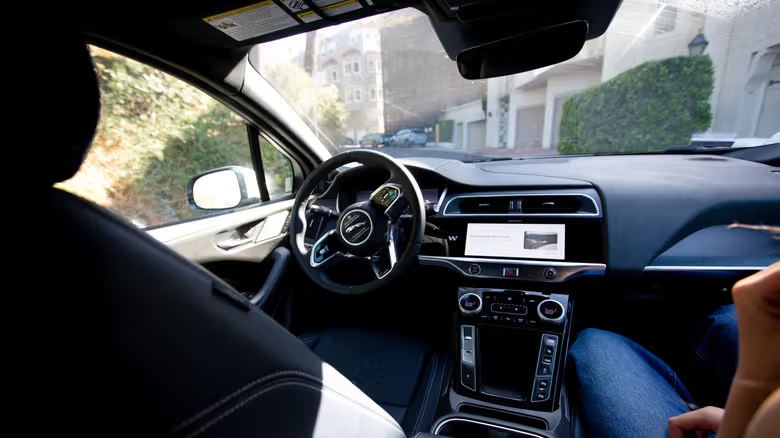
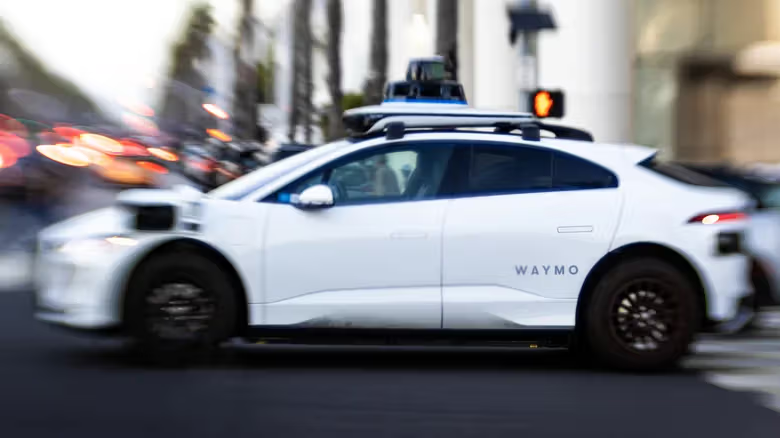
A car with no one behind the wheel, turning, braking, and reading red lights on its own in city traffic — for the passengers inside, it's hard to imagine anything more "automated" than this. But according to the SAE (Society of Automotive Engineers) autonomous driving classification standard, vehicles like Waymo's are currently still classified as Level 4, with some distance left before reaching the top tier, Level 5. What truly separates the two isn't how "independently" the vehicle performs on the road, but how far that independence can extend.
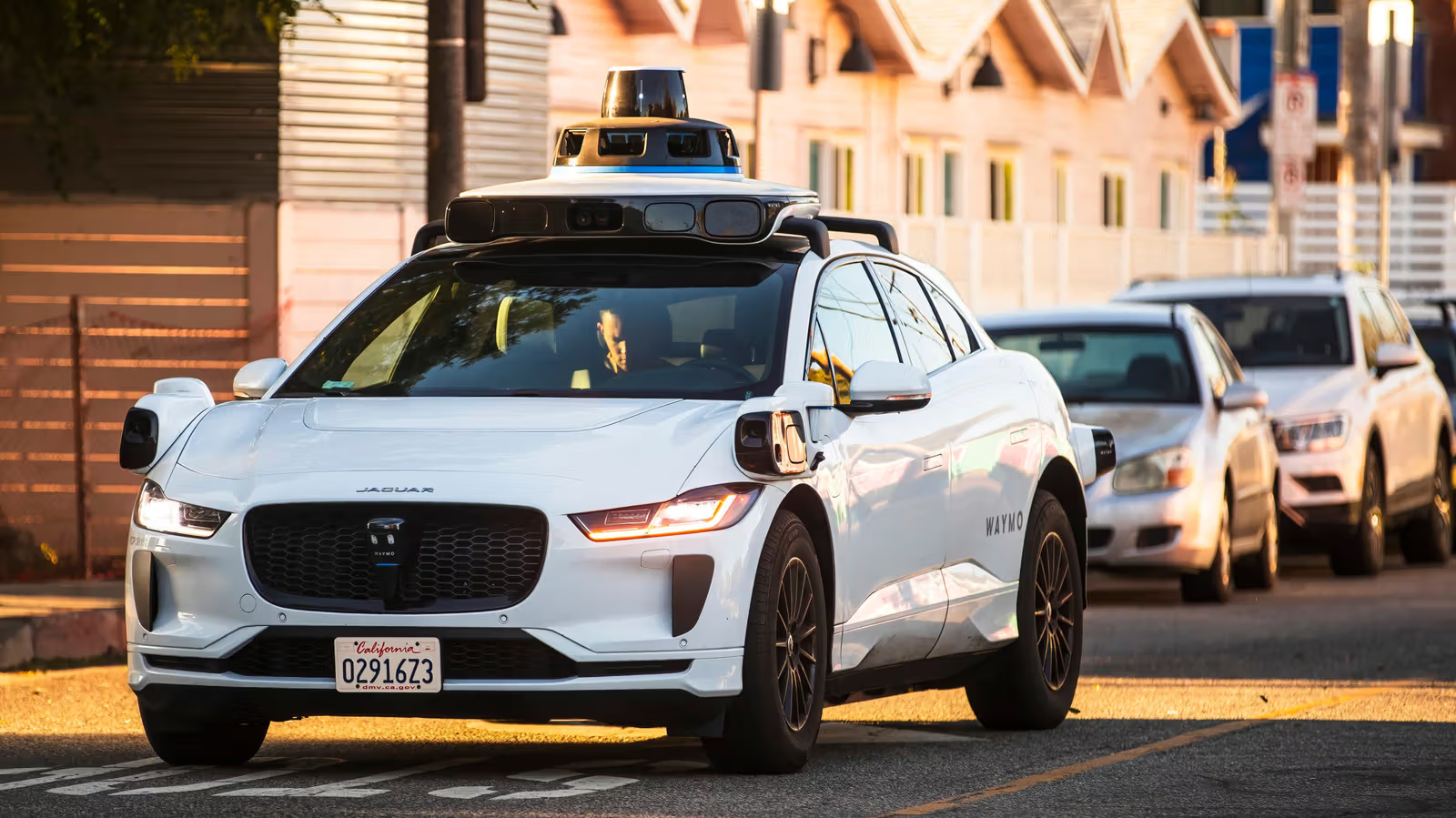
Strictly speaking, what's classified as Level 4 is the Waymo Driver — the company's autonomous driving system itself. Waymo's published safety research report describes it as an SAE Level 4 autonomous driving system, which is why an empty driver's seat doesn't mean the vehicle has reached Level 5.
The SAE classification runs from 0 to 5, six levels in total. According to the U.S. National Highway Traffic Safety Administration (NHTSA), Level 0 means a human is fully in control, even if safety systems occasionally intervene; Level 1 can continuously assist with either steering or acceleration/braking, while Level 2 can handle both at once — but at these levels, the driver remains the one responsible for driving. The real turning point comes at Level 3: the system can handle all driving tasks under specific conditions, but a human must remain ready to take over whenever the system requests it. By Level 4, that requirement disappears — as long as the automated system is operating within its designed operational range, the person inside is a passenger, not a backup driver. This is why Waymo can describe its service as fully autonomous driving without claiming to be SAE Level 5.
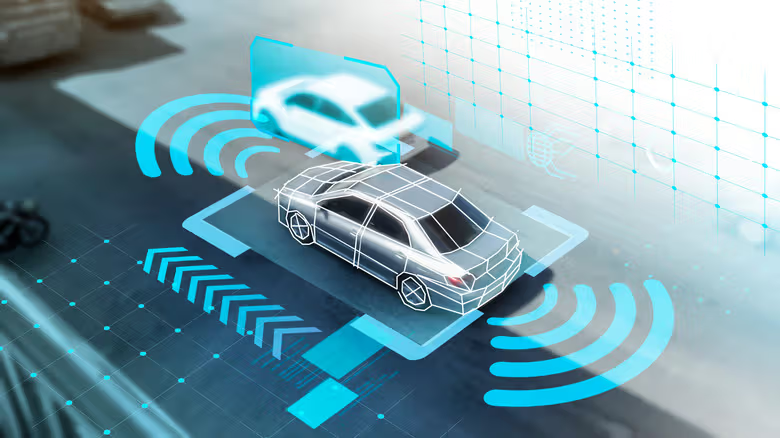
This "designed operational range" has a specific term: operational design domain (ODD). The SAE defines it as the set of conditions an autonomous driving system is designed to operate within, which may include geographic scope, road types, and the weather conditions it can handle. A Level 4 system's job is to handle driving entirely on its own within that range; what Level 5 removes is precisely that boundary. NHTSA describes Level 5 as operating under general conditions, not confined to a specific service area. In other words, a Level 4 Waymo vehicle can already autonomously handle steering, braking, and decision-making within its own operational range — the difference isn't about who's driving, but how broad a range of scenarios the system can cover.
This also explains why Waymo can keep upgrading its system and still remain at Level 4. Official information states that the sixth-generation Waymo Driver has expanded the types of environments it can handle, including more severe winter weather. But as long as the system still operates within clearly defined conditions, no matter how many more cities or weather types it can handle, it remains classified as Level 4 — not Level 5.
Remove the boundaries, and the difficulty spikes dramatically. In a collision-avoidance testing study published by Waymo in 2026, the company noted that the difficulty in evaluating a Level 4 system lies in the sheer number of operational scenarios that could lead to dangerous situations; its testing method combines human driving data, Waymo's own autonomous testing data, and expert judgment to identify potentially high-risk situations. In May 2026, Waymo vehicles encountered flooded roads in Atlanta and San Antonio, prompting the company to suspend or restrict some operations while working on improvements — a concrete example showing that even within an already defined operational range, variables like weather can still exceed a system's original handling capacity, let alone what it would face with all boundaries removed.
There's currently no clear timeline for when Level 5 will arrive. NHTSA's position is that Level 5 technology has not yet appeared in any vehicle available for consumer purchase, and the SAE classification standard describes levels of capability, not a development schedule.