What Did the 400-Pound Camera Make Tom Holland Think? Why IMAX Film Is Still a Game for the Few
A mix-up on the set of "The Odyssey" reveals why most Hollywood directors still shy away from 65mm IMAX film cameras—leaving Nolan as one of the last holdouts still going all in.
A funny mix-up happened on the set of "The Odyssey": Tom Holland reportedly thought that when the crew called "cut" every three minutes, the director was hinting that his performance wasn't good enough. In reality, it was just downtime for reloading film. Christopher Nolan's new film is one of the rare movies shot entirely on IMAX film, and this misunderstanding perfectly illustrates why the format still hasn't caught on more widely.
IMAX isn't new technology. The first IMAX film, "Tiger Child," debuted as a short in Japan back in 1970, and the following year "North of Superior" further showcased this large-screen, high-resolution projection format. But for its first decade or so, it was used almost exclusively for documentaries, educational films, and shorts—never truly breaking into mainstream feature filmmaking.
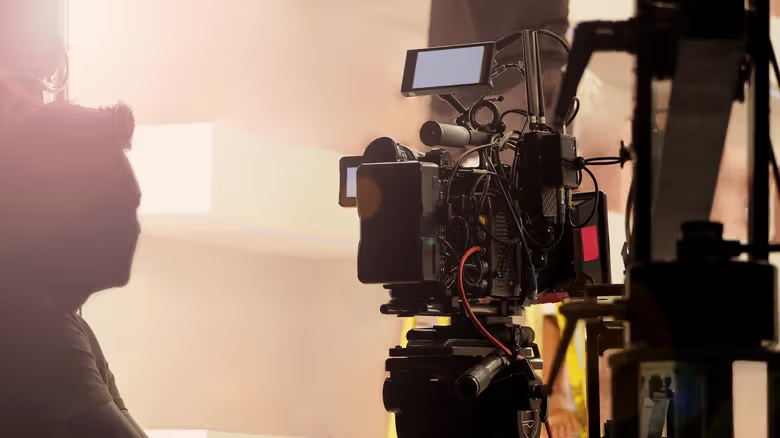
The problem lies with the camera itself. IMAX film cameras are bulkier and louder than standard 35mm cameras, and the noise they generate during shooting is a headache on sets that need clean audio. Even the newer 65mm IMAX Keighley camera used on the "Odyssey" set—touted as quieter than older models—still weighs in at nearly 400 pounds. That kind of bulk makes it nearly impossible to use in small locations or fast-paced action scenes. 65-70mm film is also larger and bulkier than standard 35mm, meaning cameras can hold less footage per load, which naturally means more frequent reloads—the exact source of Tom Holland's confusion, and also why every stoppage adds to the budget.
Nolan Is the Exception, Not the Rule
In 2008, Nolan used IMAX cameras for select scenes in "The Dark Knight," marking the first time a mainstream Hollywood film adopted the format. He was selective about which sequences got the IMAX treatment, reserving it for moments where he felt visual detail would matter most. But during that same era, Hollywood's real trajectory wasn't toward embracing the cumbersome IMAX film format—it was a full pivot to digital shooting. The reasoning is straightforward: digital cameras are quieter, lighter, and simplify post-production. By comparison, the size and noise of IMAX cameras already felt dated in 2008, let alone in 2026.
That shift happened fast. In 2009, the year after Nolan shot "The Dark Knight," "Slumdog Millionaire" won the Academy Award for Best Cinematography—the first digitally shot film to receive that honor. Since then, digital production has become the default choice in Hollywood, leaving IMAX film to a small handful of traditionalist holdouts—like Nolan, who still shoots on 65mm film cameras, believing it delivers the best image quality of any format available today.
"Filmed for IMAX" Isn't the Same as True IMAX
Most films looking to cash in on the IMAX brand take a different route. Tom Cruise is one of the poster children for this approach—"Mission: Impossible – The Final Reckoning" was shot entirely on IMAX-certified Sony digital cameras, aiming to capture a wider frame to fill IMAX's 1.90:1 screen ratio. But this differs fundamentally from Nolan's method—these films can't fill the full IMAX screen, and the aspect ratio remains inherently smaller. Then there's a case like "Ant-Man and the Wasp: Quantumania," where only certain sequences hit the 1.90:1 ratio; industry convention for the "Filmed for IMAX" label generally requires at least 45 minutes of a film to meet that standard. There are also movies labeled "The IMAX Experience," which simply reformat originally widescreen footage to fill the big screen—image quality that doesn't come close to true IMAX film.
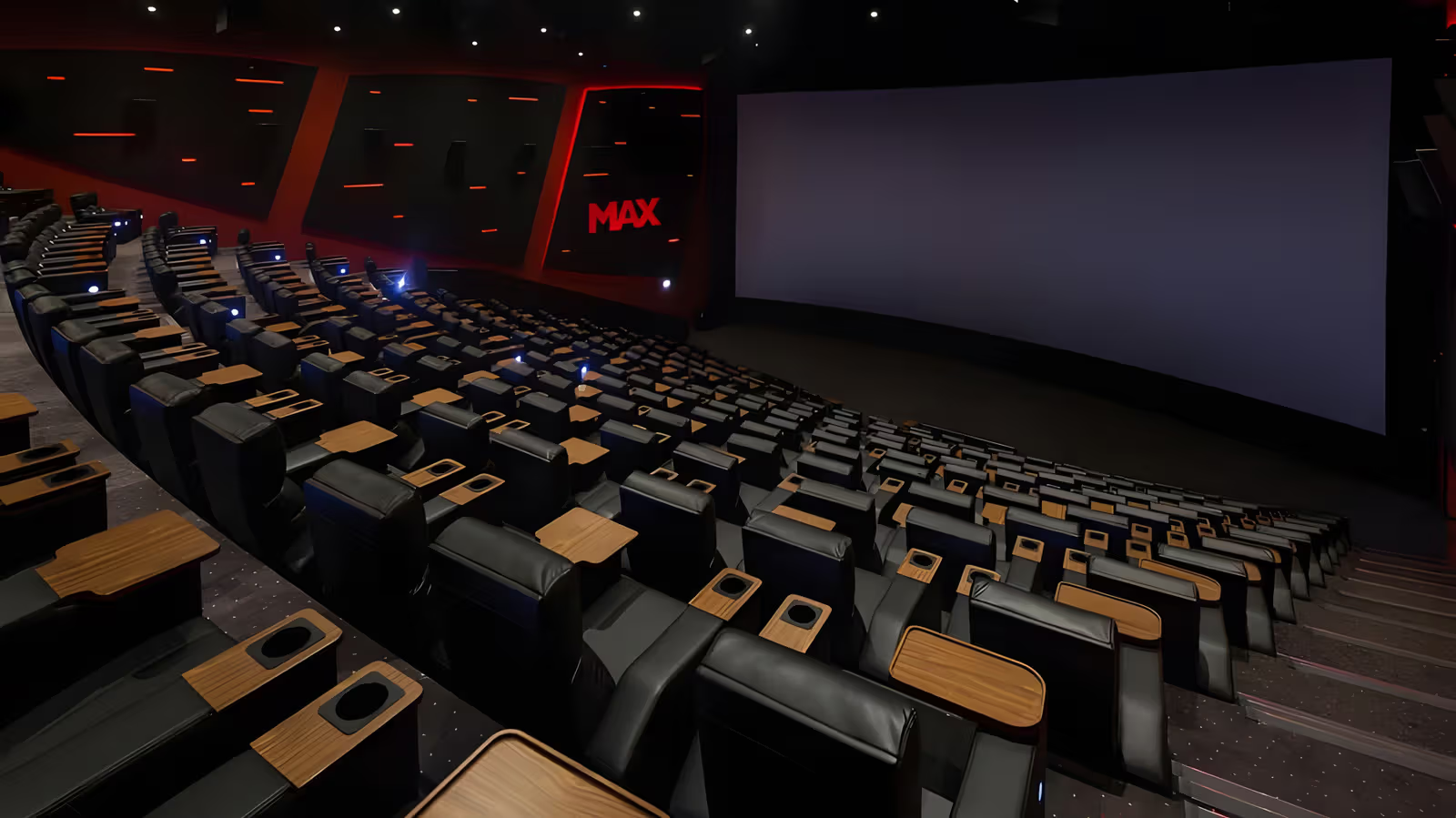
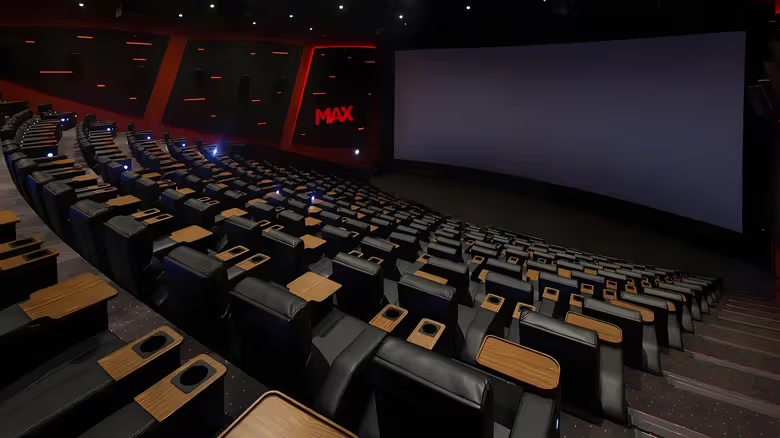
Only 41 theaters worldwide can actually project IMAX films in their original 15/70 format. That number is really the core reason most studios won't follow suit: spending more money to make a film, only to have so few venues where audiences can experience it in its best possible form. Digital cameras have certainly narrowed the gap—the Sony Venice series used on "The Final Reckoning" allows "Filmed for IMAX" movies to take fuller advantage of IMAX screens—but that still can't replicate the level of detail film capture achieves. IMAX remains a luxury choice—and it's precisely because it's expensive and rare that a work like "The Odyssey" stands out as such a rarity.