Android Auto Has a Hidden Developer Menu: The Key Reason It Now Beats CarPlay
Engadget puts Android Auto head-to-head with Apple CarPlay, comparing multi-window layouts, a hidden developer menu, and Gemini vs. Siri, to pinpoint exactly why Google currently has the edge.
Sideloading a third-party app onto your car's screen, then using CarStream to play YouTube on the dashboard for the kids in the back seat—that's something you simply can't do on Apple CarPlay, but on Android Auto it only takes flipping on a hidden menu. According to a hands-on breakdown by Engadget's Jack Whitcombe published August 16, 2026, this is one of the concrete reasons Android Auto currently has the upper hand over CarPlay.
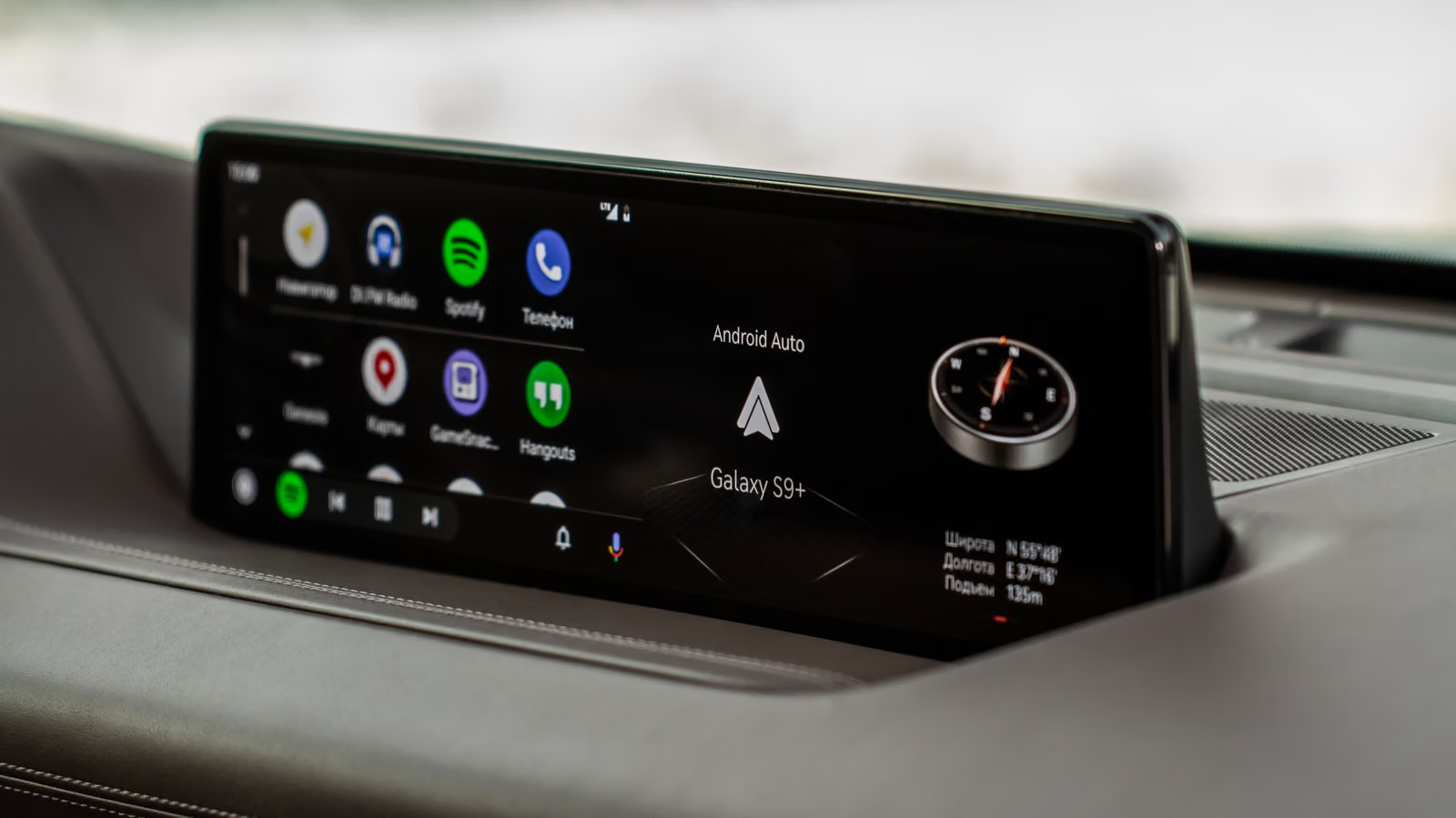
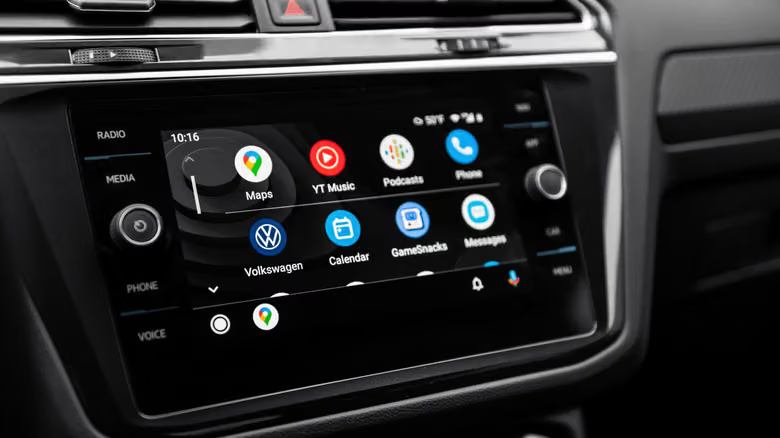
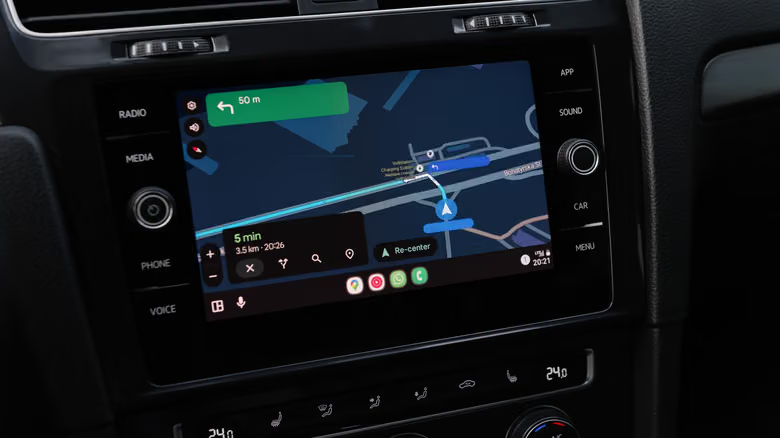
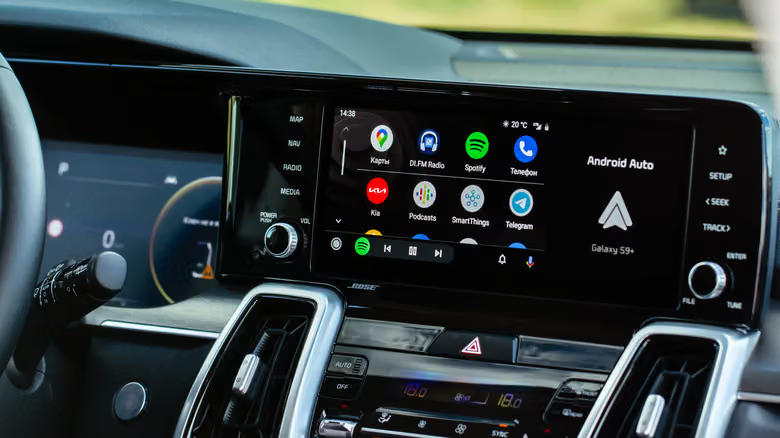
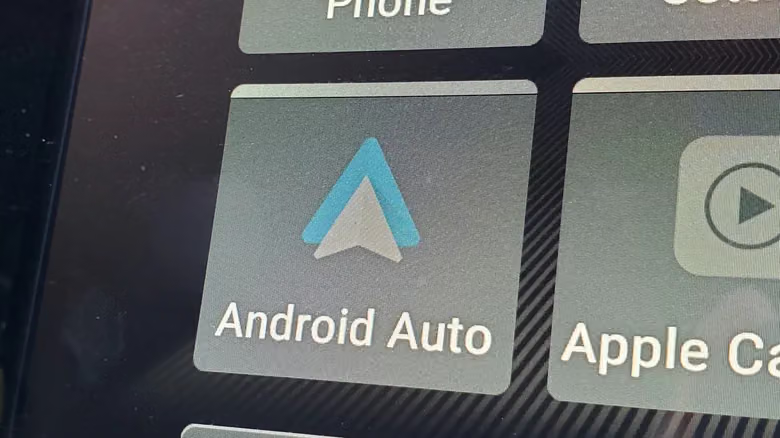
The philosophical differences between the two mirroring systems trace straight back to the personalities of Android and iPhone themselves. CarPlay's interface is built around "one thing at a time," keeping the screen focused on a single app, while Android Auto ships with a native multi-window layout, letting drivers freely resize and rearrange navigation, media playback, and widgets. Apple hasn't completely ignored the trend—CarPlay lets you rearrange app tiles and offers a split-screen view for maps and music—but details like custom wallpapers are still limited to a fixed set of Apple-provided images, with no option to pull directly from your phone's own wallpaper the way Android Auto allows.
The bigger gap is hiding in places users don't normally see. Android Auto has an undocumented developer settings menu that lets you manually enable "unknown sources," effectively pulling sideloaded apps onto the car's display—that's exactly the loophole CarStream uses to play YouTube in the car. The same menu also lets you manually adjust the default video resolution, force a switch between day and night mode, or toggle wireless Android Auto on and off for troubleshooting connection issues. Apple CarPlay has no equivalent feature by design, and its app review process is stricter overall—while Google can still restrict apps on its end through the Play Store, users retain the ability to route around it via sideloading, a level of freedom CarPlay users simply don't get.
Gemini vs. Siri: What the Hands-On Testing Found
AI voice assistants are another battleground. The article cites TechRadar's CarPlay hands-on comparison, which found that in the latest iOS 27 beta, Siri still stumbles on basic requests—asking it to find the nearest rest stop, for instance, got misread as a command to open the Calendar app. Gemini, by contrast, handles more natural phrasing and more complex, context-dependent requests, responding appropriately to the driving scenario at hand. Apple is also leaning on Gemini's underlying technology in iOS 27 to boost Siri's own capabilities. Engadget's own testing of iOS 27 describes Siri's improvements as "solid, but still has a ways to go."
Still, this gap isn't set in stone. iOS 27 won't officially launch until this fall, meaning every review so far has been based on beta builds, leaving Apple room to make adjustments before release. CarPlay Ultra, Apple's next-generation interface, is currently being tested by Aston Martin, with Tesla reportedly evaluating it as well—if it rolls out widely, Apple could close some of the gap in customization and interface depth. For now, though, the article's takeaway is clear: whether it's app selection, AI comprehension, or the customization options available to power users, Android Auto remains the more open—and more fun to tinker with—platform.