Apple’s Designers of Tomorrow 2026: four objects that ask us to pause
A palm-frond lantern, ceramic chair fringe, pencil fastenings and an expanding chess table turn the theme of presence into physical experiences at Apple and Design Miami’s second showcase.
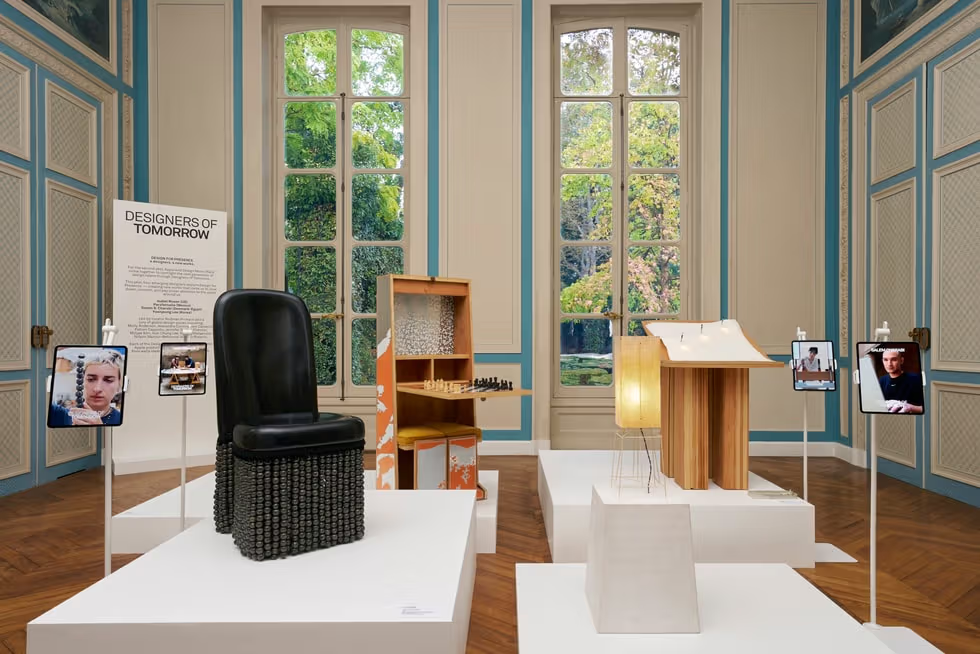
When daily life is interrupted by screens, what kind of object can make someone stay a little longer? Apple and Design Miami’s 2026 Designers of Tomorrow explores presence through work by Salem S. Charabi, Isabel Rower, Yoonjeong Lee and Parafernalia, curated by Rodman Primack. Announced on October 20 with a display at Hôtel de Maisons in Paris, this is the second edition of a brand collaboration that also documents Apple tools in the creative process.
Light and sound hold attention differently
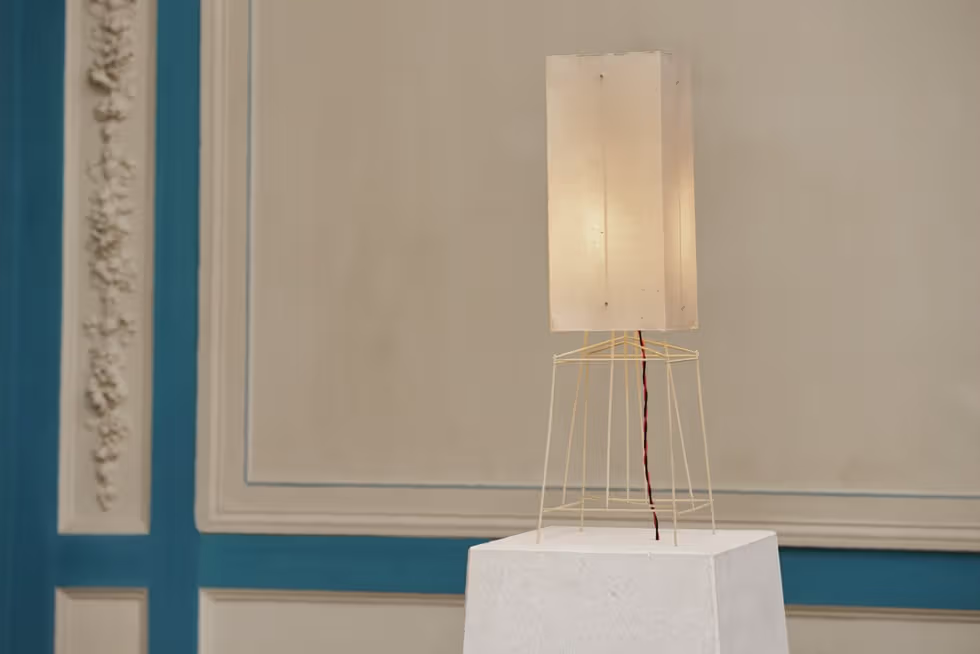
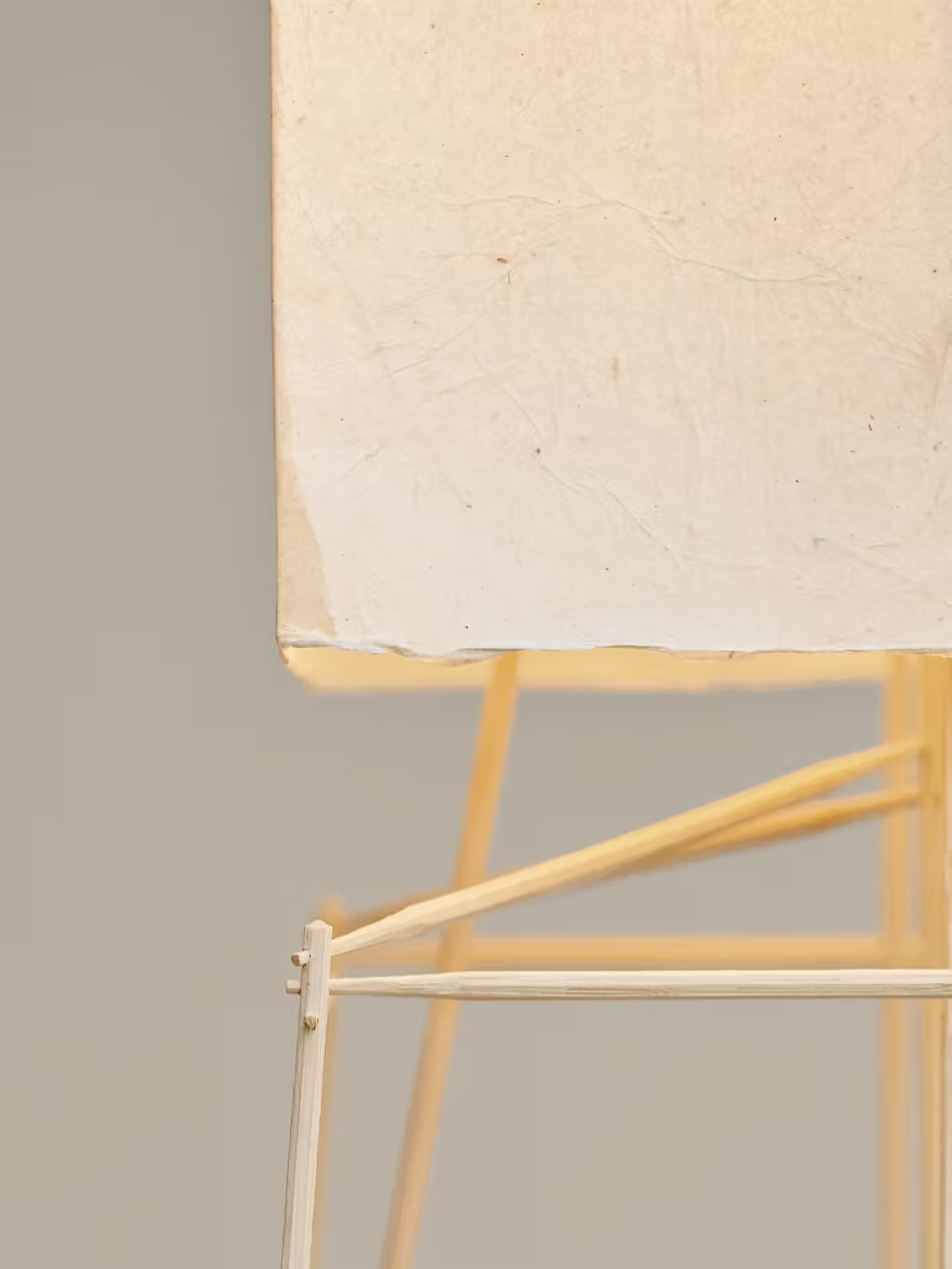
Egyptian-Danish architect Salem S. Charabi’s The Emergence of Light wraps a delicate framework in banana paper above a grooved limestone base. The framework stacks date-palm fronds, with each approximately three-millimetre-wide strand split, drilled and shaped at the ends to interlock by hand. As light passes through the paper, the interior structure remains faintly visible. Slender supports contrast with substantial stone, preserving evidence of assembly instead of reducing the lamp to a uniformly glowing surface.
The Emergence of Light contrasts a light shade with limestone.A detail reveals the slender framework and connections beneath the shade.
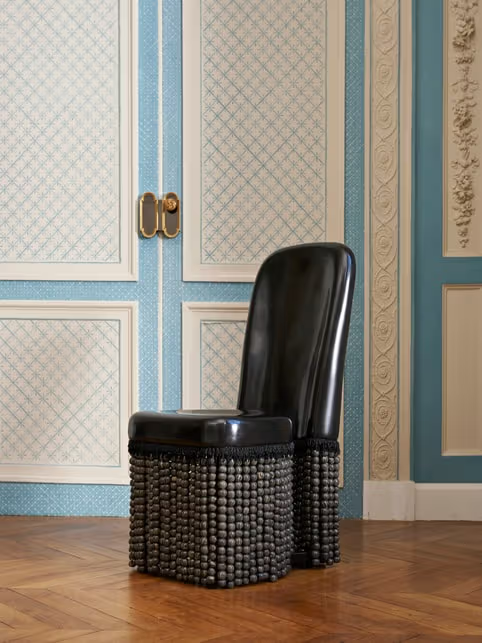
Brooklyn designer Isabel Rower’s Padded Chair 1860 takes exaggerated proportions from 18th- and 19th-century papier-mâché furniture and decorative objects, contrasting a glossy surface with ceramic-bead fringe around the seat. Its name suggests cushioning, while the image first raises questions about material. Rower explains that the beads sound when touched, turning an ordinary act of sitting into a conscious encounter. Sound and surface become separate ways of drawing attention.
Padded Chair 1860 combines gloss with ceramic-bead fringe.
Used pencils and a space to share
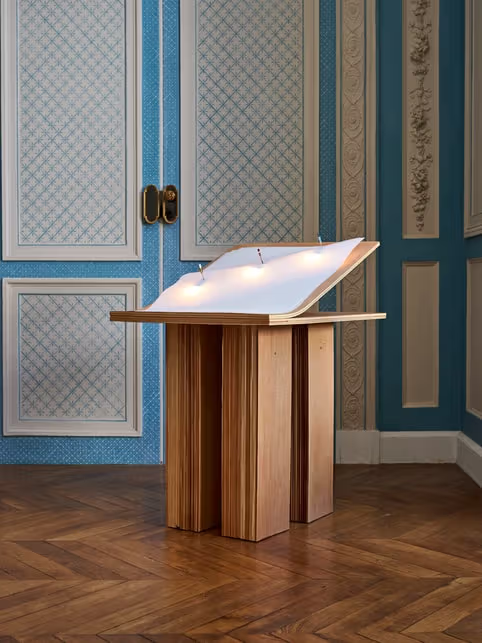
Seoul-based Yoonjeong Lee’s New Form functions as both wooden table and lamp. Approximately 5,000 thin veneer sheets form its base, paper becomes the shade, and three worn-down pencils serve as fastenings. An object usually seen as almost consumed takes on a structural role. Rather than concealing the pencils, the work keeps them visible. The volume built from many thin layers also contrasts clearly with the light paper above.
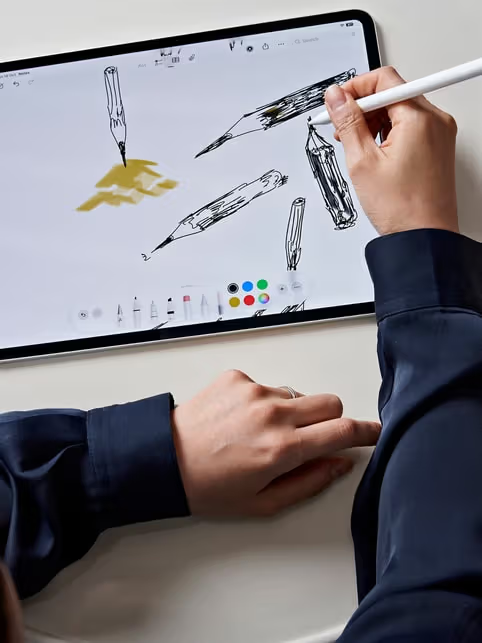
New Form supports a paper shade above a layered veneer base.Lee uses digital drawing tools to develop the pencil fastenings.
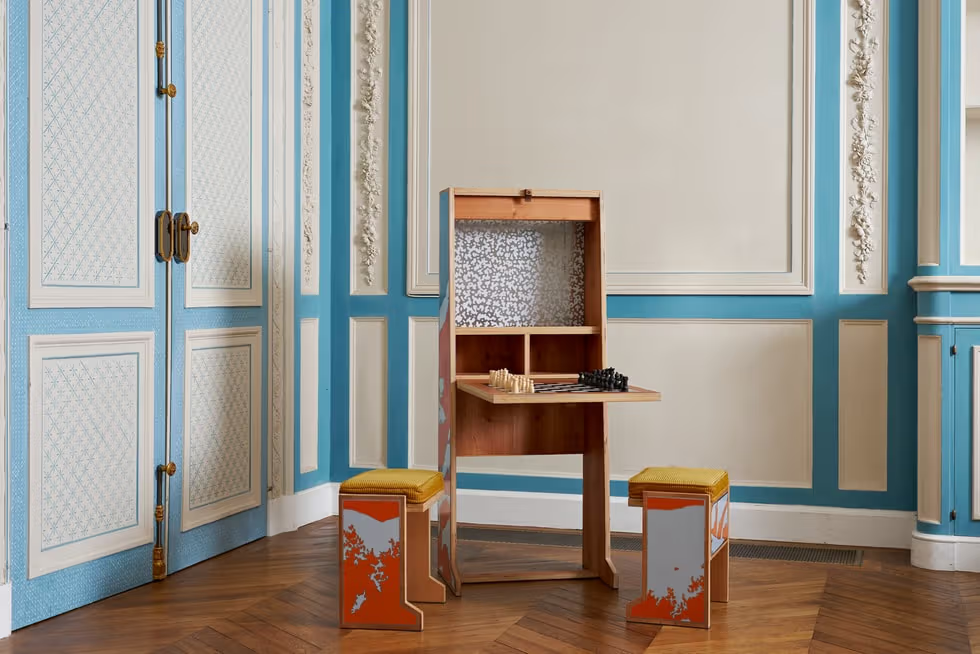
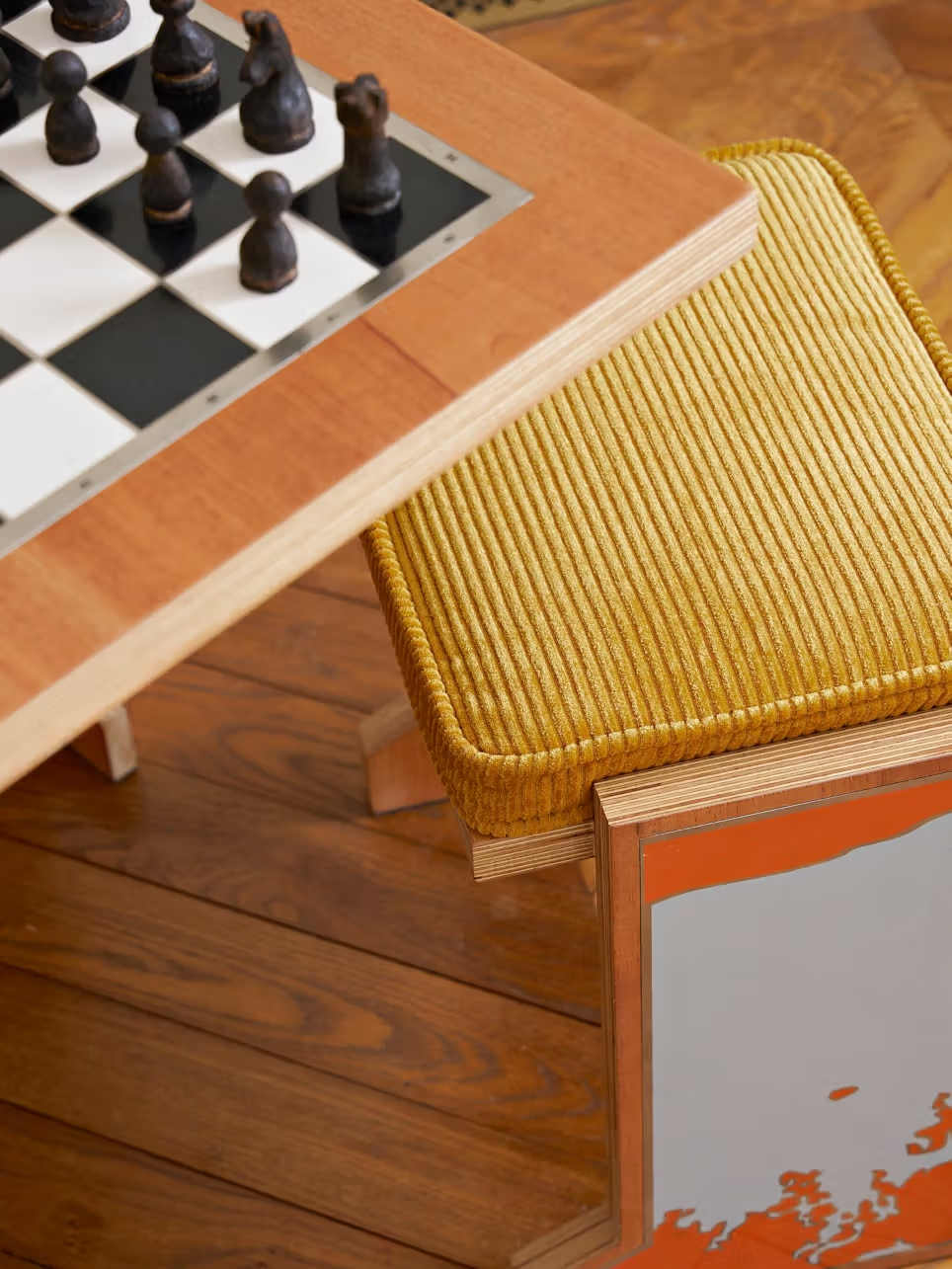
Working between Monterrey and Mexico City, Parafernalia comprises Genki Matsumura and Sebastián Zorrilla. Closed, MonoAmbiente 1 presents a landscape through acid-etched stainless steel. Opened, it reveals stools, a table and a chessboard for conversation, a game or a shared drink. Presence expands from one person contemplating an object to two people taking part in an activity. Opening the piece changes not only its outline but also the way its users face one another.
MonoAmbiente 1 opens into a table and two seats.The chessboard and seating show the work’s shared uses.
Tools explain a process, not the whole result
A jury of international design figures selected the four practices for storytelling, material innovation and craft; Apple’s Molly Anderson was among the jurors. Digital tools are an explicit part of the programme. Charabi used MacBook Pro for sketches and 3D modelling, Lee used iPad Pro and Apple Pencil to record ideas, and Parafernalia exchanged drawings through communication and cloud services. These details describe collaboration, rather than establishing that any one device accounts for the finished objects’ quality.
See Apple’s profiles of the four practices for the works and process descriptions. For readers interested in furniture, objects and space, these projects offer specific things to notice: how light crosses a material, touch produces sound, a pencil changes roles, or one object invites two people to pause. Such questions make presence more tangible than a list of selected names alone.