teamLab Hamarikyu opens November 25: night-time art in Tokyo’s historic garden, with ticket details
From November 25 to December 24, 2026, teamLab Hamarikyu links visitors, trees and the environment through five artworks. Here are the opening hours, yen prices and booking rules.
Tokyo's Hamarikyu Gardens will become a night-time setting for teamLab from November 25 to December 24, 2026. teamLab Hamarikyu is scheduled to open daily from 6 pm to 9:15 pm, with last admission at 8:30 pm, all in local Japanese time. Light, sound and visitors' movements will reconnect the garden's trees and paths. The exhibition has not opened yet: the reference images show the artworks' forms, rather than documenting an event already under way.
Why bring these artworks to Hamarikyu?
Hamarikyu contains a tidal pond fed by water from Tokyo Bay, its appearance changing with the tides. The site developed from an Edo-period hawking ground and a shogunal retreat into an imperial detached palace, before opening to the public as a garden in 1946. Roughly four centuries of use make it much more than a blank surface awaiting projections: its existing woods, weather and accumulated time become conditions through which the artworks change.
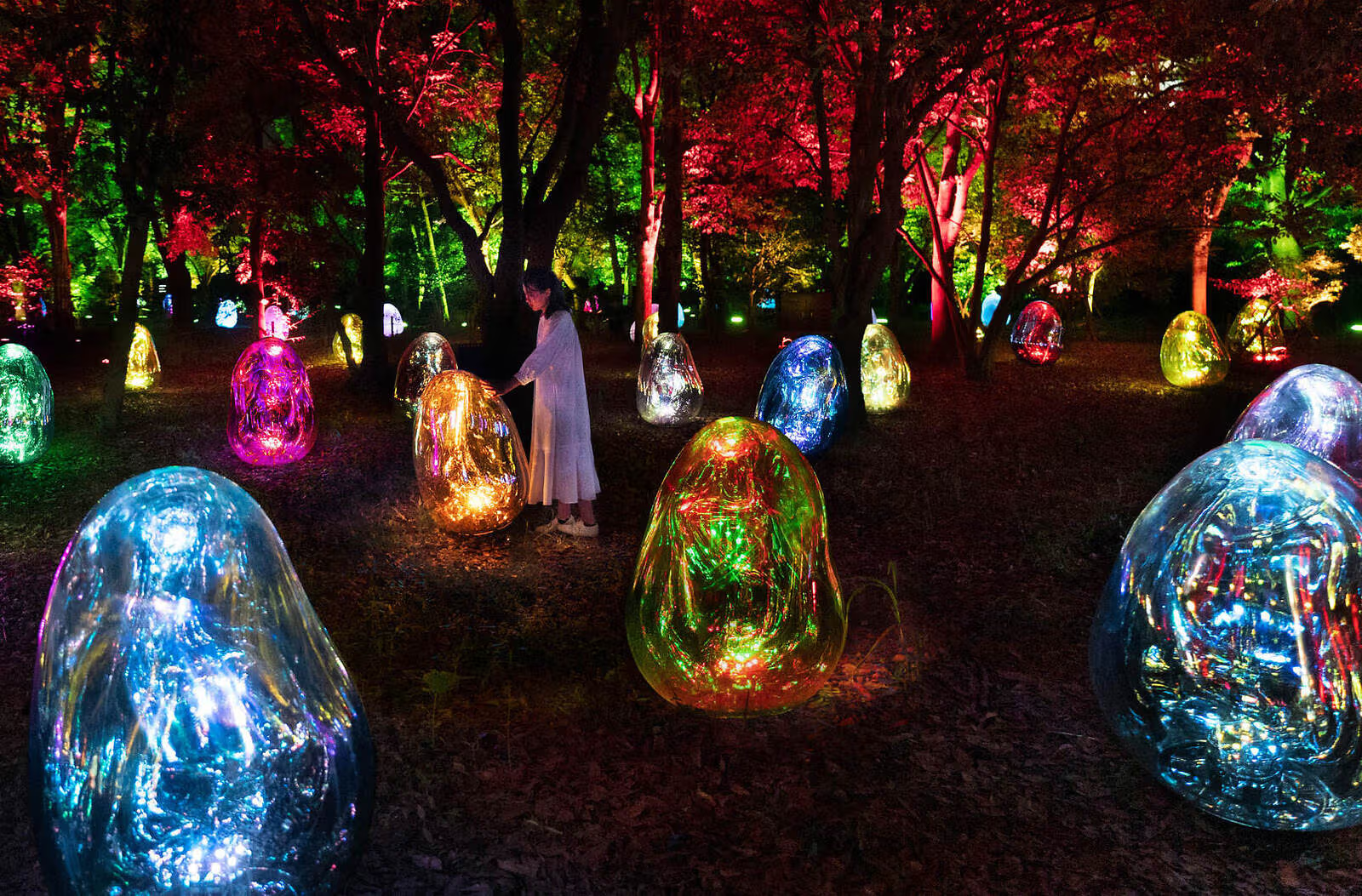
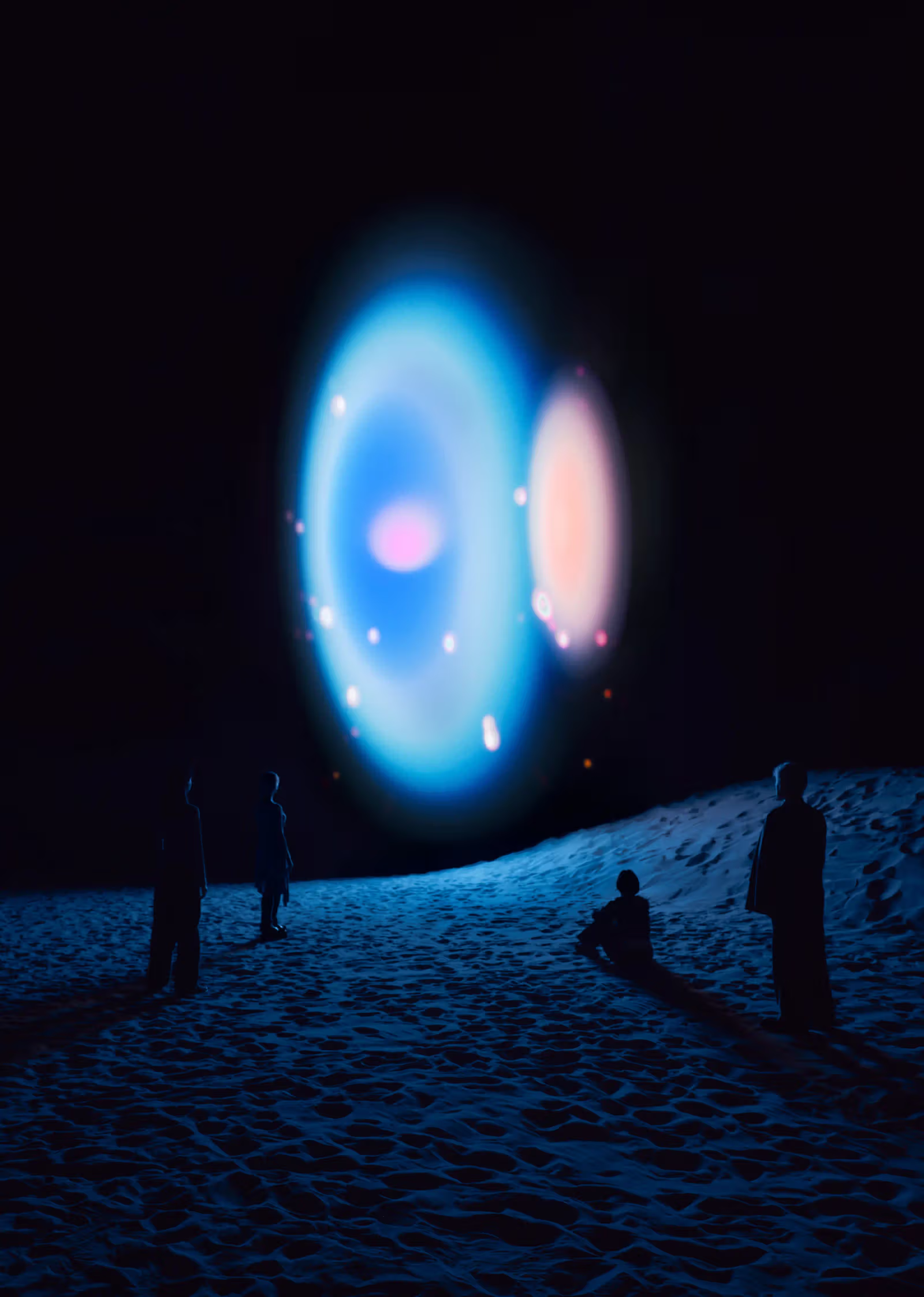
Looking here involves more than standing still for a photograph of something glowing. Autonomous Resonating Life consists of ovoid forms. When a person, wild animal or strong wind and rain tip them over, they rise again, shining and sounding a tone that passes to neighbouring ovoids and Resonating Trees. Light approaching from farther along a route may therefore signal another visitor or animal, connecting what one sees to a presence beyond oneself.
Reference image of Autonomous Resonating Life, whose large ovoids respond through light and sound.
How do the five works change perception?
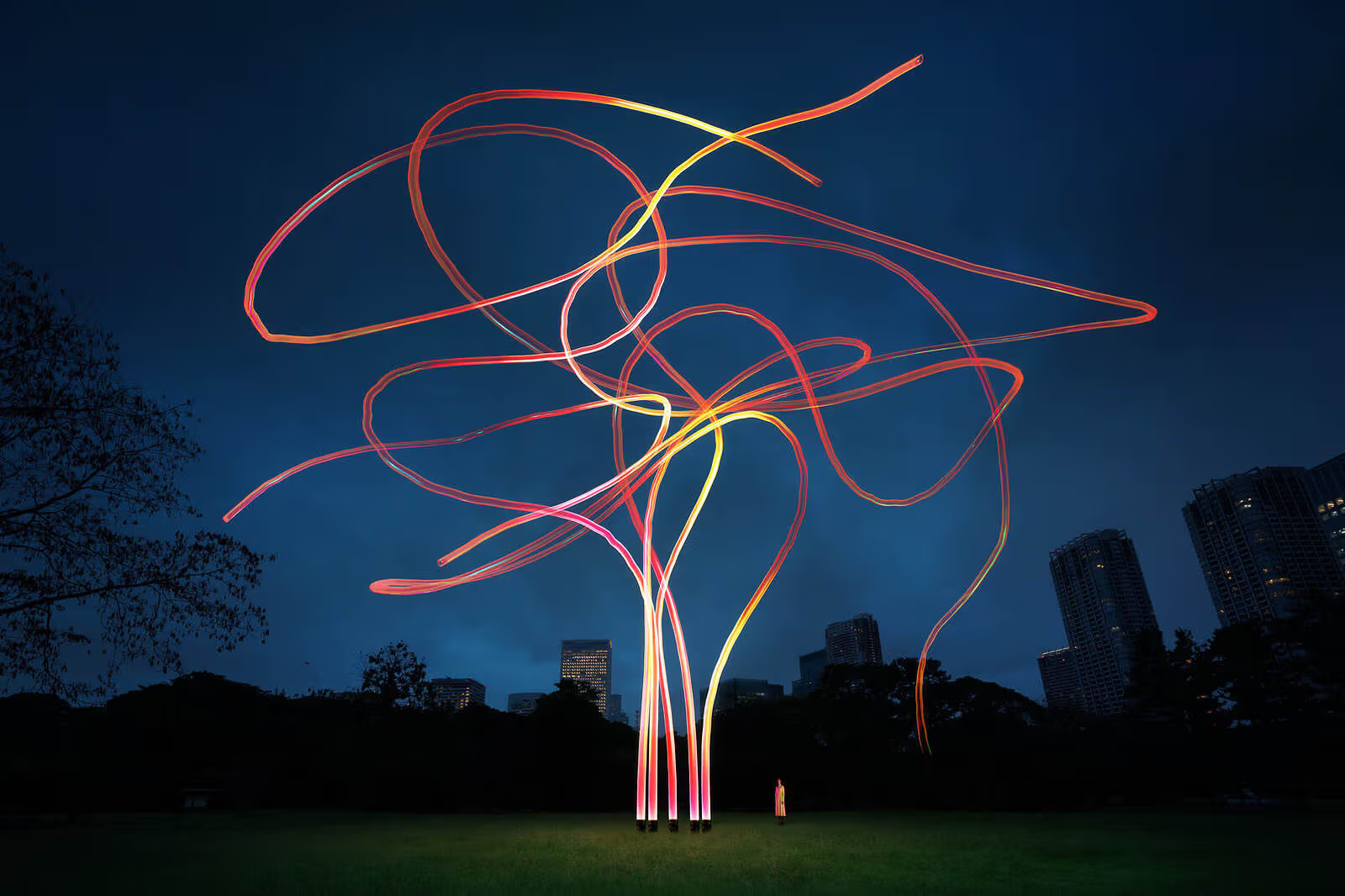
Resonating Microcosms - Solidified Light also passes light and tones between ovoids as they fall and rise, while the colours inside keep changing with the viewing angle, the object's movement and its environment. Pillars of Constant Flux changes its movement and height under the influence of wind, rain and humidity. Environmental conditions enter the structure of these works; this is not lighting that repeats an identical video from an identical position every day.
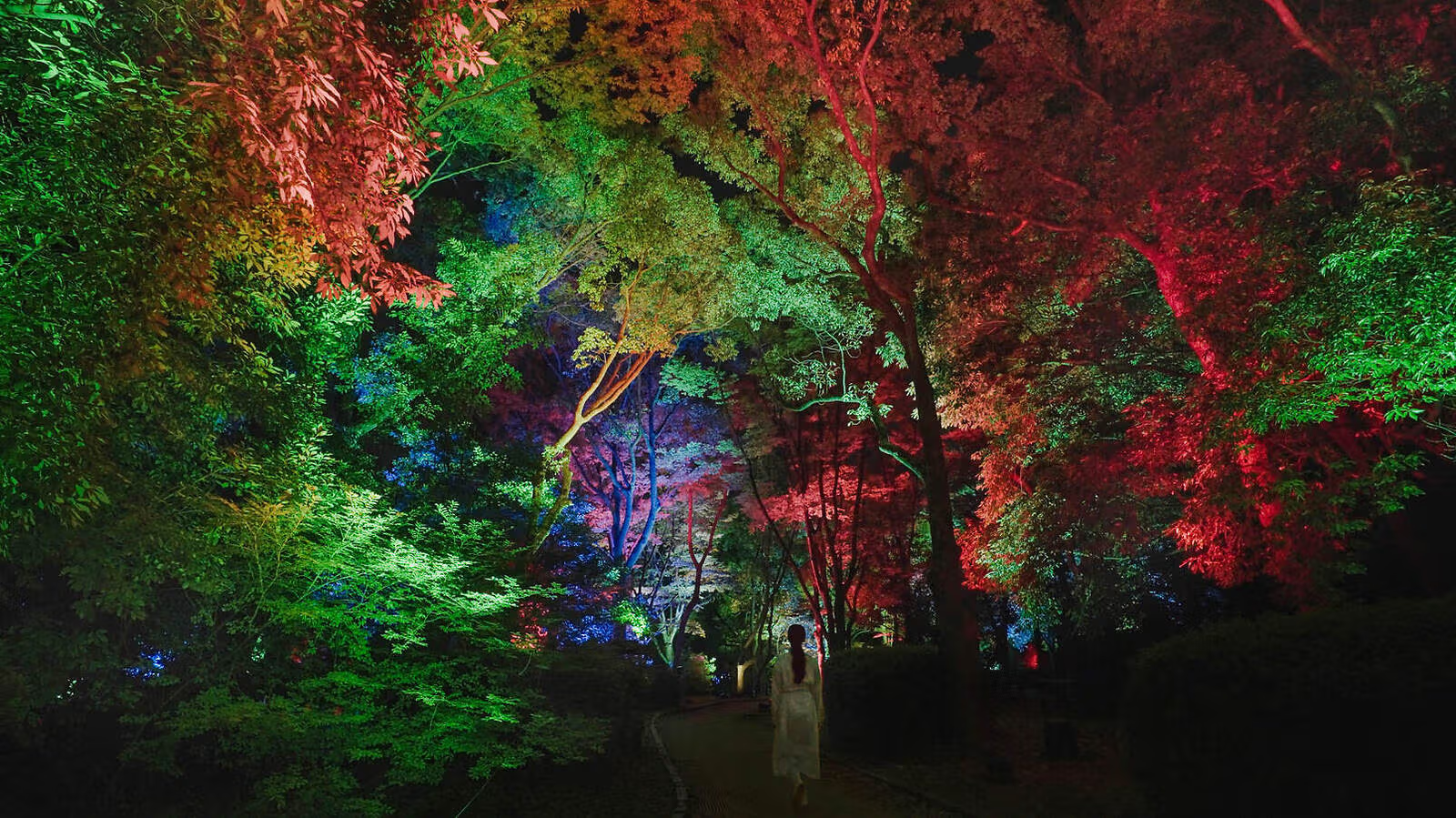
Reference image of Pillars of Constant Flux, which changes with environmental conditions.Reference image of Resonating Trees, with light spreading between trees.
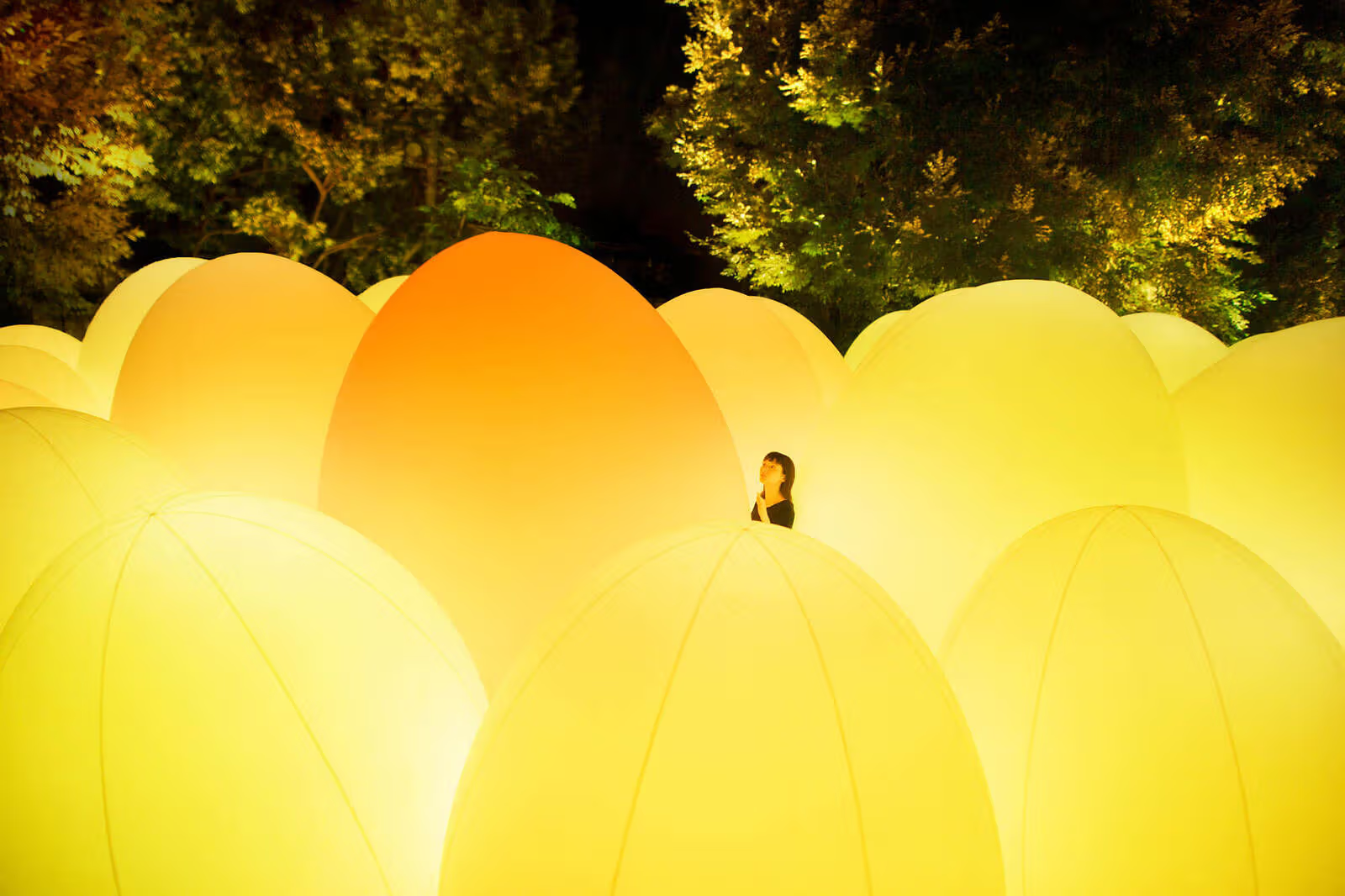
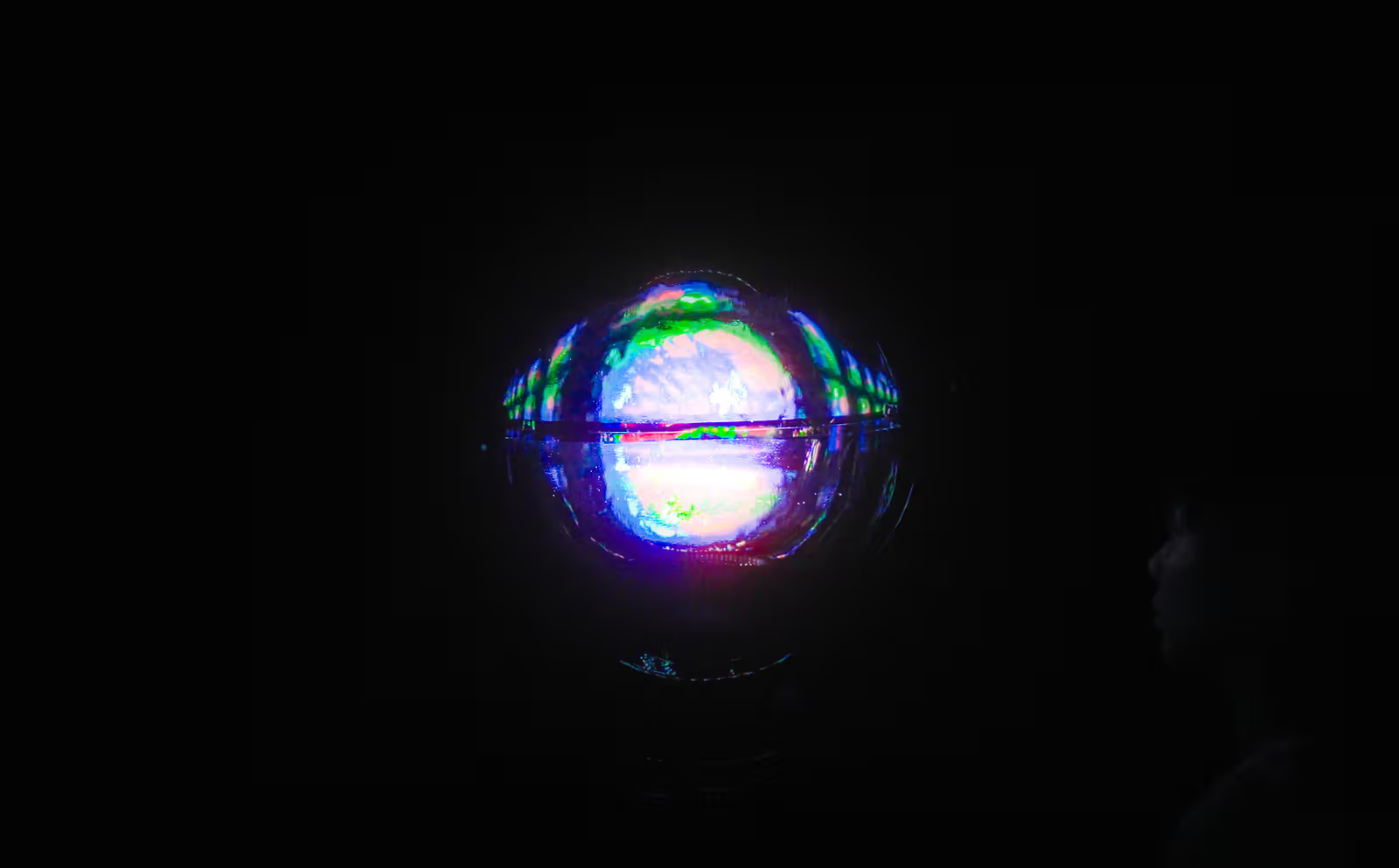
Spherical Crystallized Light turns attention towards perception itself. A viewer sees a sphere of light at the centre of a transparent sphere, although no material object with that illuminated surface exists at the centre. Light, the body and cognition form the experience. Alongside trees that respond to people, the exhibition considers how light is recognised as an object, and why the world in front of us changes as our bodies move.
Reference image of Spherical Crystallized Light, exploring how light is perceived as an object.
What are the ticket prices and entry rules?
Tax-inclusive tickets cost JPY 2,500 for adults, JPY 1,500 for junior and senior high-school students, and JPY 900 for elementary-school children; preschool children enter free. A visitor with valid disability documentation and one accompanying person may each purchase a JPY 1,250 ticket. Date-and-time reservations are required and there is no on-site ticket counter. If spaces remain, same-day tickets can be bought through the official ticket website. Children of junior-high-school age and below need a guardian aged at least 18, with one adult per three children, including free preschool entrants.
The venue is at 1-1 Hamarikyu Teien, Chuo-ku, Tokyo. Outdoor paths are dark and uneven in places, so comfortable walking shoes and warm clothing are practical. Large luggage cannot be brought in or stored, and re-entry is not permitted. Weather may affect opening times or individual works; check the official exhibition information before travelling. Allowing time to move, pause and notice surrounding changes will reveal more of the exhibition than searching for a single photographic position.