Ibrahim Mahama’s The Harvest Season is on view at the Fondation Cartier pour l’art contemporain in Paris from 22 October 2026 to 28 February 2027. Born in Tamale, Ghana, the artist has invited nine artists and collectives into the foundation’s new space. Sacks, chairs, factory structures and textiles become readable histories, asking whose lives remain visible after goods have moved on.
Sacks carry records of movement, not just texture
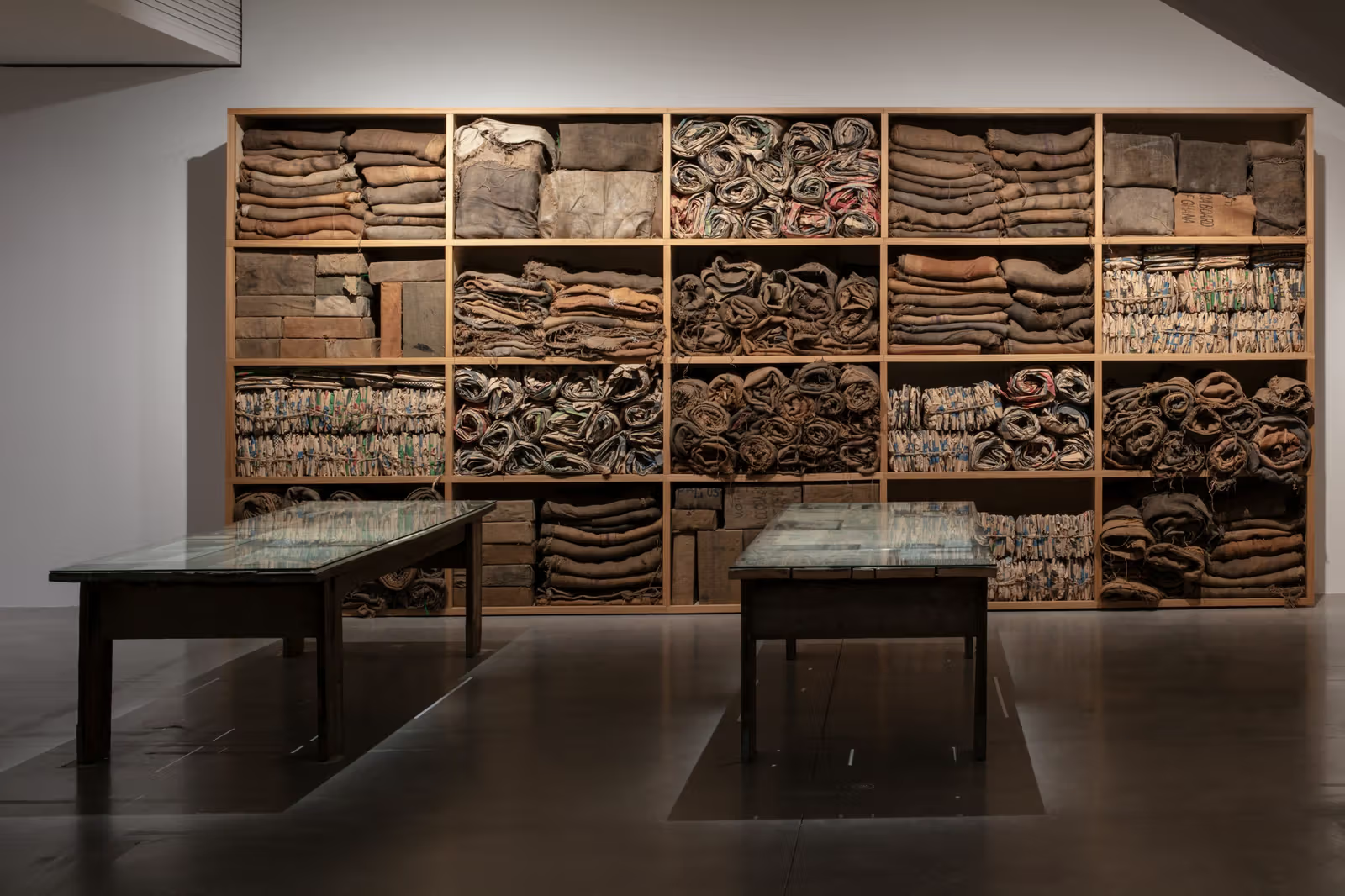
The burlap sacks Mahama has used throughout his practice are closely connected to the transport of commodities including cocoa. Manufacturing, loading and repeated circulation leave stains, repairs and markings. In the gallery, labour normally concealed by packaging becomes more visible. Beyond their effect as colour fields, seams, uneven fading and wear give the abstraction of international trade identifiable physical traces.
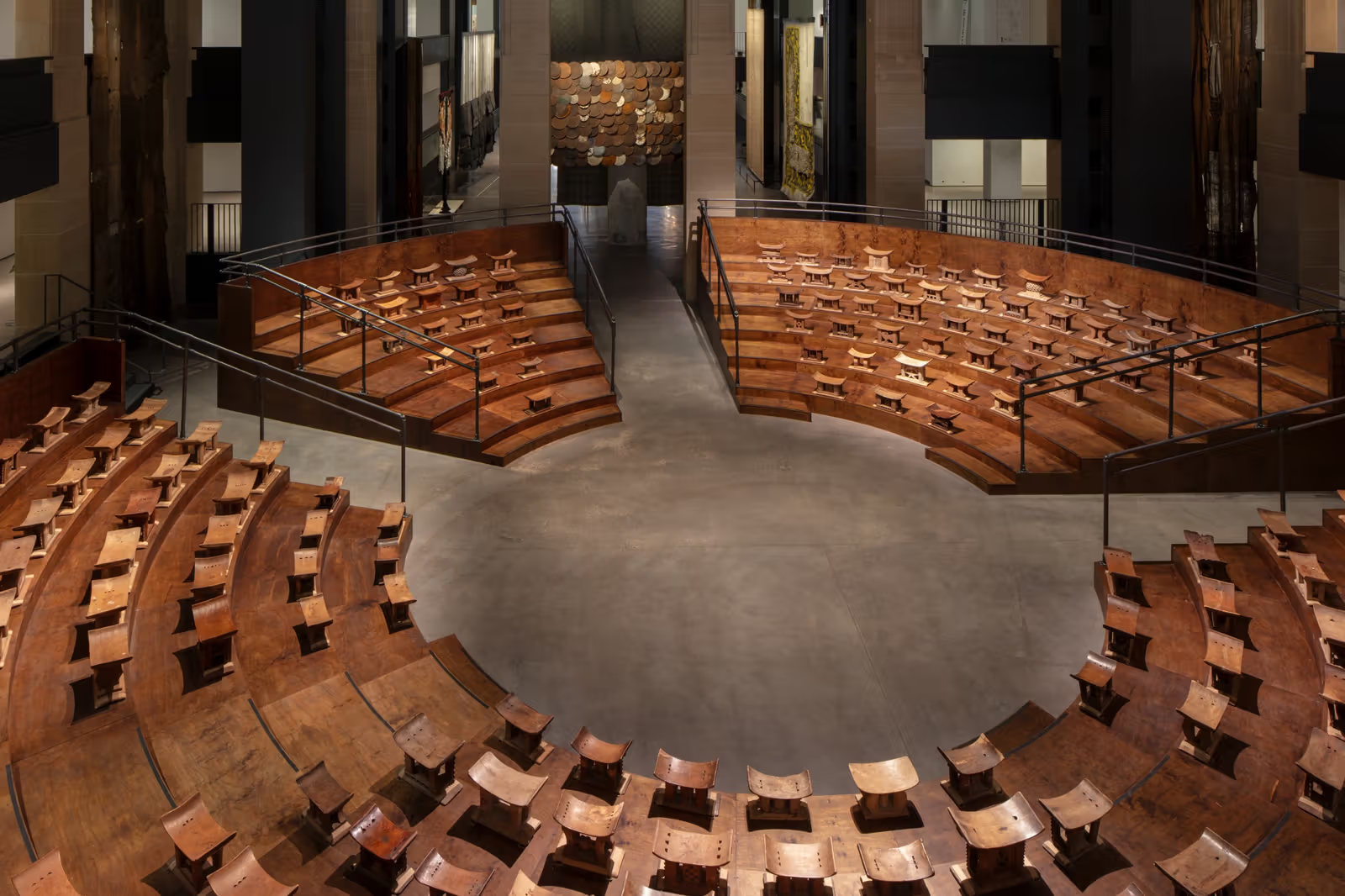
A related approach opens up Parliament of Ghosts. Curving rows of empty chairs suggest an assembly or debating chamber, but the missing crowd creates another tension: who spoke here, who remained, and whose voices went unrecorded? Dense wooden seating gives the work an architectural scale. Where viewers stand becomes part of how they experience the distance between individuals and a collective.
A factory enters the gallery as a space of memory
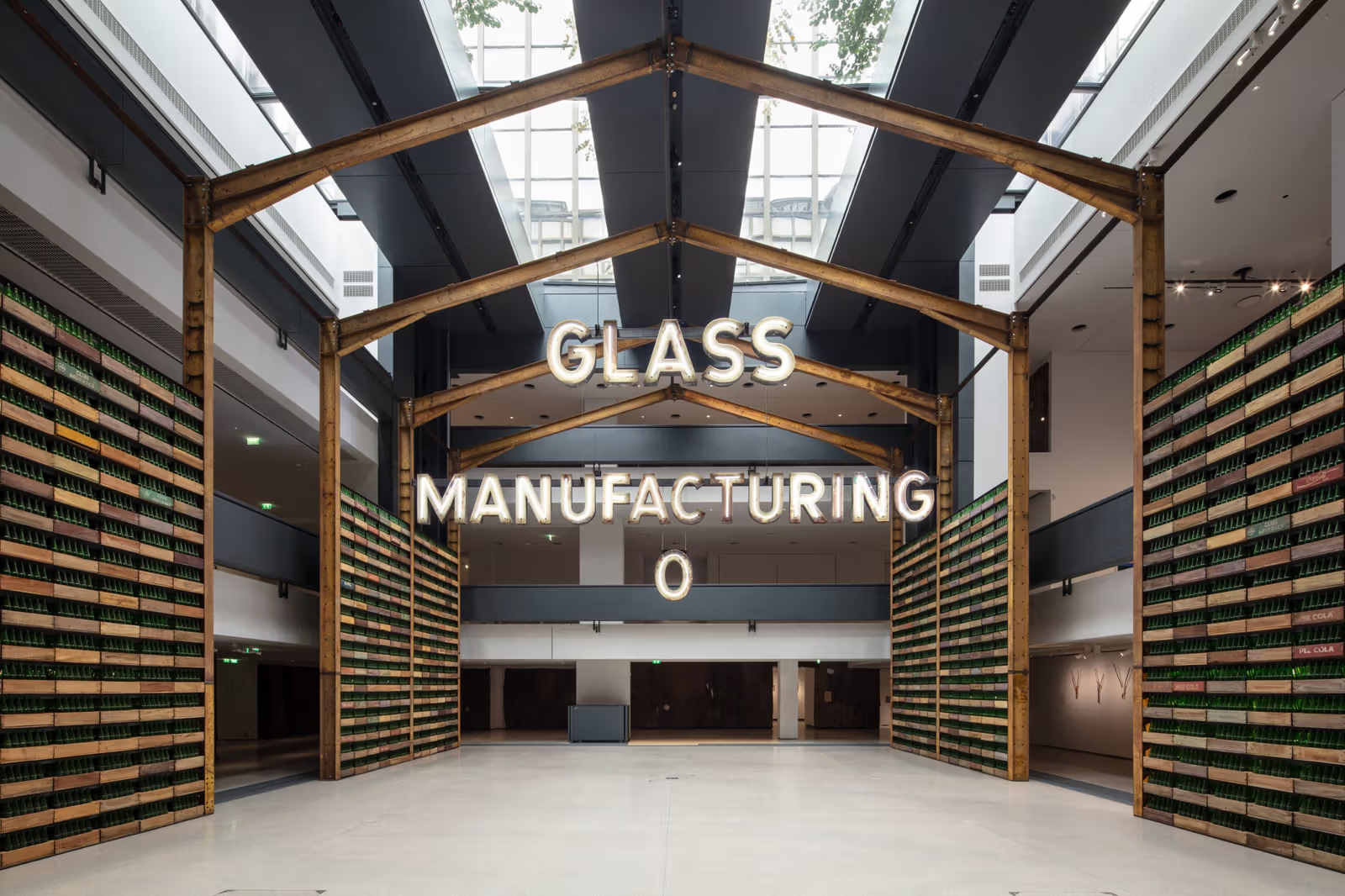
Things Fall Apart brings part of the history of Ghana’s Aboso glass factory to Paris. Metal frameworks, arranged objects and storage compartments point towards the industrial site’s former functions of production and keeping. Moving these materials is more than exhibiting an old object. Once factory elements leave their working context, questions emerge about how workers, knowledge and public memory survive the closure of equipment and buildings.
A factory structure and glass-manufacturing lettering appear in Things Fall Apart.
In the photograph, a compartmentalized storage wall holds folded and rolled sacks, shifting attention between overall scale and individual materials. Order and geometry dominate from a distance; wear, creases and signs of use become more legible nearby. This offers a practical way into the work: notice how a space is built, then ask why its materials are here, without rushing to reduce an installation to a single symbol.
Folded and rolled sacks fill a compartmentalized storage wall, showing wear and signs of use.
Nine invited contributors widen the exhibition’s perspective
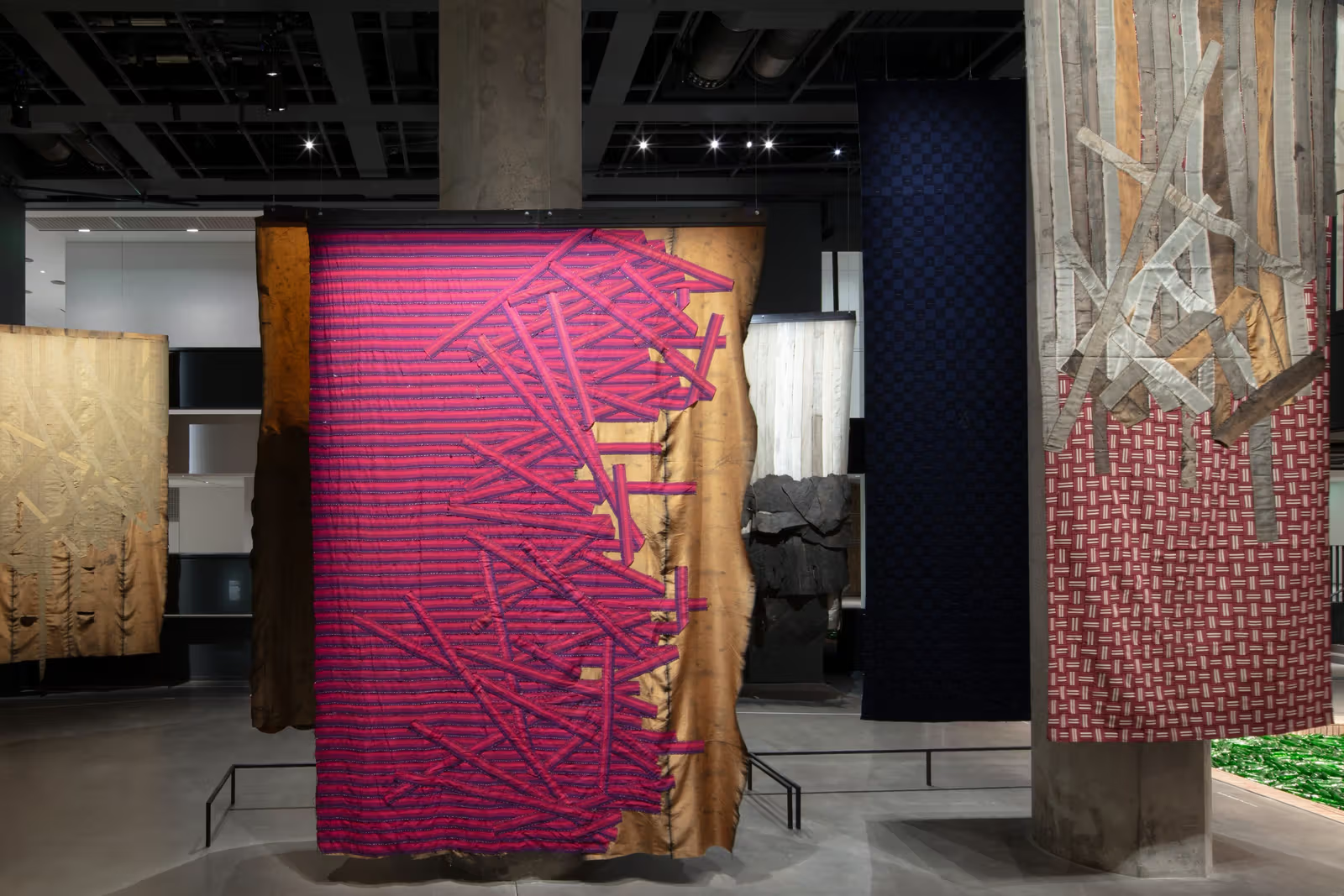
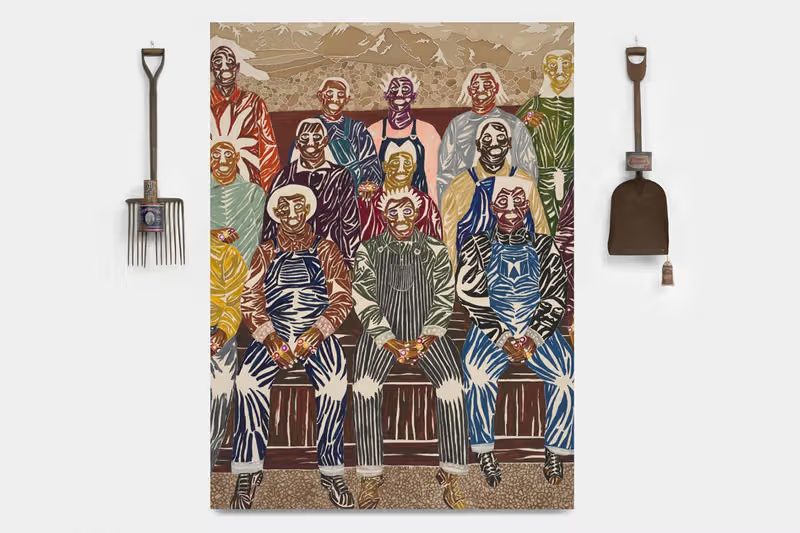
The exhibition extends beyond Mahama’s own work. Participants include textile artist Dorothy Akpene Amenuke, photographer James Barnor and painter Gideon Appah, alongside other artists and collectives. Their generations, media and working backgrounds bring several approaches to labour, education and shared life. The handworked scale of textiles also creates a rhythm that can be compared with the larger architectural installations.
Textile works by Mahama and Dorothy Akpene Amenuke establish a dialogue in the gallery.
Visitors interested in clothing, design and urban culture can begin with familiar questions: how cloth is stitched, how chairs arrange bodies and how goods are classified and stored. The exhibition makes everyday objects specific again, beyond the impact of an expansive installation photograph. The foundation’s official exhibition catalogue introduction confirms its subject and dates. The catalogue’s price is not an admission price; visit arrangements should be checked separately with the foundation.