A feature associated with Hong Kong’s Business of Design Week 2026 brings FREITAG back to an easily overlooked question: what happens after an old truck tarp has become a bag? The brand’s new navigator, Janine Weiz-Bühler, discusses moving from extending use towards material circularity. The original feature is supported by bodw+ and states that it retains editorial independence. That commercial-support context belongs alongside the content.
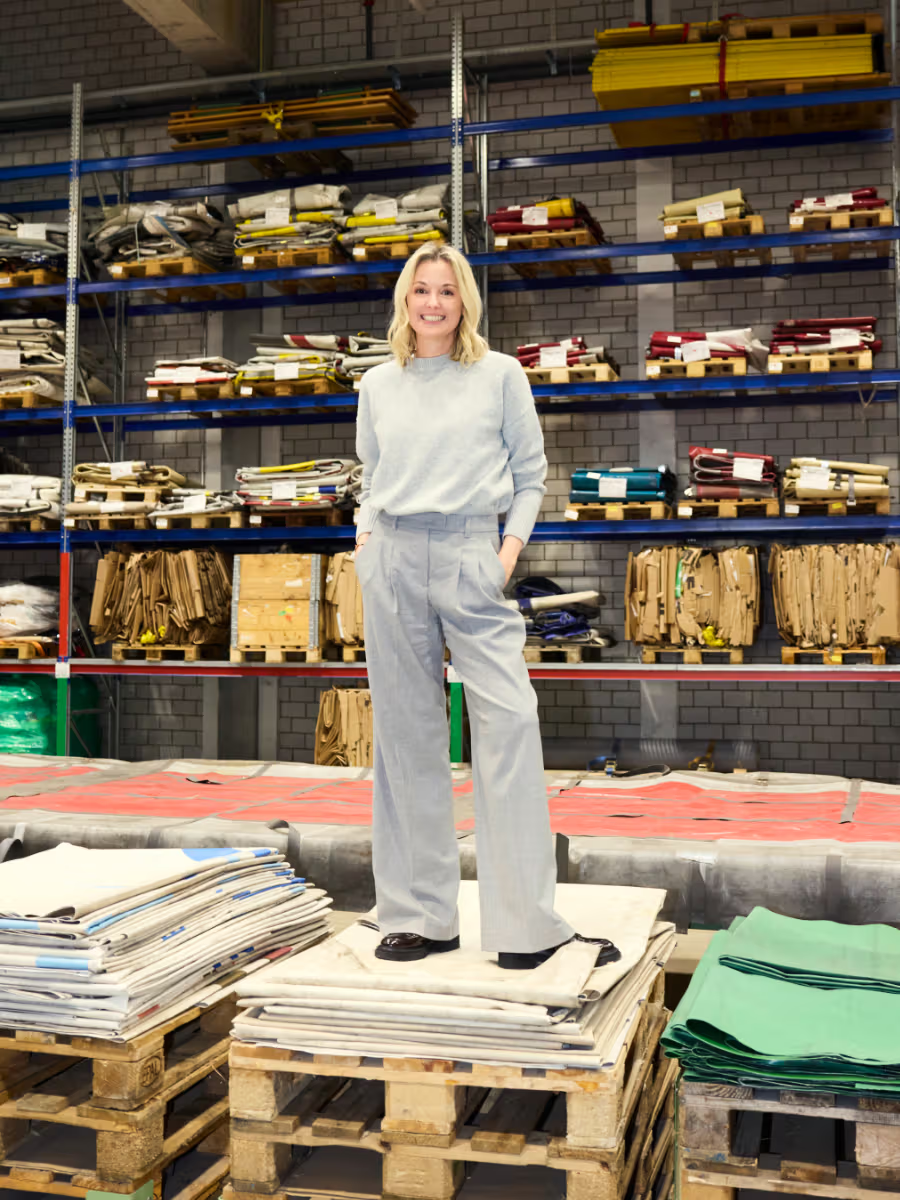
Janine Weiz-Bühler in the brand’s material space.Mono[PA6] addresses later recycling through material consistency.
How do upcycling and a closed loop differ?
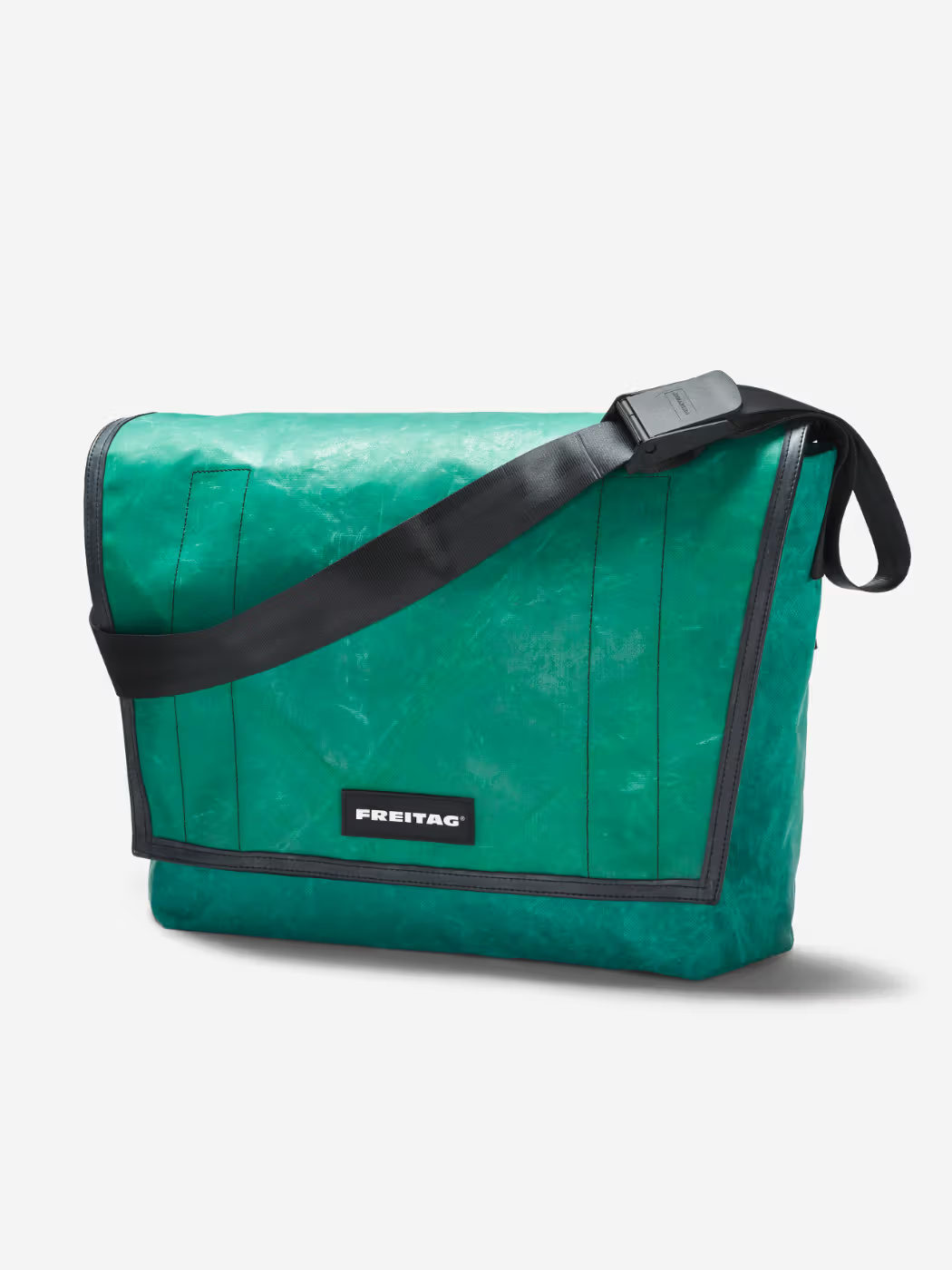
Founded in 1993 by brothers Markus and Daniel Freitag, the brand turned used truck tarpaulins, bicycle inner tubes and seat belts into durable bags. Existing colours, lettering and wear make each surface different. Moving material from a truck to a shoulder extends its use, but if layers remain difficult to separate at the end, a second life does not automatically become an endless cycle.
This distinction helps when reading sustainability claims. Upcycling asks what an existing piece of material can do now. A closed loop also asks where it goes after the new object wears out. The approaches need not cancel one another, but they require different design work. Recognising an existing material must be joined by conditions for disassembly, collection and remanufacture.
Why is repair still an important first step?
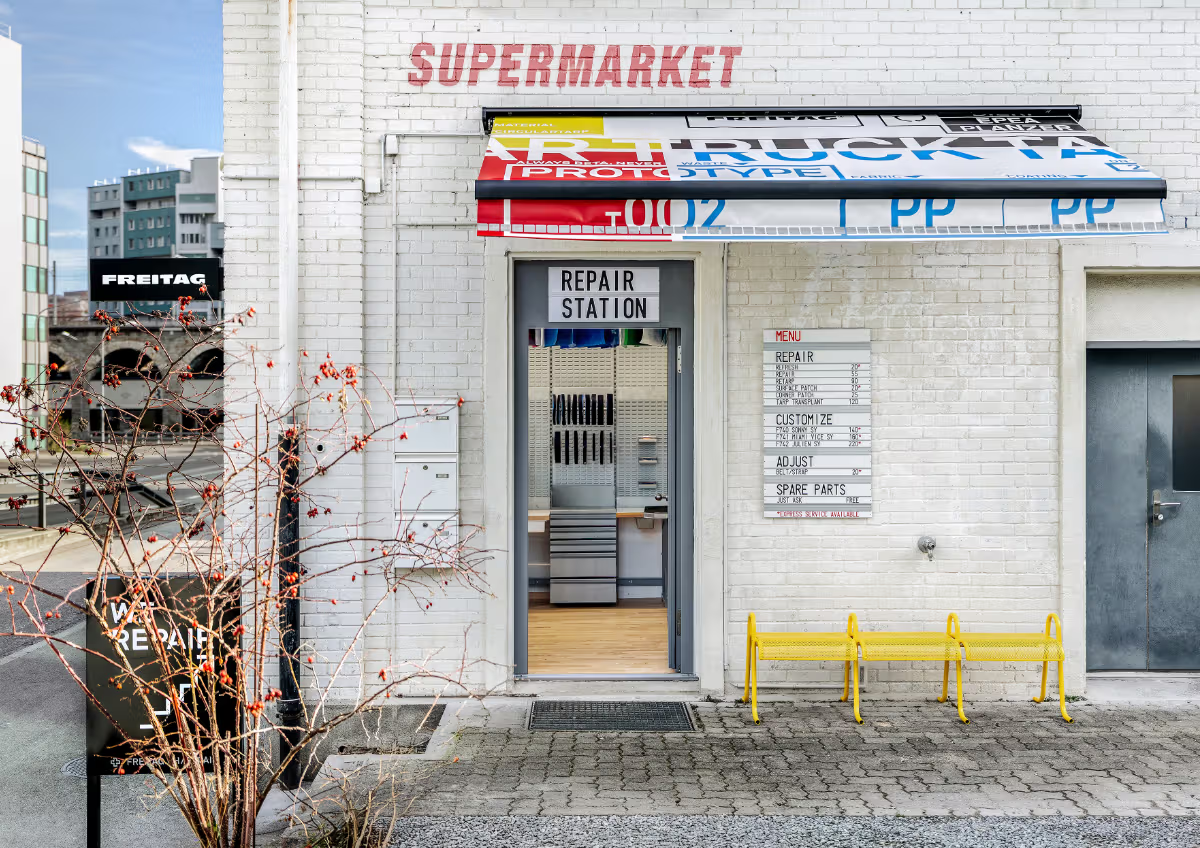
FREITAG maintains a repair network so damaged bags have a route back into use. In the feature, Weiz-Bühler emphasises extending a product’s life as far as possible even if its materials might eventually be recyclable. For a user, the ability to repair a zipper, seam or buckle is more immediate than an abstract environmental term. Keeping a bag already adapted to daily life also avoids starting every storage decision again.
Repair facilities provide another stage in extending a product’s use.
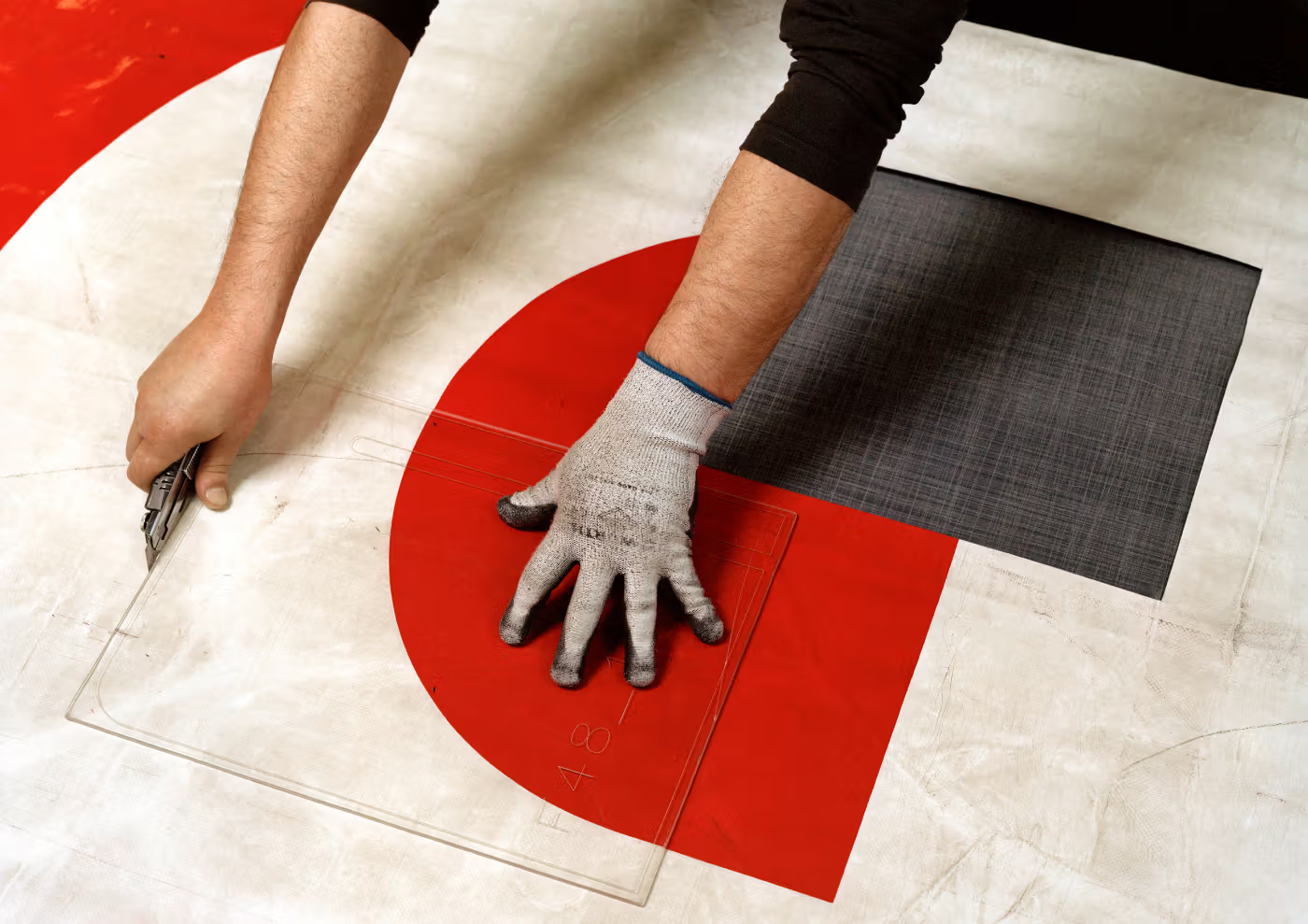
Production photographs show tarps being tested, washed and cut, with existing lettering and marks entering a new composition. The bag pattern can be standardised while the surface cannot. A designer does more than select an attractive section: usable area, existing graphics and offcuts must be considered together. Every cut encounters the limitations of a real material.
Cutting requires attention to both graphics and material use.
Where do recyclable truck-tarp trials stand?
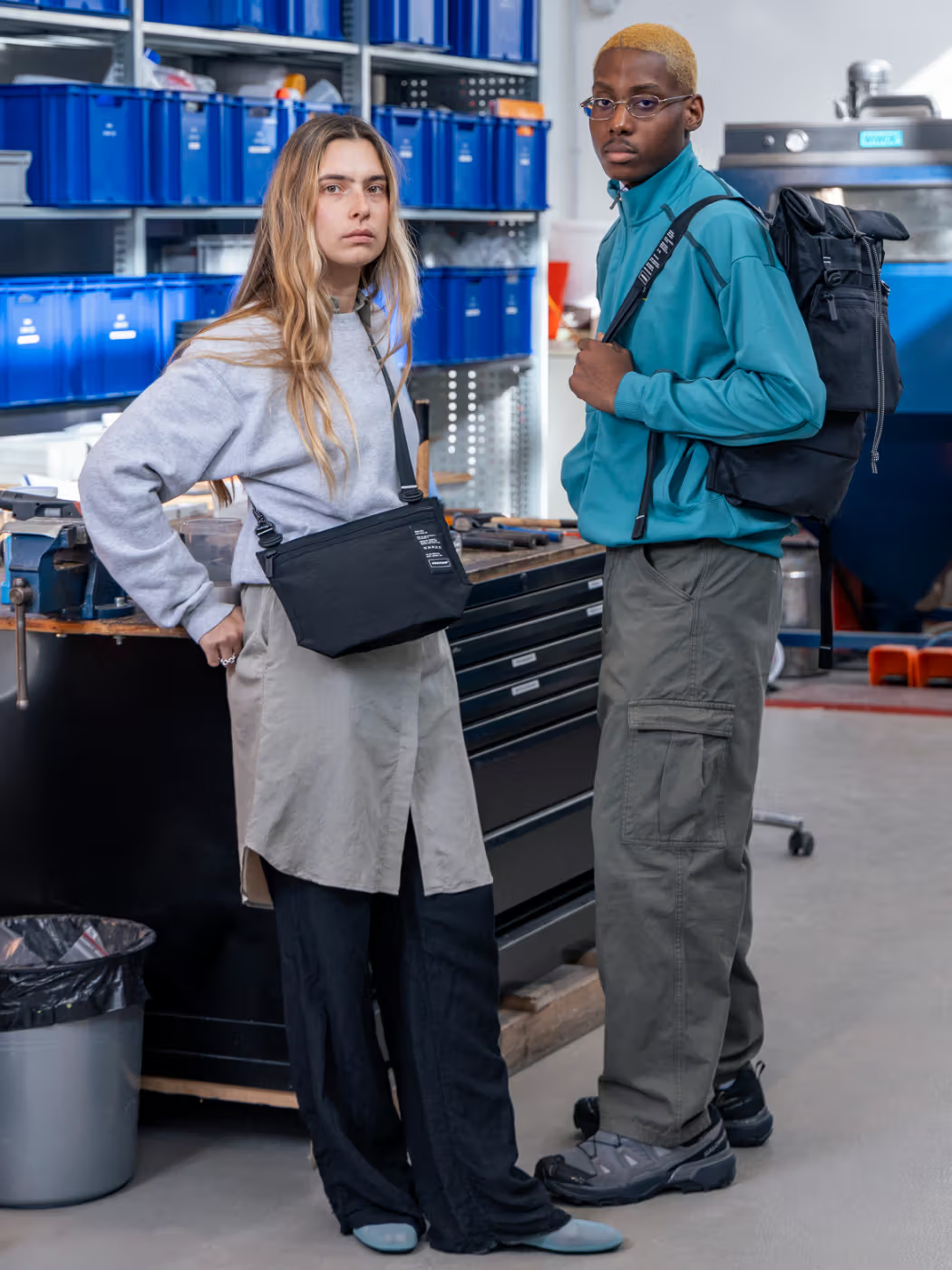
The brand is testing PVC-free, recyclable tarp approaches, with prototypes undergoing road trials in a small truck fleet. Durability, printing and industry adoption are still being developed. This remains research rather than a complete replacement for current tarps. Products such as Mono[PA6] take another route, using greater material consistency to reduce the separation of different ingredients at recycling.
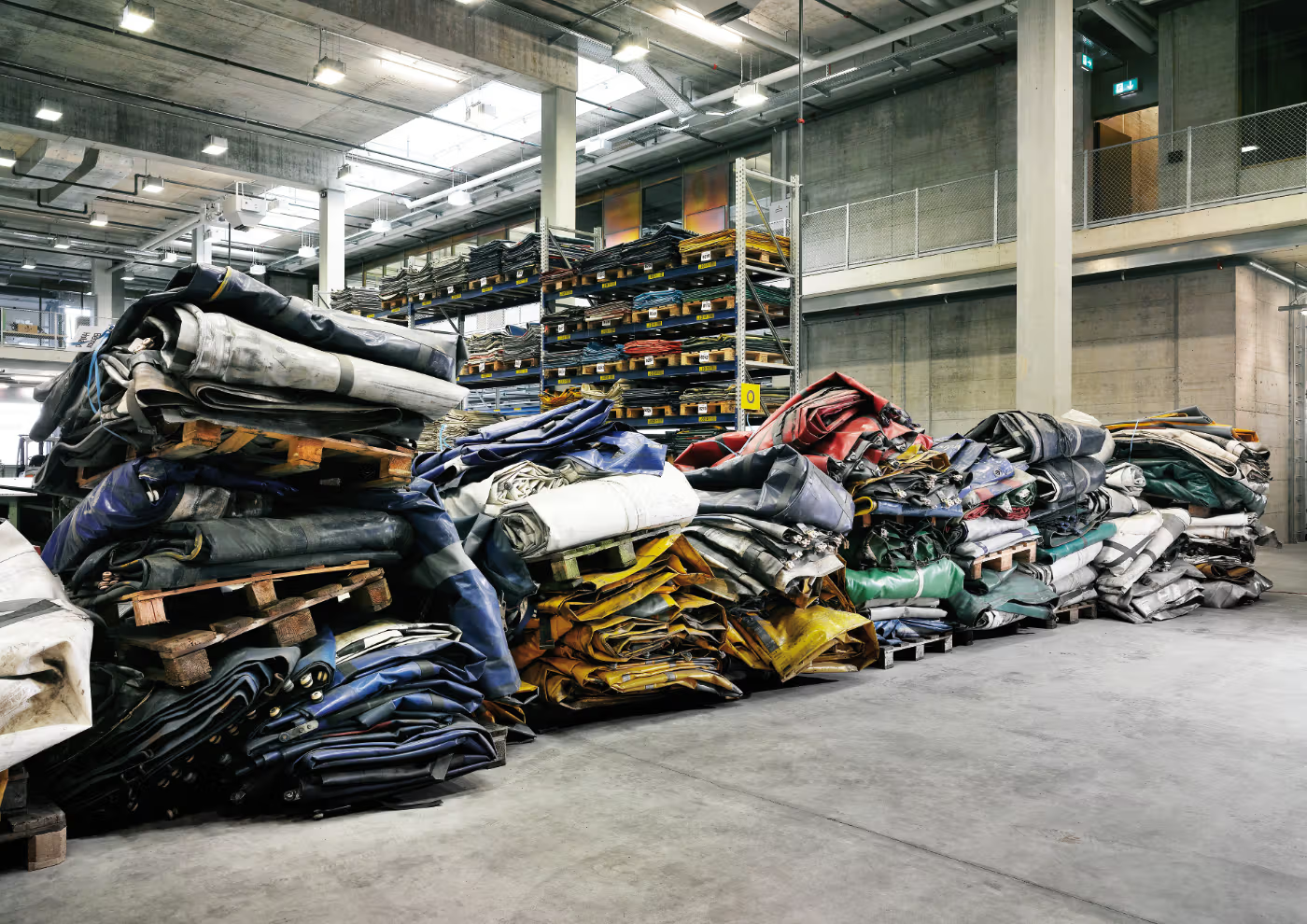
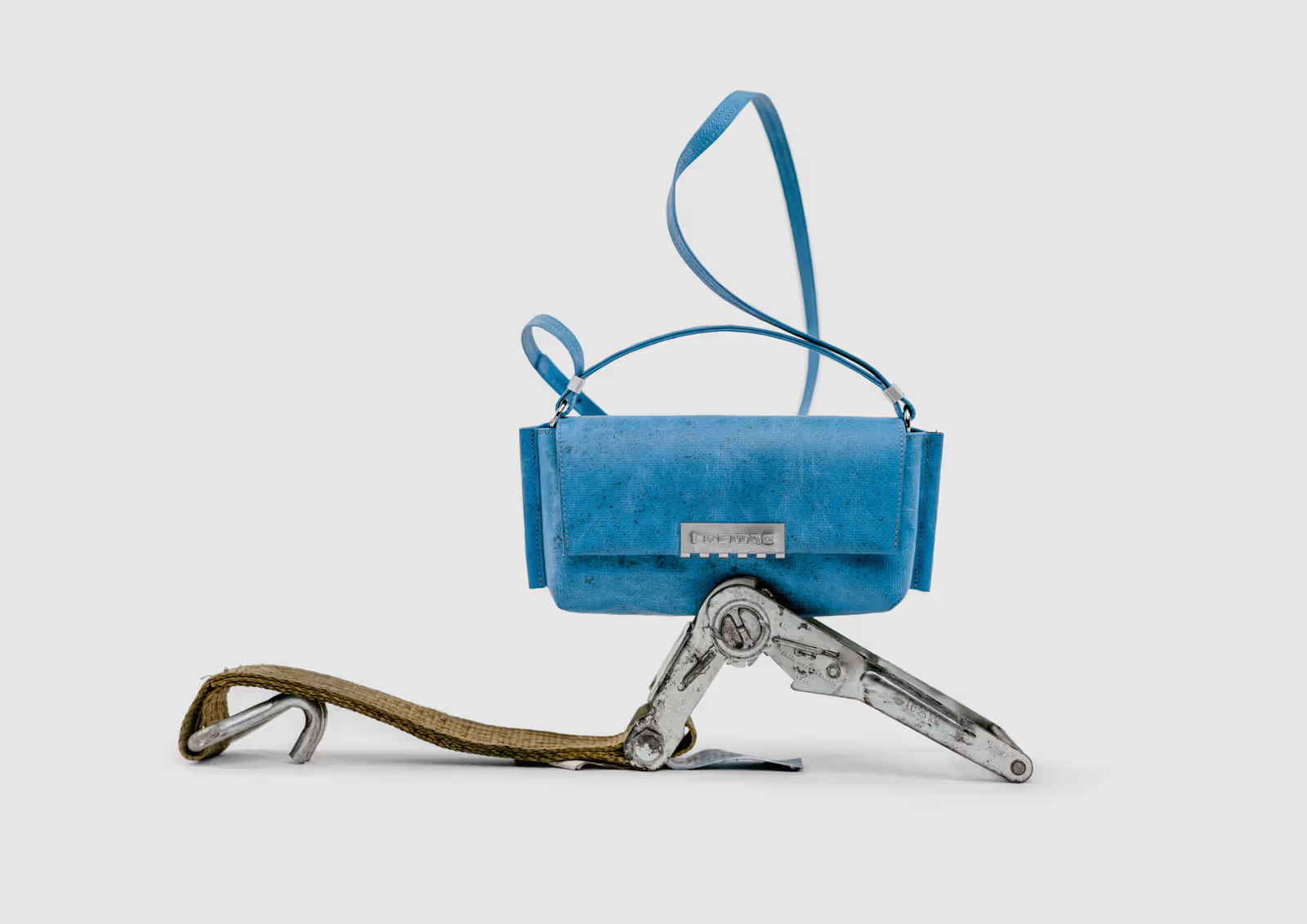
Used truck tarps await another stage of production.The smaller REFERENCE R201 ELLY continues the brand’s material approach.
The BODW discussion is relevant beyond brand operators. It returns to practical purchasing questions: are the materials understood before buying, is repair accessible during use, and is there a clear collection route afterwards? What makes FREITAG worth following is more than the character of an old tarp turned into a bag. It is whether the method can extend to third and fourth uses while preserving the durability and usefulness a product needs.