No sign-up needed, no manual toggle required — if the system determines you're under 18, your account gets rewritten with a whole different rulebook. That's the core of the new mechanism OpenAI is rolling out for teen users starting today: a default mode that kicks in without needing user consent.
Lauren Jonas, head of OpenAI's Teen and Family division, said: "Teens don't need to create a new account or change anything — if we predict you're under 18, or you tell us yourself, this simply becomes your default experience." Called ChatGPT for Teens, the age-detection system officially launches nearly a year after OpenAI promised to develop it last September, following a lawsuit alleging the chatbot contributed to the suicide of 16-year-old Adam Raine.
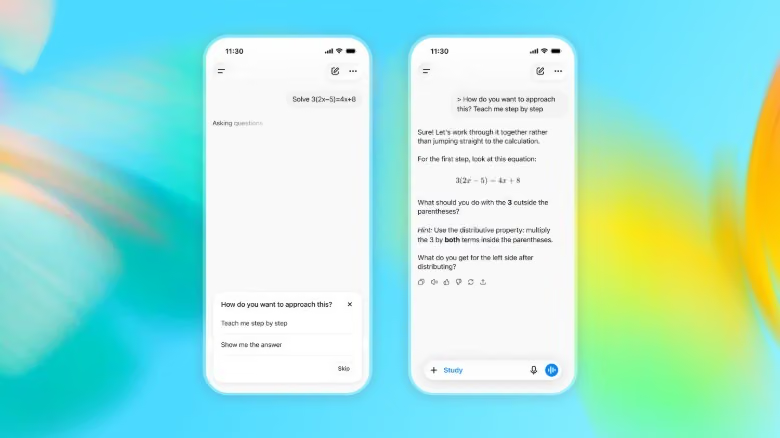
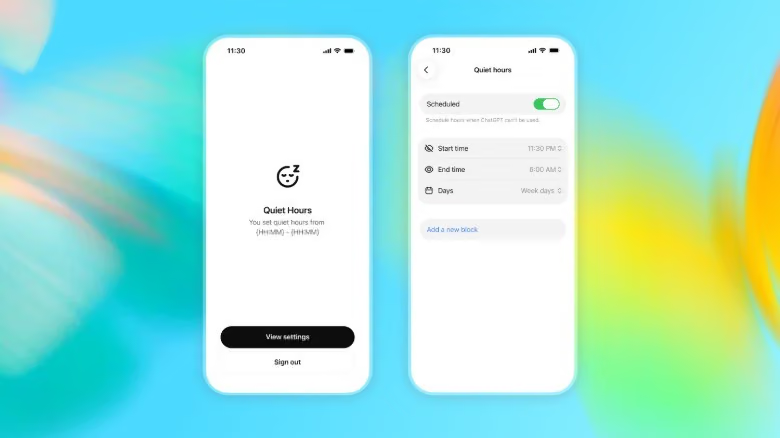
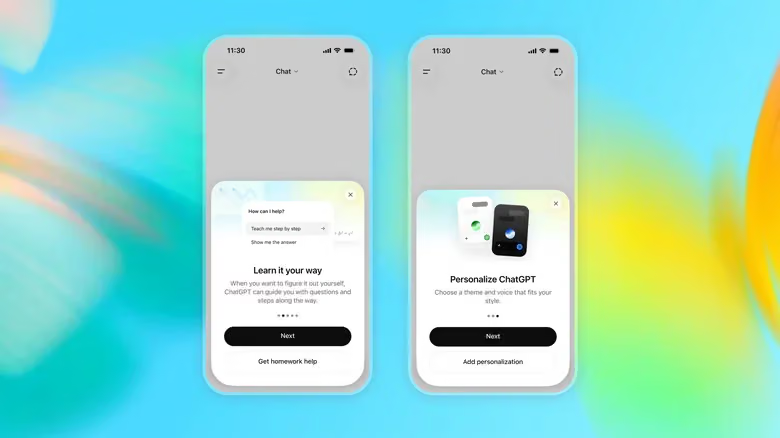
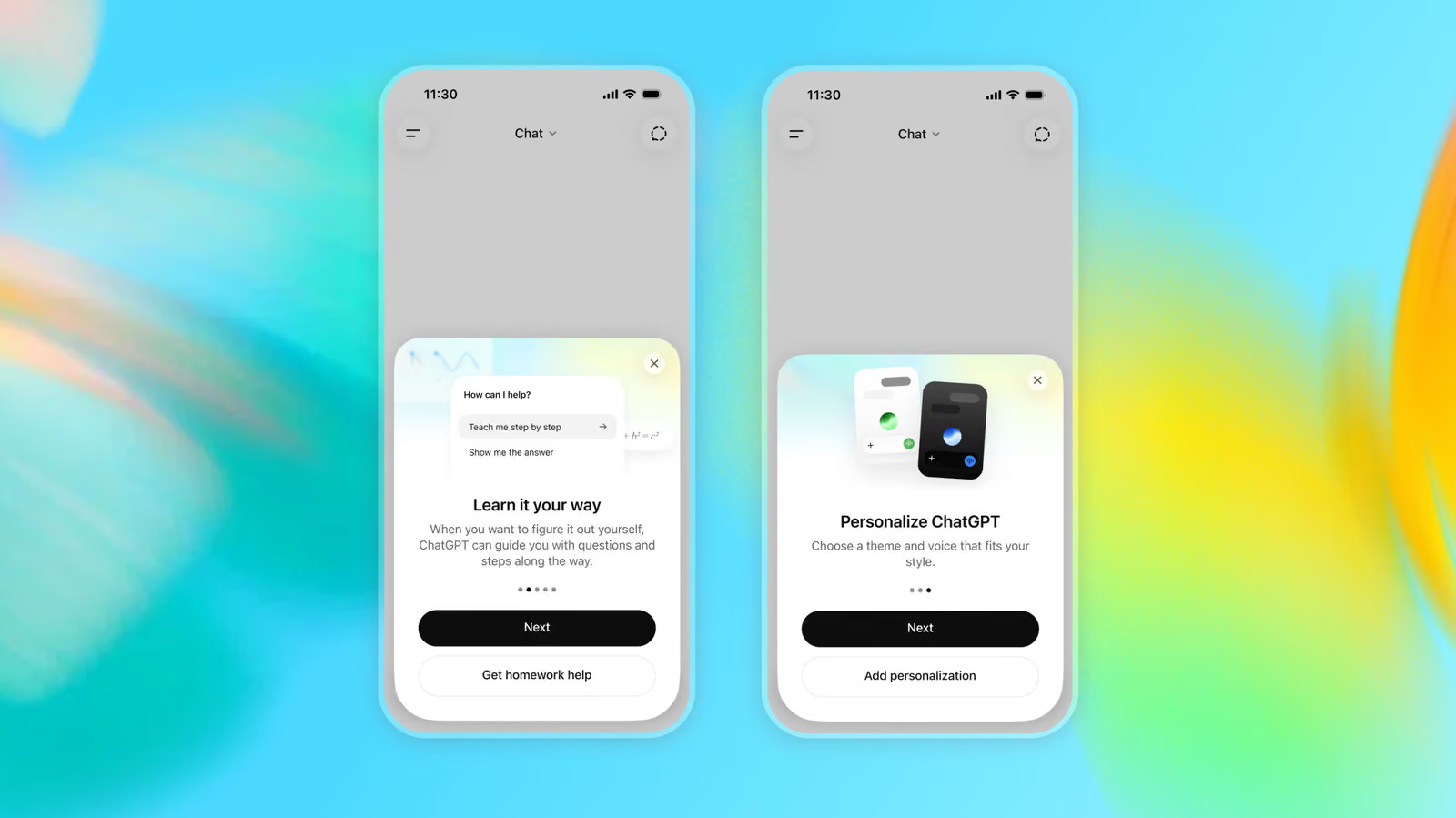
The new experience is built around two pillars: learning and safety. On the learning side, it consolidates features rolled out over the past year, the most notable being Study Mode, which uses a Socratic questioning approach — guiding users to work out solutions themselves rather than just handing over answers. Jonas said Study Mode won't be turned on by default for teen accounts, but OpenAI has added several nudges to encourage its use: starting prompts already "heavily used" by teens will continue to be refined but will "always focus on learning." There's also a new Study Hours feature that automatically activates Study Mode during set time windows — which teens can configure themselves, or parents can set via a linked account. Even without Study Hours enabled, ChatGPT will now recognize when a teen appears to be trying to dodge their homework and attempt to steer the conversation back into Study Mode.
Jonas said Study Mode has shown "positive gains in performance" across multiple randomized controlled trials, though she didn't disclose specific figures. The feature is also continually being improved — its ability to generate explanatory visuals, for instance, covered just over 70 topics when it launched in March but now spans more than 300, including things like calculus integrals, mitosis, and phases of the moon.