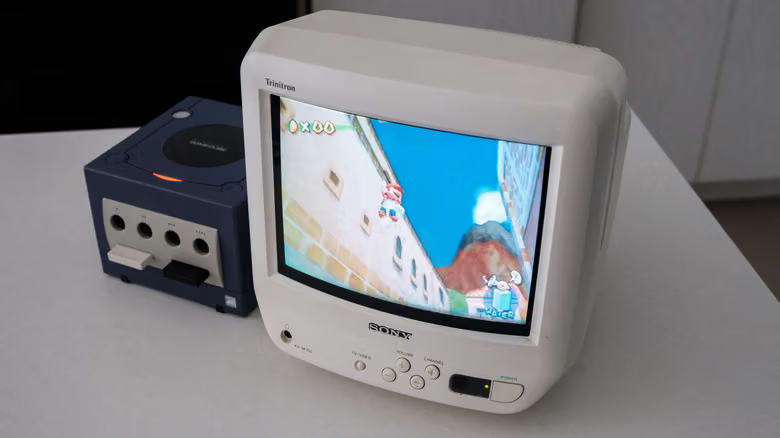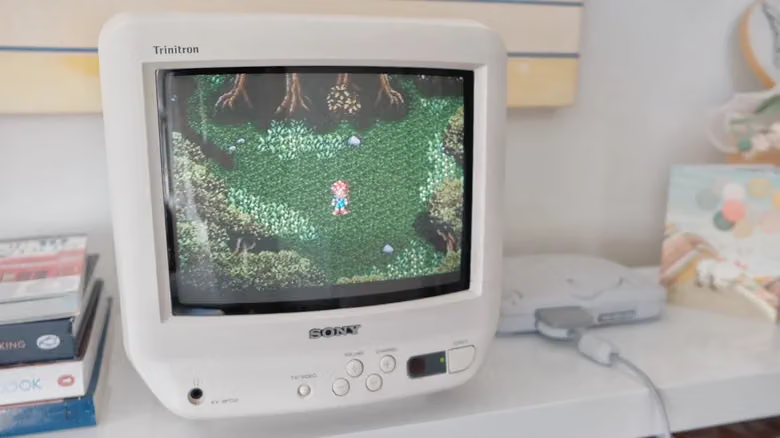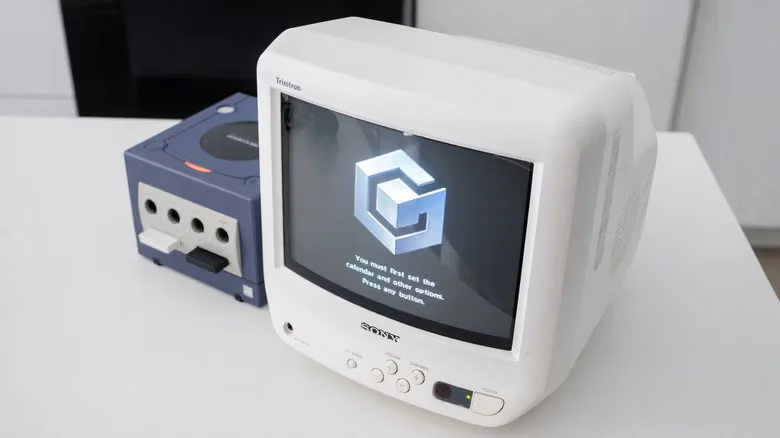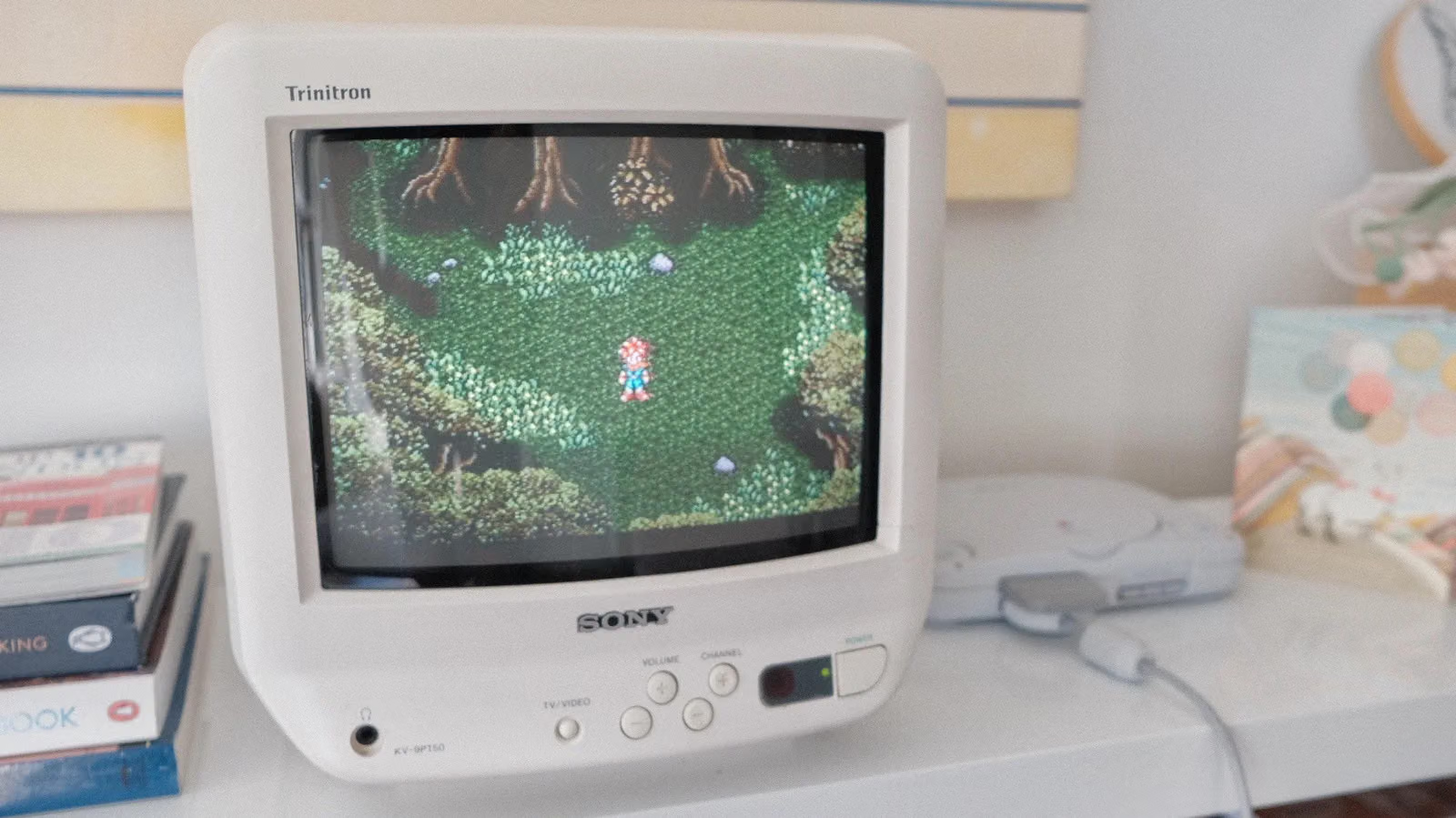
When Square Enix remastered "Final Fantasy Tactics," it removed the original's dithering effect from "Classic Mode." The decision sounds like an art-direction trade-off, but it's actually a matter of physics: dithering, the old technique of creating checkerboard-pattern noise between color blocks to simulate color gradients, only works properly when displayed on a phosphor-coated CRT screen. Move it to an LCD or OLED, and it's just a bunch of noise that looks like dirt. TINDZINE editor Igor Bonifacic cites this example in his piece to make a point: those prettier old game visuals you remember aren't some filter-induced nostalgic illusion—they're a real gap created by a generational shift in display technology.
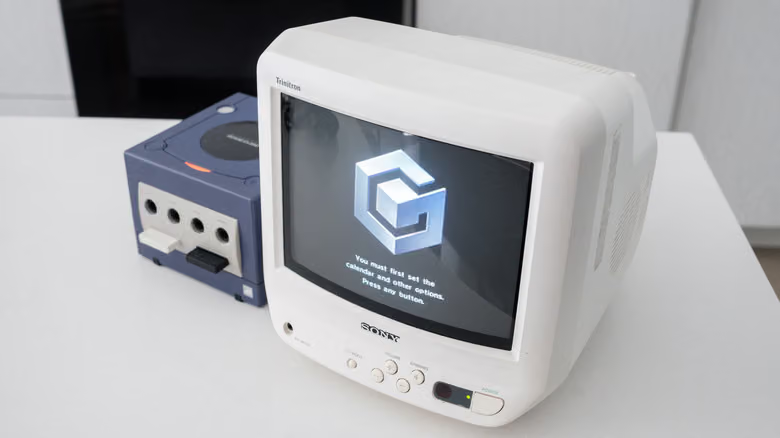
The issue comes down to how CRT (cathode ray tube) TVs form images, which operates on completely different logic from modern panels. Bonifacic explains that inside a CRT are one or more electron guns that scan across a phosphor coating on the front of the screen, drawing each horizontal "scanline" of an image from left to right, top to bottom—fast enough that the human eye can't perceive it being drawn in stages. LCD and OLED panels, on the other hand, use "sample-and-hold": the entire frame is drawn and then held static until the next refresh. This difference meant CRTs delivered far clearer motion than LCDs for a long stretch of time, until high-refresh-rate panels finally caught up in recent years. The article uses "The Legend of Zelda: Ocarina of Time" as an example—its frame rate dipped as low as 20FPS and was inconsistent, yet playing it as a kid didn't feel that choppy, and the key reason lies in how CRTs handle motion.
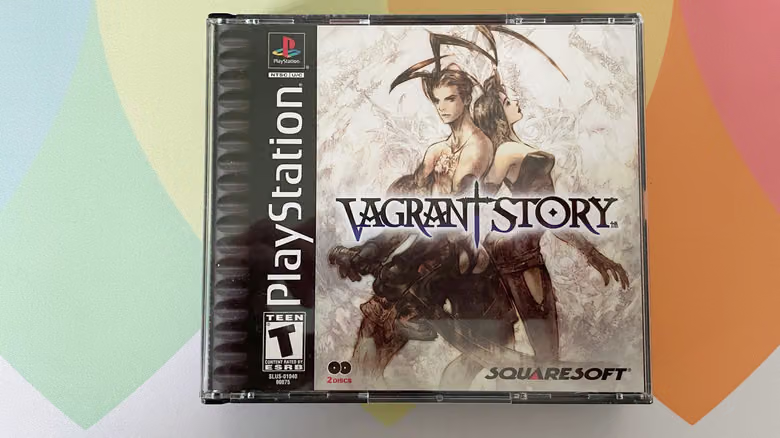
240p and 480i: Two Resolutions You've Probably Never Heard of But Play Every Day
CRTs don't have a fixed native resolution like modern panels do, so they can render all sorts of images directly without the blurring commonly seen on LCDs running at non-native resolutions. The article points out that before the PlayStation 3 and Xbox 360 generation, home consoles almost always locked onto one of two standard-definition resolutions: 240p and 480i. The "i" in 480i stands for interlaced—the TV would draw all the odd-numbered lines first, then go back and fill in the even-numbered lines, a bandwidth-saving method from the era of limited data throughput, with the side effect of that characteristic CRT flicker. The "p" in 240p stands for progressive—drawn top to bottom in one pass with no flicker, and the preferred resolution for most consoles before the PS2/GameCube generation. But on a standard-definition CRT displaying 240p, the even-numbered lines are actually left black; many people mistake these black lines for "scanlines," which isn't strictly accurate, but it's precisely the source of that distinctive look when pixel art meets CRT.