Samsung Killed Curved TVs in 2020, But Curved Gaming Monitors Just Keep Bending—and Selling
Same curved panel tech, two completely different fates. Engadget breaks down why curved TVs flopped while curved gaming monitors quietly found their footing—and it all comes down to viewing distance and how you actually use the thing.
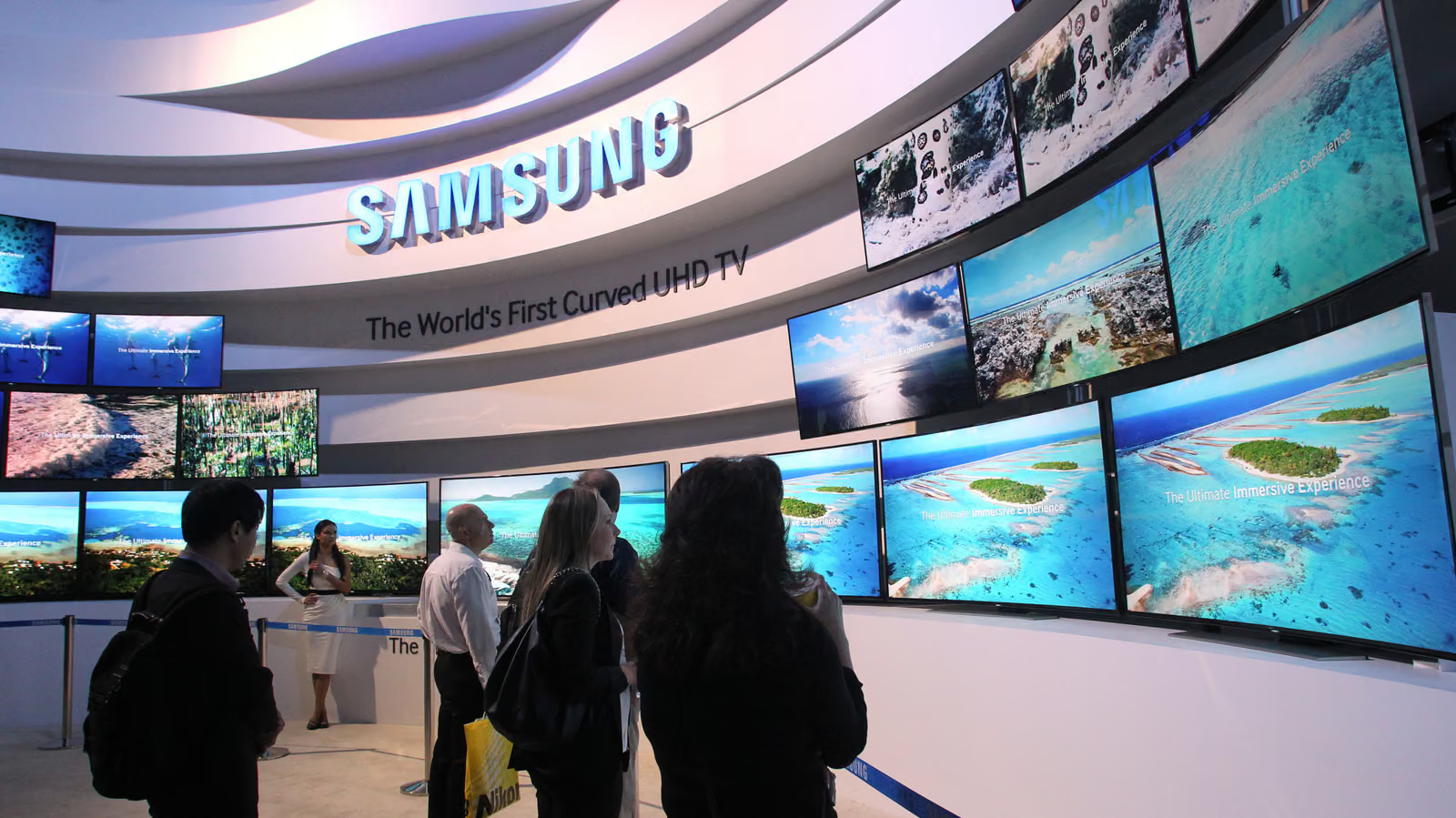
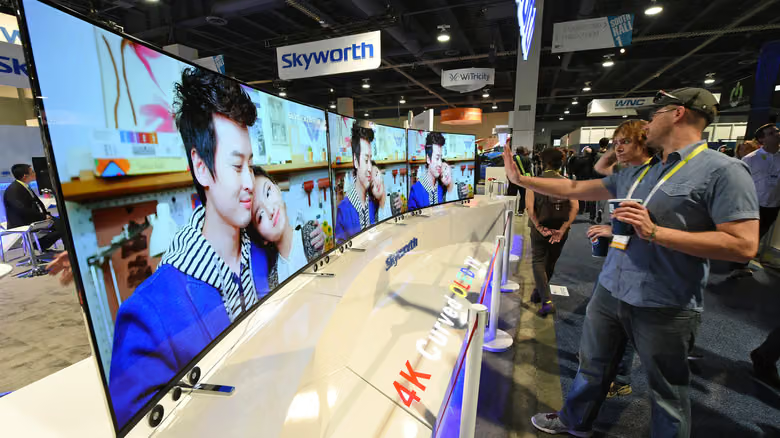
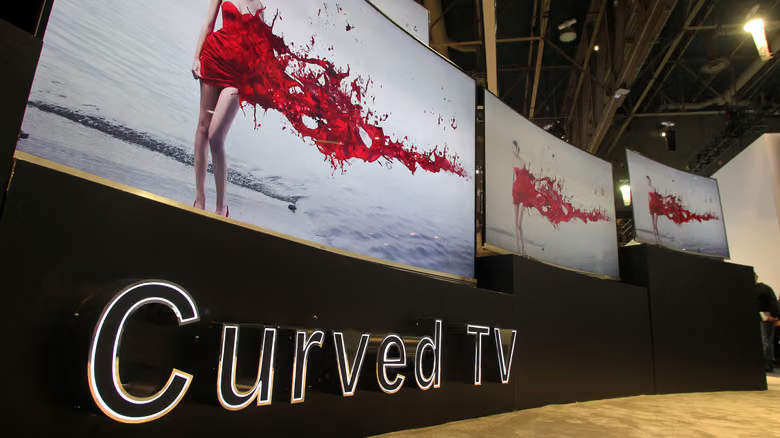
Samsung was the last brand standing when it came to curved TVs, and after 2020, a technology that once dominated CES show floors basically vanished. But the same curved-panel logic that killed TVs is thriving on gaming monitors—curving even harder than TVs ever did. Engadget's Devindra Hardawar breaks down the contradiction: curved TVs hit a dead end, while curved gaming monitors found a real path forward.
The problem comes down to "how far are you actually sitting from the screen." Curved TVs tried to recreate that IMAX or Cinerama Dome feeling of being wrapped in a giant screen, but a 55- to 65-inch TV in your living room usually sits 6 to 10 feet from the couch. Unless you've got a rare 78-inch behemoth and you're sitting close enough, it's tough to replicate that theater-level immersion. More realistically, your TV is surrounded by knickknacks, family photos, and a cat begging for attention—hardly the conditions for "falling into" a movie.
Even if you're happy with what you're seeing, your family and friends might not be. Curved LCD TVs have an obvious "sweet spot"—dead center gives you the best picture, but the moment you shift off-axis, contrast and saturation fall apart fast. Hardawar recalls seeing curved TVs at CES that basically turned grayscale at extreme angles—watching something as visually rich as Life of Pi from the side was a disaster. Curved OLED TVs don't have this sweet-spot problem, but they typically cost more than standard OLEDs too.
Dipin Sehdev, founder and CEO of consumer electronics platform CE Critic, added some manufacturing context in an interview: "I've heard from manufacturers that mass-producing curved TVs at scale is genuinely painful. Doing it at 30 or 32 inches is fine, but scaling up to 55, 65, or even 75 inches gets really difficult—manufacturing, shipping, maintaining uniformity, all of it." He also pointed out that curved TVs lose out on installation, too. "Some brands' curved TVs stick out as much as 6 inches at the edges, which is a clear dealbreaker for anyone wanting that clean, modern look mounted above a fireplace." Even a company with Samsung's scale couldn't absorb that kind of manufacturing overhead forever.
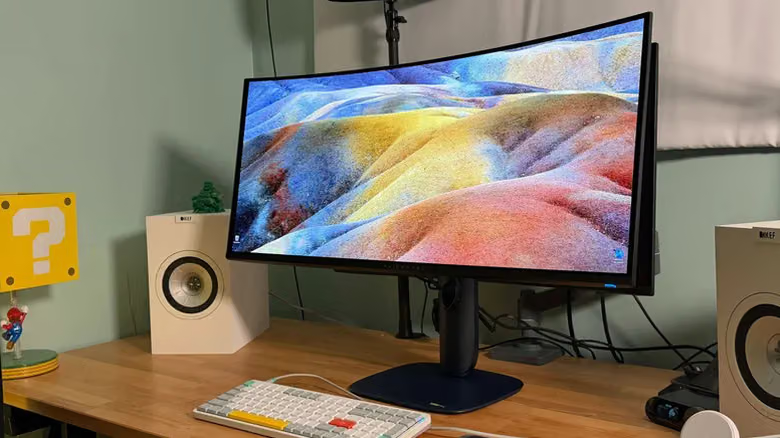
Curved gaming monitors dodged all these pitfalls because they were built for a single user from the start. That center sweet spot is a flaw on a TV, but a feature on a gaming monitor—since you're already sitting dead center in front of it, and much closer too. A 27- or 32-inch curved gaming monitor can actually deliver more immersion than a 65-inch TV you're watching from across the room. The curve also does real work: it pulls the edges of the screen into your peripheral vision, so in an FPS you can spot enemies flanking you without turning your head. It's part of why Hardawar warns readers not to just slap a regular 32- or 40-inch flat TV into monitor duty.
Without curved panel tech, there'd be no Alienware 34-inch ultrawides, and no monster products like Samsung's 55-inch Odyssey Ark. Sehdev notes that the wider the screen, the more the curve pays off: "There's a whole crowd out there seriously into sims like Gran Turismo or Microsoft's Flight Simulator—that's exactly the kind of experience they want a curved screen for."
Hardawar's closing take is that curved TVs were mostly a marketing gimmick manufacturers rushed out to juice sales—but it's precisely because they went through that failed round of curved TVs that they built up the know-how to bring curves to gaming monitors and actually give consumers something they wanted. Curved TVs are gone, but the lessons stuck around.